
The conversation
About this episode
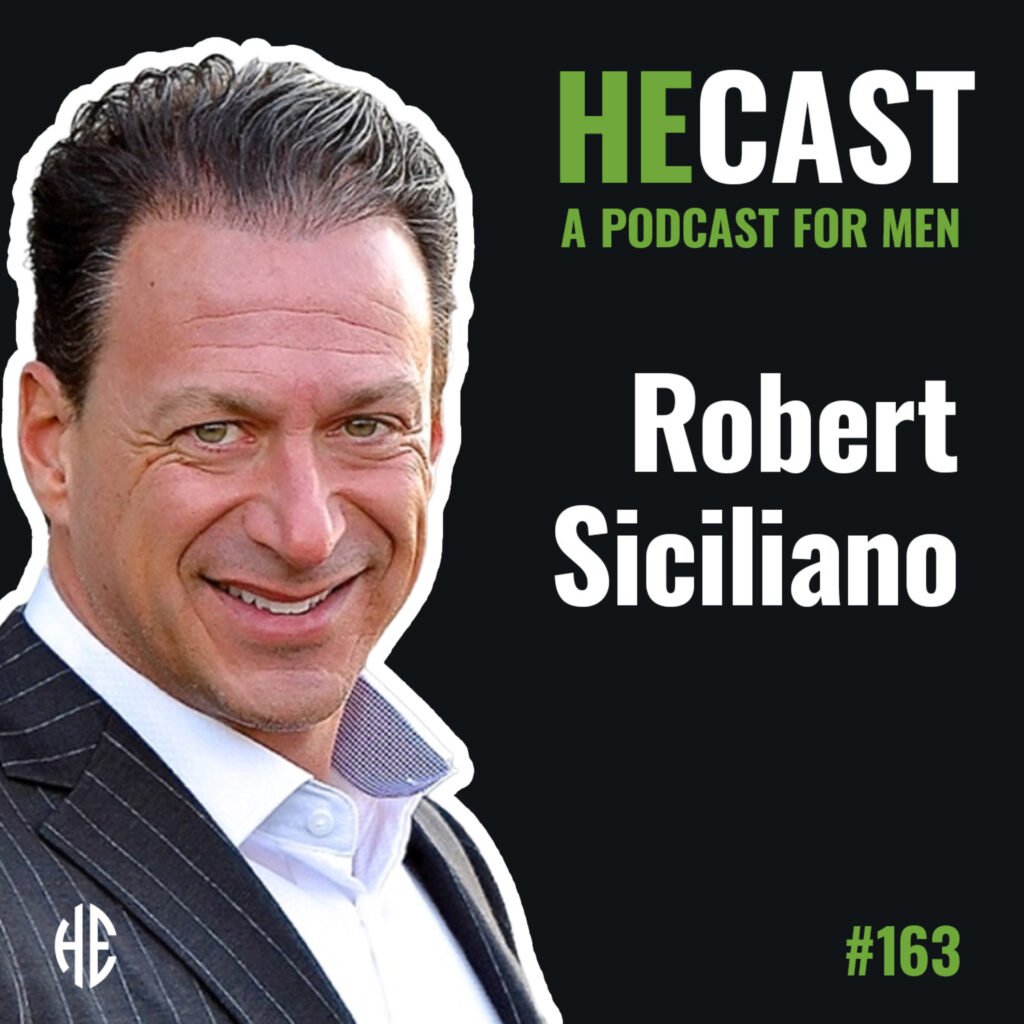
Episode 163 of heCast features Robert Siciliano in a timely and eye-opening conversation about cybersecurity, personal safety, AI deception, human awareness, trust, denial, and what it means to become a Strategic Human Firewall.
Robert Siciliano is a security analyst, best-selling author, and the Architect of The Strategic Human Firewall™. As one of the world’s most recognizable educators in personal and corporate protection, Robert is known as the “Straight Talk” voice for a digital age. His expertise has been featured on CNN, Fox News, CNBC, Anderson Cooper 360, The Wall Street Journal, The New York Times, and Forbes.
In this episode, Mike and Robert talk about why humans, not hackers, are often the ultimate deciding factor in personal and organizational security. Robert breaks down why so many companies and individuals fall into “security theater,” where they check boxes and hope for the best instead of creating real behaviour change, awareness, and protection.
This conversation goes beyond passwords and phishing scams. Robert explains how trust, denial, shame, and complacency can quietly create risk in our workplaces, families, and personal lives. He also shares how better awareness, emotional control, and practical habits can help people reduce risk, protect their peace of mind, and make smarter decisions in a world of AI deception, deepfakes, scams, and constant digital exposure.
Mike and Robert also discuss how security lessons from the workplace can carry over to the kitchen table, helping families have better conversations about safety, technology, privacy, and personal responsibility. Whether you are a business owner, a parent, a leader, or someone who simply wants to feel more prepared, this episode offers practical insight into protecting what matters most.
This episode is for anyone who wants to better understand the human side of security, reduce digital and real-world risk, and build stronger habits that support confidence, awareness, and mental wellness.
Listen to heCast, the official podcast of HeChangedIt.
Download the HeChangedIt app for more tools, content, and support on your mental wellness journey.
Read transcript
Transcript supplied via Spotify RSS.
Welcome to Hecast, the official podcast of He Changed It.
As always, I am Mike Chism. As always, I am so excited to
have conversations in the world around the world of of men's
mental Wellness. We are a podcast for men, about
men anyway. I mean, I'm sure there's some.
I know actually, I know that there are women who listen to
the show too. And I appreciate the feedback
that we get from that. So thank you very, very much.
But yeah, it's great to have these amazing conversations
around the world of men's mental Wellness.
Today we have a guy by the name of Robert Siciliano.
He is fantastic, very charismatic, Boston born and
raised. I love that just he's got that
Boston charm to him. He owns a company called Protect
now, which is actually a digital security company.
Mike, what does digital security and, and, and mental Wellness,
men's mental Wellness and the struggle for it have in common?
Actually a lot more than you think, a lot more than you
think. It's not just about what it is
that he does and, and what we can do.
And there's a lot of practical stuff here.
Like, let me tell you, there's a lot of practical stuff that we
can do here. Many times men feel like we
should be protectors for our family and the people around us,
right? We've got that thing.
A lot of us have that thing, if not all of us have that thing
inside us where we feel that need to protect.
I mean, it's a new day and age, you know, and digital protection
is a really important thing. But more so, Robert goes into
his story about how he got into this business and, and I mean,
you know, many times we get into something for a reason, and he
certainly did. He talks a lot about, he gets
really vulnerable and talks about some of the things he's
been through. And, and I just appreciate that
very much about him. It's just a great conversation
with a lot of practical use in it, too.
I hope you enjoy our episode this week featuring Robert
Siciliano. OK, Robert, I, I, I said this
before we hit record here. We've had lots of first
responders. We've had, you know, a lot of a
lot of police. We've had military firefighters,
different first responders and stuff.
I believe you are, we've even had undercover, you know,
enforcement on and whatnot. I believe you are our first Pi
and you're from Boston and I'm just so excited based.
I, I know how much personality you have.
We're going to get in to protect now and all the other stuff that
you're doing. But at the end of the day, when
you you reached out being willing to talk about your
story, I knew that you were going to be one of my very
favorite conversations of the week.
Robert, welcome to he cast. Thank you so much, happy to be
here. Oh, I'm happy to have you, man.
I'm happy to have you. OK, Give us the geographical
timeline. How long you been in Boston?
I'm born and bred in Boston, so 57 years. 57 years.
You ran the marathon the day before the you ran it yesterday,
right? Yeah, it took me forever, but
that's what happens when you've run 14 Boston Marathons and on
the 12th 1 you get to get ankle surgery.
So my my training over the past couple of years has been
stagnant due to that. I'm still nursing that.
And so yesterday I was fighting with the weather, my IT band and
my ankle. And I probably ran in total from
December to April, 12 miles. And I probably spent about maybe
20-5 hours on the bike in the garage, you know, spinning.
But that was it, you know, So for me, it's a matter of all up
here, it's in your head. And then if your physical body
can get to the starting line and you know enough about your body
to get to the finish line, you should be able to finish, which
I did. I admire the resilience of a
runner. I've always said that I, I'm in
the weight room quite a bit, but running is one of those ones
where they tell me about the runner's high and I don't know
when it shows up. I, I don't know if I've ever
experienced it. I'm not sure.
So that the resilience of a runner is crazy for me.
So the, the, how much of yesterday was muscle memory?
Like, like, like, like, did your body go, OK, I know this, I
remember this and you started feeling familiar?
Or was it completely foreign, having not been able to train
the way that you had in the past?
So I struggled. I mean, it was, it took me over
six hours, which is like a forever.
I'm a charity runner, so I always anticipate that it's
going to take me between 4 1/2 and 5 1/2.
Yesterday took me a little bit longer due to, you know, my
injuries. I ran injured and muscle memory
certainly kicks in. It's really boils down to
fortitude and recognizing your own body.
Like to know thyself, I think is like one of the most important
philosophies ever. I mean, if you don't understand
yourself and you don't understand like what motivates
you, what pushes your buttons, why you are triggered or react
to life in general, I think that you're going to always react to
life in general. And so for me, knowing myself
meant OK, knowing my limitations.
And so at one point knowing that if I keep going the way I have
them, I'm going to tear something.
And here and there, like I, I gave it a little bit more and
realized, OK, I'm going too much too fast too soon.
So I walked like 4 miles before the last two miles and I
realized, I think I got this and I think I can actually give it
some speed now. And I got and I went from doing
like 15 minute miles to 12 minute miles and I finished
before the buzzer. So that was a good thing.
Well, there you go. OK, so, so you know, having run
it for 14 times, is it is it familiar?
Do you like landmarks? Certain things like when you're
when you're in a, when you're in mile 18, you're like, Oh yeah, I
remember you as you're walking by.
Something like like is it, is it something that's that that's
bored its way into you now? Oh 100% yeah.
The there's nothing like the Boston Marathon.
It is a 26.2 mile tailgate party and like the, the and the big
thing is like you're looking for the Citgo sign.
So if you know Boston and the Citgo sign, it's kind of like
this, you know, national treasure.
And when you see that, like you know, you did it and that's when
you get all, that's when I get all emotional.
And that's when you know, like the end is near, which is, which
is great. But at the same time, you still
have to be careful because I've seen plenty people collapse in
that last couple of miles. And I've run in every possible
weather scenario you can imagine.
I've run in when it was in the 80s.
I've run when it was like sleeting and snowing.
I've run when it was like 20-30 mile an hour of wind that was
just hitting you in the face and beating you to death.
And I ran in 2013 when 2 bombs went off.
I was actually right there when the second bomb had gone off.
And you know, that was WTF my wife and kids were at the finish
line. So that was like a whole thing
and not something you usually forget, which I still get
emotional about. And you know, like it's, it's,
it's one of those life enhancing things that I think if you can
do, you should. And something that I don't know
that I'll ever stop doing. I am one of those guys that
like, I run up on like the 70 plus year old men and stop and
talk to them or walk and talk to them or jog and talk to them and
find out like, you know their story or how many have you done?
Like how old are you? Like, how many is this for you?
And, and they're so inspiring, you know, 'cause like yesterday
I met a, a guy who was 78 and this was his 22nd.
And he says how I'm struggling. I'm like, well, I'm a struggling
too, brother, you know, and another guy, it was his 70th.
He well, I'm sorry, he, he is 70 years old and this was his 28th.
And so I figured out in my head, well, at my age, if I can get to
70 years old, I will be one behind him.
I will be 27. Wow.
You just you, you just did a beautiful, beautiful metaphor as
to why he changed it exists in the 1st place like you're in
this, you're in this race, you know, it's legendary race, big,
big, big time thing. But the way you view it, the way
that you just articulated, it's like a community and, and, and
the idea that as you're going through this together, this
struggle, this intense physical, mental, emotional struggle, all
the things are, are, are, are, are, are churned up, especially
when you're running compromise or you're, you're, you're doing
it compromised. And you're talking to these guys
that have been around for a lot longer, you know, you know,
they've had, they've had a lot more revolutions around the sun
and, and here you are, you know, iron sharpening iron.
And, and then that's what you're doing with them as you're moving
forward. You're finding out they're in
the struggle, you're in the struggle.
And yet it what it does is that commonality, that community
gives you a different type of momentum moving forward and
insight moving forward. That's exactly what he changed.
It's all about really at the end of the day.
And don't we all need that? You're making me emotional.
Yeah, that's what it is. It's a beautiful thing.
I see you at 75 running it talking to a dude who's 57 at
that point, you know, the 57 year olds, like I just turned 50
not that long ago. We think we got it.
We think we got things figured out because we can use the
perspective to think about the 25 year old self and what a fool
we were at that point. And yet here you're going to be,
you know, 20 years down the line, you'll be able to do that
to a 57 year old. I just think it's a beautiful
experience. And that's, that's exactly what
he changed. It's all about just and I so I
appreciate you opening up about that and congratulations on
doing it again, man. And, and the fact that it's as
you get older, the tradition is just going to deepen as opposed
to, you know, being able to use what many people would call as a
very valid excuses say, well, I'm getting too old for this
stuff. But but you're not going to do
that. You're you're, you're leaning
into it. More my girls have been
attending since they were like 3:00 and 5:00.
My wife pushed my daughter's around in a double stroller.
Back then it was like two or three different spots of the
race, which meant she like, she packed them up, drove to one
spot, then to the other. Now, like they're 17 and 20 and
they're right there every single time, holding signs, the whole
thing. It's good.
Have either of them ever expressed the idea that they
might do it with you? So my my 20 year old ran when
she turned 18. It was her first.
She hasn't run since she she probably will.
Yesterday she mentioned probably running her senior year of
college. She's the one that said to me
years ago that of all the holidays, Patriots Day, which is
the marathon Monday, is her favorite holiday.
Seems to me like she's going to join you at some point.
Eventually, yeah. Yeah.
Oh, that's a beautiful, beautiful thing to switch gears.
So, so you, so you've you've you've been doing the Boston
Marathon for a long time. How long you been API?
So I, I was in the business of, of pride investigations for
probably five years, which is an interesting business.
You know, you're, you're, you're, you're, you're
essentially following people around and, and doing studies on
a research on people that are up to no good.
And that has a level of burnout to it.
You know, like being a law enforcement officer has a level
of burnout to it, right, Due to the fact that like, you're kind
of like at a level dealing with, you know, a, a, a, a, a, a
certain personality type that grates on you and, and can mess
with your happy zone. So I did that for five years,
and I learned an awful lot about the human condition during that
time. And prior to and since then,
I've been engaged primarily in what we would call security
awareness training, which is getting in front of audiences
both in person and virtually on managing risk, which means
understanding sociopaths, psychopaths, you know, hardcore
narcissists, those who don't experience empathy, sympathy,
guilt or remorse, you know, humans that truly have no shame.
OK, either through nature or nurture, you know how however
they would be diagnosed and, and what their motivations are and
how they choose their victims. So I'm still dealing with that
element to a degree and reverse engineering their processes and
how again, you know, we as the good essentially the 97% cause
I've come to the conclusion that about 3% of humans, they say
about 3% of men, I'm sorry, 3% of women and about 6% of men
experience being sociopaths or psychopaths and were diagnosed.
And that, you know, how they choose their victims and and
what we need to do to become the tougher target is primarily how
I spend my days today. Well, good Lord, I mean, the the
the onion is so deep on everything that you just talked
about there. I want to unpack it a little
bit. One of the questions I was going
to ask you, you did you did go down that path a little bit
knowing the percentages. That's great.
The percentages is good. And I'm certain it's something
that you can, you know, kind of hold onto knowing that it is
really relatively that low. That being said, when you
immerse yourself in behaviors of that type and you see these
sorts of things, my question for you is, did it, did it jade you
about humanity in itself or, or were you able to see all of that
and realize how much good there was out there?
You know, despite these, I don't want to say bad apples.
I don't want to try and be judgmental when it comes to
that. It's, it's, you know, there are
sociopaths out there that can experience good lives and they,
and they can be productive members of society.
I, I, I read a stat not that long ago about surgeons and how
many surgeons have that ability to be performers at that level.
And part of the reason is, is because many of them have dialed
down when it comes to empathy. But that being said, the ones
you were seeing were certainly, certainly not in that category.
Whether you're doing the private investigating or you're doing
security to protect protect against, you're seeing a lot of
this stuff. Did it jade you towards humanity
in itself? So I am a definitely a glass
half full guy. I'm an internal optimist and I
do choose to see the good in in everyone.
And I'm still to this very day surprised when people are just
so mean. I had somebody yesterday that
was very mean to me and it it always is surprising to me.
And I'm also a believer. I'm a believer in karma too.
Oh yeah, yeah, yeah. That it always comes back to get
people. Not that that's what I want.
I just know that, you know, karma has a way of evening
things out and you know, I, I, I, I spend a lot of my time,
energy and effort thinking good thoughts and consuming good
information. And at the same time, I actively
try to shield myself from harmful, consuming information,
you know, doom scrolling and such.
And so I'm always regulating in that regard.
I have been kind of, you know, upset or disappointed.
The past 10 years has, you know, been a lot to take.
And I'm, you know, a little disenfranchised as a result.
But at the same time, you know, I still have a lot of faith in
what's right. And the truth always, I think,
flows to the top as a result. I appreciate that.
I, I, you know, and, and I don't want to diminish what it is that
you have been doing and are doing.
And, and I mean, obviously you're a guy who at at the
highest expert level, I mean, you've been featured on all
sorts of very, very, very large platform, CNN and other, other,
other, other places talking about things like security, the
way the technology is developing so quickly.
I mean, my gosh, it's like, it's like holding a pinwheel into a
hurricane. It just feels like, you know,
it's, it's such a, you know, I read something and I mean,
again, I don't know, I don't know who to believe when it
comes to this stuff. But when it comes to AI and
things like that, you know, within a year, privacy will no
longer exist. It's just not going to happen
anymore. Is this, is this something that
is inevitable as we evolve as a species with technology, as it's
curious, I don't know what you'd even call it.
Like, like, you know, a curious aside, species that's developing
with us, is that a, is it a, is it a, is security one of those
things that is ever going? Are we going to get to a place
where security will still will never exist?
So, so privacy, I've been saying for 20 plus years, privacy is an
illusion. You know, it, it's, I don't know
the privacy truly exists since the Internet, Yeah, and I don't
know that it truly ever has, but since the Internet in the mid
90s, you know, privacy is quite an illusion.
That said, I personally am not too concerned about privacy.
Privacy has never been my first concern.
My first concern has always been security.
And the difference between the two is privacy is, you know,
information that people have access to about you, whereas
security is information that people have access to about you.
And what harm they can or do with it.
That's my concern. My concern is how people use
that information to hurt or harm you either virtually or
physically. You know, whether they
physically hurt you or they virtually, you know, disparage
or steal from you, That's my concern.
And so I'm not so concerned that people have information about
me. My concern is like how they can
use that against me. And that's something that that I
think to a degree is manageable. And, and as long as you
understand that if you recognize risk in that manner and you do
something about the information that's out there about you
already to minimize that risk, then I then I think that that
kind of tampers down the friction and the worry and the
harm. And that's not a very difficult
thing to manage. Just most people don't because
they don't know what to do or they kind of develop a
fatalistic attitude. Oh, you know, there's nothing I
can do about it. And then actually there is, you
know, when it comes to security, there's so many things you can
do to become a tougher or hardened target, which most
people don't understand or recognize or do anything about.
And I serve to provide people with the information to make
sure that they can manage that risk.
They can become that tougher target.
And once you do that, it, I think it does a, a solid job of
like, you know, allowing you to manage your emotions revolving
around it too, 'cause I think in the end, like no matter how old
we are, we all want a certain amount of control over our
destiny, a certain amount of control over our lives.
And, and control can be a certain illusion too, but there
is a degree of control that we can gain over our lives.
Like you put your seat belt on, not because you worry, not
because you live in fair, because it gives you control
over the vehicle should somebody swerve in front of you, a dare
run out in front of you, whatever the case is over that
vehicle keeping you tight in the driver's seat so you can manage
the steering wheel and the gas and the brakes.
And that's all security truly is, is just, you know, tools to
give you control. And so not too worried about
privacy, concerned about security.
And I think that like there's so much that we can and should do
to manage that risk. Well, I just, I, I so articulate
and I just appreciate the fact it's, it's, it's clear, you know
why you are, you know, such a renowned, powerful speaker when
it comes to this stuff, because you have the ability to simplify
things. Those distinctions are amazing.
The, the, the distinction in privacy and security.
That's, that's fantastic. I appreciate you making that
distinction right there. And, and you know, that's,
that's I'm also an optimist when it comes to I, I am, I, I see
the world. You know, sometimes I've been,
I've been told that I see, I've got the glass.
Quarters full, you know, despite there being no liquid in there.
That's how I view things. And, and, and I believe that we
are supposed to be the best, whatever you want to call it,
best stewards of responsibility that we're in that we have power
over. And if something happens that
changes the game, well, that's out of our control.
But we did the best that we could.
I love you talking about the idea of the seat belt as well.
That's a very, very simple way. It's a simple metaphor to
describe, you know, things that we can do to help protect
ourselves. Again, your your, your
perspective, your point of view is a very, it's a very unique,
unique is unique. It's a unique one.
I would love to dive into that a little bit.
What are some of the seatbelts that we don't even know about
that we could put on very, very easily that you tell people?
What are some of the, the low hanging fruit things that we
could do to harden ourselves? I assume that people who go
after folks are the ones who are going to go after the low
hanging fruit. That's why we hear so many, you
know, elders falling for, for, for, for different types of
scams and things like that, right?
It's low hanging fruit in some ways, very easy to manipulate,
very easy to get access to for somebody out there who's got a
family, you know, they want to protect their family.
There's a lot of dads who listen to this podcast, obviously,
right? And and, and you know, we're
going through what we go through as men, but then there's also
the struggle of being a parent. What's some of that?
What's some of the easier things the seatbelts that we can put on
that maybe we don't know about? So I tell everyone that like, I
can make pretty much anyone in the top 10% of secure humans or
secure Americans. Wow, it really isn't that
difficult because I know that like 90% of us are doing almost
nothing and that as long as you engage like 5 different things,
then you're in that top 10%. And so like, for example, I get
in front of a live audience and I query them.
I asked them questions. My, my job is to change a
security culture. It's a challenge people's belief
systems because what people believe of what security is
versus what it isn't is, is diametrically different.
And it all kind of goes back to when we're kids and there's all
these like variables there, right?
So one of the first questions I asked people is like, so how
many of you could honestly say you're using a different
passcode across all your critical accounts, uppercase,
lowercase numbers, characters across each critical account,
different passcode across each account.
If I get 10 to 15% of my audience to raise their hand
using a different passcode, that's a lot, which means, like,
you know, 10 to 15 to 20% are not like that's 80 plus to 90%
of the general public is using the same passcode across every
account. Yeah.
What most people don't realize is like on the dark web, there's
like between 15 and 20 billion of our passwords on the dark
web, OK, There's been like 300 billion records compromised in
the past, you know, 20 years. So of that 300 billion records,
like 1520 billion of them are passwords.
So bad guys, today, they don't hack, they log in, OK, So just
logging in to your accounts because your username is right
there and your passcode is on the dark web.
So that one thing, changing up your passcodes using a password
manager, which less than 10% of society uses a password manager,
those two things right there, password managers and changing
up your passcodes, you're already doing better than 90% of
the public. And then from there, two factor
authentication, which we all use to some degree, but I don't know
that we're all using it ubiquitously.
Like I use it on everything, eBay, Amazon, PayPal, you name
it. So all my critical accounts have
two factor authentication, especially my e-mail, especially
in my e-mail, 'cause if they get into my e-mail, now they can get
into my bank account, they can get into my PayPal account, they
can get into my mobile phone account.
And if they can get into my mobile phone account, they can
swap out the SIM on my phone. OK.
And once they swap out the SIM in my phone, now they're in my
Coinbase account. Yep.
See how that works? Another act after my crypto.
So by setting up two factor authentication for everything
including e-mail, you're already light years ahead of most people
'cause 80 plus percent don't even use two factor
authentication for e-mail, which is like crazy to me.
It's that high. Oh my gosh, I, I, I can't
believe that. It's bad.
I use bad. I was terrified with the first
one because it's like, OK, 'cause passwords.
It's one of those things where, you know, how do you like, how
do you do that across all these different platforms?
And I've got business and I've got personal and all that.
So, yeah, I've truncated and used a few passwords for certain
things. So I was like, oh God, OK.
But the two factor is something I've always done.
And whenever I get the option to it, I'm like, oh, yes, please.
I, I, I, I'm excited to do that because it does feel, it does
feel proactive, by the way. And I, I, I, I think that that's
probably something that you, you, you, you, you probably do
touch on with people that when you are whatever it is to, to,
to make yourself a little bit more secure that you do get that
little dopamine rush of going, OK, I'm glad that I've done
this. Like I'm, I'm feeling a little
bit more prepared for things. But two factor is something I've
always done. OK, So 80 something percent of
people don't don't use two factor yet?
Yeah, so between password managers changing up your pass
codes, 2 factor authentication is 3.
And then like this is going to sound so basic to people, but
like I travel the country, speak to, you know, urban, suburban,
rural. So I asked the same questions,
like how many of you lock your doors?
You know, and depending on where you live, like a rural, like I,
I, I work with Realtors all the time and lots of times like
they're like, you know, we've, we sell houses, you know, after
30 years, like the homeowner doesn't know where the keys to
the house are. They have, they have no idea.
Like there's no keys to like transfer the new owner, you
know, because people don't lock the doors because they feel safe
in their neighborhoods, which is great that you feel safe and you
should feel safe. And generally people are to a
degree. But like bad things happen
everywhere. And I don't say that like to
alarm people, but if you look at the local police blotter, bad
things happen, you know, and, and whenever you like, ask the
question. And I ask this question like
when, when you're watching the local news and something bad
happens in a neighborhood and I'm, I'll ask you this question,
something bad happens in a neighborhood and the local news
channel, you know, goes in and then with the camera person and
A and a microphone and they, they, they interview the
neighbor. They put the microphone on her
face. What does the neighbor always
say about what just happened that was bad?
I never thought it would happen. I didn't think it would be that
person. I didn't think it would.
There's just is just a kind of confusion and and surprise.
I never thought it would happen here.
They always say the exact same thing.
Like to this very day, they always say the same thing and
they will always say the same thing.
Nobody ever wants to believe or think it's going to ever happen
here. And so we kind of function at A
at a level of denial. And that leads me to my next
thing. So like the next question I ask
is like, how many of you actually like have a home
security system? You know?
And I asked that like, because there's like 1 to 2 million
homes that are burglarized in the US every single year.
Like 1 to 2 million every single year.
It's just always been like that. And it'll always be like that.
And that means like in the next decade, that's like between 10
and 20 million homes burglarized.
And so I asked a series of questions.
OK, so how many of you like, you know, so, so why don't you have
the home security system, right? And like, like if, if, if 15% of
the room raises their hand that they have a home security
system, no matter where I am in the country, that's a lot, which
means 85% don't. Yeah.
And so the next questions are like, so why?
So if you don't have a home security system, like, why not?
And some of the answers are like, well, we don't have a home
security system because we have insurance, as if insurance is
going to protect you at 3:00 AM, Right.
And then the next most common answer is we don't have a home
security system because my husband says if they're going to
break in, they're going to break in.
What are we going to do? I would divorce that guy, to be
honest with you, right, because that's a fatalist attitude, you
know, and like I, I'm not cool with the fatalism when it comes
to security. Like, why bother?
If they're going to break in, they're going to break in.
Like, you know, I got a why if I got kids, like I'm going to do
what I can. What's with within my control,
within my budget to tighten things up?
Even if you get a, a, you know, this house protected by ADT off
a, you know, eBay, like you're already like ahead of your
neighbor who doesn't have that sign layers of protection, you
know, like do something, don't do nothing.
And then the most common answer I get is we don't have a home
security system because I don't want to live like that.
I don't want to live in fear. I don't want to have to worry.
I don't want to be paranoid. They say, which turns out that
like most people when it comes to security, they look security
as kind of a bad thing. Security to most people is about
paranoia, and they think it's about fear and worry.
And people literally say we don't have a home security
system because I don't want to live in fear.
I don't want to be paranoid. Right.
Which is people's complete misconception, misunderstanding
of what security actually is. Like you don't put your seat
belt on because you're paranoid. You put it on because it's a
smart thing to do. It gives you control.
You don't install a home security system because it's
going to make you worry. Like how technology could do
that, I don't know. But like, that's what people
think. And so we have this very
unhealthy relationship with security that it's like
paranoia, which, you know, I'm sure, you know, like paranoia is
a diagnosable mental health issue.
It's not, it's not like a true thing that people get when they
engage in security practices. I don't have security practices
because I look over my shoulder and I worry all day long.
I do it because, you know, I want a degree of control over
the results. And that means like I have a
number of systems in place, layers of protection to like,
you know, make my house look like a tougher target.
Therefore they're going to go target somebody else.
And so my job is to change the security culture and get people
to wake, wake up and realize you do have actually a significant
degree of control or whether or not you are chosen.
And if you do these basic things, they're going to move on
to somebody else. I mean, unfortunately move on to
somebody else. But that's just like what we do.
And understanding and recognizing risk means just
taking action. I love, I, I love this.
There's a lot of guys who are listening to this.
And I mean, you know, when you're a guy, you've got that
many of us, if not most, if not all of us have that, that primal
thing that's inside. It's that instinct, the, the,
you know, the, the reptile brain part of that.
We need to protect what's ours or protect our family, etcetera,
etcetera, protect those who are in our tribe, whatever that that
is, we have that. Then you marry that to the idea
of think about it. If you think of somebody, I, I,
I saw some security camera footage not that long ago of, of
some car thieves. And like the car thieves were
literally going down the row of cars and they were looking to
see what doors were unlocked. Whichever door was unlocked,
that was the one that they gave some attention to the car, the
one that was locked moved on like the most, like you're
talking about the most basic of the basic thing is just to lock
the door, right? And, and so, but then to go back
to something else you said is managing emotions.
And it's very interesting because I know the career path,
like as we've talked a little bit about your history and
things like that. It's it's one thing to know the
stats and the things to do and, and, and, and what logically
makes sense, the common sense. It's one thing to know that.
But then like when you really come down to it, you're managing
people's emotions is what you're doing is, yeah, you're teaching
this stuff. But figuring out how people
think and and finding the spots where our common sense is
actually the opposite of what common sense actually is, is
something that you have to kind of recognize and then
communicate to somebody to bring them back into that right frame
of mind. I'm I'm challenging belief
systems is what I'm doing. There you go.
Yep. We've all grown up with certain
belief systems, and those belief systems are how we function.
You know, we, we, we are, are, we function based on what our
beliefs are. We make decisions based on what
our beliefs are. And I, I certainly function
based on what my beliefs are too, but I choose to function
based on what the facts are. And that is always just made a
little bit more analytical sense to me.
And yeah, I have my beliefs, I have my choices.
But there's, there's, there's a lot more, you know, if you throw
a lot more common sense into it and you and you and you
challenge, you know, what is common beliefs, then all of a
sudden you kind of like unpack certain things that we've been
conditioned to think over the course of our lives.
And all of a sudden, like, if it doesn't make any sense to think
the way you've been thinking. And what security awareness
training is, it's what it's designed to do is certainly
provide awareness about risk. But what I do is what I call
security appreciation training, which essentially challenges
people's belief systems about what risk actually is, what
security actually is, and, and kind of turn them around to
understand what security actually does and what its role
is in your life. And ultimately you go from
awareness, which is head based to appreciation to appreciating
security, which I think is heart based.
And when you appreciate someone or something like it's on a
deeper level, like it means something and matters a lot more
to you based on it just being from the neck up.
When it's from the heart up, it's like, oh, that actually has
impact on me, impact on my life, impact on my family, impact on
my business, impact on the people that I touch.
And that's in order to change minds, you need to change
hearts. And so that's what I do.
I, I provide security appreciation training.
And before you know it, like when I walk into a room and I'm
hired by a, a chief information security officer, they're
bringing me in, not just to make people more aware because they
already engage in like what's called fishing simulation
training, which is like a, which is like a, like, a, like a, like
a security awareness training that teaches you about fishing,
you know, and, and then, and they do that like once a year
and they call them me when they're like, kind of, you know,
like behind the gun. And they're like, listen, we
just want our people to care about security.
We just want them to care. Like, how do you make them care?
You know, and making people care about security is understanding
that all security is personal and security begins with you,
you know, like it like in people protect what they love.
People will, you know, engage in security practices if they
recognize it. Like, oh, this is about my
child's digital footprint. This is about my identity.
This is about my Social Security number.
This is about protecting my bank account, you know, so I speak to
it from that perspective. And so when I walk in the room,
I'm looking at 100 people that are like, they have their arms
crossed. They're looking at at me with a
scowl and let you they're looking at me like, OK, security
guy, tell me something I don't already know, You know, like,
and here we are like to protect the company.
And as I begin to ask them all of these like challenging
questions and pointing out, like, you know, 20 million homes
are burglarized in the next decade.
There's, you know, 20 billion passwords in the dark web.
And it kind of opened them up to like, here are your
vulnerabilities. And then start talking about
what they can do in their own personal lives to manage their
own digital risks. Then, then all of a sudden, like
the, the, the arms begin to go down by their side.
They physically like kind of lean into the conversation.
Their eyes kind of open up a little bit.
The scowl goes away. And, and what happens is like
their, their hands begin to go up because now they have
questions. Now they want to know.
Now they're curious like, Oh, this isn't about my company,
It's about me. Like I've always had questions
about this stuff. I want to know like, what do I
got to do to protect my child's digital footprint, my, my own
identity, my bank account, Like how this is how I manage my, I
didn't know that you could just use a password banner.
I was always worried that they would just get hacked.
And all of a sudden, like they have an opportunity to ask an
expert that's been doing this in 30 plus years on how to do this
in their own lives. Now they want to know because we
are a humans are a selfish self interested creature, right?
And so we want to know what's in it for me first.
And that and being selfish actually isn't actually a bad
thing. Selfish gets a bad rap.
But like when you are on the airplane and the flight
attendant is providing instructions about the oxygen
mask, what does he or she tell you to do first?
You. Put yours on 1st actually.
Push on. Exactly.
Put yours on first because be like, why?
Because you are ineffective unless you take care of yourself
first in so many ways, and that primarily begins with your
mental health. You are much more effective to
all those around you if you take good care of yourself first.
In, in in. Being selfish might mean getting
a good night's sleep, consuming, you know, fluids and foods,
taking care of your mental health.
Like it it's all hand in hand, taking care of your security.
Like without all these things in order, like how are you supposed
to be a good spouse, a good father, a good human if like
you're always like, like just at a disadvantage, like if you're
always playing catch up, you know, So I, I speak to security
in that regard so that people see like it is, it is a very
holistic approach to managing our digital and physical lives
with security and everything else will also fall into place
if you're thinking holistically in regards to all aspects of
being a better human. Oh, man, you, you said a whole
bunch of things there that we use the airplane analogy on here
a lot because there's a lot of guys out there who, you know,
well-intentioned perhaps, but erode erroneously.
So, you know, they, they, they literally give and give and give
and give and give. They give to their family.
They, they, all they want to do is just just just give.
But unfortunately it empties their tank because they're not,
they're constantly feeding, but never getting fed and they're
not putting things back into their tank again.
That gets them to the place where they can provide even even
an even more effective way for their family or, or, or
whatever. And we have this thing where we
put ourselves many times last and, and, and you know what we
got to come up with a, with a, with a, with a better word.
But it's like it's self-care really at the end of the day,
it's not selfish, it's self-care.
And, and that includes all of the things, you know, it's as,
as I think about, you know, my father, his generation was the
baby boomers and the father of before that, you know, the Bob
Hope generation, the depression kids.
And the idea of protecting your land has changed so much in two
generations. But if you were to go back to my
great grandfather and, and, and ask him how important it was to
protect his land, protect his family, I mean, 10 out of 10
important. And it was certainly a lot of
things that I don't do for my family today, yet I still do
have that same instinct. But we don't know what we don't
know. And it seems like you're the guy
that is really able to teach people about the things that
they don't even know that they don't know.
And, and and I'm certain that when you, when you, when you
meet with people, I'm I'm I'm sure you're info tastic and you
throw out some of these statistics and, and, and the
information alone is what people start making certain people want
to draw in and they want to hear what you have to say and see
what you, what you, what you know.
It's important what you're doing and, and, and, and the part that
I am blown away by is you're not just doing it with stats, you're
doing it with heart. And I know like, like, you know,
going through a little bit of your background and what we've
talked about here before we hit the record light, you know, you,
you, you evolved to get to this place.
And, and, and I want to talk about Protect now.
I, I, I want to get into that, but I want to get into the guy
who built Protect now a little bit before we actually get to
it. Because your experience is part
of what's LED you to being so thoughtful with what it is that
you're doing. Yeah, my SO a couple things,
like first, when I get off the platform 100% of the time,
someone always asks me, you know, like, so how did you get
into this? What do you, like former law
enforcement, FBICIA, Secret Service?
Like, what are you government, you know, police Like what what
what's your deal? You know?
And I tell them like I, I literally am from the streets of
Boston. Like that's how I got my chops.
I've been doing what I do since I was a young teen.
For me, it all started off like when I was 12, my dad, you know,
I'm 57. So when we were kids, like our
parents would open up the door at 6/7, 8:00 in the morning, let
us out and say be back, you know, for dinner time.
We'd come back 6/7, 8:00 at night, bloodied and beaten and
bruised and scarred and cut up and filthy and, and here we are.
We, we made it, you know, Which is amazing 'cause there's no
reason why I should be alive. No trackers, no cell phones of
any kind, no ways of, you know, Yep.
Doing 120 miles an hour and a 70 Nova on, you know, on route one.
Like how I'm alive, I have no idea.
But we survived it. I'm not recommending any of that
to anybody. I'm just saying, right?
That said like at 12 years old down, my father would let us go
into downtown Boston, get on the train and one time like we get
off the train and there's like 5 kids waiting for us on the
street. Like they were waiting for
anybody and they mugged us. They mugged me and my my little
brother who was eight. They took all our money.
And that kind of woke me up to like bad actors.
And my dad when we go home explains to us, OK, so those
boys today, they were the predators and you were there
prey. They were part of that.
You know that 3% like the wolves and the lions and again, it's
natural and it's normal and they choose their victims and you
need to become a tougher target. And so we started taking karate
and kickboxing and. And a year later, I meet like a
girl who at summer camp who I liked and she liked me like my
first crush. I remember I was like, kind of
holding hands in the bus. Mind you, you know, I was 13.
And this is like, we're going on like 40 something years ago.
Kids didn't. OK.
So. So we get off the bus and we get
out. We're sitting on our front
stairs one day. And she says to me, kind of
solemn looking at me. And she says, I think you should
know. My mother's boyfriend assaulted
me. And I knew what she was saying
was bad by the way she said it. I didn't quite understand it,
though. So shortly afterwards, I go
home. I asked my dad.
I'm like, dad, what is sex and what is rape?
So I learned about the birds of the bees and sexual assault in
the same conversation at 13 years old.
Again, we didn't know what sex was back then.
We didn't have the Internet. We didn't know we didn't have
porn. Like we didn't even have VHS
yet, you know, like, we didn't have any of that stuff.
And so, like, if anything, we found a Playboy in the trash on
the way to school. Like, that's how you or, or in
your grandfather's closet, you know, snooping around, like you
didn't know about that stuff. And so I learned about sexual
assault, birds and the bees. And now I've been a victim of a
multiple attack situation. A year earlier.
I meet my first victim of sexual assault.
And yeah, multiple attack situation, sexual assault.
And now, like, my view of the world is very different than
most kids. Yeah.
And so over the years, I started gravitating towards professions
revolving around security. In my mid 20s, I was teaching
real estate agents personal protection because Realtors are
murdered in the US And so that was my thing.
That's how I made my living back then.
And I had a small, I had an IBMII, got my first computer in
95, which was an IBM PS1 consultant, which is the make
and model of a Windows 3 O operating system with 150
megabyte hard drive. And I had a dial up connection
to a Oli, had to buy a separate card to be able to connect to
the Internet. Yeah.
And I got hacked and I had the ability to accept credit cards
over my computer and I lost thousands of dollars in credit
card fraud. Oh my, Oh my.
Gosh, and so I'm already teaching personal protection as
relates to violence prevention and I get hacked.
And so I didn't know that that was a thing.
And so I was still responsible for that thousands of dollars of
credit card fraud. And ultimately, like, as I began
to understand that, I realized like, this is going to be huge
because in the mid 90s, this happening to me.
It can happen to anybody. And so over the years, identity
theft started to become a big problem.
Municipalities posting Social Security numbers on the Internet
because, you know, why not? And ultimately, like new account
fraud via identity theft, people opening up credit cards in their
name became a problem in the late 90s.
And so I'm talking about this stuff, speaking about this stuff
to Realtors and others. And you know, at the same time,
I'm still in my 20s, you know, and I was living like the frat
boy life, not going to college, you know, I had my own multi
family and you know, like, I wasn't the nicest person in the
world. I wasn't like all that
empathetic myself, ego driven, wanted like just control,
control. And you know, like learned a lot
of hard lessons. Most of my relationships back
then were young women who were addicts and Alcoholics.
And like, that's the life that I lived.
Yeah. And I was codependent and I was
like, real rough and tumble. And I spent a lot of my time in
my 20s at AA and NA with those young women to get them help,
you know, Like I was just, you know, all about the broken wing.
And I got a lot of Girls Brew program.
Robert, you're a people pleaser as well then, right?
Yeah, yeah, yeah, yeah. Yeah, that's a, that's a, that's
a crazy combination. Keep going, keep going.
I just wanted to note that. Yeah.
And but I learned that like, you know, the more control I wanted,
the less control I got, right. And and the heart of my life
became. And And so through things like
Al Anon, which is like for codependence for people that are
in relationships with either the family members or in
relationship with addicts and Alcoholics that like if you
don't recover, you repeat. Same thing with Alcoholics.
If you don't recover, you repeat.
And so I just kept repeating and finding more broken wings.
And that meant, you know, eventually I crashed and burned,
hit bottom a couple of times. And I think I was kind of lucky
to do that in my 20s 'cause it really taught me humility.
It taught me about my ego and how like, at that time it was
like really ruining me. And, you know, I, I kind of
softened up as a result, you know, and, and I became a lot
more in tune with myself and others at a very early age as a
result of crashing and burning, you know, all the shit that I
went through, the fact that I don't have AIDS, the fact that
like, I didn't, you know, die from all the stuff that I went
through, like, it kind of really woke me up.
And by my early 30s, I considered myself to be pretty
conscious, you know, as a result of what I had gone through.
And I don't know that a lot of people do that.
I don't know a lot of people that experience that.
And to this very day, I mean, especially for me, having kids,
like truly, truly, truly for me with what I experienced in my
20s and then having kids like, really, truly, like woke me up
to a lot of things, you know, And so even today, like, I know,
like the moment I think I know everything.
I know nothing, you know, and I and I haven't known anything for
decades, like at this point, you know, So I'm, I'm still
learning, learning, learning, learning, learning and treat
every day as a learning experience.
I don't know how we got there, but that's.
Yeah, No, no, no, no, I I can't. No, God, no, don't ever.
The vulnerability is I appreciate it so, so much.
There's a couple things out of that.
First off, the idea that, you know, empathy can be not just
learned but enhanced. You know, it wasn't that you
weren't without empathy. It was that you never, you know,
really focus on practicing it, in the power of it and how
important it was. And then if you're doing it for
a misguided, I don't want to say misguided, the broken wings is
not necessarily misguided, but it's also not healthy.
If you're not doing it in the healthiest way, obviously, and
you weren't, you know that the empathy can be misguided and,
and being able to use it nuanced like a superpower is, is, is a
very important thing. And the journey is really I, I,
I think it's crucial. We're all on a journey.
There are guys listening to this right now who are in that spot
that you are, but would never dream of being that vulnerable
to be able to talk about it. Well, guess what?
You evolved to that place and to the idea of where you are right
now, whereas I know nothing. You know, that's that old adage.
If you're the smartest guy in the room, get into a different
room. You know, the idea that we don't
know. Again, I look at 25 year old
Mike, 25 year old Mike who thought he had it all figured
out. That guy was a fool, such a
fool. And 50 year old Mike is also a
fool. Under the perspective of wisdom
that you gain along the way, It's certainly also leads to how
OK, yeah, you're street smart and all that and you're OK.
Yeah, it's going to be a massive growth industry.
So you see where the puck is going and that's a that's a good
thing. But also the need came from your
heart, you know, and to go around to how, you know, who's
the guy that started protect. Now, before we get into that
there too, I just want to, I just got to ask because, you
know, father of two girls, you know, 117 and I mean in
unprecedented times, I've got a granddaughter, She's 8.
She is my favorite noun. She just flat out is my favorite
noun on the entire planet. There is nothing that I
appreciate more than my granddaughter.
I, I adore her and I look, I look at what the world that
she's inheriting and I look at her challenges now here and now,
you know, and we're we're all as a family grasping.
OK, when is a phone OK? When, then when is a smartphone
OK? Then when is some of these other
things OK? Because you know, we're very,
very mindful of some of the things that we need protection
for and from. So we're going to get to protect
now in a second. But, but I, I want to go to when
you became a father, certainly a lot of these things that you
learned along the way went from 2D to 3D and, and then becoming
a father of girls as well, also very specific, but yet you still
have this optimistic attitude. So, so like, let's talk to some
of the dads that are out there now that we're kind of opening
up some of these things because I certainly wouldn't wish this
childhood that my granddaughter is experiencing on anybody
considering the childhood from where I came from in my
perspective, where there wasn't any of that stuff.
But yet we're in the modern world, right?
So. Well, for one, my daughter's
didn't get a mobile phone until they were 14.
There we go. And frankly, it's been all
downhill from there, to be honest with you.
Like, literally, you know, once they got their phones, that's
when like the mental health issues started to kick in.
Like, literally, you know, So they were fine literally up
until that point, OK. And once they got their phones,
it's just too much information. And the only reason why we gave
them phones at that age was because, but look at my girls
did not cross the street until they were 14 years old.
And that's just be based on like the environment that we live in,
the type of neighborhood we live in.
Like we live in a very city and type environment and play dates
with men get in a car and go somewhere.
They went to private schools and still go to private schools.
And that meant getting in a car and driving 30 miles, you know,
to work to school. And so not crossing the street
just made sense because they just it just the environment.
But not giving them a phone up until that age was because we as
parents control the information flow.
Yes. And even still to this very day,
I've got parents that reach out to me.
OK, so like, what software do I install on my 10 year old's
iPad? I'm like, well, why the hell
does your 10 year old have an iPad?
You know, it's just way too much information.
And so like, you know, my, I think at the time, 16 years old
dot, my 16 year old daughter told me about, you know, Charlie
Kirk getting shot in the neck, in the blood squirting out of
his neck. Like that's, that's not normal.
That's not supposed to be like that.
We're not supposed to be consuming that information as
adults, nevermind 16 year olds. Like that's not good for any of
us, OK? It really truly messes with our
well-being, our mental health. Like, I don't know that people
really truly understand that the amount of stimulation that we
received, the 24 hour news cycle is not a good thing.
You know, everything about, like, us being as connected as
we are is not necessarily a good thing, OK?
All that information they're consuming is not a good thing.
And if you realize, like, how it's affecting our children, it
is truly not a good thing. And I can tell you story after
story after story of parents that I've worked with and
children that I've I've encountered that like are
disadvantaged as a result of them getting their phones before
the age of 14 years old. Yeah.
OK. I don't know that they are wired
or developed enough to even deal with anything up until that age.
Yeah. And still it was downhill from
14. So that being said, parents use
you, you control the information flow.
Like if you could hold off, do it, you know, or at at a
minimum, like they shouldn't have access to it in their
bedrooms, like late at night. Like this should be like in the
family room. Like they, there's no need for
any of that stuff. Like, so whatever you can do to
like stave it off for as long as possible, please.
It's, it's just better for them. There's all kinds of books.
There's all kinds of look at states are only right now making
it illegal for kids to have phones or, you know, banning
them in schools. Like only right now it's taking
them this God damn long to figure that out.
Yep, my kid. Is 20 years old.
It's taking them 20 years, yeah. It's it's that that, that that's
ridiculous. It's taking them that long to
figure out this isn't a good thing.
And it's only only now are states making social media
illegal for 13 year olds only now it's taking that long.
It it like they're only coming out with the data now.
I've known about this since day one.
It doesn't make me, you know, like this amazing
prognosticator. It just for me, being in the
business, seeing it first hand, being a technologist, I've seen
the damage it could do early on. OK all that I'm ranting.
Here and a father of girls who sees the change in their
behavior like, like, again, if we're, if we're parents that
are, that are aware and we have awareness and we're, we're,
we're, we're actively listening and watching.
It doesn't take a rocket scientist.
You don't have to be in the business to see behavior is
suddenly starting to change. Oh, we got a we got it.
We got to change directions. We got to, we got to slow this
train down and figure out what's where it's going and what's
going on. OK, so all these things, you
know, have have, it's been a confluence of events.
Your whole life is a confluence of events to bring you up to
this place, like from your formative years when your
neuroplasticity was the stickiest, security became a
thing. It was, it was one of those
things that part of daily life, you're seeing people who are
affected, you know, by some of the unsavory elements of
humanity. And and so it makes a lot of
sense that you've kind of become the guy that you have other than
the fact that you didn't get jaded by it and that you've kept
that optimistic spirit, you've kept that street smart
experience. That still is a light.
And I appreciate that. The fact is many people focus on
the problem and when they've gone through problems, that's
where they keep their focal point.
Some people move towards solutions and and Robert, that's
clearly what you're doing. And it feels like that's what
Now is. So all these puzzle pieces that
have come into place to help you, put you in a position to
create Protect Now, let's go into that for a second here
because I think it's, it's really important if people want
to be able to hook up with you, connect with you, whether it's
on a corporate or a personal level.
What is it that Protect Now does?
So what we provide is, you know, the, the, the, the generic term
is security awareness training. But what I truly do is what I
would call security appreciation training.
And in the end, you know, people are, I think most people when it
comes to security, like, like as we've discussed, they're a
little concerned, they're a little worried, they're a little
afraid. And they're basically
functioning in a certain level of denial.
You know, and most security training out there is what I
call the compliance trap. Like, what's being offered by
most corporations is fishing simulation training, which
really, truly is bombarding employees with, you know,
complex, impersonal rules that trigger, like, security
aversion, right? And that false sense of security
is felt by meeting these regulatory requirements while
the actual human behavior remains unchanged, you know, and
vulnerable. And while fishing simulation
training is necessary, it's designed to fix the problem of
fishing, like I mentioned. But what it fails to do is
address humans where they're at. And fundamentally, it doesn't
really make employees care. So what sometimes happens as a
result is we engage in blaming the victim, which we've been
blaming the victim forever, right?
And in some cases, you know, you should have done this.
So you should have done that. It's because of what she was
wearing. You know, it's like really, you
know, like you're kidding me, but that's how it's always been
and I've never been OK with that.
And so I, we created Protect now to kind of flip that all and
it's head and bring a whole different perspective, like
truly a holistic perspective to what security is and what
security isn't. And as a result of like, you
know, all of that blaming the victim, we end up having what we
call this silent failure. And basically it's a compromise
of the human that triggers no technical alarms and often goes
unreported because of the shame barrier.
And human beings experience a tremendous amount of shame.
It's just the way they were wired.
You know, it's a it's a way to it's a way to control us.
It's a way to make us behave. And I get all that, but it's,
it's, it's abused and not truly understood in that regard,
especially when it comes to security, right?
And that shame barrier is like this emotional wall that
prevents people, employees from reporting a data breach, from
reporting that they got, you know, hooked in a phishing
e-mail or, or, or a phone call. Right.
That makes things even worse, yeah.
Yeah, yeah, it truly does, you know?
And so we break that shame barrier by treating like what
might be considered a mistake, which really isn't a mistake.
It's just being human. Like you just trust people
normally and naturally, and they got one over on you, OK.
And so we treat that as as as this this mistake as not causes
for termination, but an opportunity to inform and
educate and like walk that person through.
OK, so let's talk about this. Let's let's talk about what
happened. Let's talk about why.
Like how they used the bad actors, used manufactured
urgency. And you're human blind spot,
which is your default to trust to, to get the best of you.
And let's, let's talk about that now sort of in the future.
You understand why it is you possess this human blind spot
because we are the interdependent species.
We require each other for our survival.
Man needs woman, woman needs man to procreate.
So the default to that is giving the benefit of doubt.
We want to believe that people are good and all that stuff,
right? So we've, we've updated and
upgraded the philosophy, the methodology so that people truly
understand why they're vulnerable because of that human
blind spot. And ultimately we teach them to
become what we call the strategic human firewall.
And the strategic human firewall is just that, you know,
firewalls like block, you know, various like technical abilities
to access a device, while a human firewall blocks deception.
It's our recognizing that not everybody is bad, but not
everybody's good either. And then like that 3%, let's say
that if they were to contact me, they use this manufacturer
urgency. Click this link or else do this
now or else and so on. And then our human blind spot
biologically wants to believe that all people are good and
that once we click that link, it's going to give us some
trouble. So the strategic human firewall
blocks deception. It's designed to make us go from
I trust automatically to I verify everything.
And once you do that, now all of a sudden, like every e-mail,
phone call and text message you, you get begins to make a little
bit more sense to you as to what the motivation to click this
link or download that file or this manufactured urgency is.
So that now like you separate yourself emotionally from what's
happening here to intellectually understanding it, you know,
interestingly, like to appreciate security is kind of
an emotional process, you know, and, and it, it, it means, it
means affecting the person emotionally, changing their
hearts to change their minds. But once you actually change
their minds, you're now asking them to actually disconnect
emotionally when something when a when a security incident is
about to happen and to think intellectually, right.
You're teaching them digital St. smarts.
Yeah, exactly. It's but once you actually
achieve that, you go through this process of actually
disconnecting emotionally from the security situation to
intellectually understanding what's happening to you.
You know, and before you know it, like people actually become
strategic community firewalls. And and what people experience
as a result of this is what I call the kitchen table effect.
And the kitchen table effect is when you take this company
training and you bring it home and you teach it to your family
around the kitchen table. Like try that with fishing
simulation compliance training. It just doesn't happen.
You know, with, with, with, with this philosophy, with this
methodology, you want to teach your family this, you want to
tell your sons and daughters your wife this, your husband
this. You want to actually like relate
this information because it makes so much more sense beyond
just your digital lives. Like it makes sense on the
streets too. Like you begin to look at risk a
little bit differently. You begin to look at people a
little bit differently. Not that you worry about them at
all, but you look at them like for who they are and where
they're at and what their motivations are.
And you look at this, you look at people differently, like in
the dating scene when you meet them online, when you meet them
in person, like and I'm and again, it's not like that you
worry about people you just like you're a little more conscious
and thoughtful about aware tensions.
You're making giving people awareness training.
It's, it's, it's, it's, it's, it's literally training for
people. We talk about this on the show
all the time. How many guys are sitting there
just, you know, you know, barreling forward with their
blinders on like a racehorse? You put the blinders on, right?
When you take the blinders off, you can see a whole world around
you as opposed to what's just going forward.
What you're doing is you're teaching people to take their
digital blinders off and that becoming thoughtful and doing
that, that of course is going to, it's going to permeate other
areas of their life. Because what you're doing is
giving them a process where they'll actually wake up a
little bit and look around as to what's going on.
As opposed to, Oh, I love what you said about the, about this
manufactured urgency. Like, holy smokes, that's
exactly right. I don't know that I've ever
been, you know, I, I, I don't know if I've ever been the
victim of, of one of these things.
And perhaps I may have not even known it, But I certainly
remember back in the day when you know, the virus protection,
when you had your, your, your 586, the first Pentium computers
and how, how important it was to have virus protection.
And if you get an e-mail from somebody you don't know and it's
an EXE, you don't click it, right.
That was just the thing and, and, and, and I mean, it's
gotten so much more complex now. The idea that people can pop
their awareness up as a result of what it is that you're doing.
That makes a lot of sense. And boy, again, from a business
standpoint, certainly, certainly where the puck is going because
people need that. We need more connectivity and
awareness when it comes to things rather than, like you
say, another just corporate, you know, fishing training,
compliance training, things like that.
This is way more important than that.
What a very cool vantage point that you've come from and you
found some success through it. So where's the application?
Like if it if it is people who are listening to this, maybe
they own a small company, maybe they own, maybe they're a
business owner, maybe they got a family, maybe they're they're
digital footprint. How do people find you and what
are some of the ways that they can use Protect now for them?
So interestingly, you know, I am no ambulance chaser.
Companies that, you know, recognize and see risk, they
don't have to wait for something bad to happen, which is kind of
how we all are. We kind of react opposed to
being proactive. And I think, you know, engaging
in effective mental health means being proactive, you know,
turning off your devices, getting a good night's rest,
surrounding yourself with good people, right?
All that stuff, right? You know, taking care of
yourself, self-care and security is the same thing.
It's just being proactive. It's just, you know, it's
engaging in proper practices, becoming the top 10% of secure
individuals and small businesses because it's the right thing to
do. You want to manage and reduce
risk, you know, putting that seat belt on.
And I am constantly providing free information out there.
If you follow me on LinkedIn every couple of weeks, we're
writing a really, you know, solid blog article.
I got, you know, 10s of thousands of followers on
LinkedIn and so just search Robert Siciliano SICILIANO
connect with you on LinkedIn. Otherwise my website
isprotectnowllc.com protectnowllc.com.
I, I can't tell you how appreciative I am for our, our,
our dynamic, our conversation today.
I'm so glad that our radars got crossed on each other and, and,
and we could talk about this. This is one of those subjects
that again, you don't even think about how important it might be.
But yet once we start getting into it a little bit, it's like,
Oh my gosh, there are so many, you know, cross pollinations
that we can do for each other. When you put this, the, the,
the, the, the veil of mental Wellness over top of this,
there's a lot of meat on this bone today.
Robert, I can't thank you enough for coming on here and for being
as vulnerable as you as you were.
Thank you so much to show us. There's a lot of guys, a lot of
food for a lot of thought, as I like to say on this show today,
on this conversation. I appreciate you very, very,
very much. And again, congratulations on
the Boston Marathon, especially doing it under duress, brother.
Thank you, Sir. I appreciate you.
Oh. Man, this is awesome.
This is why we do the show. I say this every time.
This is exactly why we do the show.
These conversations where we're, you know, where we are
completely aware. And it's not a nine second blip
where we're just scrolling and scrolling and scrolling.
But this thoughtfulness and the idea of talking about the
different avenues of things that we deal with as men, the
directions that we can go. And and really, when it comes
down to we want to protect our family, whatever that looks
like. The idea of being, you know,
street smart, not just book smart, whether it's in the open,
whether it's on a digital. I think today's conversation
showed us that those things are actually closer than we might
normally think. If you haven't downloaded the he
changed it app, what the heck are you waiting for?
Go to hechangedit.com. You can look at all the
information. I love hosting this show.
This is a lot of fun. I'm the I'm the luckiest guy in
the world because I get to be in the front row for all of these
amazing conversations. This has been another episode of
he cast the official podcast of he changed it.
My name is Mike Chisholm. Go change something.
Transcript
Read along with this episode
A source transcript is available for this conversation.