
All heCast episodes

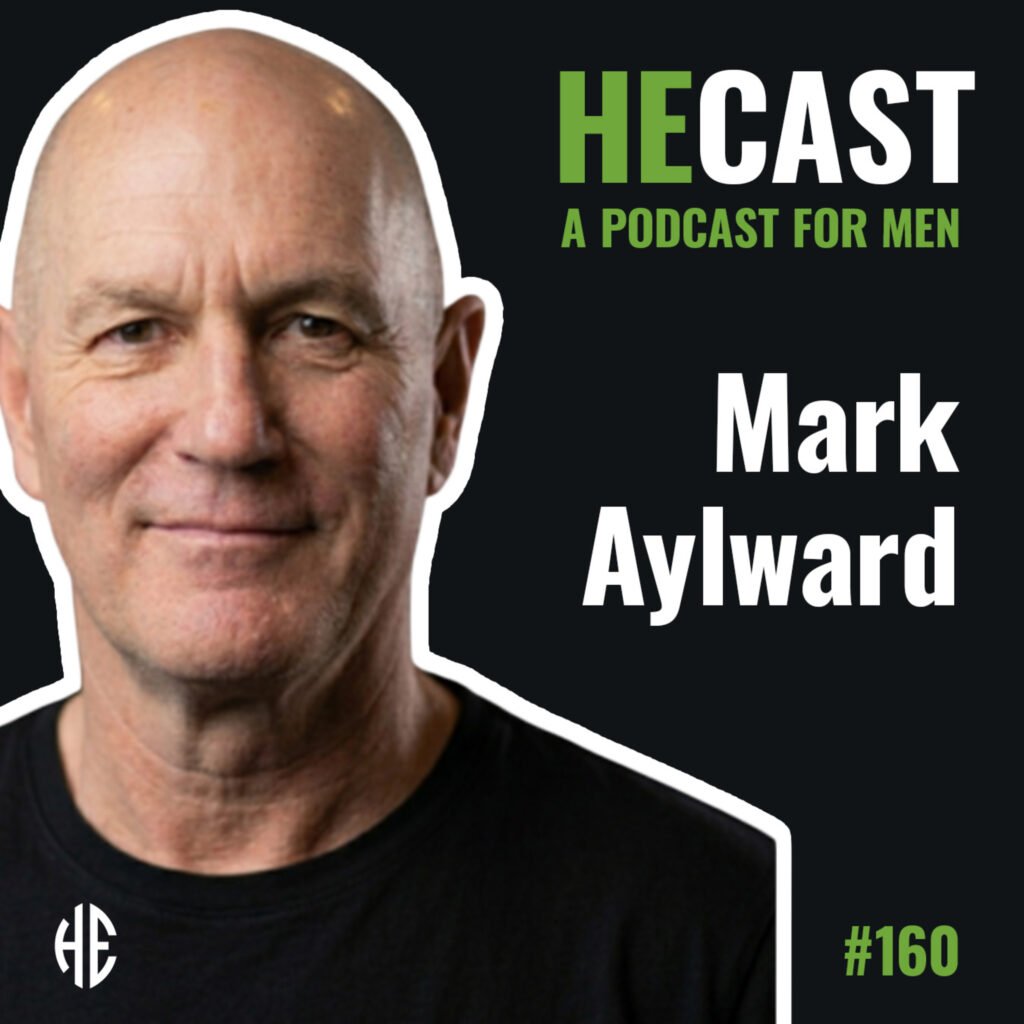
heCast Episode 160

Mark Aylward on Divorce, Accountability, and Rebuilding a Man’s Life

Season 4 01:10:02 May 6, 2026
Listen now 01:10:02
heCast Episode 160: Mark Aylward on Divorce, Accountability, and Rebuilding a Man’s Life

About this episode

Episode 160 of heCast features Mark Aylward in a grounded and powerful conversation about divorce, hardship, personal accountability, leadership, communication, and what it takes to rebuild your life when everything gets stripped back.

Mark Aylward is a father, entrepreneur, mentor, and coach who has spent more than 30 years helping people navigate career transitions and personal growth. After building and selling two successful staffing companies, Mark faced one of the most difficult chapters of his life: a long, painful divorce that forced him to fight for himself, his children, and his future. In this episode, Mike and Mark explore what adversity reveals about a man, how hardship can become a turning point, and why real leadership starts with leading yourself well.

Mike and Mark talk honestly about divorce, family court, self-representation, narcissistic patterns, communication, emotional resilience, and the difference between reacting from pain versus responding with clarity. They also explore Mark’s approach to helping men rebuild confidence, purpose, and direction through self-awareness, accountability, and practical daily action.

This episode is for men navigating divorce, major life resets, loss of identity, or the challenge of rebuilding after a season that tested everything. It is also for anyone looking for a more grounded conversation about leadership, resilience, and taking ownership of the life in front of you.

Listen to heCast, the official podcast of HeChangedIt.

Download the HeChangedIt app for more tools, content, and support on your mental wellness journey.

Read transcript

Transcript supplied via Spotify RSS.

Welcome to Heat cast, the official podcast of Heat changed

it. As always, I am Mike Chisholm.

As always, I am so excited to have conversations in the space

of men's mental Wellness. I love what it is that we do.

And, and thank you, by the way, if we've gotten a bunch of

recent feedback from people who are saying that the show is

helping shape perspectives and, and, and, and, and create

reflection for people. A reflection is something we're

going to talk about in this episode here.

As you know, I really love when we have different coaches of

different, you know, modalities on the show today.

We've got a guy who has specialized, he's been a

business coach and a career coach and whatnot, But he's

really, really moved into the space of, of, of helping guys

who have gone through or are going through divorces.

And, and, and the perspective that he has comes from an

experience that he went through. He went through a really, really

hard divorce with, you know, the kind of the kitchen thing sink

thrown at it as to the stuff he went through and, and, and has

come out on the other side in a, in a, in a very positive way and

has taken that experience and is using it to help others.

He's a he's a podcast host and a coach.

He and his Co host Jim host the imperfect men's club podcast,

the imperfect men's club podcast.

Boy, I think most of us can say we're members of that club

already. But also his name is Mark

Aylward. He has a coaching practice of

his own and we talk about all of that on the show here today.

I'll tell you this, lots of tangible things for guys who are

listening to this that are going through something that's not

necessarily divorce or anything like that.

I'm saying something. There are so many tangible

things to show. A couple things in this episode.

First off, you're not alone, OK? Don't think you are because we

all go through stuff right. So that's one of the things.

But second, there's a way out through and and and as Mark

talks about, I really appreciate his perspective.

He talks about stuff that is simple and and and free or cheap

ways to get moving in the right direction to improving your

life. I really appreciate the

conversation today. Please enjoy this episode of he

Cast featuring coach and post of the Imperfect Men's Club Podcast

Mark Ilward. OK, Mark, you know, I always

talk about how in the intro, you hear me talk about, you know,

I'm so excited to have these conversations around the space

of men's mental Wellness, and I am.

It's legitimate, every single one of these things, It's like a

Faberge egg to me. I love conversation.

I'm a relationship connection guy.

But man, when I looked at what you have done or what you're

doing now, I should say to literally, quite literally make

the world a better place specifically for men, you've

you've moved a coaching career into a very niche market and

that niche seems to be exactly the mission of what he changed.

It is I am so excited to talk to you today, specifically around

the idea of helping guys as they go through divorce, being

coached through some of these hard things.

But also it's a much bigger conversation than that.

As you know, Mark, I'm so excited to have you here.

Welcome to he cast today. Thank you, Mike.

It's a pleasure to be here. Thanks for having me.

Yeah, man, it's this is great. Now, now, at the end of the day,

I'm a big believer that we can take the stuff that goes on in

our life, no matter how heinous it might be and turn it into

something beautiful. There are guys who listen to

this right now who who have come to the he changed it world or or

listen to he cast literally as a last resort.

Maybe they got a loved one where, you know, they're

understanding that that person's, you know, warning

lights are going on or whatever. Hey, they're like, Hey, listen

to this or hey, look at this app, whatever.

Before we get into your story, before we get into what it is

that you do in your podcast and whatnot.

The encouragement that everything is temporary from

somebody who understands that at the same rock bottom that some

of these guys might be at right now, you can say that proof

positive as a testament that not only is everything temporary,

but you might think that everything is so bleak, but you

can find joy and you can find light on the other side.

And I want to start with that with you because you certainly

seem to have done that. The idea of taking lemons and

making them into lemonade seems to be your entire MO.

Let's go into that and then let's let's kind of unpack it a

little bit to talk about how you got to where you are and what

you do for people. Yeah, I, I would probably just

back that up and just say, you know, to me it's everything's a

choice, right? And, and, and everything, and,

and on top of that, I think that in my experience, it's been the

case that it's not about what happens to you.

It never has been about what happens to you because you don't

have any control over that for the most part.

It's about how you choose to respond to what happens to you.

And as cliche as that sounds, it's so true.

You know, I was just having a conversation with my son.

He was upset about something I said.

Dude, I see the lesson in this thing.

If you don't see it yet, keep looking.

Look harder, 'cause it's there, you know?

Yeah. And so, and, and I also think,

again, this is just my lived experience, that the only way

that I've ever failed at anything is, is that I've quit,

you know, and we all quit stuff. I mean, sometimes it's good to

quit certain things you're and that might be harder sometimes

than not quitting. But if you don't give up, you'll

get where you want to go. And it that's just true.

You know, you can argue that all day long, but at least for me,

it's been true. Well, and taking, like I say, a

coaching practice and, and you really do have a width and

breadth of experience that you could coach on a, on a, on a, on

a, on a lot of subjects, whether it comes to business and, and,

and and and perhaps mindset money and all that.

But to move it into divorce, I think you're really hitting

something where there are things with like what you just said

that many times won't be able to rectify themselves in men's

head, the idea of quitting versus not quitting.

And and and, you know, would I be happier on the other side?

Or is this a storm that we can persevere through?

And that is a really, really difficult precipice to stand

upon sometimes for guys out there when it comes to, you

know, arguably the most intimate relationship in their life.

Yeah, yeah. It's, you know, I, I certainly

had the benefit of being able to say, you know, I have to, I have

to take care of my kids here. I have to, I have to do

literally every moment of every day.

I have to consider the, the concept of what's in the best

interest of my children, the words that I use, the actions

that I take, showing up consistently.

You know, all the stuff that you would want to do for a loved one

or any kind of friend that you cared for is that that was kind

of my North Star. And that simplified everything.

Didn't make it easier, but it made it less complicated, if

that makes sense. Yeah, it does.

Like, OK, so, so again, going back to it, you know, do I quit?

Do I stay? Do I persevere?

Do I not, though? There's that.

And then what you just brought up is you brought something into

it where it was like, OK, the kids.

Because I mean, you know, I think about how I feel about my

stepsons. I feel about how I think about

how I feel about my granddaughter.

I do anything for them. And it's it's one of those

things where, you know, there's that cliche, oh, you never stay

together for just the kids kind of no problem.

Okay, next. No, it's way more complicated

than that. There are many times where I can

show you examples where, you know, staying together in a

miserable spot for the kids is preferable to the alternative.

And it's always nuanced. It's never black and white.

It's always Gray. So that's another choice that

there are guys who are in that place too.

But like, I love how you went back again.

It's a, you know, Mark Mattson, the subtle art of not giving a

fuck. You know, not everything is our

fault, but everything is our responsibility, including these

nuanced conversations. What I have found, though, when

you're in this, this, this, this place that does require the Gray

area, you are not alone is one of the most important things.

And having somebody who is there to kind of be a sounding board

for you. And again, not necessarily offer

advice, but perspective is an essential part of that.

That's kind of what your gig is now, right?

It is, it kind of always has been, you know, the, the ability

to get inside somebody's head with permission and really

understand where the opportunities are to, to help.

And, you know, I spent my career in the staffing space helping

people find better jobs, mostly as the owner operator of a

company. So I had that responsibility

too. But yeah, it's the same thing.

I remember walking around the courtroom like for 9 or 10

years, like on a monthly basis, and I would see guys sitting on

benches or standing up against walls and everyone was sad,

Everyone was anxious, everyone was scared and many of them were

angry. None of those emotions are good

for making big decisions. And I found myself, I found

myself walking up to guys and just saying, can I help you with

something? You look a little bit.

Do you need to know where something is?

Unfortunately, I know where everything in here is.

You know, if you need a room for some service.

But and they were so thankful, even if it was just a kind word

that that kind of stuck. And then as I sought out

resources to help me, what I found was two things.

One is I was guilty until proven innocent the whole time because

I was a guy. And that's a that's like the

1950s courtroom, right? They're stuck in the 50s.

And then, and then the other thing was there were no

resources for men to what something you said earlier, the

all the resources were for women, which is, which is great

for women, but it doesn't help men because I'm a big proponent

of the fact that men and women are very different.

And when I was younger, we used to celebrate those differences

and now we're trying to seemingly erase them, which I

think is bad for everybody, you know.

So I'll, I'll let you go. I don't want to go down that

rabbit hole. No, but the pendulum is well,

that's why he changed. It exists.

And I mean, you know, there's a she changed, it happened, they

changed, it happened. And, and at the end of the day,

if we can really understand who we are, and this goes way beyond

gender, if we can understand who we are as a human being, we can

comprehend who we are, what makes us tick, how we relate to

others on the highest of high levels, everything that the

bird's eye view, we're going to be a better member of our

collective community. But many times we don't do that

introspective work. And again, men, like you said, I

mean, if he change it exists. I mean, the topic that keeps

coming up over and over and over again is the idea of you're not

alone. Because so many guys think that

they are. They think they're the only one

that are going through what they're going through, whereas

they might be in a committed relationship or, or, or have a

lot of strong women around their lives.

They don't go through those crises at all because they're

hardwired to let that stuff out. And, and, and guys just aren't,

we talk about that all the time here.

So, so the idea of you being in these courtrooms and you know,

again, to, not, to, not to steal Thunder or, or to truncate your

story in any way. But you went through one of

these divorces that was long and it was bloody and it was awful

to the point where you were one of these guys that, that that

said the lawyers aren't helping. And you got the knowledge that

you needed to get and ended up representing yourself throughout

that whole thing. Not only that, you have then

taken all of these things that you learned along the way and

you're like literally broadcasting them for everybody,

which I think is beyond commendable In going through

that, The idea you just brought it back to you're not alone.

You see these guys who are in this place.

I love what you said about how these emotions are not a good

place to make decisions from. I I love that when you saw that,

like, was that really the tip of the spear showing them that,

hey, I see you and you're not alone.

Yeah, yeah. Well, the other thing that I

keep thinking about as you're talking is we don't we don't ask

for help. You know, men don't.

Back before the GPS days, we wouldn't ask for directions.

It's the same concept. Stereotype.

Yeah, Yeah. And it's stereotypes are

stereotypes for a reason. They're they're, they're mostly

true, you know, true to. Them for sure.

Yeah, and, and it another thing that strikes me is, you know, I

was thinking about this when I was creating some content

earlier today that my main mission right now, beyond just

what you're helping me with right now, which is awareness,

is can I trust this guy? You know, and if I how, how, how

do I determine whether I can trust this guy?

And that's why when you asked me at the beginning, the biggest

weapon I have is complete and total transparency, which

hopefully creates a level of authenticity.

I'm not hiding behind anything, right.

And, and the combination of there's three things I think the

staffing experience like investigating who people are so

that you can represent them as, as if you were them, right?

That's, that's how you do that job.

Well, it's a relationship business.

And then two of two of my 3 kids are dot or daughters, our

daughters and, and young women. And when they lost their mom,

like literally not speaking to her for 10 years, they, she

abandoned them and they're estranged as we speak.

So I took on the role of mother and father.

And so they taught me how to listen.

They taught me more empathy. They taught me how women think.

They taught me a lot of stuff that I don't think men in

general are, are present in that empathetic state.

The to the extent that women can do that, but I, I picked that up

and I've had a couple guys say to me, you have an empathy and

a, and a lack of judgement that most men don't bring to these

conversations. And I'm playing that's where it

comes from. You know, on top of the fact

that once you see how effective it is and how helpful it is, you

double down on it, right? Yeah, the the idea that you said

something there, I thought it was very, very interesting.

So in your mind, empathy is a skill.

It's something that can be taught.

It's like a skill. I think I had it, but we turned

up the volume. Yeah.

And I think it can be taught. I think most things can be

taught. That that's one of my adages

from the staffing spaces. I don't, I never hired for

credentials or experience. I hired for character because

you can teach almost everything else.

I'll see. There you go.

Including how to get out of, you know, situations that seem

impossible and restart and and all of that.

Take responsibility for where things are AT and then, and then

move forward. You know, do you like, I would

love if you did provide a little bit of background as to what you

went through? You know, I kind of set the

table a little bit and, and, and kind of gave broad strokes.

But, and again, we're not, it's not about burying an axe or

doing anything like that. There are guys, though, who are

going through significant struggle and, and, and, you

know, you were certainly one of those places, you know, you

alluded to it, the idea of, of, of, of a kid, you know, being

estranged from the one you called your wife, incredibly

complex stuff emotionally and, and, and, and, and you had to

kind of feel your way through it.

Not only that as you were going through the adversity of being

attacked. So, so, so could you maybe talk

a little bit about what you went through and then we'll talk

about what you did about it? Yeah.

So the entirety, you know, people like to ask me what

happened or when did it happen. I'm like, that's not how it

works. You know, it's, it evolves over

time. It's not a light switch that

turns on and off, but it started to be, she was going through

like a midlife crisis or something.

And I think it goes back to childhood trauma with her.

And if I were a psychologist, I could give you a diagnosis.

But I would say, you know, it was probably narcissism and

probably a number of other psychological things that when

it came time for her to say I got to work on my stuff, she did

not make that choice. She said, I'm just going to beat

the shit out of this guy and everything's his fault.

So that was a foreign thing to me for a long time because I

didn't grow up around that. I never met anybody like that.

I'd never met, at least I didn't think I'd ever met a narcissist

before, But and I'd never been a criminal.

I I was never a liar or a cheater or a stealer.

I never took advantage of other people with any malice.

So the whole thing was foreign to me and I filed for divorce

and because it was it was too much for my children, it was it

became clear to me that the only thing that you want from the

children is to cause me pain. And you don't seem to understand

that all that does is cause them pain.

And so really, really intense kind of reaction to that.

But when I served papers and she made my daughter answer the door

to to get served, she wouldn't do it herself.

I got escorted out of my house that night under a domestic

violence injunction that was completely fabricated.

It was a reaction to my filing papers.

And so I couldn't see my kids or talk to my kids for six weeks

until trial. And if I did, I would would have

been thrown in jail. And when I got to trial, the

judge figured it out pretty quick and dismissed it in about

5 minutes. And he said to me, you're free

to go back to your house right now, Mr. Ehl.

But I want to make something very clear.

If you do, one of two things is going to happen.

You're going to do or say the wrong thing.

She's going to call the police and you're going to go to jail

or you're going to do or say nothing and she's going to call

the police and you're going to go to jail.

Is that clear? I'm like, oh, shit, yeah,

unfortunately, that's clear. So, you know, and then it was

she went through six or seven attorneys, I think it was 7

because she would either fire them or they would quit because

she was an unreasonable human being.

And we had 6 judges. And, and every time I went into

the courtroom with a new judge, they would lead by saying, OK,

why are we here today? I'm like, you got to be fucking

kidding me. You didn't read anything.

You know, what are you coming off the golf course?

And I found that all these judges were older, and they were

just jaded. They'd seen so much of the

underbelly of humanity, and they'd seen so many people just

lying and cheating and stealing that they thought everybody did

that, and they didn't believe anything I said, and it had

nothing to do with me. And then the last judge was a

relatively younger woman and she actually was the only judge and

the first judge to, to actually sit down and think, now I'm, I'm

going to do everything we're going to do here is going to be

what's in the best interest of the children.

I thought to myself, Hallelujah, finally, you know, and then, you

know, I, we had, I, I, I, I was final that the first round in

2011 or 2007. And then I went back as my own

attorney to get custody and that came to conclusion in 2011 and I

and I got back pay and, and child support and alimony, which

was just, it wasn't a significant amount of money, but

it was a hell of a lot of fun. I got to chuckle out of that.

You know, that just pissed her off to no end.

And you know, my daughter's had run away from her years before

then they just took all their stuff that they could fit into

the truck and they drove over to my house and said we're not

going back. And even though she had 5050

custody, she kept getting her checks.

So she didn't really care and she never came after them.

So my son was left behind and he had told, apparently had told

her, 'cause I said, dude, come on over, let's just all live

together. And he said, Dad, I can't.

Mommy said if I leave her, she'll kill herself, you know,

so that that's the kind of thing she was capable of.

So you really don't have to tell too much more about her.

Anybody that's willing to do that is pretty much capable of

anything. And yeah, they're representing

myself was AI became very appreciative of the level of

detail and work that attorneys have to go through because it

was a it was a whirlwind of information and and and

learning. But yeah, the kids are great.

You know, they they are they struggle sometimes with the

anxiety that comes with just being abandoned by your mother.

That doesn't just go away. It resurfaces now and then.

But they're all very productive young adults.

And we ought we have a very strong.

I have a very strong relationship with all three of

them. So that's the divorce story, and

you can poke, poke at that. I appreciate that.

Well, yeah, I got lots of places to poke on that.

And so the, so you talk about the abandonment thing and we've

had, that's actually come up here on the show a couple of

times, the childhood trauma, you know, lowercase T, uppercase T

trauma stuff. But abandonment is one of those

subtle ones, you know, you, you, you toss it out there right now

like it is a known thing now that's for you and that's great.

Do they know that? Do they know that they actually

have abandonment issues and and and?

Does the awareness of that alone help?

Yeah, Yeah. That's a great question.

I think my daughters have both done significant internal work

with therapists and, you know, different holistic types of

health related things. We're all athletes and we

exercise a lot, we eat well. So we were supporting ourselves

within the things that we can control.

My son hasn't really addressed those issues.

If he looks and feels to the outside world, fine.

But he's a man, so he's stubborn about working on himself.

And in spite of the fact that I am who I am and and the girls

are who they are, he doesn't walk around all day struggling

with too much. But there's a few things that

you can tell frustration or anger or anxiety that creep in.

I'm like, dude, I think you got to, you got to go find out where

those things are and you got to kind of caress him a little bit.

Otherwise you're going to have that hanging over you for for

the rest of your life. But but to some extent, Mike, as

you know, we all have things dangling over.

Nobody's fixing everything. Nobody's perfect.

We're all, that's why we called it the Imperfect Men's Club for

our podcast. It's like the imperfection is in

fact the perfection, you know so.

I love that. And, and, and you know, you're

talking about your son there. And it's, that's the second time

that when, when, when talking about parenting at this stage,

you know, because we all know, well, most of us know, if we, if

we haven't become aware of it, you know, the moment I say it,

it'll be an aha moment, then we all know the kids become parent

deaf, you know, early on in many, many respects.

And, and that parent deafness can has a scale of, of, of where

it can be versus the actual, you know, listening.

And, and I love one of the things that you said earlier

when you were talking about your son, say, Hey, you know, can you

see the lesson in this right? Yet, you know, the idea of not

trying to, you know, strong arm it and force it down the throat

as a, as a, as a dad, how we can do that, you know, but it's,

it's, it's, it's more of an invitation for exploration.

If they choose to go down that path, they can go down that

path, But you're also giving room for him to, you know,

figure things out on his own and, and, and also letting him

know, you know, I have some insight here if you want to hear

it, but you're going to have to ask for it kind of a thing.

I, I think that's a delicate balance.

And and I love, I love that that the way that you, you know,

you're for you. You talk about that.

Clearly that's the version of our self that we want to be.

Sometimes tougher when you're in the moment with these creatures

that were more emotional about than anything, right?

Very much so, yeah. You know, it's, it's one of the

reasons I think I can be more of most effective with men that

are, you know, strangers to me at, at the introduction, because

I bring an objectivity to a situation that's completely

emotional. And when you're to to what I

said earlier, when you're emotional, one of the things I

teach in my staffing space, my coaching space, that's just

salesmanship is you know, is you know, you can, you can look at

things however you want to look at them.

And you know, being being able to when you're, when you

encounter something that makes you emotional, negatively

emotional, angry, anxious, frustrated, the best thing you

can do. My dad taught this to me from

the perspective of a fighter pilot, an airline pilot.

What do you do when an engine catches on fire?

I don't know, dad, what do you do?

Nothing. You pause and you allow yourself

to regain your objectivity. And then most of us, when we get

back to objective, we have the rule book, we have the handbook,

we have the employee handbook, we have the the documentation.

It's there in our heads. We learned it a long time ago.

But you have to allow yourself to get back to that.

Otherwise you're just lashing out.

And I certainly did a lot of that as I learned about all

this, you know? Yeah, I want to go back before

we go too far away from it to something else that I want to

poke at. When it comes to your story, you

talk about the idea of your realization that you know,

you're with somebody who doesn't have the same.

And again, I just try and be, as you know, we don't want to be at

a space where we're burying other people and things like

that. But at the same time, it's

objectivity and, and, and, and you know, you've got somebody

who you're realizing, you have a realization that they aren't

maybe capable. Use the, the N word.

That's, that's been everywhere, the narcissist, you know, word

that, that, that you, you realize you're with somebody

that doesn't have the same kind of empathy towards others as you

know, and the behavior is there and you realize what they're

capable of. There are guys right now who are

kind of grappling with that realization where they're at as

their life is moving at 100 miles an hour and they're trying

to be the provider and they're trying to be the parent and,

and, and things like that are happening.

Was that a realization that was kind of a slap in the face, you

know, a bucket of cold water? Or was it something that you

were realizing over time? And for guys who are in that

situation, you know, do you have any perspective?

Well, I was my own worst enemy for a while because of and I

think naivete is probably a good word.

You know, these are things I didn't want to believe.

These are things I had no experience with.

And you, you're really. So it wasn't a slap in the face

as much as it was an an occasional dude.

You know, I remember saying to my younger brother one time, I

can't believe she did this or I can't believe she said that.

And he's like, hey, man, at least she's consistent.

There's no surprises here. And I'm like, that's a that's a

really good perspective. Thank, thank.

Thank you for saying that. Yeah.

You know, so it, it's, it's hindsight's 2020, right?

I, I think, I think it goes back to that.

But yeah, no, it wasn't a slap in the face.

It was AI mean filing for divorce was the hardest thing

I've ever done. I'm I, I was raised Catholic.

I am practicing Catholic. I'm a faithful guy.

I don't believe in divorce and and I didn't, you know, I

thought it was going to hurt my children, but it actually helped

them. Remember saying to a guy a

couple weeks ago going through something very similar, my heart

goes out to the guy. And I just said, you know, I got

to stop the conversation for a SEC.

Joe. And I want to tell you one

thing. Your kids are kids are a lot

stronger than you think they are.

And you're not going to do anything if you stay

well-intentioned and try to maintain a level of objectivity,

no matter what happens, they're going to be OK.

I can almost promise you that. And he started crying.

It was that important. And I just said, how about it,

man? I get it.

I get it. I was so worried about my kids

for so long. And I did.

I had a friend of mine, the only friend of mine that doesn't have

his own kids, ironically, one day said to me, where you what's

up today? I got, I'm going to court.

He goes, how come? He goes, I'm I'm going to fight

for my son. He goes, why I go, what do you

mean why he's my son. He goes, doesn't it take two

people to fight and and one of them stops?

Doesn't the fight? Isn't that end the fight?

Oh wow. And I'm like, holy shit, out of

the mouths of single guys with no kids, you know, we'll talk

about. Objectivity, right?

You know right? No dog in that fight.

Yeah. So it changed my, it changed my

outlook, it changed my attitude. And I have to say that it

contributed to the expediting of the the final trial.

How much? Who knows that it would be?

Speculation OK, hold on let's let's poke that for a second

because like that OK, so we all have these light bulb moments.

I love the light bulb moments is one of the reasons I get so damn

excited about this show is because I get light bulb moments

all the time and and I kind of addicted to it.

I love I love those those moments.

I think you just said one, the idea of, OK, well, why are you

fighting for your son? So basically that's a reframe in

my mind. What he's getting you to do is

reframe what it is that you're doing.

So, so and and that is a powerful tool.

It's like what you just said about the pilot with the engine

on fire, right? You take a pause, right?

And what are you doing? You're reframing, you're

reframing priorities. You're reframing what to do.

He did that for you just by saying I'm going to go fight for

my son, which like Mark, that sounds noble to go and say I'm

going to fight for my son. And perhaps that's part of the

folly of it is it sounds like it's duty.

It feels and feeds into that, that, that that primal

masculinity that we do have. But I'm curious about what the

reframe was. Because at the end of the day,

you're going to court. You're going to what what, what

did it become in your mind? Did it be, if you were to look

back now and change the word from fight, would it be advocate

would be would it be what would the what would what was that

reframe like? Yeah, well, you know, I

continued. It's not like I stopped doing

the right thing. It's not like.

Exactly the process is the same I.

Continued to try and model behavior, be consistent, be

available, be present, all. I didn't stop any of that stuff,

but it was kind of like this is energizing her.

This is my feeding, my fight, my fighting back is giving her

energy. It's not dissuading her.

And you know, one would normally think, you know, if I push back

on somebody, it will dissuade them from doing whatever it is

they're doing. Mostly that's true, but not in

this case. And it was so I was so close to

it that I couldn't see that, even though now saying it in

hindsight, it sounds so obvious as all hindsight does, right?

Sure. But I, I decided that his point

was just that if you stop feeding her energy, then she'll

have less energy to do whatever she wants to do to you.

And that was just true. So that was the reframe.

It was your you. You think that you're fighting,

but all you're doing is feeding her negative energy.

Yeah. Oh, I love that.

OK, thank you very much for, again, I'm gonna go broad to

like, thank you very much for taking these things that you've

gone through. I'm I'm certain it's therapeutic

for yourself as well to get it out there.

It was a lot of strife. Long time of a part of your

life. It changed your entire business.

You know, like, like, again, not to put words in or to, to, to

get out there, but you are very transparent with your story.

You know, this is one of those ones where you she came after

you, your character, your business, all of that stuff and

and and sent a whole bunch of things crashing down for you.

But here you are on the other side of it, not only doing well,

but teaching people how to get through what they've gone

through. Again, this is exactly what he

changed. It is all about the idea that we

that we come to a place where we can take something that we need

and leave something that we know.

And that is that is vulnerability.

Let's go back to the directions for a second because I think

it's an important point because there's a lot of guys out there

who are afraid to ask for directions.

I'm quoting for those who are listening right into the air

quotes thing. There's a lot of guys who are

afraid to talk about what it is that they're going through,

right? But again, when somebody comes

and asks you for directions, if you're in a good space, you're

not, You know, you're in a decent mindset.

It's a pleasure to do that. It's a pleasure to help people.

And that's vulnerability. It's an exchange of

vulnerability. But the person who's in need for

some reason is more apartment many times to continually just

looking around, trying to figure it out for themselves when the

shortcut to where they want to get to is literally asking for

those directions reciprocally. The person who does that, who

gives the directions loves that. Is that your entire life right

now? Like have you based your

basically your entire life around this right now?

Yeah, you know, I remember. It makes me think of the first

placement I made when I was 26 years old.

It was a guy and he was a single dad with three young boys and he

was about to lose his his house because he'd been out of work

for so long. And I found him a job and he

said, Mark, you saved my life. And I thought, this is what God

wants me to do. You know, I'm getting emotional

just talking about. Yeah, pouring into others, man.

Like it's a great thing. There's nothing like it.

There's just nothing like it. So sorry about that, the

emotional stint there. But yeah, no, it's, it's and

then, you know, coming out the other side of this, you know,

I'm like, for instance, I'm writing a book, it's called No

One's Coming. And it talks about the feminist

movement and the the rising of that in the 60s and 70s.

And the notion that, you know, we had that conversation and

everyone kind of said, well, that sounds like a good idea,

having women have the same rights as men.

But we never had the conversation with the men to

say, this is what this is going to mean for you.

And so the men were all left alone to figure that out on

their own. And the first time some guy

opened the door for a woman and she yelled at him, I don't need

your help. I can do that myself.

He's like, what the fuck is going on here?

You know? And so I still don't think we've

had that conversation. So I'm having that conversation

in the book and wrapping my story around it because I think

it's relevant. I think it's I think it's

important. And having two daughters and I

have now been in a relationship with a woman for seven years.

So I didn't, I didn't lose my appreciation for the, for the,

the, the sweet female gender. But it's, you know, we didn't

have that conversation. I think it part, I think it's

part of the reason guys don't feel comfortable emoting.

I think it's part of the reason guys don't ask for help.

It's part of the reason guys are like, I'm not sure what I'm

supposed to say here, what I'm supposed to do, and I'm being

judged. And I think it's feels, it feels

unfair. But I don't have any defense, I

don't have any. I don't have any ammunition, I

don't have any plan. And so I think that's confusing

everyone personally. Absolutely.

You know, it's fun. I've never had like I've I've

seen tastes of what you're talking about.

You know, you certainly see it in the media.

And I think that that's a skewed if, if that's where we're

getting our cues from, it's, it's very skewed.

I, I, I, I often wonder what I would do or say if I tried to

open a door for a woman. And I got that response because

at the end of the day, politeness and courtesy and

citizenship, I like to think that I also, I wouldn't just

open a door for a pretty girl that walked by.

I would open a door for a dude that was walking by.

I would open the door for somebody who was holding three

pies in their arms. And, and, and it's just, it's

courtesy and, and, and whatnot, you know, the idea of chivalry

and the idea that that is changing.

Really at the end of the day, we need more words.

Let's explore these things, like you said, let's talk about these

things. And so the book you're writing,

that's a, that's a really noble subject to talk about and to get

discussions going. That's clearly what you are good

at. We can get into.

I want to get into your coaching practice.

I want to get into the real framework that you help people

with. And and and, and, but I want to

talk about the podcast for a second because as a, as a fellow

podcaster, you know, you know, the joy that comes from it.

Obviously we have different, we have a different vantage points

in how we do it because I don't have a Co host the imperfect

men's club. I listen to you and Jim and you

go back and forth and, and, and the way that you guys interact

with each other, clearly different perspectives on life.

There's no question that you 2 are, are not, you know, you're

not just in the same agreement club with each other and just

enjoying agreeing with each other.

You're very different guys. But at the same time, the

mandate that you both have to improve other people's lives.

You know, let's just do a real quick.

How did it come about and and what are some of the things that

you've learned hosting the Imperfect Men's Club?

Yeah. So it's probably 5 or 6 years

ago now, Jim. I was working in a in a

different capacity. I've always had kind of multiple

streams of income. I've always been kind of that

guy, but they're all related. It's helping other people in

some capacity. And I was working with an

organization that had a solution to help people process

subconscious trauma. And interestingly enough, in

your world, kind of and. Was it a psychedelic?

No, it wasn't a psychedelic. It was a, it was kind of a, it

was an equivalent to what is out there now called rapid

resolution therapy. It's the acknowledgement that,

yeah, the acknowledgement that 95% of what we think, say and do

we're doing subconsciously. And so if we haven't harnessed

whatever's going on in our subconscious, then it will

continue to traumatize us. And your, your comment about the

big T, small T was a thing. So it doesn't matter whether

it's a big T or a small T, it can still be a thorn in your

side, whatever that might mean to you.

So anyway, Long story short, Jim calls in, he finds us and he

calls in. And I answered the call cuz that

was my role. I was the, the front man cuz I

had the ability to have conversations pretty well about

this kind of stuff cuz I'd lived, I was playing with it my

whole life in some capacity, whether it was staffing or

fatherhood or divorce or whatever.

Anyway, he called in and we just started talking and I just

started asking him a bunch of questions because that's how you

have a good conversation is you ask good questions.

And he asked me one question that was very scientific or

medical. And I said, you know, Jim, I

don't know the answer to that, but I'll talk to the doctor and

let me write the question down. I'll talk to the doctor.

I'll come back to you with what he said and that in his mind

he'll tell you that's the moment he said, I really like this guy.

He's an honest man and I can trust him.

And we just that opened up his he just kind of hugged me in

from that moment on. And he stuck around an extra day

after he came to Orlando. He's from California for some

some face to face treatment, if you will.

That's that's not the right word, but it'll suffice.

And. Then we went out to.

Dinner. In person treatment.

Yeah. And, and, and we went to dinner

and we started finding out that we both were interested in, you

know, this whole idea of, of what men go through.

And he was in a position, and he'll tell you this of, of a

little bit of desperation because he had been getting a

little depression was creeping in.

And it was attributed to the fact that he was a professional

rugby player and had probably 30 or 40 concussions during his

lifetime. And it was the whole NFL

football, you know, issue and he was scared and he wasn't willing

to admit any of that at that moment.

And the other thing that's come over the years.

And then we, we just started the podcast.

My daughter, my eldest daughter was in that business.

So she helped us get it off the ground with some graphics and

music and editing. We put 5 episodes in the can,

didn't really know what we were doing and then my daughter got

busy and said that I can't help you anymore.

I got these clients over here that are paying me lots of money

and I got to go. I said that's fine honey, go and

we were stuck. And so we stopped for a SEC and

then I kept thinking to myself, what if we just didn't edit

anything? What if we didn't use music?

What if we took away all the work that we can't do?

Would it still be interesting and effective?

And we discovered that it likely would matter of fact, the

rawness of it, the authenticity of it might be its best asset.

And so I would, I would defer to your opinion on that as a

listener. But I think we're getting

better. I think we're having more fun.

And Jim has come out of Jim has come out of his shell.

He did not want to talk about women.

He did not want to talk about neurodiversity.

He's, he is dyslexic and dysgraphic and his whole

childhood wrapped around the, the, the idea that people

thought he was stupid and he was made fun of.

So he started fighting and he got into football and rugby to,

to channel that aggression. And now when he steps up on a

stage, he leads with his story of neurodiversity.

So it's really cool, you know, it's really.

Cool. I love that you just told me

that last part because if you listen to any of the, you know,

most recent episodes, and I've listened to a bunch that that is

shocking. That is absolutely shocking

because it is, he wears it like, but it's again, one of those

things when we're unfamiliar with something, you know, and it

could be anything like like the situation that guys are in right

now, for example, if they're in a, in a hard relationship or a

hard situation, when you're unfamiliar with it, you want to

kind of, you know, hug it in and, and, and, and get personal

about it and maybe even procrastinate or, or or

whatever. But the moment you start delving

into these things, well, then it goes the exact reciprocal.

You start flipping around and going, no, no, no, hold on,

let's talk about this. Let's get up.

Because again, once you start, you know, once you start kicking

up the dirt, let's see what's under the surface.

And, and that's clearly what he has done, knowing that that's

where he came from. That is very, very interesting.

I'd love to have him as a guest on, on on Ecast as well.

Because again, having you as Co hosts, it would become very

evident very quickly for people who have listened to both yours

and his episode, how different you 2 are.

But at the same time, the similarities that we have, you

know, the, the talking about the differences that we have is the

one thing that gives us these different perspectives.

Just like the single guy who was able to give you a tremendous

light bulb moment with your, with your son.

So the imperfect men's club, you guys are doing it for the

further mint of, of, of of, you know, you're scratching itches

At the same time, things that are inside.

You get through 5 episodes and, and, and, and the infrastructure

goes away and suddenly you're like, well, no, we like this.

We're going to hold on to it. We're going to re face.

You asked my opinion on things. I'm a big fan of long form.

You know, like a lot of people who've listened to the show know

that I'm a, I'm a huge David Letterman guy.

I'm the host of the Letterman podcast.

That's the other that's my other show that I have.

And one of the things I love about Dave is that when he had

his, the original late night talk show, he would go on 8-9

minutes with people. But who influenced him?

Guys like Tom Snyder? Tom Snyder was what did they

have? They had a black background.

Charlie Rose, what do they have? Black background?

You know, 3 camera angles basically, you know, the long

shot and then the two personal shots and it was just a long

form conversation. Why is the number one

broadcasting platform on the planet or broadcaster, I should

say, Joe Rogan, right? How long are his episodes?

Three, 3 1/2 hours. They're, I think there's a

hunger out there. They're obviously there's a

hunger on the other side. You look at where TikTok is and

instant, quick, quick, quick, quick, quick, the algorithm.

But to me that algorithm is, is, is hypnotizing us when it's us

being us. I believe long form is the way

to go. And the conversations that you 2

have are, are are, are beautiful.

They're dynamic. The back and forth is really,

really lovely. The perspective difference is

awesome, but they're all chocked full of, of, of information.

I, I want to give an example here because really at the end

of the day, you base your podcast around 5 things and,

and, and you go through those five things seemingly at

different times, at different topics.

But could you go through the five things really quick and,

and talk about those, talk about that?

Because there's a lot of guys who, when they hear this,

there's going to be light bulb moments.

You even just explaining the five things.

Yeah. So it's the idea that life is is

easily carved up into five areas and and we particularly men,

have a tendency to focus all our energy in one at a time to the

neglect of the other four. And what we've discovered, we've

all discovered this. I suppose we just need to be

reminded of it now and then is if you're all in on your career,

then your relationship's going to suffer, your health's

probably going to suffer your, your money situation might be

OK, but it's just money, right? So your, your, your view of

these things. And, and you know, one of the

things I do in the morning in my, in my journaling exercise is

I put these five things down on a piece of paper and say, just

give some love to each of the five today and don't neglect any

of them. Because if you make the mistake

of going all in on the one, the other four will suffer every

time. And that's just for all of us.

And it's, it's money, worldview, health, mental and physical

career or your, or your life's work and your relationships with

other people. And so, and, and what we do is

I, I used to do it. We don't use our video.

It's just an audio podcast, but I used to put on my hand and

say, there's the five right there.

And right in the middle here is yourself is your ego.

And everything is driven from here.

And then Jim started developing this list.

I think it's over 40 now. Self reflection, self,

self-awareness, I suppose, is first, which leads to self

reflection. And then it's, you know,

self-discipline, self accountability.

It, it's he has a whole list of self hyphen words and they

typically become the topics of, of episodes.

And then we, we kind of tell stories around all 5 areas of

our lives and how they're impacted.

So that's, that's it in a nutshell.

You know, I think the most important thing is that we, we

all men and women, humans have a tendency to go all in and lose

sight of the other things. We'll neglect our relationships,

or we'll neglect our sleep, or we'll neglect our health, or we

just want to get food in our belly so we'll eat shit instead

of good food. And it's just like you, you just

keep taking these moves, neglecting 3 or 4 of the five

areas. And before you know it, you

know, you're 40 lbs overweight or you're got some chronic

disease or your wife's leaving you, or, you know, it's just,

it's just the same for all of us.

And, and the balance approach is I think where it's at.

I think that's one of the secrets to life is balance,

right? Not too much of anything, but

not too little of anything either, if that makes sense.

Oh, God, are you kidding me? It makes such perfect clarity.

It's so clear. Let's one of the things I love

about you guys, you're able to you talk about deep subjects,

but you're able to really simplify them and make them, you

know, make them very, very clear.

You like, I'm listening to you right now and I know I'll tell

you this. There's a lot of guys out there

who have heard, oh, you should journal.

You should journal and people should all over them.

And they say, OK, yeah, you should journal.

At the end of the day, the times of my life is going the best are

the times that I'm journaling. And I've got a good, I've got a

good, you know, relationship with journaling Guys don't know

what to do, you know, you know, and there's different ways to do

it. OK, If every morning you took 15

minutes and you wrote down the word career, what can I do for

my career today? I'm going to call these clients.

I'm going to get this paperwork done.

I'm going to I'm going to have the best attitude when I walk

into work today, no matter what, if I'm dealing with that person,

OK, great worldview. I am not going to be I am not

going to be affected by the polarization today.

Whenever I see polarization, I'm going to laugh, you know,

relationships. I'm going to make sure I text

all of my kids today. I'm going to make sure that I

asked my wife without my phone in here.

I'm going to do this. OK, health, you know, I'm

journaling right now and I'm going to go for a run later.

Great. And, and, and money, you know,

I'm going to pay that bill off today because it's going to feel

good to do it even though it's two weeks early.

You know, if somebody did that every day, if somebody did that

every single day, imagine what the cumulative effect would be

after three days, five days a week, a month.

Do that for a month and see where your life is going to be

at that point. What a powerful, powerful intro

to the world of journaling. You don't need to go.

And so many times we complicate things so much.

What a clear way of showing somebody how to put some

direction back in their life. That's a well you.

Know you would ask me about my framework, the real framework

and generally is definitely I mean I have all these tools that

you know when I say tools I've I've borrowed them or stolen

them or repurposed them. You know I joke with people all

the time in the career space. Plagiarism ends when you get out

of school, OK, the rest of your life you're you're plagiarizing

everything for the rest of your life.

There's nothing there's no reason to make anything new up

you just relearn things. One of my favorite phrases is we

have to be reminded way more often than we need to be taught

new things. It's mostly reminding people.

And so all of the tools that I use are all of them are either

free or cheap. They don't require much time.

So they're easily consumable on a consistent basis over a long

period of time, which is how you gain any worthwhile traction in

anything. Little tiny bits, little tiny

steps over long periods of time. I enjoy them, which is a, you

know, like if I didn't like to ride a bike, then I would walk.

If I didn't like to walk, I would swim.

Find something you look forward to that you can do in a short

period of time that is, that is impactful.

And then just kind of bunch them up.

Like my journaling practice is part of I, I precede that with

prayer and I precede that with breath work.

And then after it's all over, I throw some exercise and I'll go

for a walk or I'll go out in the yard and, and just hack stuff up

for an hour and sweat, you know, So, you know, and I made a job.

I was an athlete my whole life. I was in the weight room most of

my young life, but I don't do that anymore.

I can't, I can't jog anymore. My body won't let me, but I

walk, you know, and I have a bike and I like to swim in the

ocean and, you know, get out in the sun for 5 minutes in the

morning. Everybody knows this stuff, you

know, I just think that maybe what I do is I make it more

accessible. I make it easier to understand.

And I don't, you know, I tell people in the marketing side of

what I do. If you're looking for a quick

fix, that's not how this works, you know, So you, you, you don't

go to the gym and do 900 sit ups and get a six pack.

You go to the gym everyday for about 90 days and you do 5 and

the first day and then you work your way up to 10/15/20,

whatever. And don't look in the mirror for

three months. You'll just discourage yourself,

you know, So it's just a perspective, you know, and, and

it's so those things are all part of what I deliver to my

clients because those are the things that you can take with

you. When we're done, right, that

will sustain everything, right? Because most of most of us fail

in our New Year's resolutions because of the sustainability

challenge. And it's usually because we take

on too many things that are too hard or too expensive and we

give up on them too early. So make them simpler, make them

easier, make them free, you know, and and and recognize that

we're not taking a look at the progress we're making for a few

months, right. And so, you know, that's kind of

it's it's nice that we segwayed into that, because I think

that's part of the reason what I do is so effective.

It's simple. Well, and that's, that's where I

want to go because I mean, at the end of the day, you know,

the podcast and if we, if we do ever have Jim on here, we can

talk about what he does. But but the idea of you 2 taking

what it is that you your viewpoints of the world, but

also what you do and kind of taking those things and

amalgamating them into one show and then being able to mix it up

and and, and and and give for the benefit of of, you know,

yourselves, but others, you know, it's it's it's like you're

taking these very productive conversations that you would be

having anyway with somebody you have synergy with and you're

using it to benefit everybody else.

That's what it feels like. That's the raw part.

I love that. Yeah, but then let's go to you

know, and, and, and we can find you on Mark L word L word.com,

right? And, and, and, and your

practice. I want to go into the real, you

know, and, and for anybody who wants to go in there and get an

assessment, I love that there's, there's, you know, you're

willing to do that. But, but the idea of when you go

down the site and you see how many times you talk about, you

know, the real framework, REAL, it's an acronym.

Can you talk about real and what it means?

Yeah. And just to remind me, I want to

get Jim whatever link he needs to get in touch with you guys so

you can invite. Him, we'll get Joel.

Oh yeah, just to send Joel the e-mail.

Joel's a master at that. We'll, we'll, we'll get in touch

for sure. He'd love, he'd love to come on

and talk to you. Yeah, I, I recognize actually,

Jim helped me with this. The, the idea of frameworks.

I think the way that his mind works, which is fascinating.

I mean, I love his neurodivergence is, is so much a

part of the fun of our conversation.

And we tease each other. And if there's big words that

need to be pronounced, I'm the one who pronounces them.

If, if writing needs to happen, I I'm the one who writes.

He thinks differently, like it's cool, but he he loves frameworks

because it allows his brain to organize things in a way that he

needs in order to access his intellect.

And he's a very bright guy. So that was I resisted

frameworks because I've always resisted structure.

I've always been more of a shoot from the hip kind of guy.

Like when you said we're not going to have any structure to

the show. I'm like, that's a blessing to

me because scripting me is, is, is the way to make me completely

uninteresting. And so I, the idea of I just

kept listening to this good friend of mine talk about

frameworks and he kept bringing them up in conversations.

And I'm like, I think I might have to do that because I think

maybe less for me, but in order for the outside world to say,

oh, I can see now what Mark does and how he does it because it's

in a framework, right? So that was the impetus behind

the notion of developing A framework.

And then I said, well, back to my recruiting days.

How do I begin a conversation with a prospect?

How do I get this prospect? And I start asking and

questions, Well, what is that? What's another word for that?

Well, that's reflection. We're reflecting on on life.

What's important to you? What do you like?

Why are you doing what you're doing?

What do you want to do? What would you rather do?

Why would you rather do it? It's a really, it's like, you

know what it is? It's how you prompt AI.

And so when I got into AI, I'm like, I'm just being a recruiter

here. I'm just probing with with

prompts, with questions. Why do you say that?

Say that again, What do you mean by that?

Right. Getting people to really open

up. So reflection is, I think it's

how you start any move into a better direction because

reflecting on things, being self aware and then rolling into the

idea that I'm, I am personally accountable for all this.

I'm in control of this stuff. This is my stuff.

It's it's internal. It's not external circumstance.

It's not other people. This is go inside and see what's

in there. You might not like everything,

and that's OK. You don't have to fix

everything. You just have the first thing

you have to do is know what's going on.

Right. Can I say something about that,

though? Yeah, Yeah.

We live in a society again. What is the number one social

media platform out there now? It's TikTok.

And I mean, to me, these things are the they, they distract us

from doing exactly what you do. I think there's a lot of guys

who don't know who they are because.

And never mind have been taught how to do this.

But we live in a society right now that doesn't encourage

reflection, does it? No, 100%.

And it's all the more reason that it's so important.

And I give part of what I do for sure, it's always been the case

is give people permission, like in the career space, permission

to dream bigger, right? Just because you're a project

manager in the healthcare space doesn't mean the next job has to

be project management in the healthcare space.

Because I'll tell you from experience, 80 to 90% of your

skills are transferable to any job.

So knock that shit off right away.

That cracks open people's craniums that sometimes that's

all I have to do. Holy shit, Mark, thank you so

much. I never like I was.

I became a doctor because my dad wanted me to become a doctor.

Like, that was 40 years ago, right?

So there's so many other good things you could do for humanity

as an experienced Dr. that don't require you to be a doctor in

performance. So anyway.

Can we go back to, you're not alone like again, going back to

the, the, the journaling, those five things, how easy it is with

your techniques, with people are not techniques, but the things

that you offer them free, free stuff, right?

But you're bringing the idea that you jumped in the rowboat

with them. They're not alone.

And that part, the permission part is basically just to say,

no, no, no, it's OK. You're going in the right

direction in doing this journaling, you're doing the

you're, you know, showing that that reassurance, it goes back

to how we started this whole damn thing.

You're not alone. And so so anyway, yeah, that's a

tangent, but let's, what's the E?

So our reflection what's the E? Yeah.

Well, once you've done some significant reflection and

you've gotten all this stuff down on paper or whatever you

write with doesn't matter, now it's time to evaluate.

Now it's time to evaluate, OK, what are we looking at here?

And, and what let's just kind of knock back and forth in a

similar way that we reflected, but let's just shift to

evaluation. And that's, that begins the

ranking process. Perhaps maybe like what's in

ranking of importance, ranking of impact, ranking of legacy,

ranking it what, whatever it is that you want out of the rest of

your life. Let's start to evaluate all of

this self reflection work and then that leads into action or

activate. So now it's go.

Now I have to make choices because there's only so much

time in a day. So all of these continue the

process of evaluation. All of them continue the process

of reflection and activation. But now it's done with all of

this context, right? And probably the most important

thing, Mike, in my observation out of those first three are

this idea that, you know, your values are now going to start to

align with your actions and your words.

And most of us aren't aligned, myself included, all the time.

My words sometimes are inconsistent with my actions.

My actions are inconsistent with my values because just as a, for

instance, well, let's just say one of your values is integrity,

right? You ever lied to anybody?

OK, well, you're out of alignment there, aren't you?

You know, so it's, it's not a, it's something that you're never

done with. But once you get in the habit of

doing those three things, then you have something that you can

go back to. It's like my dad told me about

religion when I questioned him when I was 17.

He said, no, you question your faith, Mark, you question

everything. That's how your faith gets

stronger, right? And so that's the activation.

And the activation produces a, A to do list, if you will, a, a, a

priority. There's, there's bigger, longer

term things, there's midterm things and then there's things

you can do today, right? And their combination one leads

to the leads to the next. Speaking of leadership, that's

the L and to lead and and I think that.

Like you've done this before. It's like, it's like you've

explained it once or twice that. Just that's just rolled out of

my mouth. I'll take no credit for that at

all, but leadership's been a whole part of my life.

I mean, I was the captain of my Little League team.

I was the captain of all my sports teams.

I was the owner of the company. I was the dad.

And my dad was a leader, is a leader.

He's 97 and he's still driving his own car and not taking any

medication. Yeah.

So quite a an exceptional example.

But leadership from the perspective of the first thing

you need to do is lead yourself. And so we're going to reach back

into our reflection. We're going to reach back into

our evaluation and we're going to reach back into our

activation and say, what are these things?

Which of these things would be consistent with me leading

myself, you know, modeling behavior, looking for

consistencies. I used to tell my kids when they

were confused in the middle of the shit you can.

The truth lies where actions and words are the same.

That's where you'll find integrity.

So whether you're judging me or your mom or your teacher or your

coach, are they are the words coming out of their mouth

consistent with the actions that they're taking.

That's where integrity lies most of the time.

It's not 100%, but it's it's really good simple formula.

And then? The idea of leading yourself.

Now hold on, I gotta, I gotta poke that.

For a second. Because like again, we got guys

who are listening to this right now.

And you think about the, you know, some people would call it

the fragile male ego, whatever you want to call it.

I think that masculinity many times has a tie to leadership.

And, and, and there are guys who are aching to be a leader and

they have been handcuffed. They're not in a place where

they're able to lead. They're not a leader in their

household, but because it might be because of what's going on

out there. And like you say, the merging

of, of, of, of what the male identity is with something else

and, and the questioning of that.

And so you got people who are confuse and confuse people many

times will be like stagnant water and stagnant water usually

isn't good for anything except for breeding bad things.

So, so you know, and and so you think about leadership.

If we're a guy that has leadership inside of us, that is

stagnant, that has been quelled, that has been pushed down,

identity has been pushed away, you just hit a hard, hard

triple, if not a home run for guys who are in that place.

You start by leading yourself. And, and, and really, if you're

doing these evaluations, if you're reflecting, if you're

evaluating, if you're starting to act, you're moving the

opposite of stagnant, right? You're starting to act on things

and you realize leadership. Oh, wait a second, It's a

superpower. I don't have to be the leader of

my wife. I don't have to be the leader of

my kids or the people at work or the person who cut me off in

traffic or, or whoever it is. If I'm leading myself, the

fulfilment shows up there and then that starts to be like, you

know, the rock being thrown into the water and the ripples

showing up from that. Leading yourself, guys who are

out there who are listening to this, start by leading yourself.

Don't worry about the fact that if you can respect yourself and

you can lead yourself in the direction you want to go, guess

what good things are going to happen that you, you, you hit a

home run with that one mark like like I think there's so many

guys that need to hear that. Yeah, good.

Yeah, I mean, it's, again, it's giving guys permission, right?

To some extent it's giving them permission that you you can you

can lead yourself. And I, I think the, you know,

people talk to me about leadership all the time.

I have A and I don't think it's cynical.

I think it's realistic is my attitude because I've dealt with

so many quote UN quote leaders, I find that most people are not

leading. They're in positions of

authority, but they're not leaders and and.

I think look at, look at my position.

I got a title and I got an office, but and you know, it's

like in I was a baseball guy. So in baseball, you look at all

the managers, most of the managers were not good players.

Most of the managers were either not players at all or they were

average players. You know, the Tommy Lasortas,

the Joe Torres, those kinds of guys.

And that doesn't mean you can't be a good player and a good

coach, but it's very interesting observation because I think that

the key to being a good leader for me, my definition of a great

leader is someone who authentically cares about the

well-being of everyone he leads. And I think that if you do that,

if you honestly care, like really authentically care, then

all of the other things that people talk about, listening

skills, empathy, not necessarily having to be the smartest guy in

the room, those will all just start to roll off your tongue

because the foundation is caring about the people that you lead.

Without that, I don't think you can lead, but a lot of people

you can. You can get a lot done screaming

at people, but it's not sustainable, right?

My, I, I had a boss that I worked for for a while and he

was a yeller and a a screamer and a motivator in that

direction. But his business model was I'm

going to start companies, I'm going to build them for two

years and then I'm going to sell them because in, in the third or

fourth year, I'm going to start losing the good people because

they're not going to tolerate this for much longer.

So in that regard, that was a rather intelligent understanding

of 1's limitations, right? But you know, my choices are

always going to be open door. Don't just bring me problems,

bring me problems with suggested solutions and whether we use

them or not, you'll be thinking you'll you'll develop critical

skills, critical thinking skills, you'll develop a

solutioning attitude. And I tell everybody that I

talked to, if you're, if you're worried about your job, what

doesn't matter whether it's AI or job security, which there's

no such thing as just figure out how to solve really critical

problems and you'll always have work.

That's it, you know. It's so it's so simple.

I'm not saying it's easy by the way.

You know, simple and easy or not necessarily synonymous with each

other. They're.

Definitely not the same thing, yeah.

Right, right. But simple is manageable and you

can move in that direction and and I can't.

God, I knew that time was going to go fast with this one today.

I just knew it, like man, I knew it.

But at the end of the day, OK, so First off, please come back

cuz I think, and you feel too, we're just scratching the

surface on things, but there's been so much good stuff For the

people who are hearing this right now, what are you focused

on? Are you focused on the problem

or are you focused on the solution?

You know, and, and, and it's so easy to get caught up in the

problem and then let the, you know, let the echo Chamber of

the problem begin and then that sends you down a bad path.

But wait a second. What if you gonna took that

pause that Mark is talking about?

What if you took that pause and said, OK, well, what might be a

a potential solution? What might be another potential

solution? Holy cow, I just thought of

three things that could be solutions.

Now, that one's not very good, but that one might be OK, and

that one there would be easier. And now suddenly you're in a

different mode completely. And you've changed your

thinking, Mark, when people wanna find you.

And I know Joel's gonna connect out with you, too, and see if

there's a way that we can take some of the resources and expand

them into the. He changed the platform as it

grows, but if people want to contact you, First off, the

Imperfect Men's Club podcast, that's on, it's on all the

podcast platforms, right? Yeah, I think there's like 9 of

them, but all the big ones for sure.

But Apple and Spotify, right? Like that's what we care about.

I think it's no offense to all the other podcast platforms out

there, but you know, but but I mean, yeah, so OK, the imperfect

men's club. OK.

And then and then what about you yourself?

Where are you, if you want to, do you do social media as well?

Or is it mostly the website? Like where do you, where do you

want people to come and look for you?

I spend most of my time on LinkedIn, and because I started

out there, because it's a career space, right?

And it's morphed into a lot more than that.

But I was there a long time ago. I think I've been there 20 years

now. Most of the stuff that I've been

producing for the last few months has been specifically

around divorced men, but there's also a ton of stuff and you can

get to all my other sites from there, like my website and my

YouTube channel. And I do some writing on Sub

Stack and Medium and Quora. I answer some questions and

stuff. So I'm out there.

But if you can get to all those other places from my LinkedIn

profile, which is like Mark last names, AYLWARD and I think my

LinkedIn profile is forward slash, I'll word Mark.

But if you type my full name in just in Google, I think I my

LinkedIn profile shows up as the number one search because it's a

rather unique name. So just to keep it simple, I

would encourage anybody with whom any of this stuff

resonates, go find me on LinkedIn, connect with me if

you're inclined. You don't have to, but go sample

some of the free stuff. I got some pretty cool videos on

YouTube. Nothing's terribly polished, but

I use a good mic and a good camera and I, I can speak pretty

good. So, you know, most of it's

relatively relatively understandable.

And then, you know, the way that I kind of ease into working, you

know, in exchange for money with people is I give people a 30

minute call on my dime. And that's, that's where we

start the reflection process. And what I promise people is

that even if we decide at the end that I can't help you or

you're not interested in my help, I'll leave you with two or

three actionable things to do. And as you can tell already

you've been writing them down what some of those are.

And then you can you'll, you'll leave, I promise you.

You'll leave with more clarity than you arrived.

And and that'll be. Free, I mean, you think about

guys who are listening to this right now and, and, and that's

where they're at, you know, and, and wherever you're at out

there, it, it can get better. You're not alone.

We've certainly talked about that here today.

Mark, I just want to say thank you again.

And I mean, we did only scratch the surface of some of the

adversity you've faced and, and, and, and, but you know, we've,

we've given a good kind of flavor for it at least.

And, and you've taken and, and done something with it that many

people don't do. And, and, and that's, that's

lean into it and then evolve it into coming to a place where you

can help others going through the adversity that they're going

through. That is certainly what he

changed. It is doing.

I hope that our that our circles will connect and and the

collaboration can deepen. As yeah, me.

Too. Me too.

I, I think that I would really enjoy further collaboration.

I'd love to come back on very gracious of you to have me and

you. You asked some really good

questions and, and, and you wrote it all down, so you know

what we haven't covered as well? That'll be the next episode.

Absolutely, man, absolutely. Mark, it's a genuine pleasure to

meet you today, everybody. I say this every time.

This is why we do the show. Yes, This is why we do the show.

We do the show so we can put some clarity out there for guys

that are going through stuff and, and, and, and perhaps you

know, others who have guys who are going through stuff that

need these insights, these specific points of view and

vantage points. If you haven't downloaded the

heat changing app yet, what the heck are you waiting for?

Go to heatchangeit.com for all of the the details and watch

this thing grow into the movement.

I mean, the goal is the the big hairy audacious goals.

We change the world. That's what we want to do

structure something. We want to change the world.

So let's make that happen. This has been another episode of

heat cast the official podcast of he changed it.

My name is Mike Chisholm. Go change something.

Read along with this episode

A source transcript is available for this conversation.

Open transcript

Meet the guest

Mark Aylward

Mark Aylward is a proud single father of three young adult children, an entrepreneur, mentor, and coach focused on helping men rebuild clarity, confidence, and purpose when life demands a reset. He founded, built, and sold two seven-figure staffing companies and now works primarily with high-performing men dealing with divorce, leadership challenges, and personal reinvention. His approach is rooted in candor, accountability, and helping men rediscover their strengths without pretending the road is easy.

Additional resource:
Imperfect Men’s Club

Read transcript

Transcript supplied via Spotify RSS.

Welcome to Heat cast, the official podcast of Heat changed

it. As always, I am Mike Chisholm.

As always, I am so excited to have conversations in the space

of men's mental Wellness. I love what it is that we do.

And, and thank you, by the way, if we've gotten a bunch of

recent feedback from people who are saying that the show is

helping shape perspectives and, and, and, and, and create

reflection for people. A reflection is something we're

going to talk about in this episode here.

As you know, I really love when we have different coaches of

different, you know, modalities on the show today.

We've got a guy who has specialized, he's been a

business coach and a career coach and whatnot, But he's

really, really moved into the space of, of, of helping guys

who have gone through or are going through divorces.

And, and, and the perspective that he has comes from an

experience that he went through. He went through a really, really

hard divorce with, you know, the kind of the kitchen thing sink

thrown at it as to the stuff he went through and, and, and has

come out on the other side in a, in a, in a very positive way and

has taken that experience and is using it to help others.

He's a he's a podcast host and a coach.

He and his Co host Jim host the imperfect men's club podcast,

the imperfect men's club podcast.

Boy, I think most of us can say we're members of that club

already. But also his name is Mark

Aylward. He has a coaching practice of

his own and we talk about all of that on the show here today.

I'll tell you this, lots of tangible things for guys who are

listening to this that are going through something that's not

necessarily divorce or anything like that.

I'm saying something. There are so many tangible

things to show. A couple things in this episode.

First off, you're not alone, OK? Don't think you are because we

all go through stuff right. So that's one of the things.

But second, there's a way out through and and and as Mark

talks about, I really appreciate his perspective.

He talks about stuff that is simple and and and free or cheap

ways to get moving in the right direction to improving your

life. I really appreciate the

conversation today. Please enjoy this episode of he

Cast featuring coach and post of the Imperfect Men's Club Podcast

Mark Ilward. OK, Mark, you know, I always

talk about how in the intro, you hear me talk about, you know,

I'm so excited to have these conversations around the space

of men's mental Wellness, and I am.

It's legitimate, every single one of these things, It's like a

Faberge egg to me. I love conversation.

I'm a relationship connection guy.

But man, when I looked at what you have done or what you're

doing now, I should say to literally, quite literally make

the world a better place specifically for men, you've

you've moved a coaching career into a very niche market and

that niche seems to be exactly the mission of what he changed.

It is I am so excited to talk to you today, specifically around

the idea of helping guys as they go through divorce, being

coached through some of these hard things.

But also it's a much bigger conversation than that.

As you know, Mark, I'm so excited to have you here.

Welcome to he cast today. Thank you, Mike.

It's a pleasure to be here. Thanks for having me.

Yeah, man, it's this is great. Now, now, at the end of the day,

I'm a big believer that we can take the stuff that goes on in

our life, no matter how heinous it might be and turn it into

something beautiful. There are guys who listen to

this right now who who have come to the he changed it world or or

listen to he cast literally as a last resort.

Maybe they got a loved one where, you know, they're

understanding that that person's, you know, warning

lights are going on or whatever. Hey, they're like, Hey, listen

to this or hey, look at this app, whatever.

Before we get into your story, before we get into what it is

that you do in your podcast and whatnot.

The encouragement that everything is temporary from

somebody who understands that at the same rock bottom that some

of these guys might be at right now, you can say that proof

positive as a testament that not only is everything temporary,

but you might think that everything is so bleak, but you

can find joy and you can find light on the other side.

And I want to start with that with you because you certainly

seem to have done that. The idea of taking lemons and

making them into lemonade seems to be your entire MO.

Let's go into that and then let's let's kind of unpack it a

little bit to talk about how you got to where you are and what

you do for people. Yeah, I, I would probably just

back that up and just say, you know, to me it's everything's a

choice, right? And, and, and everything, and,

and on top of that, I think that in my experience, it's been the

case that it's not about what happens to you.

It never has been about what happens to you because you don't

have any control over that for the most part.

It's about how you choose to respond to what happens to you.

And as cliche as that sounds, it's so true.

You know, I was just having a conversation with my son.

He was upset about something I said.

Dude, I see the lesson in this thing.

If you don't see it yet, keep looking.

Look harder, 'cause it's there, you know?

Yeah. And so, and, and I also think,

again, this is just my lived experience, that the only way

that I've ever failed at anything is, is that I've quit,

you know, and we all quit stuff. I mean, sometimes it's good to

quit certain things you're and that might be harder sometimes

than not quitting. But if you don't give up, you'll

get where you want to go. And it that's just true.

You know, you can argue that all day long, but at least for me,

it's been true. Well, and taking, like I say, a

coaching practice and, and you really do have a width and

breadth of experience that you could coach on a, on a, on a, on

a, on a lot of subjects, whether it comes to business and, and,

and and and perhaps mindset money and all that.

But to move it into divorce, I think you're really hitting

something where there are things with like what you just said

that many times won't be able to rectify themselves in men's

head, the idea of quitting versus not quitting.

And and and, you know, would I be happier on the other side?

Or is this a storm that we can persevere through?

And that is a really, really difficult precipice to stand

upon sometimes for guys out there when it comes to, you

know, arguably the most intimate relationship in their life.

Yeah, yeah. It's, you know, I, I certainly

had the benefit of being able to say, you know, I have to, I have

to take care of my kids here. I have to, I have to do

literally every moment of every day.

I have to consider the, the concept of what's in the best

interest of my children, the words that I use, the actions

that I take, showing up consistently.

You know, all the stuff that you would want to do for a loved one

or any kind of friend that you cared for is that that was kind

of my North Star. And that simplified everything.

Didn't make it easier, but it made it less complicated, if

that makes sense. Yeah, it does.

Like, OK, so, so again, going back to it, you know, do I quit?

Do I stay? Do I persevere?

Do I not, though? There's that.

And then what you just brought up is you brought something into

it where it was like, OK, the kids.

Because I mean, you know, I think about how I feel about my

stepsons. I feel about how I think about

how I feel about my granddaughter.

I do anything for them. And it's it's one of those

things where, you know, there's that cliche, oh, you never stay

together for just the kids kind of no problem.

Okay, next. No, it's way more complicated

than that. There are many times where I can

show you examples where, you know, staying together in a

miserable spot for the kids is preferable to the alternative.

And it's always nuanced. It's never black and white.

It's always Gray. So that's another choice that

there are guys who are in that place too.

But like, I love how you went back again.

It's a, you know, Mark Mattson, the subtle art of not giving a

fuck. You know, not everything is our

fault, but everything is our responsibility, including these

nuanced conversations. What I have found, though, when

you're in this, this, this, this place that does require the Gray

area, you are not alone is one of the most important things.

And having somebody who is there to kind of be a sounding board

for you. And again, not necessarily offer

advice, but perspective is an essential part of that.

That's kind of what your gig is now, right?

It is, it kind of always has been, you know, the, the ability

to get inside somebody's head with permission and really

understand where the opportunities are to, to help.

And, you know, I spent my career in the staffing space helping

people find better jobs, mostly as the owner operator of a

company. So I had that responsibility

too. But yeah, it's the same thing.

I remember walking around the courtroom like for 9 or 10

years, like on a monthly basis, and I would see guys sitting on

benches or standing up against walls and everyone was sad,

Everyone was anxious, everyone was scared and many of them were

angry. None of those emotions are good

for making big decisions. And I found myself, I found

myself walking up to guys and just saying, can I help you with

something? You look a little bit.

Do you need to know where something is?

Unfortunately, I know where everything in here is.

You know, if you need a room for some service.

But and they were so thankful, even if it was just a kind word

that that kind of stuck. And then as I sought out

resources to help me, what I found was two things.

One is I was guilty until proven innocent the whole time because

I was a guy. And that's a that's like the

1950s courtroom, right? They're stuck in the 50s.

And then, and then the other thing was there were no

resources for men to what something you said earlier, the

all the resources were for women, which is, which is great

for women, but it doesn't help men because I'm a big proponent

of the fact that men and women are very different.

And when I was younger, we used to celebrate those differences

and now we're trying to seemingly erase them, which I

think is bad for everybody, you know.

So I'll, I'll let you go. I don't want to go down that

rabbit hole. No, but the pendulum is well,

that's why he changed. It exists.

And I mean, you know, there's a she changed, it happened, they

changed, it happened. And, and at the end of the day,

if we can really understand who we are, and this goes way beyond

gender, if we can understand who we are as a human being, we can

comprehend who we are, what makes us tick, how we relate to

others on the highest of high levels, everything that the

bird's eye view, we're going to be a better member of our

collective community. But many times we don't do that

introspective work. And again, men, like you said, I

mean, if he change it exists. I mean, the topic that keeps

coming up over and over and over again is the idea of you're not

alone. Because so many guys think that

they are. They think they're the only one

that are going through what they're going through, whereas

they might be in a committed relationship or, or, or have a

lot of strong women around their lives.

They don't go through those crises at all because they're

hardwired to let that stuff out. And, and, and guys just aren't,

we talk about that all the time here.

So, so the idea of you being in these courtrooms and you know,

again, to, not, to, not to steal Thunder or, or to truncate your

story in any way. But you went through one of

these divorces that was long and it was bloody and it was awful

to the point where you were one of these guys that, that that

said the lawyers aren't helping. And you got the knowledge that

you needed to get and ended up representing yourself throughout

that whole thing. Not only that, you have then

taken all of these things that you learned along the way and

you're like literally broadcasting them for everybody,

which I think is beyond commendable In going through

that, The idea you just brought it back to you're not alone.

You see these guys who are in this place.

I love what you said about how these emotions are not a good

place to make decisions from. I I love that when you saw that,

like, was that really the tip of the spear showing them that,

hey, I see you and you're not alone.

Yeah, yeah. Well, the other thing that I

keep thinking about as you're talking is we don't we don't ask

for help. You know, men don't.

Back before the GPS days, we wouldn't ask for directions.

It's the same concept. Stereotype.

Yeah, Yeah. And it's stereotypes are

stereotypes for a reason. They're they're, they're mostly

true, you know, true to. Them for sure.

Yeah, and, and it another thing that strikes me is, you know, I

was thinking about this when I was creating some content

earlier today that my main mission right now, beyond just

what you're helping me with right now, which is awareness,

is can I trust this guy? You know, and if I how, how, how

do I determine whether I can trust this guy?

And that's why when you asked me at the beginning, the biggest

weapon I have is complete and total transparency, which

hopefully creates a level of authenticity.

I'm not hiding behind anything, right.

And, and the combination of there's three things I think the

staffing experience like investigating who people are so

that you can represent them as, as if you were them, right?

That's, that's how you do that job.

Well, it's a relationship business.

And then two of two of my 3 kids are dot or daughters, our

daughters and, and young women. And when they lost their mom,

like literally not speaking to her for 10 years, they, she

abandoned them and they're estranged as we speak.

So I took on the role of mother and father.

And so they taught me how to listen.

They taught me more empathy. They taught me how women think.

They taught me a lot of stuff that I don't think men in

general are, are present in that empathetic state.

The to the extent that women can do that, but I, I picked that up

and I've had a couple guys say to me, you have an empathy and

a, and a lack of judgement that most men don't bring to these

conversations. And I'm playing that's where it

comes from. You know, on top of the fact

that once you see how effective it is and how helpful it is, you

double down on it, right? Yeah, the the idea that you said

something there, I thought it was very, very interesting.

So in your mind, empathy is a skill.

It's something that can be taught.

It's like a skill. I think I had it, but we turned

up the volume. Yeah.

And I think it can be taught. I think most things can be

taught. That that's one of my adages

from the staffing spaces. I don't, I never hired for

credentials or experience. I hired for character because

you can teach almost everything else.

I'll see. There you go.

Including how to get out of, you know, situations that seem

impossible and restart and and all of that.

Take responsibility for where things are AT and then, and then

move forward. You know, do you like, I would

love if you did provide a little bit of background as to what you

went through? You know, I kind of set the

table a little bit and, and, and kind of gave broad strokes.

But, and again, we're not, it's not about burying an axe or

doing anything like that. There are guys, though, who are

going through significant struggle and, and, and, you

know, you were certainly one of those places, you know, you

alluded to it, the idea of, of, of, of a kid, you know, being

estranged from the one you called your wife, incredibly

complex stuff emotionally and, and, and, and, and you had to

kind of feel your way through it.

Not only that as you were going through the adversity of being

attacked. So, so, so could you maybe talk

a little bit about what you went through and then we'll talk

about what you did about it? Yeah.

So the entirety, you know, people like to ask me what

happened or when did it happen. I'm like, that's not how it

works. You know, it's, it evolves over

time. It's not a light switch that

turns on and off, but it started to be, she was going through

like a midlife crisis or something.

And I think it goes back to childhood trauma with her.

And if I were a psychologist, I could give you a diagnosis.

But I would say, you know, it was probably narcissism and

probably a number of other psychological things that when

it came time for her to say I got to work on my stuff, she did

not make that choice. She said, I'm just going to beat

the shit out of this guy and everything's his fault.

So that was a foreign thing to me for a long time because I

didn't grow up around that. I never met anybody like that.

I'd never met, at least I didn't think I'd ever met a narcissist

before, But and I'd never been a criminal.

I I was never a liar or a cheater or a stealer.

I never took advantage of other people with any malice.

So the whole thing was foreign to me and I filed for divorce

and because it was it was too much for my children, it was it

became clear to me that the only thing that you want from the

children is to cause me pain. And you don't seem to understand

that all that does is cause them pain.

And so really, really intense kind of reaction to that.

But when I served papers and she made my daughter answer the door

to to get served, she wouldn't do it herself.

I got escorted out of my house that night under a domestic

violence injunction that was completely fabricated.

It was a reaction to my filing papers.

And so I couldn't see my kids or talk to my kids for six weeks

until trial. And if I did, I would would have

been thrown in jail. And when I got to trial, the

judge figured it out pretty quick and dismissed it in about

5 minutes. And he said to me, you're free

to go back to your house right now, Mr. Ehl.

But I want to make something very clear.

If you do, one of two things is going to happen.

You're going to do or say the wrong thing.

She's going to call the police and you're going to go to jail

or you're going to do or say nothing and she's going to call

the police and you're going to go to jail.

Is that clear? I'm like, oh, shit, yeah,

unfortunately, that's clear. So, you know, and then it was

she went through six or seven attorneys, I think it was 7

because she would either fire them or they would quit because

she was an unreasonable human being.

And we had 6 judges. And, and every time I went into

the courtroom with a new judge, they would lead by saying, OK,

why are we here today? I'm like, you got to be fucking

kidding me. You didn't read anything.

You know, what are you coming off the golf course?

And I found that all these judges were older, and they were

just jaded. They'd seen so much of the

underbelly of humanity, and they'd seen so many people just

lying and cheating and stealing that they thought everybody did

that, and they didn't believe anything I said, and it had

nothing to do with me. And then the last judge was a

relatively younger woman and she actually was the only judge and

the first judge to, to actually sit down and think, now I'm, I'm

going to do everything we're going to do here is going to be

what's in the best interest of the children.

I thought to myself, Hallelujah, finally, you know, and then, you

know, I, we had, I, I, I, I was final that the first round in

2011 or 2007. And then I went back as my own

attorney to get custody and that came to conclusion in 2011 and I

and I got back pay and, and child support and alimony, which

was just, it wasn't a significant amount of money, but

it was a hell of a lot of fun. I got to chuckle out of that.

You know, that just pissed her off to no end.

And you know, my daughter's had run away from her years before

then they just took all their stuff that they could fit into

the truck and they drove over to my house and said we're not

going back. And even though she had 5050

custody, she kept getting her checks.

So she didn't really care and she never came after them.

So my son was left behind and he had told, apparently had told

her, 'cause I said, dude, come on over, let's just all live

together. And he said, Dad, I can't.

Mommy said if I leave her, she'll kill herself, you know,

so that that's the kind of thing she was capable of.

So you really don't have to tell too much more about her.

Anybody that's willing to do that is pretty much capable of

anything. And yeah, they're representing

myself was AI became very appreciative of the level of

detail and work that attorneys have to go through because it

was a it was a whirlwind of information and and and

learning. But yeah, the kids are great.

You know, they they are they struggle sometimes with the

anxiety that comes with just being abandoned by your mother.

That doesn't just go away. It resurfaces now and then.

But they're all very productive young adults.

And we ought we have a very strong.

I have a very strong relationship with all three of

them. So that's the divorce story, and

you can poke, poke at that. I appreciate that.

Well, yeah, I got lots of places to poke on that.

And so the, so you talk about the abandonment thing and we've

had, that's actually come up here on the show a couple of

times, the childhood trauma, you know, lowercase T, uppercase T

trauma stuff. But abandonment is one of those

subtle ones, you know, you, you, you toss it out there right now

like it is a known thing now that's for you and that's great.

Do they know that? Do they know that they actually

have abandonment issues and and and?

Does the awareness of that alone help?

Yeah, Yeah. That's a great question.

I think my daughters have both done significant internal work

with therapists and, you know, different holistic types of

health related things. We're all athletes and we

exercise a lot, we eat well. So we were supporting ourselves

within the things that we can control.

My son hasn't really addressed those issues.

If he looks and feels to the outside world, fine.

But he's a man, so he's stubborn about working on himself.

And in spite of the fact that I am who I am and and the girls

are who they are, he doesn't walk around all day struggling

with too much. But there's a few things that

you can tell frustration or anger or anxiety that creep in.

I'm like, dude, I think you got to, you got to go find out where

those things are and you got to kind of caress him a little bit.

Otherwise you're going to have that hanging over you for for

the rest of your life. But but to some extent, Mike, as

you know, we all have things dangling over.

Nobody's fixing everything. Nobody's perfect.

We're all, that's why we called it the Imperfect Men's Club for

our podcast. It's like the imperfection is in

fact the perfection, you know so.

I love that. And, and, and you know, you're

talking about your son there. And it's, that's the second time

that when, when, when talking about parenting at this stage,

you know, because we all know, well, most of us know, if we, if

we haven't become aware of it, you know, the moment I say it,

it'll be an aha moment, then we all know the kids become parent

deaf, you know, early on in many, many respects.

And, and that parent deafness can has a scale of, of, of where

it can be versus the actual, you know, listening.

And, and I love one of the things that you said earlier

when you were talking about your son, say, Hey, you know, can you

see the lesson in this right? Yet, you know, the idea of not

trying to, you know, strong arm it and force it down the throat

as a, as a, as a dad, how we can do that, you know, but it's,

it's, it's, it's more of an invitation for exploration.

If they choose to go down that path, they can go down that

path, But you're also giving room for him to, you know,

figure things out on his own and, and, and also letting him

know, you know, I have some insight here if you want to hear

it, but you're going to have to ask for it kind of a thing.

I, I think that's a delicate balance.

And and I love, I love that that the way that you, you know,

you're for you. You talk about that.

Clearly that's the version of our self that we want to be.

Sometimes tougher when you're in the moment with these creatures

that were more emotional about than anything, right?

Very much so, yeah. You know, it's, it's one of the

reasons I think I can be more of most effective with men that

are, you know, strangers to me at, at the introduction, because

I bring an objectivity to a situation that's completely

emotional. And when you're to to what I

said earlier, when you're emotional, one of the things I

teach in my staffing space, my coaching space, that's just

salesmanship is you know, is you know, you can, you can look at

things however you want to look at them.

And you know, being being able to when you're, when you

encounter something that makes you emotional, negatively

emotional, angry, anxious, frustrated, the best thing you

can do. My dad taught this to me from

the perspective of a fighter pilot, an airline pilot.

What do you do when an engine catches on fire?

I don't know, dad, what do you do?

Nothing. You pause and you allow yourself

to regain your objectivity. And then most of us, when we get

back to objective, we have the rule book, we have the handbook,

we have the employee handbook, we have the the documentation.

It's there in our heads. We learned it a long time ago.

But you have to allow yourself to get back to that.

Otherwise you're just lashing out.

And I certainly did a lot of that as I learned about all

this, you know? Yeah, I want to go back before

we go too far away from it to something else that I want to

poke at. When it comes to your story, you

talk about the idea of your realization that you know,

you're with somebody who doesn't have the same.

And again, I just try and be, as you know, we don't want to be at

a space where we're burying other people and things like

that. But at the same time, it's

objectivity and, and, and, and you know, you've got somebody

who you're realizing, you have a realization that they aren't

maybe capable. Use the, the N word.

That's, that's been everywhere, the narcissist, you know, word

that, that, that you, you realize you're with somebody

that doesn't have the same kind of empathy towards others as you

know, and the behavior is there and you realize what they're

capable of. There are guys right now who are

kind of grappling with that realization where they're at as

their life is moving at 100 miles an hour and they're trying

to be the provider and they're trying to be the parent and,

and, and things like that are happening.

Was that a realization that was kind of a slap in the face, you

know, a bucket of cold water? Or was it something that you

were realizing over time? And for guys who are in that

situation, you know, do you have any perspective?

Well, I was my own worst enemy for a while because of and I

think naivete is probably a good word.

You know, these are things I didn't want to believe.

These are things I had no experience with.

And you, you're really. So it wasn't a slap in the face

as much as it was an an occasional dude.

You know, I remember saying to my younger brother one time, I

can't believe she did this or I can't believe she said that.

And he's like, hey, man, at least she's consistent.

There's no surprises here. And I'm like, that's a that's a

really good perspective. Thank, thank.

Thank you for saying that. Yeah.

You know, so it, it's, it's hindsight's 2020, right?

I, I think, I think it goes back to that.

But yeah, no, it wasn't a slap in the face.

It was AI mean filing for divorce was the hardest thing

I've ever done. I'm I, I was raised Catholic.

I am practicing Catholic. I'm a faithful guy.

I don't believe in divorce and and I didn't, you know, I

thought it was going to hurt my children, but it actually helped

them. Remember saying to a guy a

couple weeks ago going through something very similar, my heart

goes out to the guy. And I just said, you know, I got

to stop the conversation for a SEC.

Joe. And I want to tell you one

thing. Your kids are kids are a lot

stronger than you think they are.

And you're not going to do anything if you stay

well-intentioned and try to maintain a level of objectivity,

no matter what happens, they're going to be OK.

I can almost promise you that. And he started crying.

It was that important. And I just said, how about it,

man? I get it.

I get it. I was so worried about my kids

for so long. And I did.

I had a friend of mine, the only friend of mine that doesn't have

his own kids, ironically, one day said to me, where you what's

up today? I got, I'm going to court.

He goes, how come? He goes, I'm I'm going to fight

for my son. He goes, why I go, what do you

mean why he's my son. He goes, doesn't it take two

people to fight and and one of them stops?

Doesn't the fight? Isn't that end the fight?

Oh wow. And I'm like, holy shit, out of

the mouths of single guys with no kids, you know, we'll talk

about. Objectivity, right?

You know right? No dog in that fight.

Yeah. So it changed my, it changed my

outlook, it changed my attitude. And I have to say that it

contributed to the expediting of the the final trial.

How much? Who knows that it would be?

Speculation OK, hold on let's let's poke that for a second

because like that OK, so we all have these light bulb moments.

I love the light bulb moments is one of the reasons I get so damn

excited about this show is because I get light bulb moments

all the time and and I kind of addicted to it.

I love I love those those moments.

I think you just said one, the idea of, OK, well, why are you

fighting for your son? So basically that's a reframe in

my mind. What he's getting you to do is

reframe what it is that you're doing.

So, so and and that is a powerful tool.

It's like what you just said about the pilot with the engine

on fire, right? You take a pause, right?

And what are you doing? You're reframing, you're

reframing priorities. You're reframing what to do.

He did that for you just by saying I'm going to go fight for

my son, which like Mark, that sounds noble to go and say I'm

going to fight for my son. And perhaps that's part of the

folly of it is it sounds like it's duty.

It feels and feeds into that, that, that that primal

masculinity that we do have. But I'm curious about what the

reframe was. Because at the end of the day,

you're going to court. You're going to what what, what

did it become in your mind? Did it be, if you were to look

back now and change the word from fight, would it be advocate

would be would it be what would the what would what was that

reframe like? Yeah, well, you know, I

continued. It's not like I stopped doing

the right thing. It's not like.

Exactly the process is the same I.

Continued to try and model behavior, be consistent, be

available, be present, all. I didn't stop any of that stuff,

but it was kind of like this is energizing her.

This is my feeding, my fight, my fighting back is giving her

energy. It's not dissuading her.

And you know, one would normally think, you know, if I push back

on somebody, it will dissuade them from doing whatever it is

they're doing. Mostly that's true, but not in

this case. And it was so I was so close to

it that I couldn't see that, even though now saying it in

hindsight, it sounds so obvious as all hindsight does, right?

Sure. But I, I decided that his point

was just that if you stop feeding her energy, then she'll

have less energy to do whatever she wants to do to you.

And that was just true. So that was the reframe.

It was your you. You think that you're fighting,

but all you're doing is feeding her negative energy.

Yeah. Oh, I love that.

OK, thank you very much for, again, I'm gonna go broad to

like, thank you very much for taking these things that you've

gone through. I'm I'm certain it's therapeutic

for yourself as well to get it out there.

It was a lot of strife. Long time of a part of your

life. It changed your entire business.

You know, like, like, again, not to put words in or to, to, to

get out there, but you are very transparent with your story.

You know, this is one of those ones where you she came after

you, your character, your business, all of that stuff and

and and sent a whole bunch of things crashing down for you.

But here you are on the other side of it, not only doing well,

but teaching people how to get through what they've gone

through. Again, this is exactly what he

changed. It is all about the idea that we

that we come to a place where we can take something that we need

and leave something that we know.

And that is that is vulnerability.

Let's go back to the directions for a second because I think

it's an important point because there's a lot of guys out there

who are afraid to ask for directions.

I'm quoting for those who are listening right into the air

quotes thing. There's a lot of guys who are

afraid to talk about what it is that they're going through,

right? But again, when somebody comes

and asks you for directions, if you're in a good space, you're

not, You know, you're in a decent mindset.

It's a pleasure to do that. It's a pleasure to help people.

And that's vulnerability. It's an exchange of

vulnerability. But the person who's in need for

some reason is more apartment many times to continually just

looking around, trying to figure it out for themselves when the

shortcut to where they want to get to is literally asking for

those directions reciprocally. The person who does that, who

gives the directions loves that. Is that your entire life right

now? Like have you based your

basically your entire life around this right now?

Yeah, you know, I remember. It makes me think of the first

placement I made when I was 26 years old.

It was a guy and he was a single dad with three young boys and he

was about to lose his his house because he'd been out of work

for so long. And I found him a job and he

said, Mark, you saved my life. And I thought, this is what God

wants me to do. You know, I'm getting emotional

just talking about. Yeah, pouring into others, man.

Like it's a great thing. There's nothing like it.

There's just nothing like it. So sorry about that, the

emotional stint there. But yeah, no, it's, it's and

then, you know, coming out the other side of this, you know,

I'm like, for instance, I'm writing a book, it's called No

One's Coming. And it talks about the feminist

movement and the the rising of that in the 60s and 70s.

And the notion that, you know, we had that conversation and

everyone kind of said, well, that sounds like a good idea,

having women have the same rights as men.

But we never had the conversation with the men to

say, this is what this is going to mean for you.

And so the men were all left alone to figure that out on

their own. And the first time some guy

opened the door for a woman and she yelled at him, I don't need

your help. I can do that myself.

He's like, what the fuck is going on here?

You know? And so I still don't think we've

had that conversation. So I'm having that conversation

in the book and wrapping my story around it because I think

it's relevant. I think it's I think it's

important. And having two daughters and I

have now been in a relationship with a woman for seven years.

So I didn't, I didn't lose my appreciation for the, for the,

the, the sweet female gender. But it's, you know, we didn't

have that conversation. I think it part, I think it's

part of the reason guys don't feel comfortable emoting.

I think it's part of the reason guys don't ask for help.

It's part of the reason guys are like, I'm not sure what I'm

supposed to say here, what I'm supposed to do, and I'm being

judged. And I think it's feels, it feels

unfair. But I don't have any defense, I

don't have any. I don't have any ammunition, I

don't have any plan. And so I think that's confusing

everyone personally. Absolutely.

You know, it's fun. I've never had like I've I've

seen tastes of what you're talking about.

You know, you certainly see it in the media.

And I think that that's a skewed if, if that's where we're

getting our cues from, it's, it's very skewed.

I, I, I, I often wonder what I would do or say if I tried to

open a door for a woman. And I got that response because

at the end of the day, politeness and courtesy and

citizenship, I like to think that I also, I wouldn't just

open a door for a pretty girl that walked by.

I would open a door for a dude that was walking by.

I would open the door for somebody who was holding three

pies in their arms. And, and, and it's just, it's

courtesy and, and, and whatnot, you know, the idea of chivalry

and the idea that that is changing.

Really at the end of the day, we need more words.

Let's explore these things, like you said, let's talk about these

things. And so the book you're writing,

that's a, that's a really noble subject to talk about and to get

discussions going. That's clearly what you are good

at. We can get into.

I want to get into your coaching practice.

I want to get into the real framework that you help people

with. And and and, and, but I want to

talk about the podcast for a second because as a, as a fellow

podcaster, you know, you know, the joy that comes from it.

Obviously we have different, we have a different vantage points

in how we do it because I don't have a Co host the imperfect

men's club. I listen to you and Jim and you

go back and forth and, and, and the way that you guys interact

with each other, clearly different perspectives on life.

There's no question that you 2 are, are not, you know, you're

not just in the same agreement club with each other and just

enjoying agreeing with each other.

You're very different guys. But at the same time, the

mandate that you both have to improve other people's lives.

You know, let's just do a real quick.

How did it come about and and what are some of the things that

you've learned hosting the Imperfect Men's Club?

Yeah. So it's probably 5 or 6 years

ago now, Jim. I was working in a in a

different capacity. I've always had kind of multiple

streams of income. I've always been kind of that

guy, but they're all related. It's helping other people in

some capacity. And I was working with an

organization that had a solution to help people process

subconscious trauma. And interestingly enough, in

your world, kind of and. Was it a psychedelic?

No, it wasn't a psychedelic. It was a, it was kind of a, it

was an equivalent to what is out there now called rapid

resolution therapy. It's the acknowledgement that,

yeah, the acknowledgement that 95% of what we think, say and do

we're doing subconsciously. And so if we haven't harnessed

whatever's going on in our subconscious, then it will

continue to traumatize us. And your, your comment about the

big T, small T was a thing. So it doesn't matter whether

it's a big T or a small T, it can still be a thorn in your

side, whatever that might mean to you.

So anyway, Long story short, Jim calls in, he finds us and he

calls in. And I answered the call cuz that

was my role. I was the, the front man cuz I

had the ability to have conversations pretty well about

this kind of stuff cuz I'd lived, I was playing with it my

whole life in some capacity, whether it was staffing or

fatherhood or divorce or whatever.

Anyway, he called in and we just started talking and I just

started asking him a bunch of questions because that's how you

have a good conversation is you ask good questions.

And he asked me one question that was very scientific or

medical. And I said, you know, Jim, I

don't know the answer to that, but I'll talk to the doctor and

let me write the question down. I'll talk to the doctor.

I'll come back to you with what he said and that in his mind

he'll tell you that's the moment he said, I really like this guy.

He's an honest man and I can trust him.

And we just that opened up his he just kind of hugged me in

from that moment on. And he stuck around an extra day

after he came to Orlando. He's from California for some

some face to face treatment, if you will.

That's that's not the right word, but it'll suffice.

And. Then we went out to.

Dinner. In person treatment.

Yeah. And, and, and we went to dinner

and we started finding out that we both were interested in, you

know, this whole idea of, of what men go through.

And he was in a position, and he'll tell you this of, of a

little bit of desperation because he had been getting a

little depression was creeping in.

And it was attributed to the fact that he was a professional

rugby player and had probably 30 or 40 concussions during his

lifetime. And it was the whole NFL

football, you know, issue and he was scared and he wasn't willing

to admit any of that at that moment.

And the other thing that's come over the years.

And then we, we just started the podcast.

My daughter, my eldest daughter was in that business.

So she helped us get it off the ground with some graphics and

music and editing. We put 5 episodes in the can,

didn't really know what we were doing and then my daughter got

busy and said that I can't help you anymore.

I got these clients over here that are paying me lots of money

and I got to go. I said that's fine honey, go and

we were stuck. And so we stopped for a SEC and

then I kept thinking to myself, what if we just didn't edit

anything? What if we didn't use music?

What if we took away all the work that we can't do?

Would it still be interesting and effective?

And we discovered that it likely would matter of fact, the

rawness of it, the authenticity of it might be its best asset.

And so I would, I would defer to your opinion on that as a

listener. But I think we're getting

better. I think we're having more fun.

And Jim has come out of Jim has come out of his shell.

He did not want to talk about women.

He did not want to talk about neurodiversity.

He's, he is dyslexic and dysgraphic and his whole

childhood wrapped around the, the, the idea that people

thought he was stupid and he was made fun of.

So he started fighting and he got into football and rugby to,

to channel that aggression. And now when he steps up on a

stage, he leads with his story of neurodiversity.

So it's really cool, you know, it's really.

Cool. I love that you just told me

that last part because if you listen to any of the, you know,

most recent episodes, and I've listened to a bunch that that is

shocking. That is absolutely shocking

because it is, he wears it like, but it's again, one of those

things when we're unfamiliar with something, you know, and it

could be anything like like the situation that guys are in right

now, for example, if they're in a, in a hard relationship or a

hard situation, when you're unfamiliar with it, you want to

kind of, you know, hug it in and, and, and, and get personal

about it and maybe even procrastinate or, or or

whatever. But the moment you start delving

into these things, well, then it goes the exact reciprocal.

You start flipping around and going, no, no, no, hold on,

let's talk about this. Let's get up.

Because again, once you start, you know, once you start kicking

up the dirt, let's see what's under the surface.

And, and that's clearly what he has done, knowing that that's

where he came from. That is very, very interesting.

I'd love to have him as a guest on, on on Ecast as well.

Because again, having you as Co hosts, it would become very

evident very quickly for people who have listened to both yours

and his episode, how different you 2 are.

But at the same time, the similarities that we have, you

know, the, the talking about the differences that we have is the

one thing that gives us these different perspectives.

Just like the single guy who was able to give you a tremendous

light bulb moment with your, with your son.

So the imperfect men's club, you guys are doing it for the

further mint of, of, of of, you know, you're scratching itches

At the same time, things that are inside.

You get through 5 episodes and, and, and, and the infrastructure

goes away and suddenly you're like, well, no, we like this.

We're going to hold on to it. We're going to re face.

You asked my opinion on things. I'm a big fan of long form.

You know, like a lot of people who've listened to the show know

that I'm a, I'm a huge David Letterman guy.

I'm the host of the Letterman podcast.

That's the other that's my other show that I have.

And one of the things I love about Dave is that when he had

his, the original late night talk show, he would go on 8-9

minutes with people. But who influenced him?

Guys like Tom Snyder? Tom Snyder was what did they

have? They had a black background.

Charlie Rose, what do they have? Black background?

You know, 3 camera angles basically, you know, the long

shot and then the two personal shots and it was just a long

form conversation. Why is the number one

broadcasting platform on the planet or broadcaster, I should

say, Joe Rogan, right? How long are his episodes?

Three, 3 1/2 hours. They're, I think there's a

hunger out there. They're obviously there's a

hunger on the other side. You look at where TikTok is and

instant, quick, quick, quick, quick, quick, the algorithm.

But to me that algorithm is, is, is hypnotizing us when it's us

being us. I believe long form is the way

to go. And the conversations that you 2

have are, are are, are beautiful.

They're dynamic. The back and forth is really,

really lovely. The perspective difference is

awesome, but they're all chocked full of, of, of information.

I, I want to give an example here because really at the end

of the day, you base your podcast around 5 things and,

and, and you go through those five things seemingly at

different times, at different topics.

But could you go through the five things really quick and,

and talk about those, talk about that?

Because there's a lot of guys who, when they hear this,

there's going to be light bulb moments.

You even just explaining the five things.

Yeah. So it's the idea that life is is

easily carved up into five areas and and we particularly men,

have a tendency to focus all our energy in one at a time to the

neglect of the other four. And what we've discovered, we've

all discovered this. I suppose we just need to be

reminded of it now and then is if you're all in on your career,

then your relationship's going to suffer, your health's

probably going to suffer your, your money situation might be

OK, but it's just money, right? So your, your, your view of

these things. And, and you know, one of the

things I do in the morning in my, in my journaling exercise is

I put these five things down on a piece of paper and say, just

give some love to each of the five today and don't neglect any

of them. Because if you make the mistake

of going all in on the one, the other four will suffer every

time. And that's just for all of us.

And it's, it's money, worldview, health, mental and physical

career or your, or your life's work and your relationships with

other people. And so, and, and what we do is

I, I used to do it. We don't use our video.

It's just an audio podcast, but I used to put on my hand and

say, there's the five right there.

And right in the middle here is yourself is your ego.

And everything is driven from here.

And then Jim started developing this list.

I think it's over 40 now. Self reflection, self,

self-awareness, I suppose, is first, which leads to self

reflection. And then it's, you know,

self-discipline, self accountability.

It, it's he has a whole list of self hyphen words and they

typically become the topics of, of episodes.

And then we, we kind of tell stories around all 5 areas of

our lives and how they're impacted.

So that's, that's it in a nutshell.

You know, I think the most important thing is that we, we

all men and women, humans have a tendency to go all in and lose

sight of the other things. We'll neglect our relationships,

or we'll neglect our sleep, or we'll neglect our health, or we

just want to get food in our belly so we'll eat shit instead

of good food. And it's just like you, you just

keep taking these moves, neglecting 3 or 4 of the five

areas. And before you know it, you

know, you're 40 lbs overweight or you're got some chronic

disease or your wife's leaving you, or, you know, it's just,

it's just the same for all of us.

And, and the balance approach is I think where it's at.

I think that's one of the secrets to life is balance,

right? Not too much of anything, but

not too little of anything either, if that makes sense.

Oh, God, are you kidding me? It makes such perfect clarity.

It's so clear. Let's one of the things I love

about you guys, you're able to you talk about deep subjects,

but you're able to really simplify them and make them, you

know, make them very, very clear.

You like, I'm listening to you right now and I know I'll tell

you this. There's a lot of guys out there

who have heard, oh, you should journal.

You should journal and people should all over them.

And they say, OK, yeah, you should journal.

At the end of the day, the times of my life is going the best are

the times that I'm journaling. And I've got a good, I've got a

good, you know, relationship with journaling Guys don't know

what to do, you know, you know, and there's different ways to do

it. OK, If every morning you took 15

minutes and you wrote down the word career, what can I do for

my career today? I'm going to call these clients.

I'm going to get this paperwork done.

I'm going to I'm going to have the best attitude when I walk

into work today, no matter what, if I'm dealing with that person,

OK, great worldview. I am not going to be I am not

going to be affected by the polarization today.

Whenever I see polarization, I'm going to laugh, you know,

relationships. I'm going to make sure I text

all of my kids today. I'm going to make sure that I

asked my wife without my phone in here.

I'm going to do this. OK, health, you know, I'm

journaling right now and I'm going to go for a run later.

Great. And, and, and money, you know,

I'm going to pay that bill off today because it's going to feel

good to do it even though it's two weeks early.

You know, if somebody did that every day, if somebody did that

every single day, imagine what the cumulative effect would be

after three days, five days a week, a month.

Do that for a month and see where your life is going to be

at that point. What a powerful, powerful intro

to the world of journaling. You don't need to go.

And so many times we complicate things so much.

What a clear way of showing somebody how to put some

direction back in their life. That's a well you.

Know you would ask me about my framework, the real framework

and generally is definitely I mean I have all these tools that

you know when I say tools I've I've borrowed them or stolen

them or repurposed them. You know I joke with people all

the time in the career space. Plagiarism ends when you get out

of school, OK, the rest of your life you're you're plagiarizing

everything for the rest of your life.

There's nothing there's no reason to make anything new up

you just relearn things. One of my favorite phrases is we

have to be reminded way more often than we need to be taught

new things. It's mostly reminding people.

And so all of the tools that I use are all of them are either

free or cheap. They don't require much time.

So they're easily consumable on a consistent basis over a long

period of time, which is how you gain any worthwhile traction in

anything. Little tiny bits, little tiny

steps over long periods of time. I enjoy them, which is a, you

know, like if I didn't like to ride a bike, then I would walk.

If I didn't like to walk, I would swim.

Find something you look forward to that you can do in a short

period of time that is, that is impactful.

And then just kind of bunch them up.

Like my journaling practice is part of I, I precede that with

prayer and I precede that with breath work.

And then after it's all over, I throw some exercise and I'll go

for a walk or I'll go out in the yard and, and just hack stuff up

for an hour and sweat, you know, So, you know, and I made a job.

I was an athlete my whole life. I was in the weight room most of

my young life, but I don't do that anymore.

I can't, I can't jog anymore. My body won't let me, but I

walk, you know, and I have a bike and I like to swim in the

ocean and, you know, get out in the sun for 5 minutes in the

morning. Everybody knows this stuff, you

know, I just think that maybe what I do is I make it more

accessible. I make it easier to understand.

And I don't, you know, I tell people in the marketing side of

what I do. If you're looking for a quick

fix, that's not how this works, you know, So you, you, you don't

go to the gym and do 900 sit ups and get a six pack.

You go to the gym everyday for about 90 days and you do 5 and

the first day and then you work your way up to 10/15/20,

whatever. And don't look in the mirror for

three months. You'll just discourage yourself,

you know, So it's just a perspective, you know, and, and

it's so those things are all part of what I deliver to my

clients because those are the things that you can take with

you. When we're done, right, that

will sustain everything, right? Because most of most of us fail

in our New Year's resolutions because of the sustainability

challenge. And it's usually because we take

on too many things that are too hard or too expensive and we

give up on them too early. So make them simpler, make them

easier, make them free, you know, and and and recognize that

we're not taking a look at the progress we're making for a few

months, right. And so, you know, that's kind of

it's it's nice that we segwayed into that, because I think

that's part of the reason what I do is so effective.

It's simple. Well, and that's, that's where I

want to go because I mean, at the end of the day, you know,

the podcast and if we, if we do ever have Jim on here, we can

talk about what he does. But but the idea of you 2 taking

what it is that you your viewpoints of the world, but

also what you do and kind of taking those things and

amalgamating them into one show and then being able to mix it up

and and, and and and give for the benefit of of, you know,

yourselves, but others, you know, it's it's it's like you're

taking these very productive conversations that you would be

having anyway with somebody you have synergy with and you're

using it to benefit everybody else.

That's what it feels like. That's the raw part.

I love that. Yeah, but then let's go to you

know, and, and, and we can find you on Mark L word L word.com,

right? And, and, and, and your

practice. I want to go into the real, you

know, and, and for anybody who wants to go in there and get an

assessment, I love that there's, there's, you know, you're

willing to do that. But, but the idea of when you go

down the site and you see how many times you talk about, you

know, the real framework, REAL, it's an acronym.

Can you talk about real and what it means?

Yeah. And just to remind me, I want to

get Jim whatever link he needs to get in touch with you guys so

you can invite. Him, we'll get Joel.

Oh yeah, just to send Joel the e-mail.

Joel's a master at that. We'll, we'll, we'll get in touch

for sure. He'd love, he'd love to come on

and talk to you. Yeah, I, I recognize actually,

Jim helped me with this. The, the idea of frameworks.

I think the way that his mind works, which is fascinating.

I mean, I love his neurodivergence is, is so much a

part of the fun of our conversation.

And we tease each other. And if there's big words that

need to be pronounced, I'm the one who pronounces them.

If, if writing needs to happen, I I'm the one who writes.

He thinks differently, like it's cool, but he he loves frameworks

because it allows his brain to organize things in a way that he

needs in order to access his intellect.

And he's a very bright guy. So that was I resisted

frameworks because I've always resisted structure.

I've always been more of a shoot from the hip kind of guy.

Like when you said we're not going to have any structure to

the show. I'm like, that's a blessing to

me because scripting me is, is, is the way to make me completely

uninteresting. And so I, the idea of I just

kept listening to this good friend of mine talk about

frameworks and he kept bringing them up in conversations.

And I'm like, I think I might have to do that because I think

maybe less for me, but in order for the outside world to say,

oh, I can see now what Mark does and how he does it because it's

in a framework, right? So that was the impetus behind

the notion of developing A framework.

And then I said, well, back to my recruiting days.

How do I begin a conversation with a prospect?

How do I get this prospect? And I start asking and

questions, Well, what is that? What's another word for that?

Well, that's reflection. We're reflecting on on life.

What's important to you? What do you like?

Why are you doing what you're doing?

What do you want to do? What would you rather do?

Why would you rather do it? It's a really, it's like, you

know what it is? It's how you prompt AI.

And so when I got into AI, I'm like, I'm just being a recruiter

here. I'm just probing with with

prompts, with questions. Why do you say that?

Say that again, What do you mean by that?

Right. Getting people to really open

up. So reflection is, I think it's

how you start any move into a better direction because

reflecting on things, being self aware and then rolling into the

idea that I'm, I am personally accountable for all this.

I'm in control of this stuff. This is my stuff.

It's it's internal. It's not external circumstance.

It's not other people. This is go inside and see what's

in there. You might not like everything,

and that's OK. You don't have to fix

everything. You just have the first thing

you have to do is know what's going on.

Right. Can I say something about that,

though? Yeah, Yeah.

We live in a society again. What is the number one social

media platform out there now? It's TikTok.

And I mean, to me, these things are the they, they distract us

from doing exactly what you do. I think there's a lot of guys

who don't know who they are because.

And never mind have been taught how to do this.

But we live in a society right now that doesn't encourage

reflection, does it? No, 100%.

And it's all the more reason that it's so important.

And I give part of what I do for sure, it's always been the case

is give people permission, like in the career space, permission

to dream bigger, right? Just because you're a project

manager in the healthcare space doesn't mean the next job has to

be project management in the healthcare space.

Because I'll tell you from experience, 80 to 90% of your

skills are transferable to any job.

So knock that shit off right away.

That cracks open people's craniums that sometimes that's

all I have to do. Holy shit, Mark, thank you so

much. I never like I was.

I became a doctor because my dad wanted me to become a doctor.

Like, that was 40 years ago, right?

So there's so many other good things you could do for humanity

as an experienced Dr. that don't require you to be a doctor in

performance. So anyway.

Can we go back to, you're not alone like again, going back to

the, the, the journaling, those five things, how easy it is with

your techniques, with people are not techniques, but the things

that you offer them free, free stuff, right?

But you're bringing the idea that you jumped in the rowboat

with them. They're not alone.

And that part, the permission part is basically just to say,

no, no, no, it's OK. You're going in the right

direction in doing this journaling, you're doing the

you're, you know, showing that that reassurance, it goes back

to how we started this whole damn thing.

You're not alone. And so so anyway, yeah, that's a

tangent, but let's, what's the E?

So our reflection what's the E? Yeah.

Well, once you've done some significant reflection and

you've gotten all this stuff down on paper or whatever you

write with doesn't matter, now it's time to evaluate.

Now it's time to evaluate, OK, what are we looking at here?

And, and what let's just kind of knock back and forth in a

similar way that we reflected, but let's just shift to

evaluation. And that's, that begins the

ranking process. Perhaps maybe like what's in

ranking of importance, ranking of impact, ranking of legacy,

ranking it what, whatever it is that you want out of the rest of

your life. Let's start to evaluate all of

this self reflection work and then that leads into action or

activate. So now it's go.

Now I have to make choices because there's only so much

time in a day. So all of these continue the

process of evaluation. All of them continue the process

of reflection and activation. But now it's done with all of

this context, right? And probably the most important

thing, Mike, in my observation out of those first three are

this idea that, you know, your values are now going to start to

align with your actions and your words.

And most of us aren't aligned, myself included, all the time.

My words sometimes are inconsistent with my actions.

My actions are inconsistent with my values because just as a, for

instance, well, let's just say one of your values is integrity,

right? You ever lied to anybody?

OK, well, you're out of alignment there, aren't you?

You know, so it's, it's not a, it's something that you're never

done with. But once you get in the habit of

doing those three things, then you have something that you can

go back to. It's like my dad told me about

religion when I questioned him when I was 17.

He said, no, you question your faith, Mark, you question

everything. That's how your faith gets

stronger, right? And so that's the activation.

And the activation produces a, A to do list, if you will, a, a, a

priority. There's, there's bigger, longer

term things, there's midterm things and then there's things

you can do today, right? And their combination one leads

to the leads to the next. Speaking of leadership, that's

the L and to lead and and I think that.

Like you've done this before. It's like, it's like you've

explained it once or twice that. Just that's just rolled out of

my mouth. I'll take no credit for that at

all, but leadership's been a whole part of my life.

I mean, I was the captain of my Little League team.

I was the captain of all my sports teams.

I was the owner of the company. I was the dad.

And my dad was a leader, is a leader.

He's 97 and he's still driving his own car and not taking any

medication. Yeah.

So quite a an exceptional example.

But leadership from the perspective of the first thing

you need to do is lead yourself. And so we're going to reach back

into our reflection. We're going to reach back into

our evaluation and we're going to reach back into our

activation and say, what are these things?

Which of these things would be consistent with me leading

myself, you know, modeling behavior, looking for

consistencies. I used to tell my kids when they

were confused in the middle of the shit you can.

The truth lies where actions and words are the same.

That's where you'll find integrity.

So whether you're judging me or your mom or your teacher or your

coach, are they are the words coming out of their mouth

consistent with the actions that they're taking.

That's where integrity lies most of the time.

It's not 100%, but it's it's really good simple formula.

And then? The idea of leading yourself.

Now hold on, I gotta, I gotta poke that.

For a second. Because like again, we got guys

who are listening to this right now.

And you think about the, you know, some people would call it

the fragile male ego, whatever you want to call it.

I think that masculinity many times has a tie to leadership.

And, and, and there are guys who are aching to be a leader and

they have been handcuffed. They're not in a place where

they're able to lead. They're not a leader in their

household, but because it might be because of what's going on

out there. And like you say, the merging

of, of, of, of what the male identity is with something else

and, and the questioning of that.

And so you got people who are confuse and confuse people many

times will be like stagnant water and stagnant water usually

isn't good for anything except for breeding bad things.

So, so you know, and and so you think about leadership.

If we're a guy that has leadership inside of us, that is

stagnant, that has been quelled, that has been pushed down,

identity has been pushed away, you just hit a hard, hard

triple, if not a home run for guys who are in that place.

You start by leading yourself. And, and, and really, if you're

doing these evaluations, if you're reflecting, if you're

evaluating, if you're starting to act, you're moving the

opposite of stagnant, right? You're starting to act on things

and you realize leadership. Oh, wait a second, It's a

superpower. I don't have to be the leader of

my wife. I don't have to be the leader of

my kids or the people at work or the person who cut me off in

traffic or, or whoever it is. If I'm leading myself, the

fulfilment shows up there and then that starts to be like, you

know, the rock being thrown into the water and the ripples

showing up from that. Leading yourself, guys who are

out there who are listening to this, start by leading yourself.

Don't worry about the fact that if you can respect yourself and

you can lead yourself in the direction you want to go, guess

what good things are going to happen that you, you, you hit a

home run with that one mark like like I think there's so many

guys that need to hear that. Yeah, good.

Yeah, I mean, it's, again, it's giving guys permission, right?

To some extent it's giving them permission that you you can you

can lead yourself. And I, I think the, you know,

people talk to me about leadership all the time.

I have A and I don't think it's cynical.

I think it's realistic is my attitude because I've dealt with

so many quote UN quote leaders, I find that most people are not

leading. They're in positions of

authority, but they're not leaders and and.

I think look at, look at my position.

I got a title and I got an office, but and you know, it's

like in I was a baseball guy. So in baseball, you look at all

the managers, most of the managers were not good players.

Most of the managers were either not players at all or they were

average players. You know, the Tommy Lasortas,

the Joe Torres, those kinds of guys.

And that doesn't mean you can't be a good player and a good

coach, but it's very interesting observation because I think that

the key to being a good leader for me, my definition of a great

leader is someone who authentically cares about the

well-being of everyone he leads. And I think that if you do that,

if you honestly care, like really authentically care, then

all of the other things that people talk about, listening

skills, empathy, not necessarily having to be the smartest guy in

the room, those will all just start to roll off your tongue

because the foundation is caring about the people that you lead.

Without that, I don't think you can lead, but a lot of people

you can. You can get a lot done screaming

at people, but it's not sustainable, right?

My, I, I had a boss that I worked for for a while and he

was a yeller and a a screamer and a motivator in that

direction. But his business model was I'm

going to start companies, I'm going to build them for two

years and then I'm going to sell them because in, in the third or

fourth year, I'm going to start losing the good people because

they're not going to tolerate this for much longer.

So in that regard, that was a rather intelligent understanding

of 1's limitations, right? But you know, my choices are

always going to be open door. Don't just bring me problems,

bring me problems with suggested solutions and whether we use

them or not, you'll be thinking you'll you'll develop critical

skills, critical thinking skills, you'll develop a

solutioning attitude. And I tell everybody that I

talked to, if you're, if you're worried about your job, what

doesn't matter whether it's AI or job security, which there's

no such thing as just figure out how to solve really critical

problems and you'll always have work.

That's it, you know. It's so it's so simple.

I'm not saying it's easy by the way.

You know, simple and easy or not necessarily synonymous with each

other. They're.

Definitely not the same thing, yeah.

Right, right. But simple is manageable and you

can move in that direction and and I can't.

God, I knew that time was going to go fast with this one today.

I just knew it, like man, I knew it.

But at the end of the day, OK, so First off, please come back

cuz I think, and you feel too, we're just scratching the

surface on things, but there's been so much good stuff For the

people who are hearing this right now, what are you focused

on? Are you focused on the problem

or are you focused on the solution?

You know, and, and, and it's so easy to get caught up in the

problem and then let the, you know, let the echo Chamber of

the problem begin and then that sends you down a bad path.

But wait a second. What if you gonna took that

pause that Mark is talking about?

What if you took that pause and said, OK, well, what might be a

a potential solution? What might be another potential

solution? Holy cow, I just thought of

three things that could be solutions.

Now, that one's not very good, but that one might be OK, and

that one there would be easier. And now suddenly you're in a

different mode completely. And you've changed your

thinking, Mark, when people wanna find you.

And I know Joel's gonna connect out with you, too, and see if

there's a way that we can take some of the resources and expand

them into the. He changed the platform as it

grows, but if people want to contact you, First off, the

Imperfect Men's Club podcast, that's on, it's on all the

podcast platforms, right? Yeah, I think there's like 9 of

them, but all the big ones for sure.

But Apple and Spotify, right? Like that's what we care about.

I think it's no offense to all the other podcast platforms out

there, but you know, but but I mean, yeah, so OK, the imperfect

men's club. OK.

And then and then what about you yourself?

Where are you, if you want to, do you do social media as well?

Or is it mostly the website? Like where do you, where do you

want people to come and look for you?

I spend most of my time on LinkedIn, and because I started

out there, because it's a career space, right?

And it's morphed into a lot more than that.

But I was there a long time ago. I think I've been there 20 years

now. Most of the stuff that I've been

producing for the last few months has been specifically

around divorced men, but there's also a ton of stuff and you can

get to all my other sites from there, like my website and my

YouTube channel. And I do some writing on Sub

Stack and Medium and Quora. I answer some questions and

stuff. So I'm out there.

But if you can get to all those other places from my LinkedIn

profile, which is like Mark last names, AYLWARD and I think my

LinkedIn profile is forward slash, I'll word Mark.

But if you type my full name in just in Google, I think I my

LinkedIn profile shows up as the number one search because it's a

rather unique name. So just to keep it simple, I

would encourage anybody with whom any of this stuff

resonates, go find me on LinkedIn, connect with me if

you're inclined. You don't have to, but go sample

some of the free stuff. I got some pretty cool videos on

YouTube. Nothing's terribly polished, but

I use a good mic and a good camera and I, I can speak pretty

good. So, you know, most of it's

relatively relatively understandable.

And then, you know, the way that I kind of ease into working, you

know, in exchange for money with people is I give people a 30

minute call on my dime. And that's, that's where we

start the reflection process. And what I promise people is

that even if we decide at the end that I can't help you or

you're not interested in my help, I'll leave you with two or

three actionable things to do. And as you can tell already

you've been writing them down what some of those are.

And then you can you'll, you'll leave, I promise you.

You'll leave with more clarity than you arrived.

And and that'll be. Free, I mean, you think about

guys who are listening to this right now and, and, and that's

where they're at, you know, and, and wherever you're at out

there, it, it can get better. You're not alone.

We've certainly talked about that here today.

Mark, I just want to say thank you again.

And I mean, we did only scratch the surface of some of the

adversity you've faced and, and, and, and, but you know, we've,

we've given a good kind of flavor for it at least.

And, and you've taken and, and done something with it that many

people don't do. And, and, and that's, that's

lean into it and then evolve it into coming to a place where you

can help others going through the adversity that they're going

through. That is certainly what he

changed. It is doing.

I hope that our that our circles will connect and and the

collaboration can deepen. As yeah, me.

Too. Me too.

I, I think that I would really enjoy further collaboration.

I'd love to come back on very gracious of you to have me and

you. You asked some really good

questions and, and, and you wrote it all down, so you know

what we haven't covered as well? That'll be the next episode.

Absolutely, man, absolutely. Mark, it's a genuine pleasure to

meet you today, everybody. I say this every time.

This is why we do the show. Yes, This is why we do the show.

We do the show so we can put some clarity out there for guys

that are going through stuff and, and, and, and perhaps you

know, others who have guys who are going through stuff that

need these insights, these specific points of view and

vantage points. If you haven't downloaded the

heat changing app yet, what the heck are you waiting for?

Go to heatchangeit.com for all of the the details and watch

this thing grow into the movement.

I mean, the goal is the the big hairy audacious goals.

We change the world. That's what we want to do

structure something. We want to change the world.

So let's make that happen. This has been another episode of

heat cast the official podcast of he changed it.

My name is Mike Chisholm. Go change something.

Keep the conversation going.

Daily check-ins, practical tools, real conversations, and support built around men's mental wellness.