
All heCast episodes

heCast Episode 152

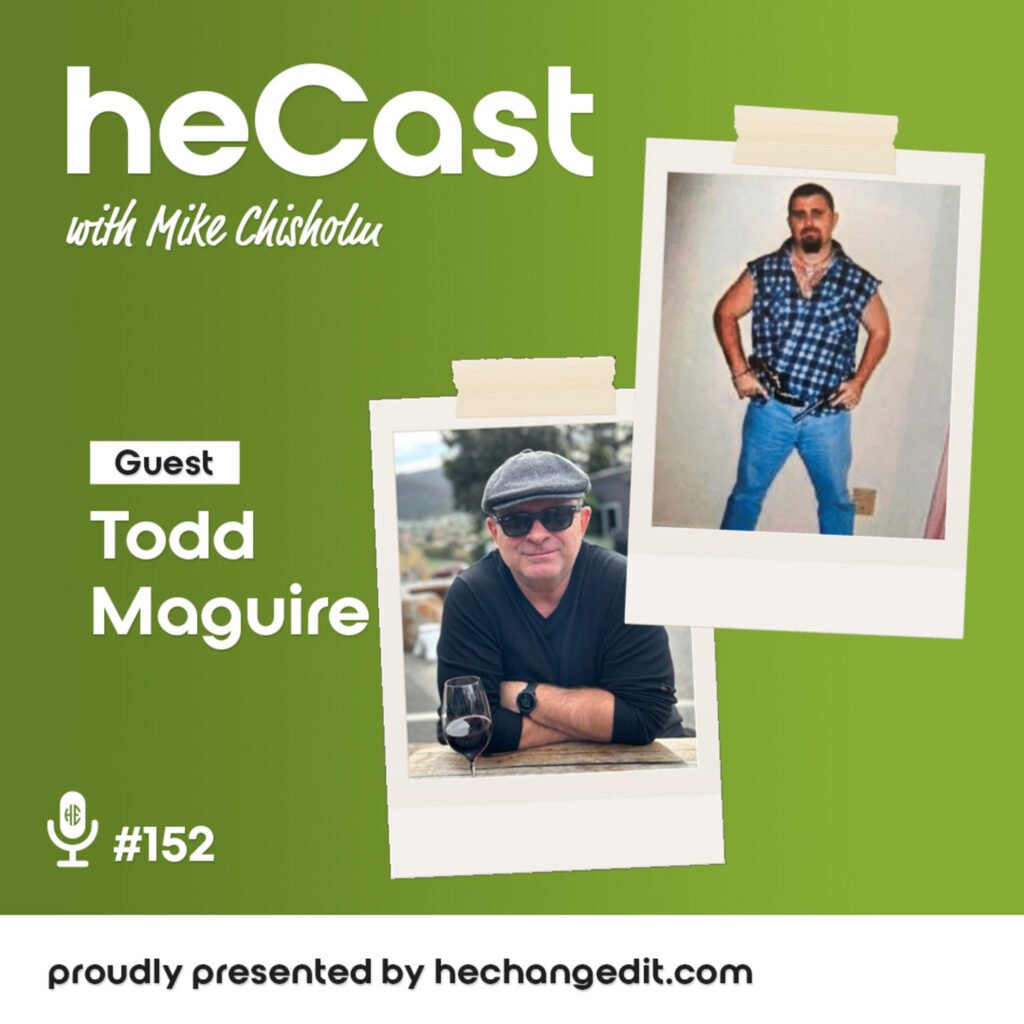
Todd Maguire on Trauma, Undercover Policing, and Healing After Loss

Season 3 01:07:45 March 25, 2026
Listen now 01:07:45
heCast Episode 152: Todd Maguire on Trauma, Undercover Policing, and Healing After Loss

About this episode

Episode 152 of heCast features Todd Maguire in a raw and powerful conversation about trauma, undercover policing, grief, mental health, and healing after devastating loss.

Todd Maguire is a former undercover police officer in Australia whose life changed forever on New Year’s Day 2000 when his girlfriend took her own life in their family home. In the aftermath of that trauma, Todd threw himself into undercover policing and created a new identity — Donny Wilson — a fearless and reckless version of himself willing to step into the darkest corners of organised crime while privately carrying overwhelming grief and emotional pain.

Mike and Todd explore the hidden toll of policing, the stigma around mental health in law enforcement, the brotherhood and connection that helped keep Todd going, and the difficult but necessary work of vulnerability and recovery. They also discuss Todd’s memoir DONNY – An Undercover Cop with a Deathwish, and how sharing the truth about trauma, loss, identity, and survival can help others feel less alone.

This episode is for law enforcement, first responders, mental health advocates, and anyone navigating trauma, grief, PTSD, or the challenge of rebuilding after unimaginable hardship.

Listen to heCast, the official podcast of HeChangedIt.

Download the HeChangedIt app for more tools, content, and support on your mental wellness journey.

Read transcript

Transcript supplied via Spotify RSS.

Welcome to Heat Cast, the official podcast of He Changed

it. As always, I am Mike Chisholm.

As always, I am so excited to have conversations in the world

surrounding men's mental Wellness.

I I love hearing these people stories.

Sometimes I think I'm the luckiest person involved in this

entire project because I'm the guy that gets to hear the

stories right away. I'm the guy that gets to

interact and ask the questions. Hopefully as we do that we are

listening and, and I'm doing a good conduit for, for the

stories that, that, that come in.

Now today's story, I'm going to give the disclaimer right up.

There's some hard stuff in this, OK, there's some hard stuff.

Our, our guy today, Todd McGuire, former police officer

from Australia. And I mean, he's written a book

called Donnie, an undercover cop with a death wish.

And it's exactly like the title sounds.

This guy was undercover and, and, and, and we go through some

of the stories that, that, that, that he encountered as that was

happening. However, the thing that kick

started, this is a very, very grisly story.

He had a, a, a, a girl in his life, a gal in his life who was

very, very close to him. And she tragically took her own

life. And so this is one of those

episodes where we're throwing the disclaimer up right from the

beginning. You know, he tells the story of

what he saw and, and, and what he went through.

And it's, it was in many ways a, a, a gateway to a downward

spiral that he's so desperately now on the other end of it, you

know, a couple decades later wants to help people avoid.

And it's so amazing listening to Todd talk about this, you know,

you got this massive Australian guy, you know, rugby players

strong and, and, and yet at the same time, all the things that

he has gone through has, has just brought this vulnerability

and kindness out of him where he just wants to take his story and

use it to help people. And I was certainly, certainly

moved by everything we talked about.

It was great talking to him about his perspectives on

things, you know, being a police officer when he was some of the

ways that he, he, he the undercover operations work,

which is every bit as fascinating as you think it

would be in a movie or something.

So this is a very cool conversation.

I'm very, very proud to present on He Cast today my conversation

with Todd McGuire. Todd, I am blown away by your

story. I, I, I love how I love how we

connected because, you know, I, I believe that law enforcement

is one of those things where, where there's a brotherhood

there, no matter what part of the planet that you're on.

And and and we've had we've had quite a few, you know, law

enforcement professionals on he cast before, but none with a

story like yours, author of Donnie, an undercover cop with a

death wish, Todd McGuire. Donnie's obviously not your

name, but welcome to heat cast. And my first question is,

whenever you hear the name Donnie, does it make you turn

your head? Yes.

That I, I taught myself to at the time to always respond to

Donnie and not my real name. But it's still, it's still there

every now and then, so. Wow.

You know, I think that all of us, not maybe not all of us, but

a lot of us guys growing up, whether it is the the idea of

the stereotype, the sensationalization in in, in

media, you think about somebody who is an undercover cop and

going undercover to do some things.

You know, there are certain, yeah, stereotypes, I guess, is

probably the the best word of generalizations that people

have. When did you know that you

wanted to be in law enforcement? And then did you always know

that you wanted to go into this side of it?

Now I am, I sort of joined when I was 23.

I finished school when I was 1679.

So it was still a bit of time between that and I was following

the hospitality line. I wanted to be a public.

I like run a bar or run a hotel. And, and I was doing those sort

of things. And it was just by chance that I

was having a drink with a mate at at a pub down the Gold Coast

and and he said, why don't you join the cops?

And after about the 5th beer, I said, I'll do it once just to

shut you out. And and La Behala got in and I

never looked back to be I just once I got in, I actually really

liked it. Sure, I, I can, I can certainly

understand that, you know, the human desire for community and,

and, and belonging and connection and things.

And I mean, again, I know, I know the North American version

of that. You know, I'm from Canada, but I

mean, you know, I've had American law enforcement, of

course, the media and things like that.

And when you go into something like that, there is that

community and that brotherhood and that is around the world

too. That's just like that in

Australia as well, right? The sense of belonging.

I I actually visited USA in 1999 with a Australian Police rugby

league site and the reception we got from the police over in in

New York and New Jersey and Philadelphia was second to none.

It was almost like we were family to them.

It was so, so welcoming. It was amazing.

Do you miss that brotherhood now?

I do, yeah. Yeah, I definitely do.

I'm not sure if it's the same in in my place area anymore.

It seems to have changed a lot. But I I have fond memories of

the 1st 10 or 15 years of having that camaraderie, playing a lot

of sport, looking after each other's backs.

It was pretty cool. I, I, the first thing that I

thought about cause again, like I've got family members who,

who, who are on the force over here and, and, and I, I know

quite a few. I, I guess one of the questions

that I have is for, for much of our audience is from North

America. Do you think that the police

force in Australia is very similar or different?

Are there major differences between what we see over here in

North America versus what you have there or is it, is it the

same thing all over the world? I think policing is the same

everywhere. There still seems to be the

culture of, you know, the, the foot soldiers seem to be doing

all the work and, and society and, and, and the organization

don't seem to support them at which which usually brings the

foot soldiers together. It more camaraderie together

because they feel like they're on a siege.

And I, I think that that that's something that seems to be

happening all around the world. Yeah, it's the tribalism that is

going on in the polarization of, of, of people is, is, is

astounding. It certainly is over here right

now. And I mean, you know, a few

years ago there was this, in my opinion, nonsense about people

going out and saying, you know, defund the police over here in

North America. People were people were actually

believing that. And it's just like, no, are you

kidding me? I think it's the opposite.

I think we need to get these people more support, more

training and, and, and at the end of the day, the competition

for the job should be, it should be fierce because the standard

is so high and you don't get that by, by defunding things.

That's, that's, that's what I see anyway.

What year UK you were 23 and what year was that when you when

you started? Yeah.

So I joined, it was six months in the Academy and that was in

1996. And and then I, I, I was out out

and first year constable as a in 1997 in April.

OK, as a constable, you know, learning the ropes of things and

whatnot, what is the typical, you know, I mean, obviously

theft is everywhere, you know, investigation is everywhere.

You know, I, I would assume traffic tickets and things like

that are everywhere. Was that basically what was just

general keeping of the peace in the in the?

Community yeah, first, first couple of years is just a broad

range of everything. So, you know, you get a an idea

of exactly what's going on in the police and then that's when

you can specialize if you choose to.

That's that's how I looked at and and I was very interested

in, in, in serious organizational crime and I

wanted to be a detective. That was my goal.

I this is where exactly the, the question I had, how long when

before you were in there and you kind of learned the ropes?

Did you want to start specializing?

Sounds like right away. And, and the idea of

investigative and, and the investigative arm of things and,

and, and being a detective, the idea of just the thrill that is

inside so many boys and so many men.

Is that, is that really what it was?

It was the, the thrill of things.

Was there something specifically about it that you were good at

or that you you you enjoyed about it?

I think sort of, I come from a background of, you know, working

in hotels, playing a lot of sport, playing a lot of rugby

league and just a knockabout sort of fella didn't take things

too seriously. I found that I could, I could

talk to people quite easily on their level and not talk down to

them. You could get confessions quite

easily or you could you could generate some good informants

that way as well. I felt that if I was going to

join the place I wanted to make a serious difference and you

know, investigate serious crimes, not just just not your

street level stuff. I was not not interested in

giving tickets. Yeah, traffic staff that that

just didn't didn't do anything for me.

But, you know, I wanted to catch the, the murders, the rapists,

the, you know, all of those sort of ones.

You know, I think that there are stereotypes as well about

Australia. You know, the, you know, we, we,

we hear over here across, across the other side of the world, you

know, Oh yeah. They don't have a ton of guns

there. They don't have a lot of, you

know, it's a, it's a different, it's a, it's a different animal

over there is that would you, would you say that that's an

accurate thing? Were there were there certain

crimes that bubbled up to the surface that that that that

happened more often than other, other crimes?

Yeah, when I look at the statistics of what have out in

America, I mean we we pile in into insignificance with that.

You know, some of the murder rates and the homicide rates in

in some of those places are just they're, they're probably 50

years worth for us in one, one year for over there.

So, yeah, I'm blown away by how that happens, how those

organizations can spend the time investigating because most times

a Murdoch really could take almost six months to a year to

investigate and when we might only have, you know, maybe 10 or

20 compared to the numbers that you have.

And yeah, we certainly don't have the the gun culture.

We know that most people, if they have a gun, it's usually

illegal. So Yep.

And but it is becoming more prevalent.

It's certainly noticing a lot more.

A lot of people are carrying knowledge now, especially the

younger brigade. So different, different beast,

but still the same level of violence here.

So you're doing this for a few years.

You realize that you want to move into the investigative side

of things. Did you do that for a while, or

was undercover one of the things that kind of bubbled up faster

than than than slower? Yeah, So I'll tell you the story

of how how it actually happened and, and, and hold on to your

seats here. This is this is this is pretty

serious, pretty, pretty heavy. So I was, I was probably 2 to 2

1/2 years into the place. I've done a done a few little

stints, you know, tipping my tow into the, into the CRB work and

the plainclothes investigative work, but being identified as

someone that, you know, in time I'll, I'll get to go there.

I was identified that, you know, he's a good worker, seems to be

on the ball. And I was just doing my time.

I was just, you know, keep arresting people, finding the

right crooks and just doing what I have to do.

I still very green and I wasn't in any rush to do anything.

Yeah. However, it was New Year's Eve

on 1999. And if people can remember back

then, the big thing was the Y2K 2K.

Yeah. Where, you know, the world was

supposed to stop the next day. You know, the computers were

going to backpedal and all, everything was going to crash.

So there was a fair bit of fear across the world.

And that 99 or I had to work at 10:00 PM to 6:00 AM.

It was a, a night shift in uniform, just walking, walking,

you know, the malls. So there's a lot of violence, a

lot of fights, a lot of drunkenness.

And, and I went with a group of people for dinner beforehand

with the with the girl that I was saying I'd moved in with her

about 18 months earlier. She'd she had had just recently

separate or divorced from a husband.

I think it was divorced or separated, can't remember now.

And she had a little 3 year old boy, 4 year old boy.

And we're getting on really well.

Future was looking really nice. She was living in a in a

hinterland property out at Madura Bar for anyone that knows

on the Gold Coast, which is serves paradise area.

It was a really nice sort of semi rural sort of setting.

It was beautiful. Anyway, we went out to dinner

and and one of my old phones, if you remember back then, the old

Nokia 6110 or the 3110 we we had to do the star and enter to to

open it or unlock it. I could I hear a couple of beeps

in my in my pocket and and I thought I mustn't have locked

it. This could be doing a pocket

doll got it out just to clear it and I had 666 on it.

And I just made a joke to to the people in the that I was having

dinner with and I said, look at this.

I just got a message. Looks like the the world is

going to end tomorrow. Made a bit of a joke about it.

Everyone laughed. Sure.

Anyway, I had the so all the men went to went to work because

we're all police and the women went to a nightclub and, and my

girlfriend, she went out with all the others and they're

having a great night. They were sending me, you know,

you know, text messages and ringing them and having a fun

night in between the fights that we were stopping.

Anyway, I picked her up at 5:30 or 6:00 in the morning and we

went home and, you know, she was pretty tired by that time.

I was tired. I had to sort of start work in

the afternoon on one of those quick shifts and, and I'll, you

know, I won't go too far into what happened there, but

essentially we, we both went to sleep in the morning and, and I

woke up at about 1:35 and I had my little, the little 4 year old

boy got sort of saying, mommy, where are you?

Mommy, Mommy, where are you? And I rolled over and you know,

her side of the bed was cold. She wasn't there.

It was like, OK, this is weird. So I picked him up and I said

let's go and have a look, bit of a look for Mummy.

Where's Mummy? Where's Mummy?

I'm making a bit of a game of it.

Not in this room. Not in this room.

Yeah, my eyes are still hanging out.

I'd had about 3 hours sleep so far and I wasn't.

I honestly had not ever thought of this ever coming into my mind

prior to this at all. We need all these rooms.

And I knew that our laundry was downstairs in a makeshift type.

It was, it was a garage that was made into a rumpus room type

thing for OK, for guests and so forth, asleep as well.

But that's where the laundry was.

And, and I said, oh, let's go downstairs.

She might be putting a load of washing on or, or fixing

something down there. As I went downstairs, walked

down the steps, opened a sliding door and I saw her.

She she'd actually hung herself and, and, and she'd used a white

electrical cord and wrapped around her neck many, many

times. It was really, really tight.

My first thought was just to throw him as far as wide as

possible. I I threw him because I didn't

want him to see his mum like that.

I slammed the door shut. And then the way that I ascribe

it was the physical pain was more than the mental pain at the

time. It felt like something had hit

me so hard in the chest that I couldn't breathe.

My legs went numb, they couldn't move and I was like looking out.

I just just in gobsmack and then started yelling, crying, all of

the words why have you done this?

What happened? What's happening like this can't

be real. And as you can imagine, you

know, time sort of stood still. I still don't know to this day

how long it was. I do remember picking her up,

thinking if I pick her up and get it back around around her

neck, she might be alive, but she was very cold.

And I think dig down. I knew that she wasn't with us

anymore. I made the decision because I

couldn't get the electrical cord from around her neck to put her

back down. And I, I was really worried

about that because I thought that might have done something

more, but in hindsight, she was already dead.

But I couldn't get the, the new other, the electrical cord from

around because you know, when it's really, when it's really

tied together, you just can't get any to move.

And Oh yeah, I ran upstairs, got a knife, came back down, cut the

cut the cord and begin CPR. And I can't remember if we did

it for 2 minutes or 20 minutes, but at one stage I thought that

I'd got a breathing, but it was just my ear going and rising

into her chest and then coming back out again.

Yeah. I've made the decision at some

stage to go and find your 4 year old and I went OK, I think this

is gone here. I better find out where Clark

is. I ran outside and luckily he was

just sort of waiting around the corner for me.

So I, I picked up him and I rang Triple O and rang the police

station where I was supposed to start that afternoon and said

you better get some, get some people out here.

The, the weird part about this whole thing is when the young

fellow was 10 years old, I spoke to him and he went, he obviously

went and lived with his dad there after, after that.

And they said, oh, he's now ready to talk about what

happened that day. He'd done a lot of, a lot of

work with, with, with professionals and so forth.

And, and the dad said, yeah, I think he's ready.

I said, OK, any questions you got, let me know.

So we went through the whole day and one, one question that

really stuck with me was so Todd, why was, why did the big

black dog have me pinned up against the wall while you're

inside? And I said, we didn't have a dog

mate. There's no dogs in our street.

It was a cul-de-sac and we lived on acreage.

There was no dog at all. And I said, I, I didn't know

anyone that anyhow hadn't been a black dog.

And it took me a while to sort of really work that out.

And I've realized what that is, is that that is, you know, my

partner, Karen, that was her black dog leaving her and coming

into me and, and the young fella.

And one of my messages that I say to people is, you know, if

you if you've got the black dog and you think that ending in

life is going to stop that black dog from living, it just gets

passed on to your family and if and your loved ones.

And that's what it did for me. Todd, by this point, you know,

you've been, you've been, you know, for lack of a better term

on the force. You've been, you've been, you

know, been a part of this for. A few years now, had you run

into that situation? You know, I've talked to a lot

of, again, a lot of law enforcement and, and many times,

you know, the, the, the, the, the first people on a scene when

things like this happen. Had you, had you seen that

before? Or is this at this point the

most extreme version of of of of of something like this that you

had seen by this point? I've definitely seen it before,

yeah. But when you're when you work,

you really, you disassociate yourself with it.

Right. But I do know that, you know,

growing up, I had a really excellent upbringing with no

trauma, no abuse, no death. There was, you know, my grandma

died. That was about it.

No one, no one around me died. I hadn't had to experience grief

or loss. And, and I sort of think that

the way that I handled this was because it was the first time I

really ever had to and it was so close to me.

I really, I really struggled with it.

Well, it started a spiral at this point, right?

Like this was in, in many respects, you know, I don't want

to get too far ahead of the story, but it, but at the end of

the day, this was, this was the event that, that, that kind of

started a cascade of, of events that, you know, impacted you to

this day, to the point where, you know, I'm going to write the

book and talk about this and I'm going to get this stuff out

there. When you saw some of these

things beforehand. And I mean, you know, a lot has

been written about how, how, how much, you know, law enforcement

are first responders, as we, you know, as we call them here in,

in, in, in Canada, There's programs, there's talking, you

know, when something happens, there's a debrief that happens

to make sure that things are OK in the head.

At least that's what they're supposed to be.

You know, that's, that's the direction that we're moving.

That's the direction we're moving.

But there's also still to this day stigma and, and, you know,

people almost untrusting of these things here because it

thinks there might be repercussions or whatever that

looks like. Did you have any of that prior

and specifically after this situation, was there any of that

even offered to you back then? No, no, because when when the

Detective Inspector arrived later that day, I basically just

got grilled on why the why the knife was there and I felt like

I was a bit of a suspect, to be honest with that.

Yeah, that didn't really get in well with me.

As I got as I got longer term in the, in the police and more

experience, I understood the line of questioning.

It was more to rule me out than to than to, you know, I

understand it now, but I remember at the time I, I

couldn't understand it because I was in such such, you know,

grief stricken died, couldn't understand that, not even ask me

that question. Yeah.

So how many days after this happened did you go back to

work? I had three months off and.

Took three. OK, so they gave you, they gave

you something they gave you, they gave you.

Was there a psych eval and all that kind of stuff at the time

or or or? You know, I just asked for a

transfer to go back to my home city where I, where I grew up

and live, live with my sister. Yeah.

And, and I basically said, yeah, I need 3 months off.

And, and this is where I sort of look back and I wish that I

hadn't done what I'd done. I, I, I found, I found my best

friend at the end end of empty bottle.

You know, I started drinking way too much.

I really that was the only way that I felt that I could cope.

So alcohol was your coping mechanism at that point?

Yeah, it was. Yeah.

Yeah, yeah. Well, it's, it's funny because

you know, Australians worldwide, you know, many people would,

would, would, would just give the crown of drinking to the,

the, the country and continent of, of Australia.

You know, you know, you guys, you guys know how to do it.

You guys know how to do it. You can be, you know, when you

come, when you combine it with sport and, and all of that, you

just think about the culture. There's a drinking culture

there. Did you have that before?

And what had changed in that point?

Was it? It was, it was more of a need

now as opposed to a situational let's have some fun.

It was a need. It was a daily thing.

Yeah, I noticed in hindsight there was a significant

difference in the two. Where the one was, it was more

social and enjoyable. Where to cope?

It was an angry drink. It was by myself and it wasn't

fun. It wasn't.

It was it was a destructive way of doing things.

Did you ever get yourself into trouble when when you were when

you were intoxicated? Or what?

Yeah, yeah. I think I know where this is

going. There's a lot of guys out there

who when something happens, whether it's, you know, a death

around them, divorce, you know, just just just real, real

struggle. Many times guys will put their

head down and just bury themselves into work and that

becomes their identity. Is that something that happened

to you? No, I was the opposite.

Oh yeah, I remember driving around in a police car and no

idea what was going on around me.

I was so spaced out, so just not even aware of what was going on.

Like there could have been an armed robbery right in front of

me and I wouldn't, wouldn't have seen it because I, my mind was

so far away. And yeah, yeah, I definitely

didn't get into work that much. It was, it was probably nine

months later, I was, I was in a bar in, in the, in the valley

in, in Brisbane. And I, I heard this voice at the

bar and it was the same fellow who sort of convinced me to join

the police. Now we're probably looking at

five years earlier. And but I looked at him and it

wasn't the same face as what I remembered.

Like he had long dreadlocks. He had earrings coming out of

his eyes and nose and everything.

And, and I said, what are you doing?

And he said I'm undercover, don't tell anyone.

No kidding. Yeah, and he goes shoot.

Come over here. So I remember there was a group

of them that had a obviously a in between jobs and they were

having a bit of a, a get together themselves.

And, and I sort of said, jeez, they look like they look like

the roadies of bloody Bon Jovi cover band or something.

Not Bon Jovi, Not Bon Jovi. The Bon Jovi cover band.

That's who they were the roadies for.

There, Yeah, yeah. So they're looking wild and

woolly. They didn't look like cops at

all. And so when I run, had a bit of

a chat with him for a minute for, for a while and started

listening to their stories. And yeah, I went home that

night. I went, that's what I'm doing.

I've got nothing to lose. I've got no future.

I've got, you know, I'm, I'm living in with my sister.

And I thought to myself prior to that I had a, you know, I

thought I had a future with a, with a, with a lovely girl and,

and a nice area and a house. And I really felt there was no

future for me at that point in time.

So I went, we got nothing to lose.

Let's do it. So I did it, got in and within

12 months of Karen's death, I, I walked into the the office of,

of the undercover unit. And they, and they gave me a

piece of paper and said, your name now is Donnie Wilson.

And here's your first job. See you later.

Were you prepared? Did you know?

Did you know that, or was it you know?

It was a four week course and unlike any course, it never

fully prepares you. Yeah.

And I think that you sort of, you get the basics and you do a

lot of, I did a lot of homework. I got prepared by, you know,

really narrowing down the whites of drugs, the pricing, you know,

tagging bits off clip seal bags, how much they weigh.

I, I made sure that, you know, always had my, my scars with me

and always tested people's scars in case they were bullshitting

me. And if you put in Australia's

two 20s and a 10 cent piece was exactly 28.4g.

So that's sort of all those little, little things like that

just to make sure. The arcane knowledge, Todd, the

arcane knowledge that's in your head, it's just that's crazy.

Like, OK, you didn't want to scale, all right, put these 3

coins in. And so you're learning all this

stuff to prepare. OK, so that's the that's that's

kind of the the logical stuff. But then it's a matter of you're

creating a new persona like like your name's Donnie Wilson and

and and and is it up to you to develop the back story?

Is a back story given to you? Is that something that is a

little? Bit of both.

Yeah, well, each, each back story usually, usually is

made-up when I started a new job and you're given a registered

informant to introduce you to people.

So you'd you'd find out more about them and then make a back

story. And you always made it quite

simple, very simple, just so it didn't sort of go bad.

But yeah, most times it always did.

You're given a registered informant.

OK where's the trust level there?

Like, like, like, like. OK, yeah, I was going to say I

was going to say so like, OK. And it's like, I mean, you know,

drugs, it makes a lot of sense. At the time, what was the drug

of choice that you guys were going after?

And what was the what was the the underground economy that you

were trying to break into? What was the?

Yeah, it's interesting to say that because that was one of the

reasons why I wanted to write this book, because I'd read, I'd

read a couple of undercover books of blokes in in

Queensland, Australia that wrote about their time in the 70s and

80s. And a lot of that was a lot of

marijuana and a lot of a lot of heroin and a lot of pretty heavy

gun crime back then, armed robberies and banks and so

forth. And, and what I noticed is so

the majority of of my drugs that we were chasing when, when I was

going through was obviously around the turn of the century,

2001, whatever. And, and it was, it was

amphetamines. So speed where, where everyone

was basically being a home cook or a industrial cook.

Yeah, that was huge. And we were probably about 3 or

4 years into the MDMA scene hitting, hitting Australia as

well. Yeah.

And sort of massive change in, in the way that we did business

and the way that normal people like we're always used to sort

of the heroin junkie type attitude where they used to

steal. And that's where cops didn't

like that, where people had to steal to, to feed their, their

drug habit. Yep.

But what I noticed with the MDMA pills was fairly cheap and it

was just a weekend experience for someone to go to a, a

concert or, or a, you know, a music thing.

So some of the people that were getting roped into these things

were, were, were not criminals at all.

They apart from taking some, some pills, they had not, yeah,

committed a crime in their lives.

So I really noticed the difference in, in the, when

people, you know, I was just say just general, like let's say

hairdressers, teachers, bank Johnnys, whatever they, they

became charged. They became crooks in in our

eyes, but in the real world they really weren't.

But then they became a a real big backlash against the place

because they usually would have been on our side.

But then we're we're now demonizing it.

So the court of public opinion says this is not dangerous to

anybody, it's a bad law, and you're stuck between a rock and

a hard place going, OK, the court of public opinion says

this, but the law says this, and I'm supposed to uphold the law.

Yeah. Yeah, that's a tough spot, man.

That's a really, really tough spot.

Like I'm, I'm super curious, 'cause like now, I mean, you

know, I, I remember growing up in the just say no years over

here and, and I'm certain that that that was a worldwide, you

know, expression and, and I mean, I remember being taught

things about marijuana back then.

And now I live in a country where it's completely legal and,

and, and it's a, you know, you know, you, you grow up with the,

and for lack of a better term, the reefer madness, you know,

mentality of, of, of what marijuana does.

And then now you look and you see where things are at.

I'm super, super curious. Your point of view is going to

be one that's very, in my opinion, that's going to be

unique and, and, and educated in a very, very interesting way.

Has your opinion on drugs changed?

You know, in, in, in all of these, these decades that have

gone by now, has your opinion of drugs changed?

Absolutely. I, I actually wanted to talk

about that in my book, but my, I was, I was sort of discouraged.

Maybe that's part of my second book, but I, I spent 27 years

pretty much chasing and searching for illegal drugs.

And obviously two of those years were as an undercover agent.

The rest were just investigating.

Yep. And yeah, I've, I've got a

different version of them and you know, there's there's some

drugs that if they're made correctly, can actually help

people. Obviously, Yeah, yeah.

MDMA. MDMA is being used for therapy

for all sorts of things, ironically, including PTSD,

which, you know, that's, that's kind of why I was asking.

I was, you know, because you've clear, you know, you've talked

about it and I, I want to get into some of the mental health

struggles that you, you've. Been diagnosed with I'm

investigating trying to trying to do some ketamine theory

therapy as well so Yep. I think that, well, you know

what I can, I can, I, I can open up that I, you know, my, I lost

my father in, in, in April of last year, you know, and I mean

this, this is the first time I'm really saying this publicly, but

I don't, I don't care because I, I, it was, it was, he had six

months of a very, very horrible type of dementia called Lewy

body dementia, which is not Alzheimer's.

It's something significantly worse.

And my mom and I, he was hospitalized for the last three

months of his life. And it was a very, very

traumatic time. You know, when we lost him, it

was a, it was a, it was a blessing, but still very, very,

very difficult. It was, it was extremely

difficult. And I went and did a bunch of

research as to what, to what, what, what can happen and what

can, what can help. And I didn't like the idea of

being on a, a pharmaceutical SSRI for the rest of my life or

for, you know, I, I didn't like that at all.

And, and so I started looking at things like ibogaine and like

ketamine and whatnot. And here where I live, there's a

clinic I had to get referred by my doctor and, and, and I had

ketamine therapy with, you know, an anesthesiologist administered

it and I had a nurse with me the entire time.

And it was, it was extremely clinical, but at the same time

completely life changing in, in, in many respects.

And I look at that and I look at the stigma that's attached to

that. Like I've never really said it

publicly. I've never said it on the on the

podcast, but the people that I've talked to about it that

I've confided in that I've done it.

The plethora of reactions, Todd has been like all over the

place. Some people are like, oh, tell

me more and some people it has literally hurt my relationship

with them because they have that just say no stigma about drugs.

They're they're in cement about it.

And, and, and, and for you, I mean, my gosh, you, you were

there times when you're doing the job where like you, like

you've alluded to it, that must have created a crisis of

confidence when you're looking at this teacher or this banker

who was enjoying a show and, and, and, and using the MDMA

for, for, for, for that to enhance some things.

I'm not, I'm not discounting the fact that they broke the law.

Like I get that, but that must have created a very interesting

dynamic in your head, like almost an argument a little bit.

And it's hard when you're hired to do something, but your

conscience is telling you something else.

That must have been difficult as well.

Yeah, it was. And and there was there's one

example I'd give that was pretty powerful.

And it was someone that I'd actually become friends with in

the in the nightclub scene. It was blowing pills off him.

He was confiding in me with bad hair.

He's his world was falling apart.

He'd lost his wife. It.

Yeah, I'm sorry. He had.

Yeah, separated from his wife, had two, two daughters and he

was just going through a bad breakup and was using drugs and

selling something he just sold to the wrong bike on the wrong

night, you know, and, and then, and then we became mites.

You know, I was really torn by it because I could tell that he

wasn't a crook. He wasn't like he still had a

normal job. He was doing this to cope.

And Yep, he, he brought the law, but and then, you know, he got

arrested. He got charged with trafficking

of, as I say, methyl Leoxyl and methyl amphetamine.

And, and he was looking at jail and he, he wasn't someone that

needed to go to jail, but he, he rang me one day after knowing

that I was a was the uncovered cop that did it to him.

And the phone came up and his name was up there.

And I went on, no, he's going to give me a spray here.

They're like threatened me and all that sort of stuff.

I thought, oh, get the other way, get the other way.

Yeah. Anyway, he just said, Donnie, I

can't go to jail. Can you tell my kids I love them

all. That's some shit.

And I said, man, man, what are you doing?

What are you doing? And he goes, I'm just on the

Cliff near Fortitude Valley, New Farm.

I'm jumping, I'm out. I said, where are you exactly?

I'll be there in 10 minutes. Rice diver.

And this was part of the attitude that I had been going

through for the past year and a half was I was on a death wish.

I, I was walking through doors that I shouldn't walk through.

But I didn't really give a shit what happened to me because I

was still grieving. I was too scared to kill myself,

but I was hoping that it happened in the line of duty.

Yeah. That's so my, my reckless sort

of behaviour at the time was he was standing, you know, tears

coming down his face and grabbed his arm and I said, OK, well

let's do it 123, let's go. And I'll try to push him and,

and he goes, oh, hey, hey, what are you doing?

I said, I thought you wanted to kill yourself.

I'll do it with you, come on. And he goes, what, what, what,

what are you talking about? I said, why else would you ring

me? You knew that I wanted to

fucking go as well. Like we we can find it and show

it all those things over like 6 months.

And I said, Dad, you put fucking let's go, let's do it.

And it was very much lethal weapon like when I think about

it later. And he yeah, he dragged me back

and we've because I was gone and dragged me back and we fell on

the floor on the on the grass prime.

We sat on this park bench for another 3 hours talking about

how much he'd miss his kids and his wife, his ex-wife and all

that because he wanted to try and get back with her.

And I, I think that was a lightweight moment for me where

I went back home that night to my safe house by myself.

And I just went, what am I doing?

Why am I behaving like this? Because I was hoping that was

going to happen because of the pain that I had.

And I went do I want to do I want to do, I want to do that to

my parents and my, my brothers and my sisters and my family

members and. Yeah.

I hadn't really given much thought about a product.

I was just, I was just on a mission.

I was on a death wish where I was just going through doors

where all I did was open doors for me again.

And then I was bringing down the the I was bringing down the, you

know, the head honchos that the police hadn't got for ages.

And I was getting all these slaps on the back.

And but I'd go, I don't want that award.

I don't give a shit about that. That's not mine yet.

And so that was a real big turning point for me where I

went, OK, I got to stop this shit, man.

I got to stop it. I really do.

Like you can't just essentially I was just walking out into a,

you know, a busy hallway without even looking at the cars.

That's that's how what I was doing.

Just reckless, abandoned and you know that that zombie like

behavior. You need a cold shower.

Sometimes you need a wake up call and it sounds like it

sounds like it. It sounds like it it it was.

Do you know where he is today? No, I don't.

No, no. I, I, I, I'm super curious about

the idea of you, you know, releasing this book.

And, and I mean, you know, Australia's a big place, but

it's also a small place. You know, when you look at the

population and, and things like that and, and, and you got to

wonder if, if, if you know, in the time after you've released

this and, and you've talked about some of the things that

you've, you've been through and you've felt and you've learned

certainly the things that you've learned.

If ever anybody from your past will ever see it, hear it.

And that that's a very, that's a very interesting idea as well.

It'd be interesting to see if if anybody ever makes the the

connections. Yeah, well, every every time is

changed and it's only. Your name wasn't Donnie Wilson

was the name though, right? Yeah, yeah, yeah.

Yeah, what I'm just saying, Doctor Wilson's a charismatic

guy. That that that that got to know

a whole bunch of people and networked and and whatnot.

And and you got to think, I wonder if anybody out there

would yes to their names are changed for the book.

I get that. But I'm more thinking about the

human connection of of of that because that alone could be a

wake up call for them potentially.

Yeah, I'm sort of pretty happy to think that most of the people

that I've dealt with couldn't read.

All right, fair enough. Well, wherever that guy is

today, because as far as you know, he's still around, right?

As. Far as, as far as you know, and

so wherever that guy is today, well, and that's the thing, you

know, like, like, like, like right now, we're just going to

hey, throw it out to the universe and say, hey, we wish

that guy well, hope he's doing well, Hope he's gotten his, you

know, his version of, of, of the insights that you've gotten.

And, and, and we throw that out there.

So, so that was the first wake up call.

But at this point you're entrenched and you're staying

there and you're getting claps on the back.

And so there's confusion going on 'cause you're, you're making

headway. I can, I can imagine that they

wouldn't be very happy if you decided to pull full stop on

things. How much longer did things go at

this point? You're, you're, you're kind of

awake and aware about things now and looking at things a little

bit differently. You're not as reckless, you're

not as on autopilot anymore. At what point did things start

to to change? Like did the healing begin then

or did you have to get out before healing began?

Yeah, I think it wasn't till I definitely got out until I

started healing. Yeah, I think.

And it took me a long time. It took me many, many years.

Yeah. I write a a chapter in the book

about beige couches where I hated sitting on the on the

couches telling psychologists or counsellors my story.

And I just felt it didn't work for me.

So your mind talk therapy wasn't connecting for you?

No, no, I noticed that you know one I always seemed to be on the

on the on the clock and and I thought, you know, for an hour,

an hour session, it took me usually 45 minutes to open up

and then before you know it, time up.

See you in two weeks. To me, it just sometimes I've

got some really good stuff out of it.

Other times I sort of went, I don't understand, like this

still doesn't bring Karen back. That was my theory at the time.

Oh, like nothing, no one here can help me because, yeah.

And then I'll sort of say, OK, well, I'd sort of grill in and

say what traumatic things have happened to you and nothing.

They just went to uni and did a really good degree and and a

very successful what they do and they understand a lot.

Yeah, but I but I say it's like a male telling a female what

childbirth is like. Yeah, it's impossible.

Unless you've been through that, that severe trauma, it's

impossible to give give any advice in my books.

So let's throw it to the other side then.

Like, have you since met people who have experienced similar

things? And because of that commonality,

you know, it's a little bit more effective.

Exactly. Yeah.

And one thing I've noticed, obviously this happened in 2000.

Back then, there was no Internet.

There was no podcast, there was no social media.

There's no Google. The only thing that you learned

was by going to one of these people or if a friend of yours,

their dad and mum had an encyclopedia library done or, or

you went to the library and odd didn't do anything.

So I've noticed that since the advent of social media, I know

there's lots of negatives, but the positive parts of social

media of when I started listening to certain Instagram

things or Facebook or whatever about mental health and some of

the, you know, the anecdotal stories that people were saying

was like, wow, that's how I've been feeling.

And for a long time, I felt so isolated thinking that it was

just me thinking that because none of my friends had been any

been through this type thing. And I, I felt like I couldn't

explain it to, to anyone. And I was listening to these

sort of things and I've sort of dealt deeper and deeper into it

over the last couple of years and, and everything resonates

with me and I go thank Christ. Thank Christ.

It makes you feel better. Yeah, the, the idea of you are

not alone other than the work, like the words are one thing.

OK, fine. You're not alone.

You're not alone. You're not alone.

But like that actual feeling that gets into your, to your

core being where you're seen and heard, that person's seen and

heard and you realize, oh, I'm not alone.

And this person actually understands and gets and, and I

can understand and get them. And what you're talking about is

connection. I mean, the whole reason he

changed it exists as a platform there.

You know, you know, my wife and her team are, they're trying to

change the world with with, with he changed it.

And you're, you're, you're talking about the silver bullet.

The silver bullet is connection. You know, the idea that a guy

can come in and take something that he needs and leave

something that he knows. Well, imagine if guys to scale

are doing that. And, and you know, that's,

that's exactly what you're talking about here.

Because at the end of the day, like I, I see you right now and

it's like, OK, here's a guy who wants to help people who are

going through something similar to what he went through.

I see that it's pouring out of you.

That's why you wrote the book. Like, I mean, you know, you're,

you're, you're, you're talking about really, really tough

things, Not because it's fun to talk about it, not because there

were stories. No, you, I mean you, you talk

about this with Karen And and if there's a guy who hears this,

has gone through something similar, can see that there's

light on the other their side, if they're not further along the

path that you know that then where you are.

And, and and so I think that that is the silver bullet is

connection and and and and being seen and heard.

Is it? Is there structure to it?

Have you been to men's groups? Have you been to things Do you

like to do? Do you like to do public

speaking about this stuff? You're obviously very, very good

at it. You know, you've got your story

down. The book is here.

It's a, it's a, it's a wonderful platform for that.

Is that therapeutic because you're able to talk about it and

you're just getting it out more? Yeah, I'm definitely doing all

of those things and just just beginning in a, in a public

speaking environment. So I, yeah, I definitely want to

explore that. I don't, I try not to sort of

make out that I'm an expert. Yeah, I'm not a health

professional. I'm not going to fix anyone or

whatever, but I just want to get my story out there and just

resonate with people and, and make it a conversation starter.

My, my, my story. I know it sounds wonderful and

all that sort of stuff, but everyone goes, everyone will go

through a bad part in their life.

Just different people have it at different times and, and at

different levels. And I know that 10 years ago I

couldn't have done this. And I think it's maybe my

maturity and just the passage of time.

But I, I couldn't even say her name 10 years ago without

crying. But now I'm, and I sort of just

pushed it all out. And I used to worry about what

people would think about me if they thought I was weak or

whatever. And it's maturity.

I think it's turning 50. I think it's just whatever where

I go, I really don't care what people think and if and if some

tough bloke thinks that I'm wait for doing this.

You are the one that has the problem my friend.

Yeah, well, I mean, it shows right there if they if they

think, if they can't do it, who's tougher, right?

And, and, and so, you know, that's that, that's the proof

right there. And, and, and that's the stigma,

but the connection that you're talking about.

And when you do connect that that erases the stigma because

it shows that we're not alone. And, and that's a huge, that,

that that's a huge concept to to understand.

It's very easy to say, very hard to believe for people who are

actually in the situation, because it does feel that way.

And I, I, I'm really grateful that you're, you're, you're,

you're, you're, you're, you're finding the way to hack through

this and, and, and find your way to the other side.

I want to talk clinically for a second.

Were you officially die? Like, I know PTSD is a huge, you

know, it's a buzzword these days.

You know, I think about kids in, in their 20s and they're talking

about the trauma that they're experiencing.

And I mean, it's sort of a Co opted word, but it's also a real

thing. PTSD is a real thing.

It's a diagnosed condition. Going through what you've gone

through, what were you officially diagnosed with?

Yeah, it was the complex PTSD Complex.

PTSD. Obviously starting from Cannes

and then having numerous, you know, being involving, can't

even remember how many, how many very dangerous situations where

by rights I should have been dead.

So, but I also, what I talk about in my book is playing

rugby league for all of my life and coaching and, and being

involved is that, you know, I had a serious knee injury.

Oh yeah. I got a plate in my, in my arm

because I tackled the Blake's head and that's a lot harder

than the arm. And, and then I, I fractured the

eye socket and I lost half, half my side out of my left eye.

And I likened the the trauma to my brain as no different to a

rugby league injury. Yeah.

My knee. Yeah.

I'm, I'm never going to be as, as as fast as a runner I ever

used to because it's not the same.

My eye still sees half and I still, I see double when I look

out of the peripheral. Yeah.

But what I worked out when I was playing footy is that it was 2

balls coming at me. I'd always catch the bottom off.

So. Oh my.

God, and that's how you lived life.

That just became your norm at that point.

Exactly. You just get used to stuff and,

and, and the way that I looked at it is the brain has an

injury, which was through no fault of my own either.

And if you manage it well, I could still live a normal life

the same as I can with my knee and my eye and my arm.

And they shouldn't be looked upon as anything different.

Just because it's your brain has copped an injury through

something that you experienced right, it's not going to it

doesn't ruin your life. Yeah, yeah, yeah.

That's and, and I mean, if there's a, if there's a theme

going through this amazing conversation that we're having

today, that's, that's, that's kind of it right there.

You know, there is more to life than the difficulty that you are

experiencing at that moment, even if that difficulty is

something extreme and and traumatic.

You can get better. And, and, and this is where I

think your story is just so powerful because yeah, I, I, I,

I like, I like hearing a phenomenal charismatic expert on

a subject more as much as the next guy.

It's, it's, it's great. But but people's stories and,

and talking about what they've learned with no outcome except

to just express their story and say what they learned, that

leaves it up to the viewer or the listener to then apply some

of these things to the situation that they're going through.

And it gives perspective. It gives depth.

Despite your depth perception issues, it gives depth.

And you know, and, and, and so I'm super curious about the

reaction to when people hear your story to when people have

read your book. I, I'm super curious about what

people have come up to you and said, I can imagine that a lot

of people have come to you and they have spilled their guts

about their story and, and, and, and and whatnot.

And I'm I'm curious if there are any patterns because you're the

receiver of these things and and are is there a commonality to

any of them? Yeah, it, it is.

It's as I said before that I thought, you know, if I got any

negative, you know, reactions in terms of being a silk or, or or

whatever, I actually haven't got any.

Everything's been positive. Everything is said.

I'm so proud of you, brother. Yeah.

And then next thing and I they're telling me about their

story. And that's what I'm saying.

It's a conversational starter. I think you need to be

vulnerable to be connect with people.

And I'm also civil. If someone's got to do it, I'll

be that wonder to be the vulnerable person to start the

ball rolling. I I was lucky to have a, a

drink. I was having a beer at a surf

club recently and, and there was a, an ex NRL player who's a bit

of a larrikin. He's a fun fella.

And you know, I was telling him about the book and within 5 or

10 minutes he was telling me about some, you know, some

hardship that he was going through his life as well.

And it was like wow, this is amazing, this is awesome.

And that would never have been brought up, you know, in an

environment like that with their me telling my story first.

You're, you're literally giving a commercial for what he

changed. It is all about.

That's exactly it. We're trying to take that.

We're trying to take what you just said and turn it into

something that any guy can pick up a phone.

Where this came from too is when, when my wife and her team

were doing the research about men in particular and what you

know, the particular like, like, you know, going through some of

the stats and things like that. One of the, one of the places

that they ended up was a guy who was very high up in the Canadian

military on the administrative side, but he's also, you know,

seeing stuff, but he's like, he's an orchestrator.

He's, he's in that role. And he was talking about the,

you know, the suicide numbers and, and, and whatnot.

And he, one of the remarks, the offhand remarks he said is

everything and every single one of them dies with the phone in

their pocket. And, and, and, and that's where

the power comes in. It's like, OK, well, how can we

take that phone and, and, and put something on there that

every guy could have an opportunity to experience

exactly what you're talking about?

You know, and, and I, I appreciate your message very,

very much. It's just encouraging for what

he changed. It is all about, you know, these

stories you talk about how you haven't had any negative

backlash. And I appreciate that very, very

much because there's a part of me and we started the

conversation talking about the community that's in law

enforcement or, or protection or, you know, these this

brotherhood that's there was any, has anybody read the book

and said, Hey, you know, you're, you're putting some stuff out

there to, you know, kind of talk about the behind the scenes that

of things that we should do was has there been a negative

reaction that way or, or is it the other way?

Where are you using this as an opportunity to talk to folks

within enforcement to maybe help them seek help so they don't get

to the place that you did, that reckless place?

Yeah, yeah. And it's not, it's not just in

law enforcement. It's it's across the board.

I haven't had any negativity. If if it is, they've kept it to

themselves, which I'm fine with that I have.

Of course, yeah. It got to the stage where I was

getting, but not only the the story, but the way that I'd

written it and people would. The main thing I'm getting is

that I could not put it down. I haven't, I haven't read a book

in 20 years and I read it in two settings.

I could not put it down and that seems to be what is coming out

which and then other people are saying who really wrote it for

you? Come on.

Oh, there we go. And I went, oh, serious, it was

me because other people say I can actually see you talking

when I'm reading it. So I and I, yeah, I'm getting

some excellent feedback, which I love because I've never been a

writer. I've never been caught at it.

And because I, because I, I basically wrote it about six

weeks. I didn't stop once I started.

And it was so therapeutical. I loved every minute.

I couldn't wait to get back to do it.

I'd start at 6:00 in the morning, I'd be finishing at

8:00 at night, and I just wouldn't even know where the

time has gone. And yeah, I didn't know how to

start. I knew where I knew where to

start. Like I knew I had a story, but I

didn't know how do I start Once Upon a time like I I just

didn't. Yep.

So I just did a microphone and that microphone Word document

thing and started talking and after about 3 pages I read it

back and went oh OK yeah that works so.

I was going to ask you, you alluded to it and so this is one

of the questions that I had for you.

The, I mean, clearly you healed a lot and I mean you, you

alluded to, to some of the markers that that that started

that healing journey. Was there anything more healing

than writing the book? It was probably the best thing

that's ever happened. The healing that I've had over

the last 20 something years has been certainly hasn't been

pretty. It hasn't been easy.

There's been a lot of where you think you've made ground,

You've, you fall again, you get back up again, you fall again,

you get back up and it's there's, there's, there's one

thing that I, I talk about where I, I lost my mum two years ago

and, and she passed away and my, my, that was the next person

since, since basically Karen died, someone of my immediate

family that had passed away. Yeah.

And I was really aware. Am I going to go down the same

right is what I did when I lost Karen.

Was I going to be reckless? Was I going to turn to the

bottle or was I going to do all these things?

And I remember thinking to myself, if mum's watching, would

she be proud of how I'm dealing with your death?

And. There you go.

And I said, OK, I'm going to make a prayer.

I'm not going to go down that track because she was very

worried about me when I'd lost Karen.

And then similarly I, I thought to myself, OK, well it kind of

been watching me over the last whatever, 20 years or especially

the first five years afterwards. I'm pretty sure she wouldn't be

too proud of me the way that I dealt with myself.

So that was a motivator for me. Yeah, I sure get that.

I hate that this went as fast as it did.

I knew, as we said before we hit record, this is going to go by

real fast. I I'm gonna finish with the

cliche. And it's a cliche.

I'm sorry. If if if you know, I love, I

love being the guy that asks different questions and things

like that. I love the guy that being the

that guy. But I'm sorry, the story is just

so powerful and so fun. OK, before I ask this question,

OK, where can people get the book?

Like, so. OK Donnie, an undercover cop

with a death wish. That's the title of the book.

Is it on Amazon? Is it?

Is it a one? Wise deal on all your on all

your ones overseas in Australia. I I do have a website and and I

personally. Audio as well?

Did you say audio? The Amazon audio and.

There's no audio book though. Yeah, there's.

No audio book. I'm still working on that right

now, so. OK, can I please make a

recommendation if you can, if you can make it work, please

read it yourself. I, I, I honestly think, like you

said, you said you, you know, it's your voice and I, I

honestly think you've got, you've got a commanding voice.

People are always, of course, on this side of the, of the world,

a sucker for an Australian accent and whatnot.

I think, oh, if you could, if you could do it where you read

the book yourself, that would be phenomenal.

You can find on Amazon Todd McGuire, Donnie, an undercover

cop with a death wish. So here's the here comes the

cliche and here's how we got to finish it today.

But I want you to come back, especially like, you know, when

you get some more perspective after the, you know, I would

love to have you back and to hear your story and the

continuation of where you're at because we are again, you know,

a cliche word all on a journey. But but as you go down further,

further down the path, I would certainly, certainly love to

hear more of the things that you've learned because you're

probably in the in you're probably the best sponge for

learning right now than you've ever been.

And the people that you're going to talk to are going to teach

you so much good, good stuff. Don It's also talk to Donnie.

Different people. Too.

Yeah, yes, exactly, Exactly. So that being said, let's go to

the cliche. What's the biggest similarity

between Todd McGuire and Donnie Wilson?

And what's the biggest difference between Todd McGuire

and Donnie Wilson? They're totally different

people. Completely, OK, completely

completely different people. I and and my wife now we use the

analogy of Donnie is my PTSD and when when she sees or when I can

feel that Donnie is creeping back in a bit, we become aware

of it and we put things into place to make sure that Donnie

stays in the closet. I can't think of a better place

to end right there because we all have a Donnie inside of us.

When you, when you frame it that way taught, we all have that,

you know, you know, counselors or or might call it the shadow

self. We you know that the part of us

that. Yeah.

And when it starts to creep out the awareness is everything.

And you're clearly, clearly very, very hyper aware of these

things. I just want to say thank you.

First off, whenever I have somebody who was in the service

of any kind come on here, I say thank you for your service.

Thank you for for trying to make this world a better place as you

know, as you did at the time, you know, you know, and we

could. I can't wait for you to come

back on and we will have more of a discussion on the morality of

certain drugs and things like that, things you learned along

the way. But at the end of the day,

always trying to do good, wanting that that was the

intention. And anybody who serves, I say

thank you very, very, very much for your service.

So thank you for that. But the, the, the bigger thanks

comes for the fact that, man, when you go through something,

when, when a guy goes through something and, and, and they

don't stay quiet about it, but they actually are able to deal

with it and then use it to help other guys.

Well, that's what's going to make the world a better place.

And you are a light in this world, Todd.

You really are. And I just want to say thank you

so much for the vulnerability, big, tough rugby cop, undercover

guy that's gone through all these things.

And guess what? You can talk about your

feelings, you can talk about some of the experiences.

That's the real strength coming from a really strong guy.

Thank you so much for taking time out of your day to come on

to he cast and he changed it, man.

I really, really appreciate it. We're trying to change the world

and it's it's because of guys like you that we have the

ingredients to do it. So thank you so much man.

You're a legend, man Thank you. Thanks for being.

Thanks for having me on. Oh, absolutely, absolutely.

I'll do a quick outro and then we can say our goodbye

privately. Everybody.

This is why we do the show. This is exactly why we do the

show. This is why he he changed it

exists. You know, if you haven't

downloaded the app, what the heck are you waiting for?

Go to hechangedit.com. Take a look at the app.

Watch as it grows. Watch as we move this thing

towards wanting to make the world a better place.

This has been another episode of he cast the official podcast of

he changed it. My name is Mike Chisholm.

Go change something.

Read along with this episode

A source transcript is available for this conversation.

Open transcript

Meet the guest

Todd Maguire

Todd Maguire is a former undercover police officer in Australia and the author of DONNY – An Undercover Cop with a Deathwish. His story is a powerful reflection on trauma, loss, identity, resilience, and the human capacity to survive even the darkest chapters of life.

Read transcript

Transcript supplied via Spotify RSS.

Welcome to Heat Cast, the official podcast of He Changed

it. As always, I am Mike Chisholm.

As always, I am so excited to have conversations in the world

surrounding men's mental Wellness.

I I love hearing these people stories.

Sometimes I think I'm the luckiest person involved in this

entire project because I'm the guy that gets to hear the

stories right away. I'm the guy that gets to

interact and ask the questions. Hopefully as we do that we are

listening and, and I'm doing a good conduit for, for the

stories that, that, that come in.

Now today's story, I'm going to give the disclaimer right up.

There's some hard stuff in this, OK, there's some hard stuff.

Our, our guy today, Todd McGuire, former police officer

from Australia. And I mean, he's written a book

called Donnie, an undercover cop with a death wish.

And it's exactly like the title sounds.

This guy was undercover and, and, and, and we go through some

of the stories that, that, that, that he encountered as that was

happening. However, the thing that kick

started, this is a very, very grisly story.

He had a, a, a, a girl in his life, a gal in his life who was

very, very close to him. And she tragically took her own

life. And so this is one of those

episodes where we're throwing the disclaimer up right from the

beginning. You know, he tells the story of

what he saw and, and, and what he went through.

And it's, it was in many ways a, a, a gateway to a downward

spiral that he's so desperately now on the other end of it, you

know, a couple decades later wants to help people avoid.

And it's so amazing listening to Todd talk about this, you know,

you got this massive Australian guy, you know, rugby players

strong and, and, and yet at the same time, all the things that

he has gone through has, has just brought this vulnerability

and kindness out of him where he just wants to take his story and

use it to help people. And I was certainly, certainly

moved by everything we talked about.

It was great talking to him about his perspectives on

things, you know, being a police officer when he was some of the

ways that he, he, he the undercover operations work,

which is every bit as fascinating as you think it

would be in a movie or something.

So this is a very cool conversation.

I'm very, very proud to present on He Cast today my conversation

with Todd McGuire. Todd, I am blown away by your

story. I, I, I love how I love how we

connected because, you know, I, I believe that law enforcement

is one of those things where, where there's a brotherhood

there, no matter what part of the planet that you're on.

And and and we've had we've had quite a few, you know, law

enforcement professionals on he cast before, but none with a

story like yours, author of Donnie, an undercover cop with a

death wish, Todd McGuire. Donnie's obviously not your

name, but welcome to heat cast. And my first question is,

whenever you hear the name Donnie, does it make you turn

your head? Yes.

That I, I taught myself to at the time to always respond to

Donnie and not my real name. But it's still, it's still there

every now and then, so. Wow.

You know, I think that all of us, not maybe not all of us, but

a lot of us guys growing up, whether it is the the idea of

the stereotype, the sensationalization in in, in

media, you think about somebody who is an undercover cop and

going undercover to do some things.

You know, there are certain, yeah, stereotypes, I guess, is

probably the the best word of generalizations that people

have. When did you know that you

wanted to be in law enforcement? And then did you always know

that you wanted to go into this side of it?

Now I am, I sort of joined when I was 23.

I finished school when I was 1679.

So it was still a bit of time between that and I was following

the hospitality line. I wanted to be a public.

I like run a bar or run a hotel. And, and I was doing those sort

of things. And it was just by chance that I

was having a drink with a mate at at a pub down the Gold Coast

and and he said, why don't you join the cops?

And after about the 5th beer, I said, I'll do it once just to

shut you out. And and La Behala got in and I

never looked back to be I just once I got in, I actually really

liked it. Sure, I, I can, I can certainly

understand that, you know, the human desire for community and,

and, and belonging and connection and things.

And I mean, again, I know, I know the North American version

of that. You know, I'm from Canada, but I

mean, you know, I've had American law enforcement, of

course, the media and things like that.

And when you go into something like that, there is that

community and that brotherhood and that is around the world

too. That's just like that in

Australia as well, right? The sense of belonging.

I I actually visited USA in 1999 with a Australian Police rugby

league site and the reception we got from the police over in in

New York and New Jersey and Philadelphia was second to none.

It was almost like we were family to them.

It was so, so welcoming. It was amazing.

Do you miss that brotherhood now?

I do, yeah. Yeah, I definitely do.

I'm not sure if it's the same in in my place area anymore.

It seems to have changed a lot. But I I have fond memories of

the 1st 10 or 15 years of having that camaraderie, playing a lot

of sport, looking after each other's backs.

It was pretty cool. I, I, the first thing that I

thought about cause again, like I've got family members who,

who, who are on the force over here and, and, and I, I know

quite a few. I, I guess one of the questions

that I have is for, for much of our audience is from North

America. Do you think that the police

force in Australia is very similar or different?

Are there major differences between what we see over here in

North America versus what you have there or is it, is it the

same thing all over the world? I think policing is the same

everywhere. There still seems to be the

culture of, you know, the, the foot soldiers seem to be doing

all the work and, and society and, and, and the organization

don't seem to support them at which which usually brings the

foot soldiers together. It more camaraderie together

because they feel like they're on a siege.

And I, I think that that that's something that seems to be

happening all around the world. Yeah, it's the tribalism that is

going on in the polarization of, of, of people is, is, is

astounding. It certainly is over here right

now. And I mean, you know, a few

years ago there was this, in my opinion, nonsense about people

going out and saying, you know, defund the police over here in

North America. People were people were actually

believing that. And it's just like, no, are you

kidding me? I think it's the opposite.

I think we need to get these people more support, more

training and, and, and at the end of the day, the competition

for the job should be, it should be fierce because the standard

is so high and you don't get that by, by defunding things.

That's, that's, that's what I see anyway.

What year UK you were 23 and what year was that when you when

you started? Yeah.

So I joined, it was six months in the Academy and that was in

1996. And and then I, I, I was out out

and first year constable as a in 1997 in April.

OK, as a constable, you know, learning the ropes of things and

whatnot, what is the typical, you know, I mean, obviously

theft is everywhere, you know, investigation is everywhere.

You know, I, I would assume traffic tickets and things like

that are everywhere. Was that basically what was just

general keeping of the peace in the in the?

Community yeah, first, first couple of years is just a broad

range of everything. So, you know, you get a an idea

of exactly what's going on in the police and then that's when

you can specialize if you choose to.

That's that's how I looked at and and I was very interested

in, in, in serious organizational crime and I

wanted to be a detective. That was my goal.

I this is where exactly the, the question I had, how long when

before you were in there and you kind of learned the ropes?

Did you want to start specializing?

Sounds like right away. And, and the idea of

investigative and, and the investigative arm of things and,

and, and being a detective, the idea of just the thrill that is

inside so many boys and so many men.

Is that, is that really what it was?

It was the, the thrill of things.

Was there something specifically about it that you were good at

or that you you you enjoyed about it?

I think sort of, I come from a background of, you know, working

in hotels, playing a lot of sport, playing a lot of rugby

league and just a knockabout sort of fella didn't take things

too seriously. I found that I could, I could

talk to people quite easily on their level and not talk down to

them. You could get confessions quite

easily or you could you could generate some good informants

that way as well. I felt that if I was going to

join the place I wanted to make a serious difference and you

know, investigate serious crimes, not just just not your

street level stuff. I was not not interested in

giving tickets. Yeah, traffic staff that that

just didn't didn't do anything for me.

But, you know, I wanted to catch the, the murders, the rapists,

the, you know, all of those sort of ones.

You know, I think that there are stereotypes as well about

Australia. You know, the, you know, we, we,

we hear over here across, across the other side of the world, you

know, Oh yeah. They don't have a ton of guns

there. They don't have a lot of, you

know, it's a, it's a different, it's a, it's a different animal

over there is that would you, would you say that that's an

accurate thing? Were there were there certain

crimes that bubbled up to the surface that that that that

happened more often than other, other crimes?

Yeah, when I look at the statistics of what have out in

America, I mean we we pile in into insignificance with that.

You know, some of the murder rates and the homicide rates in

in some of those places are just they're, they're probably 50

years worth for us in one, one year for over there.

So, yeah, I'm blown away by how that happens, how those

organizations can spend the time investigating because most times

a Murdoch really could take almost six months to a year to

investigate and when we might only have, you know, maybe 10 or

20 compared to the numbers that you have.

And yeah, we certainly don't have the the gun culture.

We know that most people, if they have a gun, it's usually

illegal. So Yep.

And but it is becoming more prevalent.

It's certainly noticing a lot more.

A lot of people are carrying knowledge now, especially the

younger brigade. So different, different beast,

but still the same level of violence here.

So you're doing this for a few years.

You realize that you want to move into the investigative side

of things. Did you do that for a while, or

was undercover one of the things that kind of bubbled up faster

than than than slower? Yeah, So I'll tell you the story

of how how it actually happened and, and, and hold on to your

seats here. This is this is this is pretty

serious, pretty, pretty heavy. So I was, I was probably 2 to 2

1/2 years into the place. I've done a done a few little

stints, you know, tipping my tow into the, into the CRB work and

the plainclothes investigative work, but being identified as

someone that, you know, in time I'll, I'll get to go there.

I was identified that, you know, he's a good worker, seems to be

on the ball. And I was just doing my time.

I was just, you know, keep arresting people, finding the

right crooks and just doing what I have to do.

I still very green and I wasn't in any rush to do anything.

Yeah. However, it was New Year's Eve

on 1999. And if people can remember back

then, the big thing was the Y2K 2K.

Yeah. Where, you know, the world was

supposed to stop the next day. You know, the computers were

going to backpedal and all, everything was going to crash.

So there was a fair bit of fear across the world.

And that 99 or I had to work at 10:00 PM to 6:00 AM.

It was a, a night shift in uniform, just walking, walking,

you know, the malls. So there's a lot of violence, a

lot of fights, a lot of drunkenness.

And, and I went with a group of people for dinner beforehand

with the with the girl that I was saying I'd moved in with her

about 18 months earlier. She'd she had had just recently

separate or divorced from a husband.

I think it was divorced or separated, can't remember now.

And she had a little 3 year old boy, 4 year old boy.

And we're getting on really well.

Future was looking really nice. She was living in a in a

hinterland property out at Madura Bar for anyone that knows

on the Gold Coast, which is serves paradise area.

It was a really nice sort of semi rural sort of setting.

It was beautiful. Anyway, we went out to dinner

and and one of my old phones, if you remember back then, the old

Nokia 6110 or the 3110 we we had to do the star and enter to to

open it or unlock it. I could I hear a couple of beeps

in my in my pocket and and I thought I mustn't have locked

it. This could be doing a pocket

doll got it out just to clear it and I had 666 on it.

And I just made a joke to to the people in the that I was having

dinner with and I said, look at this.

I just got a message. Looks like the the world is

going to end tomorrow. Made a bit of a joke about it.

Everyone laughed. Sure.

Anyway, I had the so all the men went to went to work because

we're all police and the women went to a nightclub and, and my

girlfriend, she went out with all the others and they're

having a great night. They were sending me, you know,

you know, text messages and ringing them and having a fun

night in between the fights that we were stopping.

Anyway, I picked her up at 5:30 or 6:00 in the morning and we

went home and, you know, she was pretty tired by that time.

I was tired. I had to sort of start work in

the afternoon on one of those quick shifts and, and I'll, you

know, I won't go too far into what happened there, but

essentially we, we both went to sleep in the morning and, and I

woke up at about 1:35 and I had my little, the little 4 year old

boy got sort of saying, mommy, where are you?

Mommy, Mommy, where are you? And I rolled over and you know,

her side of the bed was cold. She wasn't there.

It was like, OK, this is weird. So I picked him up and I said

let's go and have a look, bit of a look for Mummy.

Where's Mummy? Where's Mummy?

I'm making a bit of a game of it.

Not in this room. Not in this room.

Yeah, my eyes are still hanging out.

I'd had about 3 hours sleep so far and I wasn't.

I honestly had not ever thought of this ever coming into my mind

prior to this at all. We need all these rooms.

And I knew that our laundry was downstairs in a makeshift type.

It was, it was a garage that was made into a rumpus room type

thing for OK, for guests and so forth, asleep as well.

But that's where the laundry was.

And, and I said, oh, let's go downstairs.

She might be putting a load of washing on or, or fixing

something down there. As I went downstairs, walked

down the steps, opened a sliding door and I saw her.

She she'd actually hung herself and, and, and she'd used a white

electrical cord and wrapped around her neck many, many

times. It was really, really tight.

My first thought was just to throw him as far as wide as

possible. I I threw him because I didn't

want him to see his mum like that.

I slammed the door shut. And then the way that I ascribe

it was the physical pain was more than the mental pain at the

time. It felt like something had hit

me so hard in the chest that I couldn't breathe.

My legs went numb, they couldn't move and I was like looking out.

I just just in gobsmack and then started yelling, crying, all of

the words why have you done this?

What happened? What's happening like this can't

be real. And as you can imagine, you

know, time sort of stood still. I still don't know to this day

how long it was. I do remember picking her up,

thinking if I pick her up and get it back around around her

neck, she might be alive, but she was very cold.

And I think dig down. I knew that she wasn't with us

anymore. I made the decision because I

couldn't get the electrical cord from around her neck to put her

back down. And I, I was really worried

about that because I thought that might have done something

more, but in hindsight, she was already dead.

But I couldn't get the, the new other, the electrical cord from

around because you know, when it's really, when it's really

tied together, you just can't get any to move.

And Oh yeah, I ran upstairs, got a knife, came back down, cut the

cut the cord and begin CPR. And I can't remember if we did

it for 2 minutes or 20 minutes, but at one stage I thought that

I'd got a breathing, but it was just my ear going and rising

into her chest and then coming back out again.

Yeah. I've made the decision at some

stage to go and find your 4 year old and I went OK, I think this

is gone here. I better find out where Clark

is. I ran outside and luckily he was

just sort of waiting around the corner for me.

So I, I picked up him and I rang Triple O and rang the police

station where I was supposed to start that afternoon and said

you better get some, get some people out here.

The, the weird part about this whole thing is when the young

fellow was 10 years old, I spoke to him and he went, he obviously

went and lived with his dad there after, after that.

And they said, oh, he's now ready to talk about what

happened that day. He'd done a lot of, a lot of

work with, with, with professionals and so forth.

And, and the dad said, yeah, I think he's ready.

I said, OK, any questions you got, let me know.

So we went through the whole day and one, one question that

really stuck with me was so Todd, why was, why did the big

black dog have me pinned up against the wall while you're

inside? And I said, we didn't have a dog

mate. There's no dogs in our street.

It was a cul-de-sac and we lived on acreage.

There was no dog at all. And I said, I, I didn't know

anyone that anyhow hadn't been a black dog.

And it took me a while to sort of really work that out.

And I've realized what that is, is that that is, you know, my

partner, Karen, that was her black dog leaving her and coming

into me and, and the young fella.

And one of my messages that I say to people is, you know, if

you if you've got the black dog and you think that ending in

life is going to stop that black dog from living, it just gets

passed on to your family and if and your loved ones.

And that's what it did for me. Todd, by this point, you know,

you've been, you've been, you know, for lack of a better term

on the force. You've been, you've been, you

know, been a part of this for. A few years now, had you run

into that situation? You know, I've talked to a lot

of, again, a lot of law enforcement and, and many times,

you know, the, the, the, the, the first people on a scene when

things like this happen. Had you, had you seen that

before? Or is this at this point the

most extreme version of of of of of something like this that you

had seen by this point? I've definitely seen it before,

yeah. But when you're when you work,

you really, you disassociate yourself with it.

Right. But I do know that, you know,

growing up, I had a really excellent upbringing with no

trauma, no abuse, no death. There was, you know, my grandma

died. That was about it.

No one, no one around me died. I hadn't had to experience grief

or loss. And, and I sort of think that

the way that I handled this was because it was the first time I

really ever had to and it was so close to me.

I really, I really struggled with it.

Well, it started a spiral at this point, right?

Like this was in, in many respects, you know, I don't want

to get too far ahead of the story, but it, but at the end of

the day, this was, this was the event that, that, that kind of

started a cascade of, of events that, you know, impacted you to

this day, to the point where, you know, I'm going to write the

book and talk about this and I'm going to get this stuff out

there. When you saw some of these

things beforehand. And I mean, you know, a lot has

been written about how, how, how much, you know, law enforcement

are first responders, as we, you know, as we call them here in,

in, in, in Canada, There's programs, there's talking, you

know, when something happens, there's a debrief that happens

to make sure that things are OK in the head.

At least that's what they're supposed to be.

You know, that's, that's the direction that we're moving.

That's the direction we're moving.

But there's also still to this day stigma and, and, you know,

people almost untrusting of these things here because it

thinks there might be repercussions or whatever that

looks like. Did you have any of that prior

and specifically after this situation, was there any of that

even offered to you back then? No, no, because when when the

Detective Inspector arrived later that day, I basically just

got grilled on why the why the knife was there and I felt like

I was a bit of a suspect, to be honest with that.

Yeah, that didn't really get in well with me.

As I got as I got longer term in the, in the police and more

experience, I understood the line of questioning.

It was more to rule me out than to than to, you know, I

understand it now, but I remember at the time I, I

couldn't understand it because I was in such such, you know,

grief stricken died, couldn't understand that, not even ask me

that question. Yeah.

So how many days after this happened did you go back to

work? I had three months off and.

Took three. OK, so they gave you, they gave

you something they gave you, they gave you.

Was there a psych eval and all that kind of stuff at the time

or or or? You know, I just asked for a

transfer to go back to my home city where I, where I grew up

and live, live with my sister. Yeah.

And, and I basically said, yeah, I need 3 months off.

And, and this is where I sort of look back and I wish that I

hadn't done what I'd done. I, I, I found, I found my best

friend at the end end of empty bottle.

You know, I started drinking way too much.

I really that was the only way that I felt that I could cope.

So alcohol was your coping mechanism at that point?

Yeah, it was. Yeah.

Yeah, yeah. Well, it's, it's funny because

you know, Australians worldwide, you know, many people would,

would, would, would just give the crown of drinking to the,

the, the country and continent of, of Australia.

You know, you know, you guys, you guys know how to do it.

You guys know how to do it. You can be, you know, when you

come, when you combine it with sport and, and all of that, you

just think about the culture. There's a drinking culture

there. Did you have that before?

And what had changed in that point?

Was it? It was, it was more of a need

now as opposed to a situational let's have some fun.

It was a need. It was a daily thing.

Yeah, I noticed in hindsight there was a significant

difference in the two. Where the one was, it was more

social and enjoyable. Where to cope?

It was an angry drink. It was by myself and it wasn't

fun. It wasn't.

It was it was a destructive way of doing things.

Did you ever get yourself into trouble when when you were when

you were intoxicated? Or what?

Yeah, yeah. I think I know where this is

going. There's a lot of guys out there

who when something happens, whether it's, you know, a death

around them, divorce, you know, just just just real, real

struggle. Many times guys will put their

head down and just bury themselves into work and that

becomes their identity. Is that something that happened

to you? No, I was the opposite.

Oh yeah, I remember driving around in a police car and no

idea what was going on around me.

I was so spaced out, so just not even aware of what was going on.

Like there could have been an armed robbery right in front of

me and I wouldn't, wouldn't have seen it because I, my mind was

so far away. And yeah, yeah, I definitely

didn't get into work that much. It was, it was probably nine

months later, I was, I was in a bar in, in the, in the valley

in, in Brisbane. And I, I heard this voice at the

bar and it was the same fellow who sort of convinced me to join

the police. Now we're probably looking at

five years earlier. And but I looked at him and it

wasn't the same face as what I remembered.

Like he had long dreadlocks. He had earrings coming out of

his eyes and nose and everything.

And, and I said, what are you doing?

And he said I'm undercover, don't tell anyone.

No kidding. Yeah, and he goes shoot.

Come over here. So I remember there was a group

of them that had a obviously a in between jobs and they were

having a bit of a, a get together themselves.

And, and I sort of said, jeez, they look like they look like

the roadies of bloody Bon Jovi cover band or something.

Not Bon Jovi, Not Bon Jovi. The Bon Jovi cover band.

That's who they were the roadies for.

There, Yeah, yeah. So they're looking wild and

woolly. They didn't look like cops at

all. And so when I run, had a bit of

a chat with him for a minute for, for a while and started

listening to their stories. And yeah, I went home that

night. I went, that's what I'm doing.

I've got nothing to lose. I've got no future.

I've got, you know, I'm, I'm living in with my sister.

And I thought to myself prior to that I had a, you know, I

thought I had a future with a, with a, with a lovely girl and,

and a nice area and a house. And I really felt there was no

future for me at that point in time.

So I went, we got nothing to lose.

Let's do it. So I did it, got in and within

12 months of Karen's death, I, I walked into the the office of,

of the undercover unit. And they, and they gave me a

piece of paper and said, your name now is Donnie Wilson.

And here's your first job. See you later.

Were you prepared? Did you know?

Did you know that, or was it you know?

It was a four week course and unlike any course, it never

fully prepares you. Yeah.

And I think that you sort of, you get the basics and you do a

lot of, I did a lot of homework. I got prepared by, you know,

really narrowing down the whites of drugs, the pricing, you know,

tagging bits off clip seal bags, how much they weigh.

I, I made sure that, you know, always had my, my scars with me

and always tested people's scars in case they were bullshitting

me. And if you put in Australia's

two 20s and a 10 cent piece was exactly 28.4g.

So that's sort of all those little, little things like that

just to make sure. The arcane knowledge, Todd, the

arcane knowledge that's in your head, it's just that's crazy.

Like, OK, you didn't want to scale, all right, put these 3

coins in. And so you're learning all this

stuff to prepare. OK, so that's the that's that's

kind of the the logical stuff. But then it's a matter of you're

creating a new persona like like your name's Donnie Wilson and

and and and is it up to you to develop the back story?

Is a back story given to you? Is that something that is a

little? Bit of both.

Yeah, well, each, each back story usually, usually is

made-up when I started a new job and you're given a registered

informant to introduce you to people.

So you'd you'd find out more about them and then make a back

story. And you always made it quite

simple, very simple, just so it didn't sort of go bad.

But yeah, most times it always did.

You're given a registered informant.

OK where's the trust level there?

Like, like, like, like. OK, yeah, I was going to say I

was going to say so like, OK. And it's like, I mean, you know,

drugs, it makes a lot of sense. At the time, what was the drug

of choice that you guys were going after?

And what was the what was the the underground economy that you

were trying to break into? What was the?

Yeah, it's interesting to say that because that was one of the

reasons why I wanted to write this book, because I'd read, I'd

read a couple of undercover books of blokes in in

Queensland, Australia that wrote about their time in the 70s and

80s. And a lot of that was a lot of

marijuana and a lot of a lot of heroin and a lot of pretty heavy

gun crime back then, armed robberies and banks and so

forth. And, and what I noticed is so

the majority of of my drugs that we were chasing when, when I was

going through was obviously around the turn of the century,

2001, whatever. And, and it was, it was

amphetamines. So speed where, where everyone

was basically being a home cook or a industrial cook.

Yeah, that was huge. And we were probably about 3 or

4 years into the MDMA scene hitting, hitting Australia as

well. Yeah.

And sort of massive change in, in the way that we did business

and the way that normal people like we're always used to sort

of the heroin junkie type attitude where they used to

steal. And that's where cops didn't

like that, where people had to steal to, to feed their, their

drug habit. Yep.

But what I noticed with the MDMA pills was fairly cheap and it

was just a weekend experience for someone to go to a, a

concert or, or a, you know, a music thing.

So some of the people that were getting roped into these things

were, were, were not criminals at all.

They apart from taking some, some pills, they had not, yeah,

committed a crime in their lives.

So I really noticed the difference in, in the, when

people, you know, I was just say just general, like let's say

hairdressers, teachers, bank Johnnys, whatever they, they

became charged. They became crooks in in our

eyes, but in the real world they really weren't.

But then they became a a real big backlash against the place

because they usually would have been on our side.

But then we're we're now demonizing it.

So the court of public opinion says this is not dangerous to

anybody, it's a bad law, and you're stuck between a rock and

a hard place going, OK, the court of public opinion says

this, but the law says this, and I'm supposed to uphold the law.

Yeah. Yeah, that's a tough spot, man.

That's a really, really tough spot.

Like I'm, I'm super curious, 'cause like now, I mean, you

know, I, I remember growing up in the just say no years over

here and, and I'm certain that that that was a worldwide, you

know, expression and, and I mean, I remember being taught

things about marijuana back then.

And now I live in a country where it's completely legal and,

and, and it's a, you know, you know, you, you grow up with the,

and for lack of a better term, the reefer madness, you know,

mentality of, of, of what marijuana does.

And then now you look and you see where things are at.

I'm super, super curious. Your point of view is going to

be one that's very, in my opinion, that's going to be

unique and, and, and educated in a very, very interesting way.

Has your opinion on drugs changed?

You know, in, in, in all of these, these decades that have

gone by now, has your opinion of drugs changed?

Absolutely. I, I actually wanted to talk

about that in my book, but my, I was, I was sort of discouraged.

Maybe that's part of my second book, but I, I spent 27 years

pretty much chasing and searching for illegal drugs.

And obviously two of those years were as an undercover agent.

The rest were just investigating.

Yep. And yeah, I've, I've got a

different version of them and you know, there's there's some

drugs that if they're made correctly, can actually help

people. Obviously, Yeah, yeah.

MDMA. MDMA is being used for therapy

for all sorts of things, ironically, including PTSD,

which, you know, that's, that's kind of why I was asking.

I was, you know, because you've clear, you know, you've talked

about it and I, I want to get into some of the mental health

struggles that you, you've. Been diagnosed with I'm

investigating trying to trying to do some ketamine theory

therapy as well so Yep. I think that, well, you know

what I can, I can, I, I can open up that I, you know, my, I lost

my father in, in, in April of last year, you know, and I mean

this, this is the first time I'm really saying this publicly, but

I don't, I don't care because I, I, it was, it was, he had six

months of a very, very horrible type of dementia called Lewy

body dementia, which is not Alzheimer's.

It's something significantly worse.

And my mom and I, he was hospitalized for the last three

months of his life. And it was a very, very

traumatic time. You know, when we lost him, it

was a, it was a, it was a blessing, but still very, very,

very difficult. It was, it was extremely

difficult. And I went and did a bunch of

research as to what, to what, what, what can happen and what

can, what can help. And I didn't like the idea of

being on a, a pharmaceutical SSRI for the rest of my life or

for, you know, I, I didn't like that at all.

And, and so I started looking at things like ibogaine and like

ketamine and whatnot. And here where I live, there's a

clinic I had to get referred by my doctor and, and, and I had

ketamine therapy with, you know, an anesthesiologist administered

it and I had a nurse with me the entire time.

And it was, it was extremely clinical, but at the same time

completely life changing in, in, in many respects.

And I look at that and I look at the stigma that's attached to

that. Like I've never really said it

publicly. I've never said it on the on the

podcast, but the people that I've talked to about it that

I've confided in that I've done it.

The plethora of reactions, Todd has been like all over the

place. Some people are like, oh, tell

me more and some people it has literally hurt my relationship

with them because they have that just say no stigma about drugs.

They're they're in cement about it.

And, and, and, and for you, I mean, my gosh, you, you were

there times when you're doing the job where like you, like

you've alluded to it, that must have created a crisis of

confidence when you're looking at this teacher or this banker

who was enjoying a show and, and, and, and using the MDMA

for, for, for, for that to enhance some things.

I'm not, I'm not discounting the fact that they broke the law.

Like I get that, but that must have created a very interesting

dynamic in your head, like almost an argument a little bit.

And it's hard when you're hired to do something, but your

conscience is telling you something else.

That must have been difficult as well.

Yeah, it was. And and there was there's one

example I'd give that was pretty powerful.

And it was someone that I'd actually become friends with in

the in the nightclub scene. It was blowing pills off him.

He was confiding in me with bad hair.

He's his world was falling apart.

He'd lost his wife. It.

Yeah, I'm sorry. He had.

Yeah, separated from his wife, had two, two daughters and he

was just going through a bad breakup and was using drugs and

selling something he just sold to the wrong bike on the wrong

night, you know, and, and then, and then we became mites.

You know, I was really torn by it because I could tell that he

wasn't a crook. He wasn't like he still had a

normal job. He was doing this to cope.

And Yep, he, he brought the law, but and then, you know, he got

arrested. He got charged with trafficking

of, as I say, methyl Leoxyl and methyl amphetamine.

And, and he was looking at jail and he, he wasn't someone that

needed to go to jail, but he, he rang me one day after knowing

that I was a was the uncovered cop that did it to him.

And the phone came up and his name was up there.

And I went on, no, he's going to give me a spray here.

They're like threatened me and all that sort of stuff.

I thought, oh, get the other way, get the other way.

Yeah. Anyway, he just said, Donnie, I

can't go to jail. Can you tell my kids I love them

all. That's some shit.

And I said, man, man, what are you doing?

What are you doing? And he goes, I'm just on the

Cliff near Fortitude Valley, New Farm.

I'm jumping, I'm out. I said, where are you exactly?

I'll be there in 10 minutes. Rice diver.

And this was part of the attitude that I had been going

through for the past year and a half was I was on a death wish.

I, I was walking through doors that I shouldn't walk through.

But I didn't really give a shit what happened to me because I

was still grieving. I was too scared to kill myself,

but I was hoping that it happened in the line of duty.

Yeah. That's so my, my reckless sort

of behaviour at the time was he was standing, you know, tears

coming down his face and grabbed his arm and I said, OK, well

let's do it 123, let's go. And I'll try to push him and,

and he goes, oh, hey, hey, what are you doing?

I said, I thought you wanted to kill yourself.

I'll do it with you, come on. And he goes, what, what, what,

what are you talking about? I said, why else would you ring

me? You knew that I wanted to

fucking go as well. Like we we can find it and show

it all those things over like 6 months.

And I said, Dad, you put fucking let's go, let's do it.

And it was very much lethal weapon like when I think about

it later. And he yeah, he dragged me back

and we've because I was gone and dragged me back and we fell on

the floor on the on the grass prime.

We sat on this park bench for another 3 hours talking about

how much he'd miss his kids and his wife, his ex-wife and all

that because he wanted to try and get back with her.

And I, I think that was a lightweight moment for me where

I went back home that night to my safe house by myself.

And I just went, what am I doing?

Why am I behaving like this? Because I was hoping that was

going to happen because of the pain that I had.

And I went do I want to do I want to do, I want to do that to

my parents and my, my brothers and my sisters and my family

members and. Yeah.

I hadn't really given much thought about a product.

I was just, I was just on a mission.

I was on a death wish where I was just going through doors

where all I did was open doors for me again.

And then I was bringing down the the I was bringing down the, you

know, the head honchos that the police hadn't got for ages.

And I was getting all these slaps on the back.

And but I'd go, I don't want that award.

I don't give a shit about that. That's not mine yet.

And so that was a real big turning point for me where I

went, OK, I got to stop this shit, man.

I got to stop it. I really do.

Like you can't just essentially I was just walking out into a,

you know, a busy hallway without even looking at the cars.

That's that's how what I was doing.

Just reckless, abandoned and you know that that zombie like

behavior. You need a cold shower.

Sometimes you need a wake up call and it sounds like it

sounds like it. It sounds like it it it was.

Do you know where he is today? No, I don't.

No, no. I, I, I, I'm super curious about

the idea of you, you know, releasing this book.

And, and I mean, you know, Australia's a big place, but

it's also a small place. You know, when you look at the

population and, and things like that and, and, and you got to

wonder if, if, if you know, in the time after you've released

this and, and you've talked about some of the things that

you've, you've been through and you've felt and you've learned

certainly the things that you've learned.

If ever anybody from your past will ever see it, hear it.

And that that's a very, that's a very interesting idea as well.

It'd be interesting to see if if anybody ever makes the the

connections. Yeah, well, every every time is

changed and it's only. Your name wasn't Donnie Wilson

was the name though, right? Yeah, yeah, yeah.

Yeah, what I'm just saying, Doctor Wilson's a charismatic

guy. That that that that got to know

a whole bunch of people and networked and and whatnot.

And and you got to think, I wonder if anybody out there

would yes to their names are changed for the book.

I get that. But I'm more thinking about the

human connection of of of that because that alone could be a

wake up call for them potentially.

Yeah, I'm sort of pretty happy to think that most of the people

that I've dealt with couldn't read.

All right, fair enough. Well, wherever that guy is

today, because as far as you know, he's still around, right?

As. Far as, as far as you know, and

so wherever that guy is today, well, and that's the thing, you

know, like, like, like, like right now, we're just going to

hey, throw it out to the universe and say, hey, we wish

that guy well, hope he's doing well, Hope he's gotten his, you

know, his version of, of, of the insights that you've gotten.

And, and, and we throw that out there.

So, so that was the first wake up call.

But at this point you're entrenched and you're staying

there and you're getting claps on the back.

And so there's confusion going on 'cause you're, you're making

headway. I can, I can imagine that they

wouldn't be very happy if you decided to pull full stop on

things. How much longer did things go at

this point? You're, you're, you're kind of

awake and aware about things now and looking at things a little

bit differently. You're not as reckless, you're

not as on autopilot anymore. At what point did things start

to to change? Like did the healing begin then

or did you have to get out before healing began?

Yeah, I think it wasn't till I definitely got out until I

started healing. Yeah, I think.

And it took me a long time. It took me many, many years.

Yeah. I write a a chapter in the book

about beige couches where I hated sitting on the on the

couches telling psychologists or counsellors my story.

And I just felt it didn't work for me.

So your mind talk therapy wasn't connecting for you?

No, no, I noticed that you know one I always seemed to be on the

on the on the clock and and I thought, you know, for an hour,

an hour session, it took me usually 45 minutes to open up

and then before you know it, time up.

See you in two weeks. To me, it just sometimes I've

got some really good stuff out of it.

Other times I sort of went, I don't understand, like this

still doesn't bring Karen back. That was my theory at the time.

Oh, like nothing, no one here can help me because, yeah.

And then I'll sort of say, OK, well, I'd sort of grill in and

say what traumatic things have happened to you and nothing.

They just went to uni and did a really good degree and and a

very successful what they do and they understand a lot.

Yeah, but I but I say it's like a male telling a female what

childbirth is like. Yeah, it's impossible.

Unless you've been through that, that severe trauma, it's

impossible to give give any advice in my books.

So let's throw it to the other side then.

Like, have you since met people who have experienced similar

things? And because of that commonality,

you know, it's a little bit more effective.

Exactly. Yeah.

And one thing I've noticed, obviously this happened in 2000.

Back then, there was no Internet.

There was no podcast, there was no social media.

There's no Google. The only thing that you learned

was by going to one of these people or if a friend of yours,

their dad and mum had an encyclopedia library done or, or

you went to the library and odd didn't do anything.

So I've noticed that since the advent of social media, I know

there's lots of negatives, but the positive parts of social

media of when I started listening to certain Instagram

things or Facebook or whatever about mental health and some of

the, you know, the anecdotal stories that people were saying

was like, wow, that's how I've been feeling.

And for a long time, I felt so isolated thinking that it was

just me thinking that because none of my friends had been any

been through this type thing. And I, I felt like I couldn't

explain it to, to anyone. And I was listening to these

sort of things and I've sort of dealt deeper and deeper into it

over the last couple of years and, and everything resonates

with me and I go thank Christ. Thank Christ.

It makes you feel better. Yeah, the, the idea of you are

not alone other than the work, like the words are one thing.

OK, fine. You're not alone.

You're not alone. You're not alone.

But like that actual feeling that gets into your, to your

core being where you're seen and heard, that person's seen and

heard and you realize, oh, I'm not alone.

And this person actually understands and gets and, and I

can understand and get them. And what you're talking about is

connection. I mean, the whole reason he

changed it exists as a platform there.

You know, you know, my wife and her team are, they're trying to

change the world with with, with he changed it.

And you're, you're, you're talking about the silver bullet.

The silver bullet is connection. You know, the idea that a guy

can come in and take something that he needs and leave

something that he knows. Well, imagine if guys to scale

are doing that. And, and you know, that's,

that's exactly what you're talking about here.

Because at the end of the day, like I, I see you right now and

it's like, OK, here's a guy who wants to help people who are

going through something similar to what he went through.

I see that it's pouring out of you.

That's why you wrote the book. Like, I mean, you know, you're,

you're, you're, you're talking about really, really tough

things, Not because it's fun to talk about it, not because there

were stories. No, you, I mean you, you talk

about this with Karen And and if there's a guy who hears this,

has gone through something similar, can see that there's

light on the other their side, if they're not further along the

path that you know that then where you are.

And, and and so I think that that is the silver bullet is

connection and and and and being seen and heard.

Is it? Is there structure to it?

Have you been to men's groups? Have you been to things Do you

like to do? Do you like to do public

speaking about this stuff? You're obviously very, very good

at it. You know, you've got your story

down. The book is here.

It's a, it's a, it's a wonderful platform for that.

Is that therapeutic because you're able to talk about it and

you're just getting it out more? Yeah, I'm definitely doing all

of those things and just just beginning in a, in a public

speaking environment. So I, yeah, I definitely want to

explore that. I don't, I try not to sort of

make out that I'm an expert. Yeah, I'm not a health

professional. I'm not going to fix anyone or

whatever, but I just want to get my story out there and just

resonate with people and, and make it a conversation starter.

My, my, my story. I know it sounds wonderful and

all that sort of stuff, but everyone goes, everyone will go

through a bad part in their life.

Just different people have it at different times and, and at

different levels. And I know that 10 years ago I

couldn't have done this. And I think it's maybe my

maturity and just the passage of time.

But I, I couldn't even say her name 10 years ago without

crying. But now I'm, and I sort of just

pushed it all out. And I used to worry about what

people would think about me if they thought I was weak or

whatever. And it's maturity.

I think it's turning 50. I think it's just whatever where

I go, I really don't care what people think and if and if some

tough bloke thinks that I'm wait for doing this.

You are the one that has the problem my friend.

Yeah, well, I mean, it shows right there if they if they

think, if they can't do it, who's tougher, right?

And, and, and so, you know, that's that, that's the proof

right there. And, and, and that's the stigma,

but the connection that you're talking about.

And when you do connect that that erases the stigma because

it shows that we're not alone. And, and that's a huge, that,

that that's a huge concept to to understand.

It's very easy to say, very hard to believe for people who are

actually in the situation, because it does feel that way.

And I, I, I'm really grateful that you're, you're, you're,

you're, you're, you're, you're finding the way to hack through

this and, and, and find your way to the other side.

I want to talk clinically for a second.

Were you officially die? Like, I know PTSD is a huge, you

know, it's a buzzword these days.

You know, I think about kids in, in their 20s and they're talking

about the trauma that they're experiencing.

And I mean, it's sort of a Co opted word, but it's also a real

thing. PTSD is a real thing.

It's a diagnosed condition. Going through what you've gone

through, what were you officially diagnosed with?

Yeah, it was the complex PTSD Complex.

PTSD. Obviously starting from Cannes

and then having numerous, you know, being involving, can't

even remember how many, how many very dangerous situations where

by rights I should have been dead.

So, but I also, what I talk about in my book is playing

rugby league for all of my life and coaching and, and being

involved is that, you know, I had a serious knee injury.

Oh yeah. I got a plate in my, in my arm

because I tackled the Blake's head and that's a lot harder

than the arm. And, and then I, I fractured the

eye socket and I lost half, half my side out of my left eye.

And I likened the the trauma to my brain as no different to a

rugby league injury. Yeah.

My knee. Yeah.

I'm, I'm never going to be as, as as fast as a runner I ever

used to because it's not the same.

My eye still sees half and I still, I see double when I look

out of the peripheral. Yeah.

But what I worked out when I was playing footy is that it was 2

balls coming at me. I'd always catch the bottom off.

So. Oh my.

God, and that's how you lived life.

That just became your norm at that point.

Exactly. You just get used to stuff and,

and, and the way that I looked at it is the brain has an

injury, which was through no fault of my own either.

And if you manage it well, I could still live a normal life

the same as I can with my knee and my eye and my arm.

And they shouldn't be looked upon as anything different.

Just because it's your brain has copped an injury through

something that you experienced right, it's not going to it

doesn't ruin your life. Yeah, yeah, yeah.

That's and, and I mean, if there's a, if there's a theme

going through this amazing conversation that we're having

today, that's, that's, that's kind of it right there.

You know, there is more to life than the difficulty that you are

experiencing at that moment, even if that difficulty is

something extreme and and traumatic.

You can get better. And, and, and this is where I

think your story is just so powerful because yeah, I, I, I,

I like, I like hearing a phenomenal charismatic expert on

a subject more as much as the next guy.

It's, it's, it's great. But but people's stories and,

and talking about what they've learned with no outcome except

to just express their story and say what they learned, that

leaves it up to the viewer or the listener to then apply some

of these things to the situation that they're going through.

And it gives perspective. It gives depth.

Despite your depth perception issues, it gives depth.

And you know, and, and, and so I'm super curious about the

reaction to when people hear your story to when people have

read your book. I, I'm super curious about what

people have come up to you and said, I can imagine that a lot

of people have come to you and they have spilled their guts

about their story and, and, and, and and whatnot.

And I'm I'm curious if there are any patterns because you're the

receiver of these things and and are is there a commonality to

any of them? Yeah, it, it is.

It's as I said before that I thought, you know, if I got any

negative, you know, reactions in terms of being a silk or, or or

whatever, I actually haven't got any.

Everything's been positive. Everything is said.

I'm so proud of you, brother. Yeah.

And then next thing and I they're telling me about their

story. And that's what I'm saying.

It's a conversational starter. I think you need to be

vulnerable to be connect with people.

And I'm also civil. If someone's got to do it, I'll

be that wonder to be the vulnerable person to start the

ball rolling. I I was lucky to have a, a

drink. I was having a beer at a surf

club recently and, and there was a, an ex NRL player who's a bit

of a larrikin. He's a fun fella.

And you know, I was telling him about the book and within 5 or

10 minutes he was telling me about some, you know, some

hardship that he was going through his life as well.

And it was like wow, this is amazing, this is awesome.

And that would never have been brought up, you know, in an

environment like that with their me telling my story first.

You're, you're literally giving a commercial for what he

changed. It is all about.

That's exactly it. We're trying to take that.

We're trying to take what you just said and turn it into

something that any guy can pick up a phone.

Where this came from too is when, when my wife and her team

were doing the research about men in particular and what you

know, the particular like, like, you know, going through some of

the stats and things like that. One of the, one of the places

that they ended up was a guy who was very high up in the Canadian

military on the administrative side, but he's also, you know,

seeing stuff, but he's like, he's an orchestrator.

He's, he's in that role. And he was talking about the,

you know, the suicide numbers and, and, and whatnot.

And he, one of the remarks, the offhand remarks he said is

everything and every single one of them dies with the phone in

their pocket. And, and, and, and that's where

the power comes in. It's like, OK, well, how can we

take that phone and, and, and put something on there that

every guy could have an opportunity to experience

exactly what you're talking about?

You know, and, and I, I appreciate your message very,

very much. It's just encouraging for what

he changed. It is all about, you know, these

stories you talk about how you haven't had any negative

backlash. And I appreciate that very, very

much because there's a part of me and we started the

conversation talking about the community that's in law

enforcement or, or protection or, you know, these this

brotherhood that's there was any, has anybody read the book

and said, Hey, you know, you're, you're putting some stuff out

there to, you know, kind of talk about the behind the scenes that

of things that we should do was has there been a negative

reaction that way or, or is it the other way?

Where are you using this as an opportunity to talk to folks

within enforcement to maybe help them seek help so they don't get

to the place that you did, that reckless place?

Yeah, yeah. And it's not, it's not just in

law enforcement. It's it's across the board.

I haven't had any negativity. If if it is, they've kept it to

themselves, which I'm fine with that I have.

Of course, yeah. It got to the stage where I was

getting, but not only the the story, but the way that I'd

written it and people would. The main thing I'm getting is

that I could not put it down. I haven't, I haven't read a book

in 20 years and I read it in two settings.

I could not put it down and that seems to be what is coming out

which and then other people are saying who really wrote it for

you? Come on.

Oh, there we go. And I went, oh, serious, it was

me because other people say I can actually see you talking

when I'm reading it. So I and I, yeah, I'm getting

some excellent feedback, which I love because I've never been a

writer. I've never been caught at it.

And because I, because I, I basically wrote it about six

weeks. I didn't stop once I started.

And it was so therapeutical. I loved every minute.

I couldn't wait to get back to do it.

I'd start at 6:00 in the morning, I'd be finishing at

8:00 at night, and I just wouldn't even know where the

time has gone. And yeah, I didn't know how to

start. I knew where I knew where to

start. Like I knew I had a story, but I

didn't know how do I start Once Upon a time like I I just

didn't. Yep.

So I just did a microphone and that microphone Word document

thing and started talking and after about 3 pages I read it

back and went oh OK yeah that works so.

I was going to ask you, you alluded to it and so this is one

of the questions that I had for you.

The, I mean, clearly you healed a lot and I mean you, you

alluded to, to some of the markers that that that started

that healing journey. Was there anything more healing

than writing the book? It was probably the best thing

that's ever happened. The healing that I've had over

the last 20 something years has been certainly hasn't been

pretty. It hasn't been easy.

There's been a lot of where you think you've made ground,

You've, you fall again, you get back up again, you fall again,

you get back up and it's there's, there's, there's one

thing that I, I talk about where I, I lost my mum two years ago

and, and she passed away and my, my, that was the next person

since, since basically Karen died, someone of my immediate

family that had passed away. Yeah.

And I was really aware. Am I going to go down the same

right is what I did when I lost Karen.

Was I going to be reckless? Was I going to turn to the

bottle or was I going to do all these things?

And I remember thinking to myself, if mum's watching, would

she be proud of how I'm dealing with your death?

And. There you go.

And I said, OK, I'm going to make a prayer.

I'm not going to go down that track because she was very

worried about me when I'd lost Karen.

And then similarly I, I thought to myself, OK, well it kind of

been watching me over the last whatever, 20 years or especially

the first five years afterwards. I'm pretty sure she wouldn't be

too proud of me the way that I dealt with myself.

So that was a motivator for me. Yeah, I sure get that.

I hate that this went as fast as it did.

I knew, as we said before we hit record, this is going to go by

real fast. I I'm gonna finish with the

cliche. And it's a cliche.

I'm sorry. If if if you know, I love, I

love being the guy that asks different questions and things

like that. I love the guy that being the

that guy. But I'm sorry, the story is just

so powerful and so fun. OK, before I ask this question,

OK, where can people get the book?

Like, so. OK Donnie, an undercover cop

with a death wish. That's the title of the book.

Is it on Amazon? Is it?

Is it a one? Wise deal on all your on all

your ones overseas in Australia. I I do have a website and and I

personally. Audio as well?

Did you say audio? The Amazon audio and.

There's no audio book though. Yeah, there's.

No audio book. I'm still working on that right

now, so. OK, can I please make a

recommendation if you can, if you can make it work, please

read it yourself. I, I, I honestly think, like you

said, you said you, you know, it's your voice and I, I

honestly think you've got, you've got a commanding voice.

People are always, of course, on this side of the, of the world,

a sucker for an Australian accent and whatnot.

I think, oh, if you could, if you could do it where you read

the book yourself, that would be phenomenal.

You can find on Amazon Todd McGuire, Donnie, an undercover

cop with a death wish. So here's the here comes the

cliche and here's how we got to finish it today.

But I want you to come back, especially like, you know, when

you get some more perspective after the, you know, I would

love to have you back and to hear your story and the

continuation of where you're at because we are again, you know,

a cliche word all on a journey. But but as you go down further,

further down the path, I would certainly, certainly love to

hear more of the things that you've learned because you're

probably in the in you're probably the best sponge for

learning right now than you've ever been.

And the people that you're going to talk to are going to teach

you so much good, good stuff. Don It's also talk to Donnie.

Different people. Too.

Yeah, yes, exactly, Exactly. So that being said, let's go to

the cliche. What's the biggest similarity

between Todd McGuire and Donnie Wilson?

And what's the biggest difference between Todd McGuire

and Donnie Wilson? They're totally different

people. Completely, OK, completely

completely different people. I and and my wife now we use the

analogy of Donnie is my PTSD and when when she sees or when I can

feel that Donnie is creeping back in a bit, we become aware

of it and we put things into place to make sure that Donnie

stays in the closet. I can't think of a better place

to end right there because we all have a Donnie inside of us.

When you, when you frame it that way taught, we all have that,

you know, you know, counselors or or might call it the shadow

self. We you know that the part of us

that. Yeah.

And when it starts to creep out the awareness is everything.

And you're clearly, clearly very, very hyper aware of these

things. I just want to say thank you.

First off, whenever I have somebody who was in the service

of any kind come on here, I say thank you for your service.

Thank you for for trying to make this world a better place as you

know, as you did at the time, you know, you know, and we

could. I can't wait for you to come

back on and we will have more of a discussion on the morality of

certain drugs and things like that, things you learned along

the way. But at the end of the day,

always trying to do good, wanting that that was the

intention. And anybody who serves, I say

thank you very, very, very much for your service.

So thank you for that. But the, the, the bigger thanks

comes for the fact that, man, when you go through something,

when, when a guy goes through something and, and, and they

don't stay quiet about it, but they actually are able to deal

with it and then use it to help other guys.

Well, that's what's going to make the world a better place.

And you are a light in this world, Todd.

You really are. And I just want to say thank you

so much for the vulnerability, big, tough rugby cop, undercover

guy that's gone through all these things.

And guess what? You can talk about your

feelings, you can talk about some of the experiences.

That's the real strength coming from a really strong guy.

Thank you so much for taking time out of your day to come on

to he cast and he changed it, man.

I really, really appreciate it. We're trying to change the world

and it's it's because of guys like you that we have the

ingredients to do it. So thank you so much man.

You're a legend, man Thank you. Thanks for being.

Thanks for having me on. Oh, absolutely, absolutely.

I'll do a quick outro and then we can say our goodbye

privately. Everybody.

This is why we do the show. This is exactly why we do the

show. This is why he he changed it

exists. You know, if you haven't

downloaded the app, what the heck are you waiting for?

Go to hechangedit.com. Take a look at the app.

Watch as it grows. Watch as we move this thing

towards wanting to make the world a better place.

This has been another episode of he cast the official podcast of

he changed it. My name is Mike Chisholm.

Go change something.

Keep the conversation going.

Daily check-ins, practical tools, real conversations, and support built around men's mental wellness.