
All heCast episodes

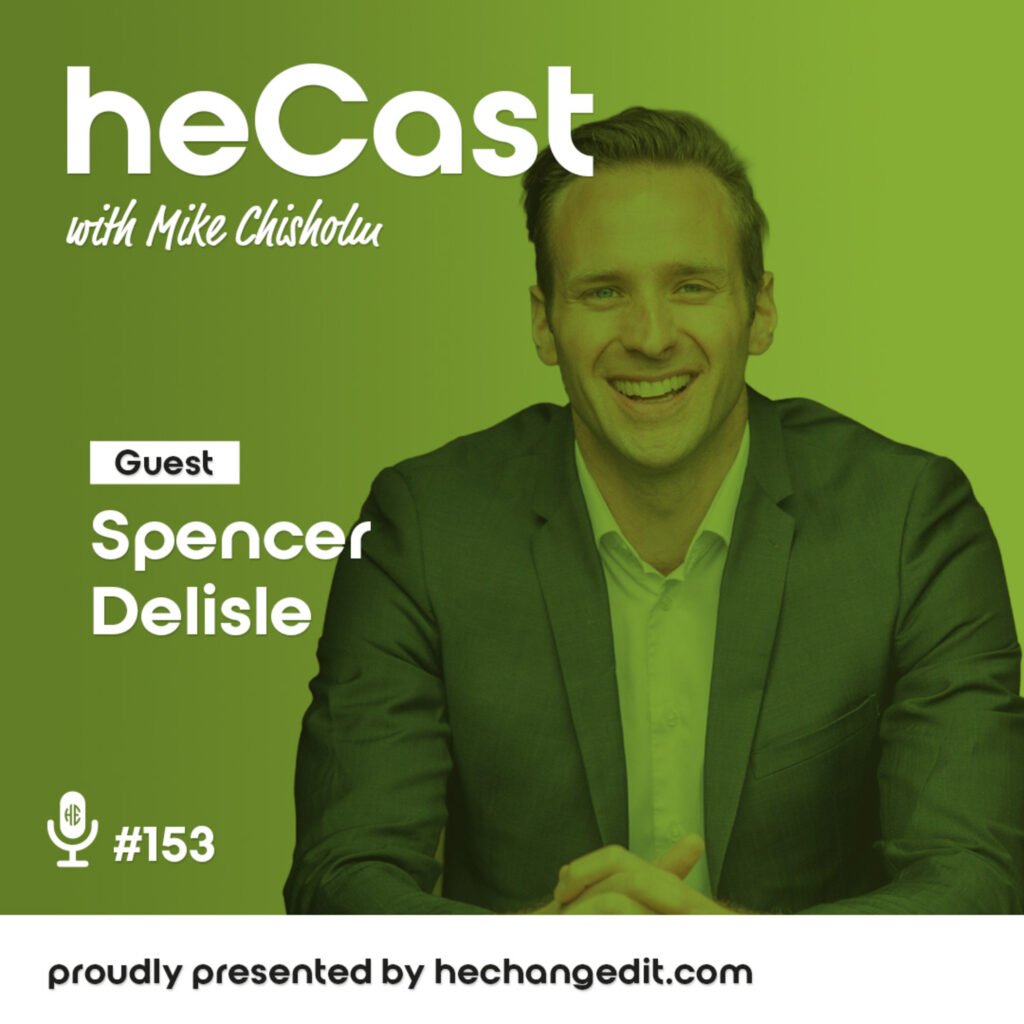
heCast Episode 153

Spencer Delisle on Meditation, Breathwork, and Mental Resilience

Season 3 01:11:22 April 1, 2026
Listen now 01:11:22
heCast Episode 153: Spencer Delisle on Meditation, Breathwork, and Mental Resilience

About this episode

Episode 153 of heCast features Spencer Delisle in a practical and eye-opening conversation about meditation, breathwork, mental resilience, focus, anxiety, and the science behind creating more calm and clarity in daily life.

Spencer Delisle is a global meditation teacher, executive coach, and the President of the Art of Living Foundation Canada. With a background in cancer and cardiology research, Spencer brings a rare mix of scientific grounding, high-performance coaching, and lived experience to the world of meditation and breathwork. In this episode, Mike and Spencer explore how simple practices like breath awareness and meditation can help regulate stress, improve focus, support emotional healing, and create more resilience in a world full of distraction and pressure.

They also discuss the common misconceptions around meditation, why it is not just a spiritual or “woo-woo” practice, and how these tools are being used with executives, athletes, first responders, veterans, and everyday people looking to feel better and perform at a higher level. Spencer shares beginner-friendly insights on how to start, what gets in the way, and why learning to sit with discomfort can become part of the path to healing and growth.

This episode is for anyone feeling overwhelmed, anxious, distracted, stuck in negative cycles, or simply looking for practical tools to create more peace, focus, and resilience.

Listen to heCast, the official podcast of HeChangedIt.

Download the HeChangedIt app for more tools, content, and support on your mental wellness journey.

Read transcript

Transcript supplied via Spotify RSS.

Welcome to Hecast, the official podcast of He Changed it.

As always, I am Mike Chisholm. As always, I am so excited to

have conversations around the world of, of mental Wellness,

men's mental Wellness specifically, but also, you

know, like when I look at today's conversation, it ain't

just about men. This is a lot of universal stuff

in this in this one here, Spencer de Leal is is, is the

president of the Art of Living Foundation in Canada.

Now this is a worldwide foundation.

It's touched over 800 million people.

And if the focal point is living better lives and, and improving

ourselves through meditation, through yoga, through practices

that have been around for a long, long time.

But, but really, at the end of the day, I don't know if there's

been a time in art, in our, in our time and place, spinning on

this rock, going around the sun, where what they're talking about

has been more needed than it is now.

And, and I mean, we're talking about ways to deal with anxiety.

We're talking about ways to deal with, you know, all of the

distractions we're we're constantly distracted and, and

our attention spans are are such that that many times we're

breaking down and there's a whole bunch of practical very

cool as Spencer talks about his journey going from a cancer

researcher. He's an executive coach and,

and, and, and, and then has done, I don't want to say an

about face. He has enhanced what he has been

doing through discovering the improvements that you can have

through meditation. And, and I, I want to be very,

very clear about this. I appreciate this about him.

He talks about how universal it is.

It doesn't have to be something where people are changing their

belief structures and all sorts of, you know, cultural, whatever

it whatever trepidation people might have.

We have a phenomenal conversation about how he as a

very clinical scientific mind went down this path and now he

is just an unbelievable resource in the world.

He, he has coached very high level athletes and executives

and things, but also people who are just looking for a way to

deal with life better than they are right now.

And I don't know if there's more of a, of a compatible guest for

Hecast. If you haven't downloaded the he

changing app, what are you waiting for?

Go to hechanging.com for all the details.

Please enjoy my amazing conversation with Spencer Deleo.

Spencer I, I've often said this being the host of Hecast, I've

got the best gig ever because I'm the one that gets to be

front seat to the insights, to the techniques, to the, the,

the, the wisdom that people have learned along the way.

This episode, I said it just before we hit record is going to

go by very, very, very, very quickly.

You know, and, and, and like I said in the intro, you've got a

lot of hats that you have worn throughout your life and it's

fascinating. You know, the word journey is Co

opted in this culture right now. And I think it's overused, but

man alive the journey you have taken to get where you are right

now, you know, from a cancer researcher, becoming a

meditation breathwork teacher. And then of course, you know,

you know, an executive coach of, of, of the highest caliber for

athletes for, you know, different people out there and

really with a message of how we can be better humans.

And I, I'm so excited to have you on here, the president of

the Art of Living Foundation in Canada, you know, one of the

largest volunteer organizations in Canada that nobody's heard

of. And I'm really excited to

introduce our audience to what it is that you do.

Spencer, thank you so much for taking time out of your insane

schedule to come on Heat cast. Thank you so much man.

Well, thank you, Mike. And you know, I I've just been

following you guys for a while there and watching your podcasts

and seeing what you get out and you know this incredible app

that you have as well. And you're doing such great

work. And it's so awesome to see such

a positive resource for men and really for everyone.

But you know, so many people, men at, I mean, can benefit from

the content, but there's so many negative stereotypes out there

for men and to have such positivity and enthusiasm and

strength is really great to see. So I appreciate all the work you

guys are doing. From a logical perspective, my

mandate, my life mission has always been don't focus on the

problem, focus on the solution. And, and I mean, we got a lot of

problems out there. That's, that's, that's true.

But when we focus on, well, what can we do about it?

You know, we take note of it, accept it, don't dwell on it.

What can we do about it? And it feels like your entire

existence now. And I mean, we all have, you

know, lives with ups and downs and all of that sort of stuff.

I don't want to, I don't want to, you know, turn you into an

Angel or anything like that, but it feels like a big part of your

life is exactly that, showing people how to focus on solution

rather than dwell and get stuck in the problems.

And there are all sorts of ways of doing that.

Meditation, of course, we're going to get into that and some

of the different techniques, but breath work and all of these

things. I want to talk to you about this

because, you know, how do you go from a medical researcher, which

I mean, the stereotypically is a very clinical existence to into

a place where stereotypically it's a very woo woo place.

And I mean, I mean that with the highest, you know, but how do

you have you always had both sides where you can kind of walk

in both worlds or, or or like how did that transformation take

place? Yeah, it's a great, it's a great

question. And I think that is the

stereotypical thing, you know, about anything that involves

meditation or spirituality or what have you is that it's going

to be woo woo. At some point.

We're going to be holding each other's hands singing kumbaya

and and, you know, this is the direction it's going to take.

And I can understand why most men are just like, there's no

way, you know, I'd rather just suffer in silence than go do any

of that. You know, that is just does not

resonate with me at all. And yeah, I think to a certain

extent, you know, I had my, you know, point in my life where it

was like that for me too. You know, I came from a

background where I would say I'm more of an introvert.

You know, I would say throughout my life, particularly my, my

young life, I've always had a real curiosity in things in

life. And you know, my, even when my

parents would buy me toys, you know, I, they'd get so

frustrated because I'd break them open.

And I want to see how they worked.

And you know, much to their chagrin of, and that the

investment that they made in those for me, but that curiosity

was there and LED me into career in science.

And I feel so grateful for being able to work in the laboratory,

you know, which is a much more, you know, working with much

smaller teams. And you know, but at the same

time, you know, the intellectual side was pretty developed, but

that other side, you know, that emotional regulation side was,

was less developed. You know, being able to, you

know, I was very anxious person. You know, I had good points and

I was able to perform well on tests and I could summon myself

up during a presentation or what have you.

But I was not comfortable in that situation at all.

And then Fast forward, you know, I found myself a few years ago

at one of our world culture festivals in front of, you know,

3.75 million people presenting. And in that moment I had a whole

like 7 pages of notes to, to introduce all the different, you

know, heads of state and these different high level business

people and spiritual leaders. And the place was.

Talking to Trump, can I interrupt you for one second on

that? You talk about the World Culture

Festival, like a lot of people don't know what that is.

And you then you mentioned heads of state, like like like

literally the tagline that we talked about, this is the

Olympics of culture. Like this is a high, high, high

level event and and it's coming to Toronto, I believe you said,

right, it's coming to the GTA. It is.

It is, yeah. OK, so so this is where you

were. So I just want to, I just want

to note that for the listener, because this is a big deal.

You find yourself like heads of state at the World Culture

Festival doing that and, and, and that that is a

transformation like based on what you said.

So I didn't. I just wanted to make sure

people understood that was a big deal, what you just said.

Yeah, Thank you. Thank you.

Yeah, Yeah. I mean the organization that I

that I lead here in Canada, it's called the The Art of Living

Foundation. Our goal is to create a stress

free, violence free world. So we got our work cut out for

us and it's a. Jesus, Buddha, Gandhi level

goal. Yeah, that you guys have, yeah.

That's it. The idea.

The idea is that, hey, you know, like we may look different, we

may eat different food, you know, but we share that common

humanity. And instead of, you know,

fighting over our differences, you know, why can't we celebrate

our differences? And especially in the times

we're living now with war and strife and people not getting

along, you know, and, you know, very narrow ideologies that are

kind of driving us apart. Not even to mention that we just

came out of a pandemic a number of years ago where we were all,

what was supposed to make us healthy was actually making us

very mentally unwell. And I know you know all about

that. So and many of your listeners do

as well. So, so the idea was, you know,

every five years we have this world culture festival.

We bring all the cultures from around the world to, you know,

show their talents and their dance song.

And it's, you know, music and culture, an incredible way to

bring people together. And, and, and that's what we've

seen and, and we've done it in Bangalore, India, Berlin and

Germany. We did one in Delhi in India.

We just did one in Washington DCA few, few years ago.

And then next year, we're having it in right here in Canada.

Wow, that's fantastic. And and I mean, you know, it

feels like as you, you kind of talked about, you know, your

journey going from from here to here, it feels like it's a

progression. And to me, Spencer, it feels

like when it comes to Toronto, it's going to be a culmination

of, of the path that you have been on in many, many respects.

That's is it a daunting task or is it just straight up

excitement like you? It's it's a muscle now you know,

you know what to do, you know how to flex it and and there'll

be excitement, of course, and the unknown of that, that sort

of thing. But is it, Is it daunting for

you that knowing that this is coming?

Yeah, I would say is definitely daunting.

It's brand new for Canada. It's a, it's a unique honor.

You know, we had about 1.1 million people come in

Washington. DCI was part of part of that

organizing committee and it's a massive undertaking, but the

transformations that you see take place, you know, you, you

know, you see the, you know, Israelis, you know,

congratulating the Palestinian and, and the, the Iranian teams

that come off after doing their presentation.

And, you know, we've got, we had like 80 food trucks there, food

from around the world, you know, So yeah, I mean, a lot of us are

foodies too. So it's like, good luck with

that. You're going to have to make

sure we're working out before and after to make sure to get

those talents off. But but, you know, it's like it

gives us a a window to just, you know, see beyond these

differences and, and start to also cultivate that piece

within. We had one of the world's

largest meditations in, in North America, in Washington and, and

you know what would be the largest meditation in the world

when we did it in Delhi. You brought up the M word and

it's finally I like I, I want to talk about it because I mean,

you know, we've had we've had a couple of people on here over

the the history of he cast where where, where they've talked

about how meditation has changed their lives and some

practitioners and things like that.

I mean, I don't think that anybody who is, you know, really

deep in the meditation world is going to enjoy the next

statement that I say because I, I don't want to talk about

meditation at a high level. But at the end of the day, when

you, when you think about who your mentor was, literally, you

know, one of the, the people who studied under the founder of

Transcendental Meditation, like, like, like, like we're talking,

you know, the bones of, of the skeleton of how this thing was,

was, was created and created a worldwide phenomenon.

So it's not a level thing. But at the end of the day, I

look at what where you have studied under and, and the

transformation that your life has taken.

Like I say, the journey that you've taken and, and I really

want to explore that a little bit.

What was your first foray into the world of meditation?

The reason I say ask this is because all of us here in the

culture, it has permeated so much.

People talk about journaling, journaling's effective

meditation. Meditation is effective.

A lot of people know that. A lot of people, it's in the

zeitgeist. It's there that it's effective,

but people don't know where to start and what to do.

And I'm curious about how you found meditation.

Yeah. I mean, I think it came from,

you know, I think there's different reasons why people

look for meditation. Some are looking to improve

their life. They're looking to be a higher

performer, whether that be in their work as an entrepreneur or

as an athlete or, you know, that's one type of person.

And then I think, you know, there are a lot of people that

are just in a lot of pain because it's very challenging to

manage their own mind. And I think that was definitely

me. You know, I was asking these big

questions about life. I kind of lost the juice in life

and, and, and was, really wasn't able to get out of it.

You know, I remember and then no knock on counseling, but I was,

I was in the middle of a, of a session with a, with a

psychologist. And I remember she broke down

and, and she was just sharing how she felt like a fraud

because, you know, she also was depressed and anxious.

And I remember just sitting there, you know, paying hundreds

of dollars for the session and thinking to myself, wow, you

know, having so much compassion because, you know, and that's in

that moment, she showed so much vulnerability, which was

incredible. But it also made me realize

like, man, this is kind of feeling like the blind leading

the blind here. And I really wanted to look to,

you know, another way that that could be very a way that I could

take responsibility for my own mental health.

So that moment started a journey where I started to do some kind

of deep introspection in myself and also tried many, many

different techniques, actually went back to school.

And even though I knew that wouldn't be the solution, I

thought, OK, well, at least it's something to do because I

couldn't find a solution otherwise.

And when I went back to school, I saw a poster that was actually

from the Art of Living club at the university I was going to.

It said free meditation. So I'm like, it's the right

price. I'm a student again.

Yeah, sure. Yep.

You know, Yep. Let me give it a shot.

And they played a guided meditation from the founder,

Guru Dev Sri Sri Ravi Shankar. And I felt, I felt like the

peace I had felt and the settleness and serenity I'd felt

when I was a kid. And I, I just observed it.

OK, wow, this is really something like this is something

worth looking into. And then I did what we call the

Art of living Part 1 course. I learned the Sudarshan Kriya.

And then this, the practice of this technique, it just totally

transformed, you know, not only my mental and emotional state,

but my confidence in able to being able to, you know, manage

my own, you know, mental, you know, physical and emotional

well-being. Yeah, I okay, so and we're gonna

talk yoga along the way as well here because obviously you went,

you didn't just go down the rabbit hole, you jumped, you

spelunked into the bottom of if you can get to the bottom ever.

I don't even know if there is. So we're gonna talk about that.

But the reason I bring it up is because yoga is a loaded word.

You know, I, I, I've done hot yoga, I've done Nidra yoga,

which are, you know, those are two very, very, very different

things, right? Meditation, same thing.

And, and you brought up the, the first experience was with a

guided, you know, a guided meditation.

And, and, and so when you talk about this level 1 of this

course that you took, did it distinguish what?

Because again, it's a very loaded word.

A lot of people don't even know, you know what it is.

It is a different thing. Did it distinguish meditation or

did it just go down a certain type and kind of show you that?

Yeah, it's a great question. And what I observed in the

course is that it laid out like a road map kind of a thing and

gave you the lay of the land. Because I think that so so many

of us, you know, we experience emotions and we're not even

aware of it, right? We're just, we jump into anger

and we're yelling at someone because there we go.

Maybe we don't even realize why. And maybe it's because we were

frustrated. You know, maybe it's just a

built up tension. Maybe it's some trigger that we

have from the past, our past. And I think the, the first part

of the course is, is really talking about the nature of the

mind and the nature of our existence as a person or as a

man. And it was really enlightening

for me because I'd never thought about it like that.

You know, they, they talk about, we talk about how, you know,

there's 7 levels to your existence.

There's the body, the most gross aspect.

Then we have the breath, a little more subtle.

Then we have the mind, which is effectively everything that

comes in through the senses. It's kind of like the projector

screen for consciousness. And we have the intellect that

analyzes and deciphers all of these things.

The memory, which you know can be a really useful tool,

especially if you're looking for your keys or you want to

remember something for a presentation or what have you.

But it can also be something that takes us out of the present

moment, you know, if we're hooked up.

Real easy, yeah. Yeah, we can get stuck, right.

So it can be something, you know, depending on how healthy

and you know, you could say well managed or purified that part of

us is it can be a pro or a con. The memory and then the ego is

the 6th one, that aspect of us that I am, you know, and it

could be, it could be, you know, I am better than everybody and

everyone is below me. Or it can also be the opposite.

It can be OK, everybody's so much better and I'm way down

here, you know, or if we cultivated, it can be this

all-encompassing ego which we all have experienced, you know,

where you know, I, you know, I see your success and I'm really

happy for you. And then, you know, vice versa.

So the ego can be cultivated and then that last layer of the

self, which is you could see the essence of who we are, that

love, that joy, that peace, which is our nature.

You know you you look at a healthy baby or a healthy

toddler or child, You know they don't.

They don't need a reason to smile.

No, they're exactly present 100% of the time.

Yeah, there you go. They're 100% present and they're

living in that, in that state of presence and living from the

self. And, you know, really what's the

difference between US? And you know, of course we have

all of our experiences, but often it's the stress in our

life that, you know, kind of puts the clouds over that nature

that we have. And you know, you, you know,

someone may say, well, you know, if you're saying my nature is

love and peace and joy and, you know, intuition and creativity,

well, I don't feel that at all. You know, someone may say, I

don't feel that at all. Well, you know, you could put

the analogy that it's a cloudy day today in southern Ontario,

where I where I am, you know, does that mean that the sun is

not there? Of course not.

We all know that the sun is shining bright.

And if we're able to use some techniques, some wisdom to take

away those clouds, then we can see the sun and we can live from

that place more often. So that was a real epiphany for

me because I thought I was an angry person.

I thought that I was an anxious person.

I thought that was OK, that's just the way I am and I've got

to accept it and that's it. But actually, I learned that no,

these are fleeting emotions that I was hanging onto.

And through these techniques, through this wisdom, I've been

able to let those emotions flow so that I can live more in the

present moment and live from that that essence of who we are,

the the self. I love that you're talking about

this. I, I, I have a, a shorthand that

I say to my client, I'm in the, I'm in the financial field is

where, where I work and I work with families, middle class

families. And, and, and one of the things

that especially during tumultuous times, right, people,

their emotions get the better of them sometimes.

And then they'll call me up. And, and one of my jobs is

basically, you know, to help people take emotion out of the

situation and make it really logical.

And one of the shorthands that I use, and I don't know where I

heard it or if I, if I, if I made it up, I don't even know.

I talk about primary and secondary emotions.

And, and many times when, when a client calls me up and says,

Hey, we need to meet, you know, there's a skirmish going on in

Iran right now. We need to meet.

The markets are up and down. They're up and down, they're up

and down, right? And, and So what we meet, I

always say, OK, the, the you're, you're talking to me out of the

secondary emotion. The secondary emotion is that

you're anxious. And these are, but really at the

end of the day, the primary emotion is the thing we need to,

to focus on. You know, if somebody's angry,

it's probably because they were hurt or offended or they were,

you know, and if you go back to the primary, like, why is this

emotion showing up right now? And it can go positive too.

Somebody's really, really happy, right?

What caused that, you know, and then you go back and you can

explore these things. And I, I just, I, that's just my

shorthand for it or whatever. And, and people kind of

understand it and they, they, they, they go from there.

And it feels like that's the deep dive that you took, you

know, OK, I'm an anxious person. OK, well, let's, let's, let's,

you're talking about a symptom. Let's go back and talk about

what caused that symptom to, to occur.

And, and so, you know, if I'm hearing you right, level 1 is,

is, is, is you kind of exploring these truths of existence and

then it kind of moves into, OK, now how we're going to, you

know, affect all of these different levels and meditation

as a tool to do that. Am I hearing that correctly?

Exactly. And I think I think that's The

thing is that, you know, you know, on the course, it's

expressed that, you know, stress is a major factor that takes us

out of the present moment, clouds our judgement.

And, you know, you know, how do we, how do we reduce stress?

How do we how do we bring the mind back to the present moment

effectively? What is meditation?

It's being present, if you want to boil it down, you know, being

present with what is. And typically our mind is either

in the future worrying about things, getting anxious, but

things like you were talking about, you know, war that's

happening wherever in the world, the effect it'll have on My

Portfolio or, or regretting things.

Oh, you know, if I only had moved, you know, this investment

this time, oh, wow, life could have been very different.

There you go, there you go. That's exactly it.

And, and, and, and, and I mean, if we can learn to manage that

in ourselves, and I mean, it comes down to awareness,

self-awareness. And, and really at the end of

the day, I, I'll tell you a book that changed my life and I don't

know how much it corresponds with, with, with art of living

or not. I'm, I'm curious actually.

Have you read Power of Now by Eckhart Tolle?

You know, I leafed through it, but the what I did read is very

powerful. Yeah, well, and I mean, it

really is, is, is, is kind of a, a little guidebook to show you

how to become present, to show you that your mind is not you

and to show you, you know, a, a, a big, a bigger, there's a

bigger thing out there and presence is the thing that's

going to attach you to it. And, and really, that to me was

a gateway. And, and I mean, I'm going to, I

might as well just ask it to you right now, because I mean, when

you're doing level 1, when you're starting meditation, I

mean, I want to ask you after all this time, are you any good

at it yet? Because I mean, and, and then

you learn the truth. There's no such thing as a bad

meditation. You learn that truth, right?

But I mean, I, how many times have I met people who have said,

Oh, I tried meditating. I was no good at it, so I

stopped doing it. And, and that shows the missing

of the point of the whole thing. And that was one point I really

wanted to talk about here today, because there's a lot of people

out there who have, who have dabbled and, and, and, and, and

they think that they did it wrong.

And, and, and it's because they expect, I think it's probably

because they expect a result right away that is a little more

tangible than what, what the exercise does.

I don't know. That's just my, that's just my

thought to it. But did you think that at the

beginning when you first tried it?

Yeah, I think I had big expectations in the beginning.

And I think you're 100% right. You know, I think a lot of

people, you know, have this impression that meditation is

just this completely peaceful state void of thoughts where,

you know, you're in bliss 100% of the time.

And sure, I mean, that can be the case.

You know, that is a state in meditation, but the reality is,

is that the way this magnificent Symphony of activity that we

call this phenomenon that we call the body and the mind, the,

the, IT works on different laws and, and, and really when we're

able to calm the system down, you know, calm the body and the

mind are connected. If I can calm the mind down

because they're connected automatically the body is going

to calm down when I calm both down.

What happens is, is just naturally, it kicks off the

stress when it kicks off the stress that often gets expressed

as can be expressed through as emotions.

It can be expressed through sensations in the body, through

thoughts, all kinds of things. So typically when people are

doing this rhythmic breathing meditation called the Sudarshan

Kriya, a lot of things are coming up.

It's releasing a lot of old traumas and stresses from the

past. So some people may feel a lot of

anger in, during during the process of this rhythmic

breathing meditation. They may feel some anxiety.

And we do our best in the beginning to really, you know,

let people know that, you know, it's coming up to come out.

It's, you know, it's, it's just, yeah, you know, it's, it's just

like if you're, if you're sick and you got to throw up, well,

you might as well just get it over with because you're going

to feel a lot better. And, and yeah, the process is

not so nice. But once you're done, wow,

you're that much lighter, you're that much more free.

And that really is the process of seduction Korea, especially

the the 1st when you start to first do this, this technique,

you know, there are a lot of different emotions and

different, you know, traumas and stresses that are coming out.

Process is not so comfortable. But in the end, with time and

practice, it does settle down and bring you to that, that

present moment. But like you said, not all the

time. It depending on how much

cleansing is happening. If more cleansing is happening,

you're not going to be so comfortable.

If you're in that more peaceful, settled, calm state, enjoy it.

It's, it's a journey, just like you said, and being able to give

ourselves that permission to be in a state, whatever that is, is

often a great way to be present as well.

Again, I just go back to I'm the luckiest guy in the world

because I get to be the guy that that that hears all of these

things and, and I'm taking it in and, and very, very grateful

for, for, for what you're talking about here.

There's a bunch of things there that like the first thing you

said was, OK, if you have an active mind and you want to calm

the mind, you calm the mind 1st. And then the there's people who

are out there listening to this right now that are in a state of

their mind is going 1,000,000 miles a minute.

You know, whether they're stuck in fight or flight, whatever it

is, their mind is just going. And when you said, OK, yeah.

And then you can calm the mind. They're probably held up on

that. Wait a second.

You can calm the mind. Yeah.

This is what we're talking about here, you know, and then the

idea of uncomfortable things coming up, they come up to come

out. My God, like I, I, that is a

such a simple concept almost. It's it, I think we all just

kind of fly by it sometimes because we don't like being

uncomfortable. But the idea of that discomfort,

which is temporary, everything is temporary.

We hear this. It's a, it's a, it's a, it's a,

you know, a platitude that's out there.

Everything is temporary. But here's where it's practical,

you know, if it's starting to come out, you let it out.

And that can happen through breath work, through meditation.

I, I got a question about, OK, so somebody who hears this and

they've got their, you know, their little ears are pointed up

going, wait a second. OK, I want, you know, this might

be something I want to do. Do you have a like when it comes

to meditation? I mean, again, we talked about

there's guided meditations. There are ones where you have

affirmations that you focus on, where you just focus on the

breath and it's silent and, and, and you know, maybe time is

involved, that kind of a thing. If somebody wants to dip their

toe and they want to start looking at it.

Do you have, I'm sure it's not a one size fit all kind of a

thing, but is there a pathway for an average guy who's out

there who's like, OK, you know, I've heard this forever.

I've got you've got my attention.

Is there a common way that people usually start?

Definitely, I mean, this, the Part 1 course is meant for

someone that has either no experience or, you know, this

has been taught to, you know, sages in the Himalayas that have

been meditating their whole life.

You know, this, this technique, it's a very, it's a very ancient

technique that you could say was kind of rediscovered in

meditation by Gouda Dev Sri Sri Ravi Shankar.

He went on a 10 day, he went in the basically in the jungle for

for 10 days. And he came out of that silent,

you know, personal retreat with this technique.

And it's something that, you know, it's interesting.

Many people have told him that it's too precious to share

unless someone has done, you know, years and years of service

and toiled it, you know, the retreat of the ashrams.

You know, that you should only give it to people that are truly

deserving. But but the way his aspect is,

his perspective, I should say, is that the times are such that

this is what's needed and let's make it available to everybody

and then whoever you know is able to benefit.

Great. And if not, that's all good too.

Everyone has their own path so people can feel confident in

coming on the course. It's a step by step process.

It's a three day course where it's a few hours a day.

If you do it online, it's 2 1/2 hours.

If you do it in person, it's three.

And we teach a number of preparatory techniques so we

don't jump into the Sudarshan Kriya, the sky breath meditation

right away. We teach some techniques that

are a little they're, they're actually very good, not only for

as a daily practice, but something you can use to calm

and soothe the mind even in a conversation.

Like imagine you're in a challenging conversation and

that person, you know, triggers you in some way.

Well, this is very common. We've all experienced that,

right? And instead of jumping into a

reaction, you could start this breathing and nobody will know

you're doing it. You can do it anytime you want.

And it's a very powerful way to kind of get back in the driver's

seat of your your mind and emotions.

Yeah, So like, OK, now that being said, there's a part of me

that loves going down the rabbit hole and the idea of like, OK,

I've had a I've had a couple and I mean, they're, they're they're

they're, they're minimal compared to what other people

have done. I've had a couple psychedelic

experiences that involve no substances whatsoever.

One time I was in a float tank, I was in a separate sensory

depriation tank and it happened in there.

The other was when I was at a breathwork seminar And, and,

and, and so I'm, I'm so that's the beginning of the rabbit

hole, which is fantastic. Let's go down the advancement a

little bit. When, when, when, when you start

to, you don't just dip your toe and stop because you think you

can't do it. No, you just you, you let the

process start to take form and, and, and you move forward.

You can see some pretty wild things.

You can have some pretty wild insights.

And I'm super curious for you through breath work, through

meditation, you know, you talk about these, these levels and

the states that you can get to and feel.

Does that happen often for you, Spencer?

Yeah, it's a great question. And definitely there's all kinds

of experiences that that you can have.

And sure, you know, I've had all kinds of experiences in terms of

like, you know, seeing colors and, you know, having.

Yeah. I, I mean, even after some of

these deep, you know, meditations, you know, just

feeling like, wow, I'm not, I don't even have a body.

Yeah. I'm in such a deep state that I

just feel connected with everyone and everything.

And I don't even identify with his body at all.

I just feel like I'm energy, you know, having that deep state of,

of bliss and fulfillment where everybody is connected to me.

I'm connected to everybody else. And yeah, all my desires and,

you know, all my cravings and aversions, they all melt away.

And this state becomes so energizing that you even just

dip into that for even a few seconds or a few minutes.

And the level of energy and vitality that you have is, is

remarkable. And, and sure, these techniques

can, can bring you all of that. And I would say that there is a,

there is a state, you know, I would say also to peer beyond

the curtain of these experiences and the real wealth is sitting

for you there because the, the experiences are, are one thing.

And I would say that in order to dip into the self and get to

that deeper level of of experience, it takes that aspect

of patience and rest. And I think that if of course,

you know, we're talking about enjoying that and having a good

experience, that kind of thing. But like I see a number of

people, they're just searching for the next high.

Oh yeah, Yep. You know, so if you're

constantly searching for a next level of excitement and you're

driving, you want to, you know, kind of drive yourself up to the

next level of excitement again and again and again.

It it's still almost, you're still kind of in the senses.

But if you're willing to go beyond the senses and go beyond

yourself in a sense and just be in that relaxed state and accept

whether it is not getting too excited, if it's sensational

experience or not getting too, you know, kind of bogged down if

it's not the psychedelic experience you wanted, right.

But just, yeah, being with what is that I've seen the greatest

transformations in, I mean, you know, for myself, we, we've

taught many courses with veterans that come back from

combat and they do this technique, this Sudarshan Korea

sky breath meditation. And I remember there one

instance where this gentleman, he hadn't slept for more than 4

hours in for the past 10 years since his deployment.

Oh, wow. So it's so interesting, the

irony, because what kept him alive on the battlefield, this

hyper vigilance was tearing him apart at home.

And, you know, he couldn't sleep, digestion was shot, he

couldn't eat. His relationship with his family

and his kids were falling apart. And he just didn't know what to

do. You know, going to all kinds of

substance abuse because you don't know how to calm your mind

down otherwise. And so he came to the course

with his head on a swivel. And after doing the first

Sudarshan Kriya, he went home and he came back the next day

for the course. And he was kind of like, tongue

in cheek pissed off at us. And we were like, OK, well, what

what's the problem? He said, well, because of you, I

almost missed my dentist appointment.

I slept 10 hours last night. No way.

You know, his like his move 11 using the technique once and

yeah, the nervous system was so, you know, so exhausted and

craving for that rest that it finally was allowed to do so.

And you should have seen him the next day.

Like of course, you know it it it's a journey.

You know, it's not a A1 and done.

There's no silver bullet. But the difference in him, you

know, the fact that he wasn't. Swiveling his head every two

seconds. The fact that, you know, his

legs weren't bouncing around so much and that instead of having

this angry look on his face or big frown, the guy, you know,

had a smile on his face. It, it's, it's incredible.

I feel like just like you were saying, you know, like I feel so

fortunate to, you know, be someone that can share these

techniques and this wisdom because I think it's the need of

the hour. You know, neither at home nor at

school have we learned how to manage our mind and emotions.

Yeah. I mean that's it's so well

articulated now. Now let's take it back to again,

part of the journey as to, as to what you do.

You know, there are people out there who are, who are, who are

lost and, and, and they're anxious and they're, they're

that this place where, you know, they're darting from one thing

to another. Whatever, this can calm things

down. I, I love, I love how you use

the, the story of the veteran there.

And I mean, PTSDI mean there's, there's so much when it comes to

people with PTSD, whatever it is, it could be, it could be

something extreme. PTSD is one of those funny

things like trauma. It's, it's individual, right?

And you can't judge it because you know what somebody's trauma

is, It could be somebody said something to somebody the wrong

way. We're in their 4th grade and the

neuroplasticity was particularly sticky that day.

And then it just, you know, it, it, it that carried with them.

They could be something very, very minute as well.

And, and I appreciate the fact that this can help uncover some

of these things. And when it comes up, it wants

to come out. I love that.

Now let's take it and look at the focal point though, like

when you deal with some of these like high impact athletes, some

of these high impact, you know, executives or, or, or, or, or

performers in business, things like that.

We can also take, you know, these techniques and, and, and,

and these these amazing, amazing gifts that are available to

anybody that we can all learn and master.

There is no, you know, there is no hierarchy when it comes to

this. And then you can take it and use

it to focus on a goal. And, and I think that that is

something that it's really worth talking about too, because there

are a lot of people who are stuck because they want to jump

towards their goal or their dream.

They want to advance in their life, whatever that looks like.

And then you can take it and you can actually laser focus it as

well. And I'd, I'd love to hear your

thoughts on that a little bit as well.

Yeah, it's a great point. I think now we live in they call

this VUCA world, this volatile, uncertain, complex, ambiguous

world. Like I just think back to my

childhood and I mean, my grandparents had a phone that

actually you had to turn and it would make sparks to, you know,

to to make the call, right? And like, you would curse the

people had zeros in their phone number because you would have to

keep, you know, waiting for that thing to come all the way back.

Like, and you called someone like if they were not home,

like, and that was it actually. Like you were not going to get a

hold of them until they got back to the office or or back home.

Like it was just a totally different world, like completely

different. And and now, you know, we live

in this world where everyone's got a device.

If you don't respond within a matter of minutes, you know,

that could be really troublesome thing either for family or or

work. And you know, we're constantly

pulled into this, you know, social media, this doom

scrolling and, you know, because of that, you know, we're living

in this very distracted society and this very distracted

environment. So no wonder it's hard to focus.

And you know, I think I, I, I know, I've, I've read some

studies, you know, over the past 20 years, I think the average

attention span has gone from about, I think it's, it was like

2 1/2 minutes all the way down, You know, to, I think we're,

we're under 10 seconds now on the, for the, it's crazy.

The average person is wild, you know what I mean?

The reason they had classrooms at 40 minutes way back in the

day when they set those is because they said after the

attention span that they'd researched whatever it was in

the 50s or the 40s or whatever it was.

So, you know, we're living in a, in a completely different world.

So, you know, no wonder we're having trouble focusing.

So now, you know, how do we focus?

What is focus? Well, it's bringing the mind to

the present moment. You know, how, how do we arrest

the mind and bring it to the present moment?

Well, can we force the mind to be in the present moment?

You know, can you force yourself to go to sleep?

Oh, well, I'm a double PhD. My mind should listen to me like

no way. Doesn't matter.

Like so. So if you can't.

You can tame the mind, but just not through force.

You can tame it through other ways and that's.

What we're talking about here exactly.

And that's it. And that's it.

So, so the, the, the point is that, you know, the, the law of

the mind is different from the law of the body.

Law of the body says if I put resistance, I try to push

something away with resistance, I'll be able to push it away.

But if I try to push away a thought, if I try to push away

my emotions, if I resist my emotions, OK, that anxiety, that

anger, I don't want to feel that anger.

Not now. I can't feel that anger.

No, this is not fair. I don't want to.

What happens, it comes back even stronger.

So yeah, sitting in it. We hear about this, we need to

learn to sit in it, and this is what you're talking about here.

That's exactly it. And the idea and the the phrase

that I really like is, you know, whatever you resist at the level

of the mind persists. So.

So the. Yeah.

It's like a skipping record. It it doesn't have a chance to

get past the the past. The part where it's skipping the

resistance creates that skip. Yeah.

That's it. So I mean, there's many ways to

do this, as you said. And I think one powerful way

that, you know, we do at the Art of Living Foundation is we use

the breath as an anchor. So, you know, is there a moment

that the breath is not in the present moment?

You know, can I say, OK, I breathed enough today, I'm going

to take a break. It's getting a little boring.

In, out, in, out and I'm going to start again on on Saturday.

Yeah. Obviously not going to happen.

What a great analogy, you know, so, so, so the breath is always

in the present moment. So this becomes a very powerful

way that I can start, you know, to bring myself back to the

present moment by putting an attention on the breath.

And if you think of the mind as a kite and you know, we, the

breath would be the string. And typically most of our kites,

we don't have a, we have a string on there, we're not using

it. The kite is just flying away

somewhere. It's going wherever it wants.

But with the breath, it becomes much easier to bring our, our

mind back to the present woman. And not only to make us more

present, but the breath is also a powerful tool for helping us

manage the emotions as well. You know, if you think about it

like when you're angry, how do you breathe?

Yeah, intense. Yeah, yeah, that's it.

You intense can be heavy or when you're anxious, you know, how do

you breathe? Shallow.

Many times it's. Exactly.

Yeah, Yeah. Shallow.

Sometimes you don't breathe at all.

Yeah, yeah, you you kind of lose your breath.

So when I'm with my trainer, you know, when we're working out, I

mean, I can't tell you the first two months when I was with, when

I first started with him. The first two months is, hey

buddy, breathe right now. Breathe through.

Like regularly. Like like, like that was the

most, you know, you're muscle, you're not going to muscle

through it. You know, if you're doing a, a

bench or whatever it is, if you don't breathe properly by the

time you get to six or seven, you're not going to get to 12

today if you're not breathing right, Right.

Like, like anytime there's any sort of opportunity for us to go

back and focus on our breath to make sure that we're doing what

we're supposed to be doing, the net result is going to be

whatever it is that we're doing will be easier or better.

Yeah, that's exactly it. So I and I think that is

something that's lost on a lot of people is the fact that.

Well, that's the thing. Like, like, again, I think about

the people who are listening to this right now.

It's so simple, you know. Yeah, yeah, it's, it's very,

very simple. I cut you off there.

How it's lost, It is lost, but but it's just, it's such a

simple thing. People don't realize that right

here in front of you, you have the tools to help you get past

whatever it is that you're going through, whatever it is, how,

however big it is, there's nothing, you know, too big that

you can't use these tools to get past what you are.

So sorry, that's my little rat there.

But I just, it's so simple, like hearing you talk about it.

It's one of those things it's easy to do.

It's easy not to do right? Yeah, now it's so true.

And, and you know, there's this old anecdote of this beggar

sitting under a tree. And you know, for years, he, he

begged in this one spot, begging, begging for what anyone

would give him, just hoping that someone would give him enough

to, to survive. And then one day he passed away

and they removed some of the dirt on that spot where he was.

And they dug up some of the dirt.

And what did they find? They found a huge treasure.

And he'd been sitting on that treasure his whole life and he

didn't even know it. And you know, that treasure is

the breath. And, you know, typically we we

breathe typically we, we feel an emotion and we breathe in a

certain way. But you know, what we're doing

is we're actually kind of flipping the script a little

bit. We're making that one way St.

into a two way street. So we start to be able to use

the breath to be able to manage the mind and emotions.

And you know, this is definitely the best way to test this out is

to come and to experience it, you know, for yourself.

But there's a lot of, we have over 100 plus research studies,

you know, demonstrating, you know, the benefits of this.

And, and really, you know, from a scientific perspective,

there's one of the breathing techniques that we teach on the

course is called Ujjay breath or victory breath.

And this breathing technique, it actually activates the the vagus

nerve, which they call like the second brain.

And typically when we get stressed out, you know what

happens? The mind, the cerebral cortex

actually gets flooded by cortisol.

Cortisol blocks neural communication.

So if your neurons can't communicate, you're done.

So instead of your wizard brain, your cerebral cortex, where all

the rational, intelligent, creative thinking happens, you

you fall back to the amygdala, that kind of lizard brain, you

know, where the fight or flight. Yeah, the reptile is happening.

Yep, exactly. Exactly.

So if if we're stuck there, we're in reaction and not the

best outcomes come out of that. But when you start to stimulate

that vagus nerve, one of the the aspects and one of the benefits

of that is that it clears the cortisol in the cerebral cortex.

So you can flip back to your wizard brain that cerebral

cortex reasoning in a rational intelligent thinking and you can

make a better decision. So, you know, not only is the

breath something that is essential to keep us alive, it

can be a very powerful tool to, you know, manage our mind and

emotions. Hey guys, anybody out there, you

know, you get frustrated with, with your spouse, you get

frustrated with your kids, you get frustrated with Co workers,

you get, you get frustrated. You know what?

You can mitigate that frustration with some breathing,

with some very simple breathing. And you know, Spencer and his

team and, and, and that's not even a this, this worldwide

movement can show you that. And, and I mean, it's, it's,

it's all over the world. You know, you've seen this thing

grow. How long have you been involved?

Because I mean, you're the president now in, in, in the

Canadian arm of art of living. You've seen this thing grow

considerably in your time since you've started to where we are

now. Yeah, it's, it's incredible.

I mean, now we're in a place where Art of Living Foundation,

I mean, it was started, you know, in 1984 by Gouda Desh Sri

Sri Abhi Shankar. By the way, is like has received

dozens and dozens and dozens of massive awards all around the

world from all sorts of different countries, highest

level or or some of the very high level awards that countries

have to offer. He has he has received them.

He is a world changer. He is, he is that guy.

And I mean, a lot of people haven't heard.

It might not be a household name, but I mean an absolute

world changer. Incredible, you know, I mean,

you know, he is not only is he like a master of meditation and

someone really walking the talk, you know, someone living in the

present moment all the time. And, you know, he could have

just stayed in India however many years ago in the 80s that

he started this and many people actually said, hey, there's so

many people in India, why did you stay here?

There's no need for you to go outside.

But he said no, that, you know, this knowledge is for everyone.

And that's the beauty of it is that this wisdom and meditation,

breathing techniques, yoga, this is something for humanity.

And it's, you know, it's effectively Vedic wisdom is what

we call it. It's, it's totally secular and

doesn't matter, you know, who you pray to or not, or where

you're from or what you look like.

Really, this is something that is of value, you know, to

everyone, you know that you see the, IT revolution and, and

we've seen these, these cell phones, you know, everyone's got

it in their, in their back pocket and, and, and, and it's

very useful and it's been something that's so useful to

people. So it's spread, you know,

throughout the world in all kinds of different languages and

all kinds of different countries.

And I mean, I think the the movement and revolution we're

involved in is the inner technology, another type of IT

and. Oh, I love it.

Another type of I'm writing it down.

OK, the other this is the this is the good IT, not the IT.

No offense to anybody who's in the no, I don't want, you know,

a bunch of people coming at me saying that No, no, the the

internal technology. I love that.

What a great what a great stopper.

That's a that's a that's a wonderful, wonderful phrase

there. Yeah, internal.

Technology. And I think for me, you know,

good Dev, he's been such an inspiration, you know, just

learning these techniques, how much they've transformed my

lives and the lives of my students.

And really he, he, he travels the world tirelessly.

Like we are in 186 countries now, which is wild.

There are, there are 40,000 Art of Living teachers that teach

these techniques 40,000. I mean it is incredible.

And I think last time the number that we have for people that

have taken our programs and and come to our events, we're at

over 800 million. So it's wild that obviously it's

interesting, you know, we had such a global impact, but that's

part of why we're having the conversation now is that, you

know, many people don't know about us at all here in Canada.

And so we're doing our best to get ourselves out there and

connect with people to say, hey, you have your own way of life,

you're very successful and a number of aspects of it.

And we want to, we want to give you a few more tools that'll

help you be even better and be able to be there more, you know,

aware and, and, and present with your kids and, and your family

and, yeah, help you enjoy life just that much more.

I'm really glad you brought that up because I'm in the comedy

world a little bit. And so I'm constantly, I host

the Letterman podcast, right? So I'm constantly looking at

yeah, so I'm always looking at. Actually it's one of Daves

Bridges right behind. Us right, right, Okay, cool,

that's awesome. But and so I'm constantly

staying up on what's going on in kind of that world.

And and recently Jerry Seinfeld was on, I think it was Neil

Brennan's podcast. I think it was Neil.

It might not have been, it might have been Mark Norman's.

I forget. They all blurred together.

But anyway, he has been a Transcendental Meditation

practitioner for a long, long, long, long time.

And so when somebody asked him about it, I forget who it was,

but it was one of them. They asked him about it.

And Jerry was like, no, it's a relaxation technique.

It's he, he basically said it has nothing to do because he's,

he's Jewish as well. And I mean, I'm not, I don't

know, you know, how, how far down the path he goes with his

spirituality. But basically it's been, it's

been thrown out there like the, the the the interviewer was

like, or the the conversation. He was shocked that Jerry would

say something like that. Because I think a lot of people

have a stigma when it comes to, again, meditation is a very

loaded word, you know, and, and I love the fact that you in

talking about this said, OK, well, hold on a second.

The stigma that's out there is that, OK, Well, if I'm going to

get into meditation and all of that sort of stuff, any other

religious, spiritual, philosophical practice that I

have formed my life around is in jeopardy.

And, and I love the way that you describe that.

I think it's really important because no, no breath work does

not mean that you're not, that you can't believe in the, in

the, the, the things that you believe in and things like that.

I love the fact that you made that distinction.

Now, obviously people are going to go down different rabbit

holes and where, where they go, where life takes them, where

they're supposed to go. Hopefully, hopefully that's what

we're all doing is where we're supposed to go.

And if we're not, these techniques will probably put it

in your face that you're not and and maybe give you the insights

of the strength to make the change that you need to change

to to make. Sometimes that's what it

sometimes that's what it takes to do this sort of thing.

But I'm really grateful that you made that distinction.

Now I want to I want to this came into my head as you were

talking a little bit earlier and I want to I want to ask this.

It's almost like a like an American SAT type question.

Is meditation for the mind what yoga is for the body?

That's a great question. Yeah.

I mean, I think depends on how you define yoga, because yoga in

one way. There you go.

Yeah, again, loaded word. There you go.

Exactly. So yoga in the way most people

understand it is like the yoga asanas, like the postures and

that kind of thing, which is one part of yoga.

The other way that the more traditional definition of yoga

is this vast knowledge, this vast expansive kind of, you

know, library of Vedic wisdom. And this includes meditation

actually. And you could say that

definitely two things that are, are, are, are in the present

moment all the time. The one we already talked about

the breath, the breath and the other is the body.

So the body is, is constant, is always in the present moment.

So like you said, you know, these asanas actually

traditionally have been used one of course, to stretch the body.

But but that's not the principal reason that we do the asanas.

Principal reason we do the asanas actually is to prepare

the mind to go into meditation because like we started in the

beginning, if your body is in is is tense, if your body is

stressed, you know, body and mind are connected.

So if your body is is tensed and stressed and all, you know,

wigged out, then what's going to happen to the mind?

Well, Yep, mind is going to go in the exact same place.

So if we're able to settle the body down with those yoga

asanas, then it becomes much more easy to, to meditate.

And I think that's another one I really liked.

You know, how here you make things so practical for people.

And it's true, many people say that meditation, that'll never

be for me. I could never calm my mind and,

and do that, you know, and, and the, the idea that comes up is

that like, oh, a calm mind is a precursor for meditation.

I don't want to call my mind. I'm afraid as to what will be

there once it gets calm, you know, like what could come up.

I don't even or I can't calm my mind that's.

Another. I can't.

Yeah, yeah, 100 percent, 100%. So, so that's The thing is that,

you know, through these asanas, you know, through movement work,

even through like a lot of physical activity, like for, you

know, the sports people here, we work with a lot of athletes, the

mind can calm down a lot with, with physical activity, you tire

out the body, the mind becomes tired and calm.

But beyond that, you know, going back to your, your question

about the asanas and the meditation for the mind, the

asanas are really meant to bring the mind to a state of

meditation. And then the meditation

technique itself is supposed to kind of dive deeper into that,

so to speak. So you could think of it, yeah,

you could think of it as as the, the awesomeness are bringing you

kind of in front of the mirror and the meditation is looking in

the mirror and experiencing that depth of yourself and, and

seeing, yeah, how incredible you are, how incredibly vast and,

and, and beautiful and, and, and the depth and the peace and that

love that's that's deep within you.

You know, like this is something totally unrelated to what you

asked. But often, you know, we keep

changing cities, we keep changing partners, you know,

because we feel that there's something, you know, not right

about that other place or that other person.

But you know, how about we look at ourselves?

You know, you can, you can change, yeah, you can change 7

billion people on the planet or you can change one person.

And there. It is.

And and that you know, that is a kind of AI think a bitter pill

to swallow for some of us. But once you do, once you do

have the courage to be yourself, to open your arms up and

experience what is whatever emotion that be, whatever

thought that that may be you'd like.

The experience is beyond what I can share.

Like you will never, I will never be able to express to you

what it is. I mean, you know, you've you've

been meditating, but it it's you can't communicate it.

It's something not of the mind. It's something of the of

experience. You need to experience it.

It can't be communicated. Oh.

Man, I like I said, I knew we both know time gets slippery

when we, when we do this here. And I mean like, right, This is

why I love long form so much because I feel like we're just

getting going. Like I've got 3 or 4 things that

I want to jump into. Like I love having you here.

And, and, and I do like I've got many other discussion points I

would like to go over with you. Can we do a Part 2 at some

point? Let's do it, love.

To. I want to do that because,

because I really feel like we're just getting to the edge here.

Like, but what you just said is such also a perfect way to, to,

to cap your first appearance of, of, of, of hopefully many

Spencer appearances on Ecast. Because the guys who are out

there who maybe as we've been talking, we've been maybe going

through some layers and really at the end of the day, you just,

you just friggin hit it, man. It's, it's, it's, it's you could

change 7 billion people. You could just go change

yourself. Yeah, really.

What is what is the way to do it?

You know, do you want that restless spirit where you're

constantly whatever it is, whether it's vehicles, whether

it's partners, whether it's cities, whether it's whatever it

is looking for, the looking for it, looking for it, looking for

hold on a second, What if you got peaceful inside?

What you might find is what you end up looking for is completely

different than what you would have had you not done that work

and. I mean that can.

Be location that can be all of that stuff, right?

And, and, and there's guys out there who are listening to this

right now who I hope I pray get a light bulb moment realizing

that, you know, it might not be about everybody else and it

probably isn't about everybody else.

In fact, if you get yourself bulletproof, it's not about

anybody else because you're bulletproof.

It's always about you and what other people do are what they're

going to do. And this is where you get to.

Is that am I? Am I?

Am I right on that? Yeah, 100 percent, 100%.

I think that's the incredible journey that no one can do for

you. You know, you and I can share

our experiences, we can share, I mean, people can feel it, right?

You know, the enthusiasm you bring, you know, to the way you

present and the way you share, You know, like, like you can

tell that that, you know, you're a competent person and you're

doing these practices like, like this is something that you need

to experience for yourself. And, and, and I think that if,

if we could say one thing, you know, for you to take that first

step, you know, whether it be to, you know, come on, we've got

a lot of videos on YouTube. If you check out Art of Living,

we've got a a YouTube channel and there's many different very

short exercises. People can try something out of

it. They just want to kind of want

to dip their toes in and they're not ready to invest in a deeper

dive program yet. But I would encourage you to to

really. Yeah, put yourself first.

You know, that that often used analogy of the oxygen mask, you

know, and, and you know, we don't, we don't read that, you

know, safety card in the airplane anymore because we all

know what it says. It says that you got to put your

cell, your mask on in order to help the the baby beside you,

right. And, and really, you know, you

do so much for everyone around you and often one person gets

left out. So if you haven't already done

so, you know, just take take charge of it today and and

decide for yourself, OK, I'm going to take 10 minutes out and

I'm going to do this breathing exercise or I'm going to, you

know, do something that's that helps me be more present.

You know, maybe you've been really longing to do some kind

of guided meditation or you've been longing to go and take a

walk or, or, or do your favorite workout.

You haven't done it for weeks, but you know, being able to set

aside that time for yourself I find is like, is like a great

first step. And yeah, I really hope everyone

can can take that time for their self today.

Spencer, I, I, I just, I cannot tell you how much I appreciate

you sharing your experiences, what you've learned and what you

guys are doing. You know, I can't thank you

enough for that. And again, I'm going to hold you

to it. We're cut.

We're doing Part 2. I'm even deeper.

This is going to be. Fantastic.

Well, well, a lot of people. OK, so, so artofliving.org, we

can go there. What about you on social media?

Do you have a do you have a social media presence that you

kind of get out there or do you like, like how do people find

you? Yeah, for sure.

Yeah, I'm a social media. I'm on Instagram, you can just

look up my name, Spencer Delisle SPENCERDELISLE and I'm also on

under the same name on Twitter. And then I'm on, of course,

Facebook and on LinkedIn as well with under the same name.

Those are great ways to to get in touch.

And yeah, any, any questions anyone has, I look at those

regularly. So feel free to drop me a line.

And yeah, we can, we can get you set up.

It's incredible journey. And yeah, I hope you all have an

opportunity to get to know yourself better yourself.

You, you're, you've been smiling at everybody else and yourself

has been, you know, really craving for a smile and dying

for a smile. And this is your opportunity to

do so. So I'm looking forward to, to

being there as a, as a, as a vehicle for you for that.

Imagine if we treated ourselves the way that we treat our kids.

Or like my, my, my granddaughter.

My granddaughter is everything. She's 8 years old and she is my

best friend. She's everything.

I see her five days a week. Imagine if I treated myself the

way I treat her. I can't even.

I can't even imagine and, and and yet that's really at the end

of the day, one of the keys it's it's not selfish.

And I think that that that, you know, self-care is not selfish

at all. And we've really, really dove

into some really cool concepts here for the guys that are out

there, You know, thank you so much for for, for hanging in and

listening to this conversation. Thank you so much for everybody

who has downloaded the app. If you haven't, if you want to

know what it's all about, go to hechangedit.com and you can

check out what's all happening. This, this thing that we want to

do, we want to do what Art of Living is doing.

We want to literally transform the world.

And there's so many good things here.

There's so many topics we didn't even get to.

A little bit of boredom is a good thing.

Don't just start doom scrolling after this.

Sit for 20 minutes and just think.

Just just with no outcome whatsoever.

Let your mind do what it's going to do.

You are a light in this world, Spencer.

You really, really are. I appreciate you and what it is

that you're doing and what you stand for.

Thank you so much. This has been another episode of

he cast the official podcast of he changed it.

My name is Mike Chisholm. Go change something.

Read along with this episode

A source transcript is available for this conversation.

Open transcript

Meet the guest

Spencer Delisle

Spencer Delisle is a global meditation teacher, executive coach, and President of the Art of Living Foundation Canada. Over the past two decades, he has helped thousands of people — including executives, first responders, elite athletes, and leaders around the world — access peak performance and inner peace through meditation, breathwork, and self-mastery practices. His work bridges mindfulness, leadership, neuroscience, and human performance.

Read transcript

Transcript supplied via Spotify RSS.

Welcome to Hecast, the official podcast of He Changed it.

As always, I am Mike Chisholm. As always, I am so excited to

have conversations around the world of, of mental Wellness,

men's mental Wellness specifically, but also, you

know, like when I look at today's conversation, it ain't

just about men. This is a lot of universal stuff

in this in this one here, Spencer de Leal is is, is the

president of the Art of Living Foundation in Canada.

Now this is a worldwide foundation.

It's touched over 800 million people.

And if the focal point is living better lives and, and improving

ourselves through meditation, through yoga, through practices

that have been around for a long, long time.

But, but really, at the end of the day, I don't know if there's

been a time in art, in our, in our time and place, spinning on

this rock, going around the sun, where what they're talking about

has been more needed than it is now.

And, and I mean, we're talking about ways to deal with anxiety.

We're talking about ways to deal with, you know, all of the

distractions we're we're constantly distracted and, and

our attention spans are are such that that many times we're

breaking down and there's a whole bunch of practical very

cool as Spencer talks about his journey going from a cancer

researcher. He's an executive coach and,

and, and, and, and then has done, I don't want to say an

about face. He has enhanced what he has been

doing through discovering the improvements that you can have

through meditation. And, and I, I want to be very,

very clear about this. I appreciate this about him.

He talks about how universal it is.

It doesn't have to be something where people are changing their

belief structures and all sorts of, you know, cultural, whatever

it whatever trepidation people might have.

We have a phenomenal conversation about how he as a

very clinical scientific mind went down this path and now he

is just an unbelievable resource in the world.

He, he has coached very high level athletes and executives

and things, but also people who are just looking for a way to

deal with life better than they are right now.

And I don't know if there's more of a, of a compatible guest for

Hecast. If you haven't downloaded the he

changing app, what are you waiting for?

Go to hechanging.com for all the details.

Please enjoy my amazing conversation with Spencer Deleo.

Spencer I, I've often said this being the host of Hecast, I've

got the best gig ever because I'm the one that gets to be

front seat to the insights, to the techniques, to the, the,

the, the wisdom that people have learned along the way.

This episode, I said it just before we hit record is going to

go by very, very, very, very quickly.

You know, and, and, and like I said in the intro, you've got a

lot of hats that you have worn throughout your life and it's

fascinating. You know, the word journey is Co

opted in this culture right now. And I think it's overused, but

man alive the journey you have taken to get where you are right

now, you know, from a cancer researcher, becoming a

meditation breathwork teacher. And then of course, you know,

you know, an executive coach of, of, of the highest caliber for

athletes for, you know, different people out there and

really with a message of how we can be better humans.

And I, I'm so excited to have you on here, the president of

the Art of Living Foundation in Canada, you know, one of the

largest volunteer organizations in Canada that nobody's heard

of. And I'm really excited to

introduce our audience to what it is that you do.

Spencer, thank you so much for taking time out of your insane

schedule to come on Heat cast. Thank you so much man.

Well, thank you, Mike. And you know, I I've just been

following you guys for a while there and watching your podcasts

and seeing what you get out and you know this incredible app

that you have as well. And you're doing such great

work. And it's so awesome to see such

a positive resource for men and really for everyone.

But you know, so many people, men at, I mean, can benefit from

the content, but there's so many negative stereotypes out there

for men and to have such positivity and enthusiasm and

strength is really great to see. So I appreciate all the work you

guys are doing. From a logical perspective, my

mandate, my life mission has always been don't focus on the

problem, focus on the solution. And, and I mean, we got a lot of

problems out there. That's, that's, that's true.

But when we focus on, well, what can we do about it?

You know, we take note of it, accept it, don't dwell on it.

What can we do about it? And it feels like your entire

existence now. And I mean, we all have, you

know, lives with ups and downs and all of that sort of stuff.

I don't want to, I don't want to, you know, turn you into an

Angel or anything like that, but it feels like a big part of your

life is exactly that, showing people how to focus on solution

rather than dwell and get stuck in the problems.

And there are all sorts of ways of doing that.

Meditation, of course, we're going to get into that and some

of the different techniques, but breath work and all of these

things. I want to talk to you about this

because, you know, how do you go from a medical researcher, which

I mean, the stereotypically is a very clinical existence to into

a place where stereotypically it's a very woo woo place.

And I mean, I mean that with the highest, you know, but how do

you have you always had both sides where you can kind of walk

in both worlds or, or or like how did that transformation take

place? Yeah, it's a great, it's a great

question. And I think that is the

stereotypical thing, you know, about anything that involves

meditation or spirituality or what have you is that it's going

to be woo woo. At some point.

We're going to be holding each other's hands singing kumbaya

and and, you know, this is the direction it's going to take.

And I can understand why most men are just like, there's no

way, you know, I'd rather just suffer in silence than go do any

of that. You know, that is just does not

resonate with me at all. And yeah, I think to a certain

extent, you know, I had my, you know, point in my life where it

was like that for me too. You know, I came from a

background where I would say I'm more of an introvert.

You know, I would say throughout my life, particularly my, my

young life, I've always had a real curiosity in things in

life. And you know, my, even when my

parents would buy me toys, you know, I, they'd get so

frustrated because I'd break them open.

And I want to see how they worked.

And you know, much to their chagrin of, and that the

investment that they made in those for me, but that curiosity

was there and LED me into career in science.

And I feel so grateful for being able to work in the laboratory,

you know, which is a much more, you know, working with much

smaller teams. And you know, but at the same

time, you know, the intellectual side was pretty developed, but

that other side, you know, that emotional regulation side was,

was less developed. You know, being able to, you

know, I was very anxious person. You know, I had good points and

I was able to perform well on tests and I could summon myself

up during a presentation or what have you.

But I was not comfortable in that situation at all.

And then Fast forward, you know, I found myself a few years ago

at one of our world culture festivals in front of, you know,

3.75 million people presenting. And in that moment I had a whole

like 7 pages of notes to, to introduce all the different, you

know, heads of state and these different high level business

people and spiritual leaders. And the place was.

Talking to Trump, can I interrupt you for one second on

that? You talk about the World Culture

Festival, like a lot of people don't know what that is.

And you then you mentioned heads of state, like like like

literally the tagline that we talked about, this is the

Olympics of culture. Like this is a high, high, high

level event and and it's coming to Toronto, I believe you said,

right, it's coming to the GTA. It is.

It is, yeah. OK, so so this is where you

were. So I just want to, I just want

to note that for the listener, because this is a big deal.

You find yourself like heads of state at the World Culture

Festival doing that and, and, and that that is a

transformation like based on what you said.

So I didn't. I just wanted to make sure

people understood that was a big deal, what you just said.

Yeah, Thank you. Thank you.

Yeah, Yeah. I mean the organization that I

that I lead here in Canada, it's called the The Art of Living

Foundation. Our goal is to create a stress

free, violence free world. So we got our work cut out for

us and it's a. Jesus, Buddha, Gandhi level

goal. Yeah, that you guys have, yeah.

That's it. The idea.

The idea is that, hey, you know, like we may look different, we

may eat different food, you know, but we share that common

humanity. And instead of, you know,

fighting over our differences, you know, why can't we celebrate

our differences? And especially in the times

we're living now with war and strife and people not getting

along, you know, and, you know, very narrow ideologies that are

kind of driving us apart. Not even to mention that we just

came out of a pandemic a number of years ago where we were all,

what was supposed to make us healthy was actually making us

very mentally unwell. And I know you know all about

that. So and many of your listeners do

as well. So, so the idea was, you know,

every five years we have this world culture festival.

We bring all the cultures from around the world to, you know,

show their talents and their dance song.

And it's, you know, music and culture, an incredible way to

bring people together. And, and, and that's what we've

seen and, and we've done it in Bangalore, India, Berlin and

Germany. We did one in Delhi in India.

We just did one in Washington DCA few, few years ago.

And then next year, we're having it in right here in Canada.

Wow, that's fantastic. And and I mean, you know, it

feels like as you, you kind of talked about, you know, your

journey going from from here to here, it feels like it's a

progression. And to me, Spencer, it feels

like when it comes to Toronto, it's going to be a culmination

of, of the path that you have been on in many, many respects.

That's is it a daunting task or is it just straight up

excitement like you? It's it's a muscle now you know,

you know what to do, you know how to flex it and and there'll

be excitement, of course, and the unknown of that, that sort

of thing. But is it, Is it daunting for

you that knowing that this is coming?

Yeah, I would say is definitely daunting.

It's brand new for Canada. It's a, it's a unique honor.

You know, we had about 1.1 million people come in

Washington. DCI was part of part of that

organizing committee and it's a massive undertaking, but the

transformations that you see take place, you know, you, you

know, you see the, you know, Israelis, you know,

congratulating the Palestinian and, and the, the Iranian teams

that come off after doing their presentation.

And, you know, we've got, we had like 80 food trucks there, food

from around the world, you know, So yeah, I mean, a lot of us are

foodies too. So it's like, good luck with

that. You're going to have to make

sure we're working out before and after to make sure to get

those talents off. But but, you know, it's like it

gives us a a window to just, you know, see beyond these

differences and, and start to also cultivate that piece

within. We had one of the world's

largest meditations in, in North America, in Washington and, and

you know what would be the largest meditation in the world

when we did it in Delhi. You brought up the M word and

it's finally I like I, I want to talk about it because I mean,

you know, we've had we've had a couple of people on here over

the the history of he cast where where, where they've talked

about how meditation has changed their lives and some

practitioners and things like that.

I mean, I don't think that anybody who is, you know, really

deep in the meditation world is going to enjoy the next

statement that I say because I, I don't want to talk about

meditation at a high level. But at the end of the day, when

you, when you think about who your mentor was, literally, you

know, one of the, the people who studied under the founder of

Transcendental Meditation, like, like, like, like we're talking,

you know, the bones of, of the skeleton of how this thing was,

was, was created and created a worldwide phenomenon.

So it's not a level thing. But at the end of the day, I

look at what where you have studied under and, and the

transformation that your life has taken.

Like I say, the journey that you've taken and, and I really

want to explore that a little bit.

What was your first foray into the world of meditation?

The reason I say ask this is because all of us here in the

culture, it has permeated so much.

People talk about journaling, journaling's effective

meditation. Meditation is effective.

A lot of people know that. A lot of people, it's in the

zeitgeist. It's there that it's effective,

but people don't know where to start and what to do.

And I'm curious about how you found meditation.

Yeah. I mean, I think it came from,

you know, I think there's different reasons why people

look for meditation. Some are looking to improve

their life. They're looking to be a higher

performer, whether that be in their work as an entrepreneur or

as an athlete or, you know, that's one type of person.

And then I think, you know, there are a lot of people that

are just in a lot of pain because it's very challenging to

manage their own mind. And I think that was definitely

me. You know, I was asking these big

questions about life. I kind of lost the juice in life

and, and, and was, really wasn't able to get out of it.

You know, I remember and then no knock on counseling, but I was,

I was in the middle of a, of a session with a, with a

psychologist. And I remember she broke down

and, and she was just sharing how she felt like a fraud

because, you know, she also was depressed and anxious.

And I remember just sitting there, you know, paying hundreds

of dollars for the session and thinking to myself, wow, you

know, having so much compassion because, you know, and that's in

that moment, she showed so much vulnerability, which was

incredible. But it also made me realize

like, man, this is kind of feeling like the blind leading

the blind here. And I really wanted to look to,

you know, another way that that could be very a way that I could

take responsibility for my own mental health.

So that moment started a journey where I started to do some kind

of deep introspection in myself and also tried many, many

different techniques, actually went back to school.

And even though I knew that wouldn't be the solution, I

thought, OK, well, at least it's something to do because I

couldn't find a solution otherwise.

And when I went back to school, I saw a poster that was actually

from the Art of Living club at the university I was going to.

It said free meditation. So I'm like, it's the right

price. I'm a student again.

Yeah, sure. Yep.

You know, Yep. Let me give it a shot.

And they played a guided meditation from the founder,

Guru Dev Sri Sri Ravi Shankar. And I felt, I felt like the

peace I had felt and the settleness and serenity I'd felt

when I was a kid. And I, I just observed it.

OK, wow, this is really something like this is something

worth looking into. And then I did what we call the

Art of living Part 1 course. I learned the Sudarshan Kriya.

And then this, the practice of this technique, it just totally

transformed, you know, not only my mental and emotional state,

but my confidence in able to being able to, you know, manage

my own, you know, mental, you know, physical and emotional

well-being. Yeah, I okay, so and we're gonna

talk yoga along the way as well here because obviously you went,

you didn't just go down the rabbit hole, you jumped, you

spelunked into the bottom of if you can get to the bottom ever.

I don't even know if there is. So we're gonna talk about that.

But the reason I bring it up is because yoga is a loaded word.

You know, I, I, I've done hot yoga, I've done Nidra yoga,

which are, you know, those are two very, very, very different

things, right? Meditation, same thing.

And, and you brought up the, the first experience was with a

guided, you know, a guided meditation.

And, and, and so when you talk about this level 1 of this

course that you took, did it distinguish what?

Because again, it's a very loaded word.

A lot of people don't even know, you know what it is.

It is a different thing. Did it distinguish meditation or

did it just go down a certain type and kind of show you that?

Yeah, it's a great question. And what I observed in the

course is that it laid out like a road map kind of a thing and

gave you the lay of the land. Because I think that so so many

of us, you know, we experience emotions and we're not even

aware of it, right? We're just, we jump into anger

and we're yelling at someone because there we go.

Maybe we don't even realize why. And maybe it's because we were

frustrated. You know, maybe it's just a

built up tension. Maybe it's some trigger that we

have from the past, our past. And I think the, the first part

of the course is, is really talking about the nature of the

mind and the nature of our existence as a person or as a

man. And it was really enlightening

for me because I'd never thought about it like that.

You know, they, they talk about, we talk about how, you know,

there's 7 levels to your existence.

There's the body, the most gross aspect.

Then we have the breath, a little more subtle.

Then we have the mind, which is effectively everything that

comes in through the senses. It's kind of like the projector

screen for consciousness. And we have the intellect that

analyzes and deciphers all of these things.

The memory, which you know can be a really useful tool,

especially if you're looking for your keys or you want to

remember something for a presentation or what have you.

But it can also be something that takes us out of the present

moment, you know, if we're hooked up.

Real easy, yeah. Yeah, we can get stuck, right.

So it can be something, you know, depending on how healthy

and you know, you could say well managed or purified that part of

us is it can be a pro or a con. The memory and then the ego is

the 6th one, that aspect of us that I am, you know, and it

could be, it could be, you know, I am better than everybody and

everyone is below me. Or it can also be the opposite.

It can be OK, everybody's so much better and I'm way down

here, you know, or if we cultivated, it can be this

all-encompassing ego which we all have experienced, you know,

where you know, I, you know, I see your success and I'm really

happy for you. And then, you know, vice versa.

So the ego can be cultivated and then that last layer of the

self, which is you could see the essence of who we are, that

love, that joy, that peace, which is our nature.

You know you you look at a healthy baby or a healthy

toddler or child, You know they don't.

They don't need a reason to smile.

No, they're exactly present 100% of the time.

Yeah, there you go. They're 100% present and they're

living in that, in that state of presence and living from the

self. And, you know, really what's the

difference between US? And you know, of course we have

all of our experiences, but often it's the stress in our

life that, you know, kind of puts the clouds over that nature

that we have. And you know, you, you know,

someone may say, well, you know, if you're saying my nature is

love and peace and joy and, you know, intuition and creativity,

well, I don't feel that at all. You know, someone may say, I

don't feel that at all. Well, you know, you could put

the analogy that it's a cloudy day today in southern Ontario,

where I where I am, you know, does that mean that the sun is

not there? Of course not.

We all know that the sun is shining bright.

And if we're able to use some techniques, some wisdom to take

away those clouds, then we can see the sun and we can live from

that place more often. So that was a real epiphany for

me because I thought I was an angry person.

I thought that I was an anxious person.

I thought that was OK, that's just the way I am and I've got

to accept it and that's it. But actually, I learned that no,

these are fleeting emotions that I was hanging onto.

And through these techniques, through this wisdom, I've been

able to let those emotions flow so that I can live more in the

present moment and live from that that essence of who we are,

the the self. I love that you're talking about

this. I, I, I have a, a shorthand that

I say to my client, I'm in the, I'm in the financial field is

where, where I work and I work with families, middle class

families. And, and, and one of the things

that especially during tumultuous times, right, people,

their emotions get the better of them sometimes.

And then they'll call me up. And, and one of my jobs is

basically, you know, to help people take emotion out of the

situation and make it really logical.

And one of the shorthands that I use, and I don't know where I

heard it or if I, if I, if I made it up, I don't even know.

I talk about primary and secondary emotions.

And, and many times when, when a client calls me up and says,

Hey, we need to meet, you know, there's a skirmish going on in

Iran right now. We need to meet.

The markets are up and down. They're up and down, they're up

and down, right? And, and So what we meet, I

always say, OK, the, the you're, you're talking to me out of the

secondary emotion. The secondary emotion is that

you're anxious. And these are, but really at the

end of the day, the primary emotion is the thing we need to,

to focus on. You know, if somebody's angry,

it's probably because they were hurt or offended or they were,

you know, and if you go back to the primary, like, why is this

emotion showing up right now? And it can go positive too.

Somebody's really, really happy, right?

What caused that, you know, and then you go back and you can

explore these things. And I, I just, I, that's just my

shorthand for it or whatever. And, and people kind of

understand it and they, they, they, they go from there.

And it feels like that's the deep dive that you took, you

know, OK, I'm an anxious person. OK, well, let's, let's, let's,

you're talking about a symptom. Let's go back and talk about

what caused that symptom to, to occur.

And, and so, you know, if I'm hearing you right, level 1 is,

is, is, is you kind of exploring these truths of existence and

then it kind of moves into, OK, now how we're going to, you

know, affect all of these different levels and meditation

as a tool to do that. Am I hearing that correctly?

Exactly. And I think I think that's The

thing is that, you know, you know, on the course, it's

expressed that, you know, stress is a major factor that takes us

out of the present moment, clouds our judgement.

And, you know, you know, how do we, how do we reduce stress?

How do we how do we bring the mind back to the present moment

effectively? What is meditation?

It's being present, if you want to boil it down, you know, being

present with what is. And typically our mind is either

in the future worrying about things, getting anxious, but

things like you were talking about, you know, war that's

happening wherever in the world, the effect it'll have on My

Portfolio or, or regretting things.

Oh, you know, if I only had moved, you know, this investment

this time, oh, wow, life could have been very different.

There you go, there you go. That's exactly it.

And, and, and, and, and I mean, if we can learn to manage that

in ourselves, and I mean, it comes down to awareness,

self-awareness. And, and really at the end of

the day, I, I'll tell you a book that changed my life and I don't

know how much it corresponds with, with, with art of living

or not. I'm, I'm curious actually.

Have you read Power of Now by Eckhart Tolle?

You know, I leafed through it, but the what I did read is very

powerful. Yeah, well, and I mean, it

really is, is, is, is kind of a, a little guidebook to show you

how to become present, to show you that your mind is not you

and to show you, you know, a, a, a big, a bigger, there's a

bigger thing out there and presence is the thing that's

going to attach you to it. And, and really, that to me was

a gateway. And, and I mean, I'm going to, I

might as well just ask it to you right now, because I mean, when

you're doing level 1, when you're starting meditation, I

mean, I want to ask you after all this time, are you any good

at it yet? Because I mean, and, and then

you learn the truth. There's no such thing as a bad

meditation. You learn that truth, right?

But I mean, I, how many times have I met people who have said,

Oh, I tried meditating. I was no good at it, so I

stopped doing it. And, and that shows the missing

of the point of the whole thing. And that was one point I really

wanted to talk about here today, because there's a lot of people

out there who have, who have dabbled and, and, and, and, and

they think that they did it wrong.

And, and, and it's because they expect, I think it's probably

because they expect a result right away that is a little more

tangible than what, what the exercise does.

I don't know. That's just my, that's just my

thought to it. But did you think that at the

beginning when you first tried it?

Yeah, I think I had big expectations in the beginning.

And I think you're 100% right. You know, I think a lot of

people, you know, have this impression that meditation is

just this completely peaceful state void of thoughts where,

you know, you're in bliss 100% of the time.

And sure, I mean, that can be the case.

You know, that is a state in meditation, but the reality is,

is that the way this magnificent Symphony of activity that we

call this phenomenon that we call the body and the mind, the,

the, IT works on different laws and, and, and really when we're

able to calm the system down, you know, calm the body and the

mind are connected. If I can calm the mind down

because they're connected automatically the body is going

to calm down when I calm both down.

What happens is, is just naturally, it kicks off the

stress when it kicks off the stress that often gets expressed

as can be expressed through as emotions.

It can be expressed through sensations in the body, through

thoughts, all kinds of things. So typically when people are

doing this rhythmic breathing meditation called the Sudarshan

Kriya, a lot of things are coming up.

It's releasing a lot of old traumas and stresses from the

past. So some people may feel a lot of

anger in, during during the process of this rhythmic

breathing meditation. They may feel some anxiety.

And we do our best in the beginning to really, you know,

let people know that, you know, it's coming up to come out.

It's, you know, it's, it's just, yeah, you know, it's, it's just

like if you're, if you're sick and you got to throw up, well,

you might as well just get it over with because you're going

to feel a lot better. And, and yeah, the process is

not so nice. But once you're done, wow,

you're that much lighter, you're that much more free.

And that really is the process of seduction Korea, especially

the the 1st when you start to first do this, this technique,

you know, there are a lot of different emotions and

different, you know, traumas and stresses that are coming out.

Process is not so comfortable. But in the end, with time and

practice, it does settle down and bring you to that, that

present moment. But like you said, not all the

time. It depending on how much

cleansing is happening. If more cleansing is happening,

you're not going to be so comfortable.

If you're in that more peaceful, settled, calm state, enjoy it.

It's, it's a journey, just like you said, and being able to give

ourselves that permission to be in a state, whatever that is, is

often a great way to be present as well.

Again, I just go back to I'm the luckiest guy in the world

because I get to be the guy that that that hears all of these

things and, and I'm taking it in and, and very, very grateful

for, for, for what you're talking about here.

There's a bunch of things there that like the first thing you

said was, OK, if you have an active mind and you want to calm

the mind, you calm the mind 1st. And then the there's people who

are out there listening to this right now that are in a state of

their mind is going 1,000,000 miles a minute.

You know, whether they're stuck in fight or flight, whatever it

is, their mind is just going. And when you said, OK, yeah.

And then you can calm the mind. They're probably held up on

that. Wait a second.

You can calm the mind. Yeah.

This is what we're talking about here, you know, and then the

idea of uncomfortable things coming up, they come up to come

out. My God, like I, I, that is a

such a simple concept almost. It's it, I think we all just

kind of fly by it sometimes because we don't like being

uncomfortable. But the idea of that discomfort,

which is temporary, everything is temporary.

We hear this. It's a, it's a, it's a, it's a,

you know, a platitude that's out there.

Everything is temporary. But here's where it's practical,

you know, if it's starting to come out, you let it out.

And that can happen through breath work, through meditation.

I, I got a question about, OK, so somebody who hears this and

they've got their, you know, their little ears are pointed up

going, wait a second. OK, I want, you know, this might

be something I want to do. Do you have a like when it comes

to meditation? I mean, again, we talked about

there's guided meditations. There are ones where you have

affirmations that you focus on, where you just focus on the

breath and it's silent and, and, and you know, maybe time is

involved, that kind of a thing. If somebody wants to dip their

toe and they want to start looking at it.

Do you have, I'm sure it's not a one size fit all kind of a

thing, but is there a pathway for an average guy who's out

there who's like, OK, you know, I've heard this forever.

I've got you've got my attention.

Is there a common way that people usually start?

Definitely, I mean, this, the Part 1 course is meant for

someone that has either no experience or, you know, this

has been taught to, you know, sages in the Himalayas that have

been meditating their whole life.

You know, this, this technique, it's a very, it's a very ancient

technique that you could say was kind of rediscovered in

meditation by Gouda Dev Sri Sri Ravi Shankar.

He went on a 10 day, he went in the basically in the jungle for

for 10 days. And he came out of that silent,

you know, personal retreat with this technique.

And it's something that, you know, it's interesting.

Many people have told him that it's too precious to share

unless someone has done, you know, years and years of service

and toiled it, you know, the retreat of the ashrams.

You know, that you should only give it to people that are truly

deserving. But but the way his aspect is,

his perspective, I should say, is that the times are such that

this is what's needed and let's make it available to everybody

and then whoever you know is able to benefit.

Great. And if not, that's all good too.

Everyone has their own path so people can feel confident in

coming on the course. It's a step by step process.

It's a three day course where it's a few hours a day.

If you do it online, it's 2 1/2 hours.

If you do it in person, it's three.

And we teach a number of preparatory techniques so we

don't jump into the Sudarshan Kriya, the sky breath meditation

right away. We teach some techniques that

are a little they're, they're actually very good, not only for

as a daily practice, but something you can use to calm

and soothe the mind even in a conversation.

Like imagine you're in a challenging conversation and

that person, you know, triggers you in some way.

Well, this is very common. We've all experienced that,

right? And instead of jumping into a

reaction, you could start this breathing and nobody will know

you're doing it. You can do it anytime you want.

And it's a very powerful way to kind of get back in the driver's

seat of your your mind and emotions.

Yeah, So like, OK, now that being said, there's a part of me

that loves going down the rabbit hole and the idea of like, OK,

I've had a I've had a couple and I mean, they're, they're they're

they're, they're minimal compared to what other people

have done. I've had a couple psychedelic

experiences that involve no substances whatsoever.

One time I was in a float tank, I was in a separate sensory

depriation tank and it happened in there.

The other was when I was at a breathwork seminar And, and,

and, and so I'm, I'm so that's the beginning of the rabbit

hole, which is fantastic. Let's go down the advancement a

little bit. When, when, when, when you start

to, you don't just dip your toe and stop because you think you

can't do it. No, you just you, you let the

process start to take form and, and, and you move forward.

You can see some pretty wild things.

You can have some pretty wild insights.

And I'm super curious for you through breath work, through

meditation, you know, you talk about these, these levels and

the states that you can get to and feel.

Does that happen often for you, Spencer?

Yeah, it's a great question. And definitely there's all kinds

of experiences that that you can have.

And sure, you know, I've had all kinds of experiences in terms of

like, you know, seeing colors and, you know, having.

Yeah. I, I mean, even after some of

these deep, you know, meditations, you know, just

feeling like, wow, I'm not, I don't even have a body.

Yeah. I'm in such a deep state that I

just feel connected with everyone and everything.

And I don't even identify with his body at all.

I just feel like I'm energy, you know, having that deep state of,

of bliss and fulfillment where everybody is connected to me.

I'm connected to everybody else. And yeah, all my desires and,

you know, all my cravings and aversions, they all melt away.

And this state becomes so energizing that you even just

dip into that for even a few seconds or a few minutes.

And the level of energy and vitality that you have is, is

remarkable. And, and sure, these techniques

can, can bring you all of that. And I would say that there is a,

there is a state, you know, I would say also to peer beyond

the curtain of these experiences and the real wealth is sitting

for you there because the, the experiences are, are one thing.

And I would say that in order to dip into the self and get to

that deeper level of of experience, it takes that aspect

of patience and rest. And I think that if of course,

you know, we're talking about enjoying that and having a good

experience, that kind of thing. But like I see a number of

people, they're just searching for the next high.

Oh yeah, Yep. You know, so if you're

constantly searching for a next level of excitement and you're

driving, you want to, you know, kind of drive yourself up to the

next level of excitement again and again and again.

It it's still almost, you're still kind of in the senses.

But if you're willing to go beyond the senses and go beyond

yourself in a sense and just be in that relaxed state and accept

whether it is not getting too excited, if it's sensational

experience or not getting too, you know, kind of bogged down if

it's not the psychedelic experience you wanted, right.

But just, yeah, being with what is that I've seen the greatest

transformations in, I mean, you know, for myself, we, we've

taught many courses with veterans that come back from

combat and they do this technique, this Sudarshan Korea

sky breath meditation. And I remember there one

instance where this gentleman, he hadn't slept for more than 4

hours in for the past 10 years since his deployment.

Oh, wow. So it's so interesting, the

irony, because what kept him alive on the battlefield, this

hyper vigilance was tearing him apart at home.

And, you know, he couldn't sleep, digestion was shot, he

couldn't eat. His relationship with his family

and his kids were falling apart. And he just didn't know what to

do. You know, going to all kinds of

substance abuse because you don't know how to calm your mind

down otherwise. And so he came to the course

with his head on a swivel. And after doing the first

Sudarshan Kriya, he went home and he came back the next day

for the course. And he was kind of like, tongue

in cheek pissed off at us. And we were like, OK, well, what

what's the problem? He said, well, because of you, I

almost missed my dentist appointment.

I slept 10 hours last night. No way.

You know, his like his move 11 using the technique once and

yeah, the nervous system was so, you know, so exhausted and

craving for that rest that it finally was allowed to do so.

And you should have seen him the next day.

Like of course, you know it it it's a journey.

You know, it's not a A1 and done.

There's no silver bullet. But the difference in him, you

know, the fact that he wasn't. Swiveling his head every two

seconds. The fact that, you know, his

legs weren't bouncing around so much and that instead of having

this angry look on his face or big frown, the guy, you know,

had a smile on his face. It, it's, it's incredible.

I feel like just like you were saying, you know, like I feel so

fortunate to, you know, be someone that can share these

techniques and this wisdom because I think it's the need of

the hour. You know, neither at home nor at

school have we learned how to manage our mind and emotions.

Yeah. I mean that's it's so well

articulated now. Now let's take it back to again,

part of the journey as to, as to what you do.

You know, there are people out there who are, who are, who are

lost and, and, and they're anxious and they're, they're

that this place where, you know, they're darting from one thing

to another. Whatever, this can calm things

down. I, I love, I love how you use

the, the story of the veteran there.

And I mean, PTSDI mean there's, there's so much when it comes to

people with PTSD, whatever it is, it could be, it could be

something extreme. PTSD is one of those funny

things like trauma. It's, it's individual, right?

And you can't judge it because you know what somebody's trauma

is, It could be somebody said something to somebody the wrong

way. We're in their 4th grade and the

neuroplasticity was particularly sticky that day.

And then it just, you know, it, it, it that carried with them.

They could be something very, very minute as well.

And, and I appreciate the fact that this can help uncover some

of these things. And when it comes up, it wants

to come out. I love that.

Now let's take it and look at the focal point though, like

when you deal with some of these like high impact athletes, some

of these high impact, you know, executives or, or, or, or, or

performers in business, things like that.

We can also take, you know, these techniques and, and, and,

and these these amazing, amazing gifts that are available to

anybody that we can all learn and master.

There is no, you know, there is no hierarchy when it comes to

this. And then you can take it and use

it to focus on a goal. And, and I think that that is

something that it's really worth talking about too, because there

are a lot of people who are stuck because they want to jump

towards their goal or their dream.

They want to advance in their life, whatever that looks like.

And then you can take it and you can actually laser focus it as

well. And I'd, I'd love to hear your

thoughts on that a little bit as well.

Yeah, it's a great point. I think now we live in they call

this VUCA world, this volatile, uncertain, complex, ambiguous

world. Like I just think back to my

childhood and I mean, my grandparents had a phone that

actually you had to turn and it would make sparks to, you know,

to to make the call, right? And like, you would curse the

people had zeros in their phone number because you would have to

keep, you know, waiting for that thing to come all the way back.

Like, and you called someone like if they were not home,

like, and that was it actually. Like you were not going to get a

hold of them until they got back to the office or or back home.

Like it was just a totally different world, like completely

different. And and now, you know, we live

in this world where everyone's got a device.

If you don't respond within a matter of minutes, you know,

that could be really troublesome thing either for family or or

work. And you know, we're constantly

pulled into this, you know, social media, this doom

scrolling and, you know, because of that, you know, we're living

in this very distracted society and this very distracted

environment. So no wonder it's hard to focus.

And you know, I think I, I, I know, I've, I've read some

studies, you know, over the past 20 years, I think the average

attention span has gone from about, I think it's, it was like

2 1/2 minutes all the way down, You know, to, I think we're,

we're under 10 seconds now on the, for the, it's crazy.

The average person is wild, you know what I mean?

The reason they had classrooms at 40 minutes way back in the

day when they set those is because they said after the

attention span that they'd researched whatever it was in

the 50s or the 40s or whatever it was.

So, you know, we're living in a, in a completely different world.

So, you know, no wonder we're having trouble focusing.

So now, you know, how do we focus?

What is focus? Well, it's bringing the mind to

the present moment. You know, how, how do we arrest

the mind and bring it to the present moment?

Well, can we force the mind to be in the present moment?

You know, can you force yourself to go to sleep?

Oh, well, I'm a double PhD. My mind should listen to me like

no way. Doesn't matter.

Like so. So if you can't.

You can tame the mind, but just not through force.

You can tame it through other ways and that's.

What we're talking about here exactly.

And that's it. And that's it.

So, so the, the, the point is that, you know, the, the law of

the mind is different from the law of the body.

Law of the body says if I put resistance, I try to push

something away with resistance, I'll be able to push it away.

But if I try to push away a thought, if I try to push away

my emotions, if I resist my emotions, OK, that anxiety, that

anger, I don't want to feel that anger.

Not now. I can't feel that anger.

No, this is not fair. I don't want to.

What happens, it comes back even stronger.

So yeah, sitting in it. We hear about this, we need to

learn to sit in it, and this is what you're talking about here.

That's exactly it. And the idea and the the phrase

that I really like is, you know, whatever you resist at the level

of the mind persists. So.

So the. Yeah.

It's like a skipping record. It it doesn't have a chance to

get past the the past. The part where it's skipping the

resistance creates that skip. Yeah.

That's it. So I mean, there's many ways to

do this, as you said. And I think one powerful way

that, you know, we do at the Art of Living Foundation is we use

the breath as an anchor. So, you know, is there a moment

that the breath is not in the present moment?

You know, can I say, OK, I breathed enough today, I'm going

to take a break. It's getting a little boring.

In, out, in, out and I'm going to start again on on Saturday.

Yeah. Obviously not going to happen.

What a great analogy, you know, so, so, so the breath is always

in the present moment. So this becomes a very powerful

way that I can start, you know, to bring myself back to the

present moment by putting an attention on the breath.

And if you think of the mind as a kite and you know, we, the

breath would be the string. And typically most of our kites,

we don't have a, we have a string on there, we're not using

it. The kite is just flying away

somewhere. It's going wherever it wants.

But with the breath, it becomes much easier to bring our, our

mind back to the present woman. And not only to make us more

present, but the breath is also a powerful tool for helping us

manage the emotions as well. You know, if you think about it

like when you're angry, how do you breathe?

Yeah, intense. Yeah, yeah, that's it.

You intense can be heavy or when you're anxious, you know, how do

you breathe? Shallow.

Many times it's. Exactly.

Yeah, Yeah. Shallow.

Sometimes you don't breathe at all.

Yeah, yeah, you you kind of lose your breath.

So when I'm with my trainer, you know, when we're working out, I

mean, I can't tell you the first two months when I was with, when

I first started with him. The first two months is, hey

buddy, breathe right now. Breathe through.

Like regularly. Like like, like that was the

most, you know, you're muscle, you're not going to muscle

through it. You know, if you're doing a, a

bench or whatever it is, if you don't breathe properly by the

time you get to six or seven, you're not going to get to 12

today if you're not breathing right, Right.

Like, like anytime there's any sort of opportunity for us to go

back and focus on our breath to make sure that we're doing what

we're supposed to be doing, the net result is going to be

whatever it is that we're doing will be easier or better.

Yeah, that's exactly it. So I and I think that is

something that's lost on a lot of people is the fact that.

Well, that's the thing. Like, like, again, I think about

the people who are listening to this right now.

It's so simple, you know. Yeah, yeah, it's, it's very,

very simple. I cut you off there.

How it's lost, It is lost, but but it's just, it's such a

simple thing. People don't realize that right

here in front of you, you have the tools to help you get past

whatever it is that you're going through, whatever it is, how,

however big it is, there's nothing, you know, too big that

you can't use these tools to get past what you are.

So sorry, that's my little rat there.

But I just, it's so simple, like hearing you talk about it.

It's one of those things it's easy to do.

It's easy not to do right? Yeah, now it's so true.

And, and you know, there's this old anecdote of this beggar

sitting under a tree. And you know, for years, he, he

begged in this one spot, begging, begging for what anyone

would give him, just hoping that someone would give him enough

to, to survive. And then one day he passed away

and they removed some of the dirt on that spot where he was.

And they dug up some of the dirt.

And what did they find? They found a huge treasure.

And he'd been sitting on that treasure his whole life and he

didn't even know it. And you know, that treasure is

the breath. And, you know, typically we we

breathe typically we, we feel an emotion and we breathe in a

certain way. But you know, what we're doing

is we're actually kind of flipping the script a little

bit. We're making that one way St.

into a two way street. So we start to be able to use

the breath to be able to manage the mind and emotions.

And you know, this is definitely the best way to test this out is

to come and to experience it, you know, for yourself.

But there's a lot of, we have over 100 plus research studies,

you know, demonstrating, you know, the benefits of this.

And, and really, you know, from a scientific perspective,

there's one of the breathing techniques that we teach on the

course is called Ujjay breath or victory breath.

And this breathing technique, it actually activates the the vagus

nerve, which they call like the second brain.

And typically when we get stressed out, you know what

happens? The mind, the cerebral cortex

actually gets flooded by cortisol.

Cortisol blocks neural communication.

So if your neurons can't communicate, you're done.

So instead of your wizard brain, your cerebral cortex, where all

the rational, intelligent, creative thinking happens, you

you fall back to the amygdala, that kind of lizard brain, you

know, where the fight or flight. Yeah, the reptile is happening.

Yep, exactly. Exactly.

So if if we're stuck there, we're in reaction and not the

best outcomes come out of that. But when you start to stimulate

that vagus nerve, one of the the aspects and one of the benefits

of that is that it clears the cortisol in the cerebral cortex.

So you can flip back to your wizard brain that cerebral

cortex reasoning in a rational intelligent thinking and you can

make a better decision. So, you know, not only is the

breath something that is essential to keep us alive, it

can be a very powerful tool to, you know, manage our mind and

emotions. Hey guys, anybody out there, you

know, you get frustrated with, with your spouse, you get

frustrated with your kids, you get frustrated with Co workers,

you get, you get frustrated. You know what?

You can mitigate that frustration with some breathing,

with some very simple breathing. And you know, Spencer and his

team and, and, and that's not even a this, this worldwide

movement can show you that. And, and I mean, it's, it's,

it's all over the world. You know, you've seen this thing

grow. How long have you been involved?

Because I mean, you're the president now in, in, in the

Canadian arm of art of living. You've seen this thing grow

considerably in your time since you've started to where we are

now. Yeah, it's, it's incredible.

I mean, now we're in a place where Art of Living Foundation,

I mean, it was started, you know, in 1984 by Gouda Desh Sri

Sri Abhi Shankar. By the way, is like has received

dozens and dozens and dozens of massive awards all around the

world from all sorts of different countries, highest

level or or some of the very high level awards that countries

have to offer. He has he has received them.

He is a world changer. He is, he is that guy.

And I mean, a lot of people haven't heard.

It might not be a household name, but I mean an absolute

world changer. Incredible, you know, I mean,

you know, he is not only is he like a master of meditation and

someone really walking the talk, you know, someone living in the

present moment all the time. And, you know, he could have

just stayed in India however many years ago in the 80s that

he started this and many people actually said, hey, there's so

many people in India, why did you stay here?

There's no need for you to go outside.

But he said no, that, you know, this knowledge is for everyone.

And that's the beauty of it is that this wisdom and meditation,

breathing techniques, yoga, this is something for humanity.

And it's, you know, it's effectively Vedic wisdom is what

we call it. It's, it's totally secular and

doesn't matter, you know, who you pray to or not, or where

you're from or what you look like.

Really, this is something that is of value, you know, to

everyone, you know that you see the, IT revolution and, and

we've seen these, these cell phones, you know, everyone's got

it in their, in their back pocket and, and, and, and it's

very useful and it's been something that's so useful to

people. So it's spread, you know,

throughout the world in all kinds of different languages and

all kinds of different countries.

And I mean, I think the the movement and revolution we're

involved in is the inner technology, another type of IT

and. Oh, I love it.

Another type of I'm writing it down.

OK, the other this is the this is the good IT, not the IT.

No offense to anybody who's in the no, I don't want, you know,

a bunch of people coming at me saying that No, no, the the

internal technology. I love that.

What a great what a great stopper.

That's a that's a that's a wonderful, wonderful phrase

there. Yeah, internal.

Technology. And I think for me, you know,

good Dev, he's been such an inspiration, you know, just

learning these techniques, how much they've transformed my

lives and the lives of my students.

And really he, he, he travels the world tirelessly.

Like we are in 186 countries now, which is wild.

There are, there are 40,000 Art of Living teachers that teach

these techniques 40,000. I mean it is incredible.

And I think last time the number that we have for people that

have taken our programs and and come to our events, we're at

over 800 million. So it's wild that obviously it's

interesting, you know, we had such a global impact, but that's

part of why we're having the conversation now is that, you

know, many people don't know about us at all here in Canada.

And so we're doing our best to get ourselves out there and

connect with people to say, hey, you have your own way of life,

you're very successful and a number of aspects of it.

And we want to, we want to give you a few more tools that'll

help you be even better and be able to be there more, you know,

aware and, and, and present with your kids and, and your family

and, yeah, help you enjoy life just that much more.

I'm really glad you brought that up because I'm in the comedy

world a little bit. And so I'm constantly, I host

the Letterman podcast, right? So I'm constantly looking at

yeah, so I'm always looking at. Actually it's one of Daves

Bridges right behind. Us right, right, Okay, cool,

that's awesome. But and so I'm constantly

staying up on what's going on in kind of that world.

And and recently Jerry Seinfeld was on, I think it was Neil

Brennan's podcast. I think it was Neil.

It might not have been, it might have been Mark Norman's.

I forget. They all blurred together.

But anyway, he has been a Transcendental Meditation

practitioner for a long, long, long, long time.

And so when somebody asked him about it, I forget who it was,

but it was one of them. They asked him about it.

And Jerry was like, no, it's a relaxation technique.

It's he, he basically said it has nothing to do because he's,

he's Jewish as well. And I mean, I'm not, I don't

know, you know, how, how far down the path he goes with his

spirituality. But basically it's been, it's

been thrown out there like the, the the the interviewer was

like, or the the conversation. He was shocked that Jerry would

say something like that. Because I think a lot of people

have a stigma when it comes to, again, meditation is a very

loaded word, you know, and, and I love the fact that you in

talking about this said, OK, well, hold on a second.

The stigma that's out there is that, OK, Well, if I'm going to

get into meditation and all of that sort of stuff, any other

religious, spiritual, philosophical practice that I

have formed my life around is in jeopardy.

And, and I love the way that you describe that.

I think it's really important because no, no breath work does

not mean that you're not, that you can't believe in the, in

the, the, the things that you believe in and things like that.

I love the fact that you made that distinction.

Now, obviously people are going to go down different rabbit

holes and where, where they go, where life takes them, where

they're supposed to go. Hopefully, hopefully that's what

we're all doing is where we're supposed to go.

And if we're not, these techniques will probably put it

in your face that you're not and and maybe give you the insights

of the strength to make the change that you need to change

to to make. Sometimes that's what it

sometimes that's what it takes to do this sort of thing.

But I'm really grateful that you made that distinction.

Now I want to I want to this came into my head as you were

talking a little bit earlier and I want to I want to ask this.

It's almost like a like an American SAT type question.

Is meditation for the mind what yoga is for the body?

That's a great question. Yeah.

I mean, I think depends on how you define yoga, because yoga in

one way. There you go.

Yeah, again, loaded word. There you go.

Exactly. So yoga in the way most people

understand it is like the yoga asanas, like the postures and

that kind of thing, which is one part of yoga.

The other way that the more traditional definition of yoga

is this vast knowledge, this vast expansive kind of, you

know, library of Vedic wisdom. And this includes meditation

actually. And you could say that

definitely two things that are, are, are, are in the present

moment all the time. The one we already talked about

the breath, the breath and the other is the body.

So the body is, is constant, is always in the present moment.

So like you said, you know, these asanas actually

traditionally have been used one of course, to stretch the body.

But but that's not the principal reason that we do the asanas.

Principal reason we do the asanas actually is to prepare

the mind to go into meditation because like we started in the

beginning, if your body is in is is tense, if your body is

stressed, you know, body and mind are connected.

So if your body is is tensed and stressed and all, you know,

wigged out, then what's going to happen to the mind?

Well, Yep, mind is going to go in the exact same place.

So if we're able to settle the body down with those yoga

asanas, then it becomes much more easy to, to meditate.

And I think that's another one I really liked.

You know, how here you make things so practical for people.

And it's true, many people say that meditation, that'll never

be for me. I could never calm my mind and,

and do that, you know, and, and the, the idea that comes up is

that like, oh, a calm mind is a precursor for meditation.

I don't want to call my mind. I'm afraid as to what will be

there once it gets calm, you know, like what could come up.

I don't even or I can't calm my mind that's.

Another. I can't.

Yeah, yeah, 100 percent, 100%. So, so that's The thing is that,

you know, through these asanas, you know, through movement work,

even through like a lot of physical activity, like for, you

know, the sports people here, we work with a lot of athletes, the

mind can calm down a lot with, with physical activity, you tire

out the body, the mind becomes tired and calm.

But beyond that, you know, going back to your, your question

about the asanas and the meditation for the mind, the

asanas are really meant to bring the mind to a state of

meditation. And then the meditation

technique itself is supposed to kind of dive deeper into that,

so to speak. So you could think of it, yeah,

you could think of it as as the, the awesomeness are bringing you

kind of in front of the mirror and the meditation is looking in

the mirror and experiencing that depth of yourself and, and

seeing, yeah, how incredible you are, how incredibly vast and,

and, and beautiful and, and, and the depth and the peace and that

love that's that's deep within you.

You know, like this is something totally unrelated to what you

asked. But often, you know, we keep

changing cities, we keep changing partners, you know,

because we feel that there's something, you know, not right

about that other place or that other person.

But you know, how about we look at ourselves?

You know, you can, you can change, yeah, you can change 7

billion people on the planet or you can change one person.

And there. It is.

And and that you know, that is a kind of AI think a bitter pill

to swallow for some of us. But once you do, once you do

have the courage to be yourself, to open your arms up and

experience what is whatever emotion that be, whatever

thought that that may be you'd like.

The experience is beyond what I can share.

Like you will never, I will never be able to express to you

what it is. I mean, you know, you've you've

been meditating, but it it's you can't communicate it.

It's something not of the mind. It's something of the of

experience. You need to experience it.

It can't be communicated. Oh.

Man, I like I said, I knew we both know time gets slippery

when we, when we do this here. And I mean like, right, This is

why I love long form so much because I feel like we're just

getting going. Like I've got 3 or 4 things that

I want to jump into. Like I love having you here.

And, and, and I do like I've got many other discussion points I

would like to go over with you. Can we do a Part 2 at some

point? Let's do it, love.

To. I want to do that because,

because I really feel like we're just getting to the edge here.

Like, but what you just said is such also a perfect way to, to,

to cap your first appearance of, of, of, of hopefully many

Spencer appearances on Ecast. Because the guys who are out

there who maybe as we've been talking, we've been maybe going

through some layers and really at the end of the day, you just,

you just friggin hit it, man. It's, it's, it's, it's you could

change 7 billion people. You could just go change

yourself. Yeah, really.

What is what is the way to do it?

You know, do you want that restless spirit where you're

constantly whatever it is, whether it's vehicles, whether

it's partners, whether it's cities, whether it's whatever it

is looking for, the looking for it, looking for it, looking for

hold on a second, What if you got peaceful inside?

What you might find is what you end up looking for is completely

different than what you would have had you not done that work

and. I mean that can.

Be location that can be all of that stuff, right?

And, and, and there's guys out there who are listening to this

right now who I hope I pray get a light bulb moment realizing

that, you know, it might not be about everybody else and it

probably isn't about everybody else.

In fact, if you get yourself bulletproof, it's not about

anybody else because you're bulletproof.

It's always about you and what other people do are what they're

going to do. And this is where you get to.

Is that am I? Am I?

Am I right on that? Yeah, 100 percent, 100%.

I think that's the incredible journey that no one can do for

you. You know, you and I can share

our experiences, we can share, I mean, people can feel it, right?

You know, the enthusiasm you bring, you know, to the way you

present and the way you share, You know, like, like you can

tell that that, you know, you're a competent person and you're

doing these practices like, like this is something that you need

to experience for yourself. And, and, and I think that if,

if we could say one thing, you know, for you to take that first

step, you know, whether it be to, you know, come on, we've got

a lot of videos on YouTube. If you check out Art of Living,

we've got a a YouTube channel and there's many different very

short exercises. People can try something out of

it. They just want to kind of want

to dip their toes in and they're not ready to invest in a deeper

dive program yet. But I would encourage you to to

really. Yeah, put yourself first.

You know, that that often used analogy of the oxygen mask, you

know, and, and you know, we don't, we don't read that, you

know, safety card in the airplane anymore because we all

know what it says. It says that you got to put your

cell, your mask on in order to help the the baby beside you,

right. And, and really, you know, you

do so much for everyone around you and often one person gets

left out. So if you haven't already done

so, you know, just take take charge of it today and and

decide for yourself, OK, I'm going to take 10 minutes out and

I'm going to do this breathing exercise or I'm going to, you

know, do something that's that helps me be more present.

You know, maybe you've been really longing to do some kind

of guided meditation or you've been longing to go and take a

walk or, or, or do your favorite workout.

You haven't done it for weeks, but you know, being able to set

aside that time for yourself I find is like, is like a great

first step. And yeah, I really hope everyone

can can take that time for their self today.

Spencer, I, I, I just, I cannot tell you how much I appreciate

you sharing your experiences, what you've learned and what you

guys are doing. You know, I can't thank you

enough for that. And again, I'm going to hold you

to it. We're cut.

We're doing Part 2. I'm even deeper.

This is going to be. Fantastic.

Well, well, a lot of people. OK, so, so artofliving.org, we

can go there. What about you on social media?

Do you have a do you have a social media presence that you

kind of get out there or do you like, like how do people find

you? Yeah, for sure.

Yeah, I'm a social media. I'm on Instagram, you can just

look up my name, Spencer Delisle SPENCERDELISLE and I'm also on

under the same name on Twitter. And then I'm on, of course,

Facebook and on LinkedIn as well with under the same name.

Those are great ways to to get in touch.

And yeah, any, any questions anyone has, I look at those

regularly. So feel free to drop me a line.

And yeah, we can, we can get you set up.

It's incredible journey. And yeah, I hope you all have an

opportunity to get to know yourself better yourself.

You, you're, you've been smiling at everybody else and yourself

has been, you know, really craving for a smile and dying

for a smile. And this is your opportunity to

do so. So I'm looking forward to, to

being there as a, as a, as a vehicle for you for that.

Imagine if we treated ourselves the way that we treat our kids.

Or like my, my, my granddaughter.

My granddaughter is everything. She's 8 years old and she is my

best friend. She's everything.

I see her five days a week. Imagine if I treated myself the

way I treat her. I can't even.

I can't even imagine and, and and yet that's really at the end

of the day, one of the keys it's it's not selfish.

And I think that that that, you know, self-care is not selfish

at all. And we've really, really dove

into some really cool concepts here for the guys that are out

there, You know, thank you so much for for, for hanging in and

listening to this conversation. Thank you so much for everybody

who has downloaded the app. If you haven't, if you want to

know what it's all about, go to hechangedit.com and you can

check out what's all happening. This, this thing that we want to

do, we want to do what Art of Living is doing.

We want to literally transform the world.

And there's so many good things here.

There's so many topics we didn't even get to.

A little bit of boredom is a good thing.

Don't just start doom scrolling after this.

Sit for 20 minutes and just think.

Just just with no outcome whatsoever.

Let your mind do what it's going to do.

You are a light in this world, Spencer.

You really, really are. I appreciate you and what it is

that you're doing and what you stand for.

Thank you so much. This has been another episode of

he cast the official podcast of he changed it.

My name is Mike Chisholm. Go change something.

Keep the conversation going.

Daily check-ins, practical tools, real conversations, and support built around men's mental wellness.