
All heCast episodes

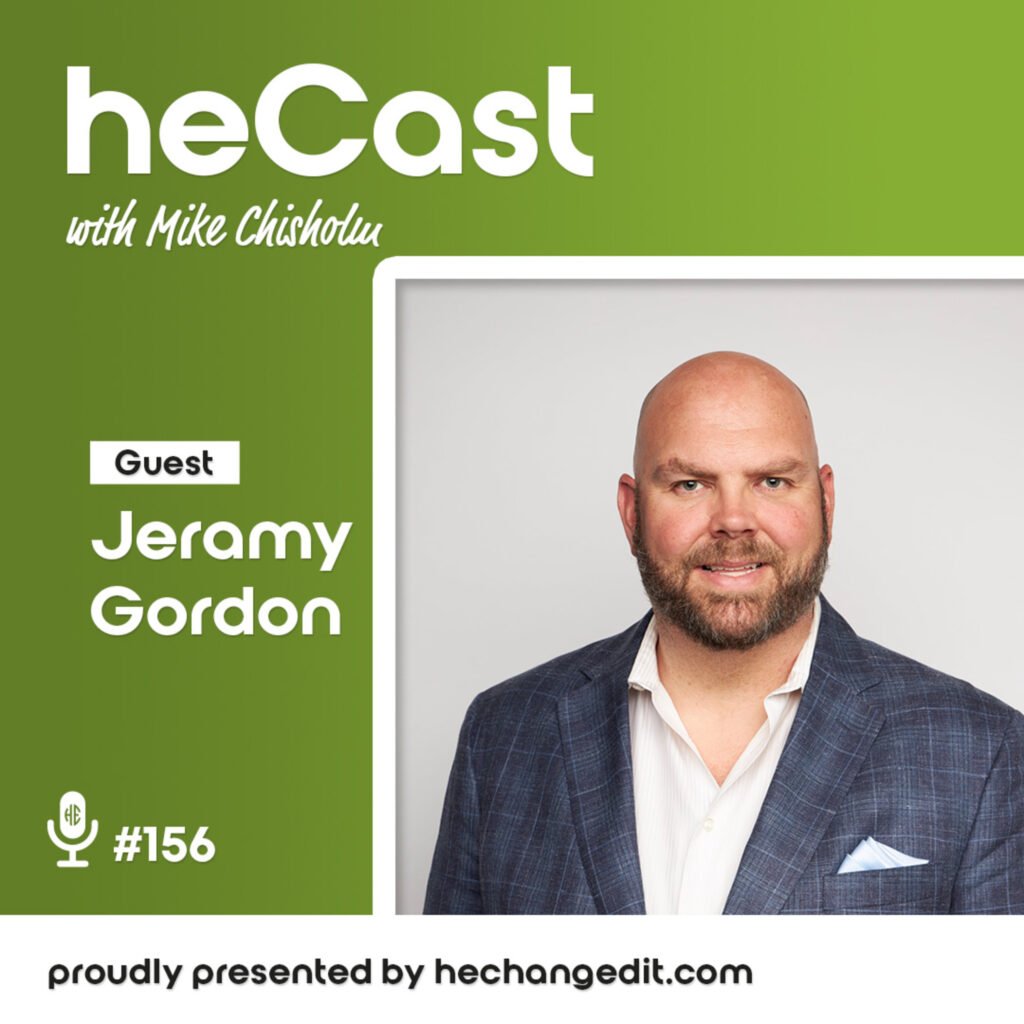
heCast Episode 156

Jeramy Gordon on Humility, Polarization, and Disagreeing Without Judgment

Season 3 01:12:13 April 16, 2026
Listen now 01:12:13
heCast Episode 156: Jeramy Gordon on Humility, Polarization, and Disagreeing Without Judgment

About this episode

Episode 156 of heCast features Jeramy Gordon in a timely and thought-provoking conversation about humility, polarization, social media, emotional intelligence, and how to disagree without judgment.

Jeramy Gordon is an author, entrepreneur, marketing executive, and the author of Opinionated, Not Judgmental, a book that explores how people can hold strong convictions without allowing those beliefs to damage relationships. In this episode, Mike and Jeramy unpack the emotional, mental, and relational cost of living in a culture driven by outrage, tribal thinking, and the constant pressure to be right.

Jeramy shares his own journey from a biased journalist and combative online debater to someone more aware of the damage caused by pride, judgment, and identity-driven conflict. Mike and Jeramy explore the role social media algorithms play in fueling division, the shame that can come with changing your mind, and why humility, empathy, and self-awareness may be some of the most important skills we can develop in today’s world.

They also talk about the deeper psychology behind polarization, the impact it has on men and relationships, and practical ways to recognize triggers, reflect more honestly, and engage with others without losing connection or compassion.

This episode is for anyone tired of the outrage cycle, frustrated by us-versus-them thinking, or looking for a healthier way to navigate disagreement, identity, and connection in a divided world.

Listen to heCast, the official podcast of HeChangedIt.

Download the HeChangedIt app for more tools, content, and support on your mental wellness journey.

Read transcript

Transcript supplied via Spotify RSS.

Welcome to Heat Cast, the official podcast of Heat

Changes. As always, I am Mike Chisholm.

As always, I am so excited to have a conversation inside the

space of mental Wellness, specifically men's mental

Wellness. I mean, it's called Heat Cast.

So that's what we're going to talk about today.

I love the guest today. I say that every single time.

But you know what? It's authentic.

So let's just go with it. Jeremy Gordon is his name.

Jeremy Gordon is an author of a book called Opinionated, Not

Judgmental. And I think if you think about

that, just for a second, you might know where the book is

going. I mean, you think about the

world that we're in right now, the idea of, of, of, of judging,

you know, based on differences that we have as humans.

I think it many times is winning the day.

And, you know, we've got this guy here.

He, he used to have an indie newspaper in Santa Barbara, you

know, a journalist background and, you know, and, and, and as

he, and his life has progressed, the idea of how he talks about

his story about how when he was a journalist, he went from a

place of being non biased to a place of being completely

biased. And, and, and, and when you

disagreed with somebody, that person was almost the enemy.

Jeremy does a he talks about that and the journey that he

took and how he realized one day that he was caught in a social

media machine that led him to a place of of of misery and what

he did to wake up, what he did to change, you know, called he

changed it right what he did to change and it completely changed

his life in for the positive. So much so he was moved to write

the book opinionated, not judgmental and talk about how we

can fight this polarization that's out there.

How, how it's possible to disagree with somebody and yet

still be very well connected with that person instead of

casting them aside and just moving over to the, the, the

team or the tribe that you identify with.

It's a very powerful message. He's a great speaker writer and

I just appreciate him very, very much.

So I hope you enjoy our conversation today with Jeremy

Gordon. OK, Jeremy, you don't know this

yet because we're trying to save everything for when the the

record light goes on. But this is a subject, the book,

the subject of your book is one that I have been really wanting

to dive into. I cannot wait to talk to you

about your book. Opinionated, not judgmental.

I cannot wait to talk about that.

But at the end of the day, there's a little bit of a road

that has LED you to being the guy to be, and I'm going to say

this, brave enough to throw this book out there in our current

polarized culture. Welcome to Heat cast.

Thank you so much for being here, and thank you so much for

writing this book. Yeah, thanks for having me.

I'm excited to jump in and have a conversation today.

It's going to be, it's going to be really, really good.

I appreciate that now, California boy, right?

I am born and raised, yes. Born and raised.

And again, I want to talk a little bit about like, you know,

sometimes it's fun to go through people's biography a little bit.

I want to jump into the subject of the book, but I do want to

get Nicole's notes of how you got here and at, at one point

rent a newspaper or a publication of some sort.

What did you run? What, what, what?

You're in the publishing business.

Yeah, so I, I have a, a very interesting career history to to

say the least. Right.

So I've been pretty much an entrepreneur my whole entire

life. But I started my career off in,

in journalism. I was in the newspaper industry

for about 12 years. Seven of those years I ran and

published my own newspaper in the Santa Barbara area, which is

about Central California area. And it was a it was a free daily

publication that published six days a week in news stands

throughout the, you know, the greater Santa Barbara area.

And it was a very interesting time in my life that the

newspaper did ultimately fail and we had to close it down.

But and that was, you know, probably the start of my

struggles from a mental health perspective when we go going

through that whole process and doing that, but that it was also

one of the biggest learning opportunities and lessons of my

life. So.

OK, let's talk about the paper. What was the focal point of it?

And I mean, six days a week, My God, the grind of that.

Let's talk about that for a little bit.

Like what years are we talking? Because again, our generation,

like I, I just turned 50 not that long ago.

I mean, newspapers were everywhere from the, the, the,

you know, the highest of the high.

When you think of like, you know, USA TODAY or the, the, The

New York Times, all the way down to, you know, free fanzines and

things like that, that would go out that people would.

But it was a huge part of getting information out there

and for all those different subcultures as well.

I'm super curious where you focused your your attention.

Yeah, so the paper launched in 2006.

So I actually just, it was just 20 years ago, like 2 weeks ago

that we, that we launched the paper.

I was 23 years old when I started it, which is just, you

know, it's just, it's just surreal to think about.

But, you know, I had this idea to start a newspaper and I, you

know, I was working in the newspaper industry.

I didn't just come out of nowhere, right?

I, I was managing a chain of papers up in the San Francisco

Bay Area and I decided I wanted to do it for myself.

And I started talking to friends and family about it.

I talked to my parents about it. And they're like, you know, we

have faith in you. You seem to know what you're

doing. And so I got support from some,

some several people and I launched a free daily newspaper

and we were focused on local news that, and that was the,

that, that was the crux of our thing.

It was just all like everything that was going on in our, in the

local communities, that's what we covered.

And it was down to Planning Commission meetings.

You know, we, we would, you know, if any new developments

going on, you know, police logs, you know, fires that were

happening, anything that was going on, car crashes, sometimes

even would make the, would make the news, right?

And so it was just this super micro newspaper.

And I think that's what made us so successful at first anyway,

right, is that there was a, there was a craving for this

kind of community style paper. And this was before the Internet

was really exploding into like the blogosphere and the sub

stacks where everyone had an, you know, opinion, you know,

Facebook was around, but, you know, mostly on college campuses

and stuff like that. So there was still a, a, a sort

of a demand in for a print, you know, paper.

So like, was there an editorial component as well where people

would would, would go back and forth on things?

Because, I mean, I think it sounds to me like this is the

seeds for the book, you know, the editorial part of a

newspaper. That's where you get your

following from where people can interact a little bit.

And again, primitively, Like, I love that you painted the

picture because that's what interaction used to look like

before the Internet created such an easy pipeline for people to

do that. Was that an element of the paper

as well? What was it called?

Yeah, so the paper is called the Santa Barbara Daily Sound.

And when we, when I, when I first launched the paper, my

idea was for it just to be news, right?

I, I didn't want there to be sort of the opinion side of

things that made that made news kind of wishy washy.

But ultimately the readers demanded it, right.

So they, they wanted, they wanted our take on what was

happening in the community. So about a year and a half into

publishing, we decided to launch an opinion page section and I

wrote the editorials and we had letters to the editor.

And it was actually a really interesting time because I had

to like, think deeply about some of the topics that we, that we

covered. And a lot of times, you know,

here I am what, 2425 years old. I don't have a strong political

bent at this time, right? I mean, I, I could tell you who

I voted for for president, but when it comes down to like

Planning Commission decisions and you know, what development

gets built and what doesn't. And you know, in Santa Barbara

is a very interesting community because there's a large

environmental component to it, right?

That, you know, you had the, the big oil spill there in the 60s,

which launched Earth Day, right? And so the community itself is

very big on the environment. So anytime a new development

would come in, there would be there would be, you know,

studies and, you know, sometimes just like 1 little endangered

frog could, you know, up and an entire development in this

community. And so as a as an editorial

writer, I had to take into all these nuanced issues and

understand them deeply and sometimes write editorials that

didn't necessarily align with what I believe personally,

because it was like what was best for the community.

And so that was just, you know, a really interesting time.

And we would get tons of letters to the editor and sometimes

those would spark new conversations.

But it wasn't real time, right? Because on the Internet that

stuff all happens real time. So you had time to think about

what you were going to say and how you were going to respond.

And it, it can be very thoughtful.

And I think that's kind of all gone out the window with the

Internet. Yeah, absolutely.

I mean the experience that you you got with that, you know, and

again, you're young, like, OK, so you have a background in

journalism, you know, go to school, whatever.

But but but at the end of the day, then you go become the

editor in chief of a paper. The learning curve on that

extreme. And I'm my goodness, what you

were building yourself, the skills that you were building

into yourself without even knowing it for all sorts of

things from, you know, things like sales to, you know, being

an entrepreneur, like you say you were, you were how where did

that come from? A lot of people are not born

entrepreneurs. Did you come from a family of

them? Were they, were you encouraged

to do that? No, not at all.

So I mean, my dad was blue collar, my mom was a stay at

home mom, you know, for our lives.

So, but they were, they always, I guess they would, I would say

they had an entrepreneurial spirit.

You're right. So my mom would always do like

craft fairs and things like that to earn extra income.

And they were always kind of kind of work on what, what their

kind of side hustle was before side hustle became like a real

thing. So I had that sort of in the

back of my head, but honestly, I had no real entrepreneurial

experience. I felt when I launched the paper

that I understood the news gathering component of it 100%

right. I could, I knew the insurance

and outs of the, The Newsroom. I could run, I could run

everything from, you know, the, the news gathering component to

the editing to the pagination, to the publishing, all that kind

of stuff. No problem.

I, I had done it all before. I knew the insurance and outs

where I had to learn on the spot was the business side of things,

right? So all of a sudden now I'm

hiring people, I'm dealing with HR issues, hiring and firing

payroll taxes, you know, all these like things that like, I

mean, I, I thought about them. They were part of my business

plan, but I didn't really think about them.

And I had no idea really what I was getting myself into.

And that's where the real growth happened in the seven years that

I had the paper. And I always say to my, you

know, I don't have an MBA from from some fancy school, but I

have an MBA from the school of Hard Knocks, that's for sure.

Well, and I mean, there's a lot of people who listen to this

show who can that that they move down that entrepreneurial Rd.

whether they're still in it, they're in the grind, they've

experienced it or they've gotten past, you know, the initial

stages of the startup life, the grind.

And, and, and I mean, the school of Hard Knocks is really at the

end of the day, many times the best teacher.

But the whole reason he changed it exists is because when people

talk about their experiences to the school of Hard Knocks, that

that many times you can, you can, you know, success leaves

clues. We talked about that, but

there's also, you know, experience leaves clues is a

broader statement to that. And again, I, I, I, you know,

talking about the book, I assume that a lot of where the book

came from, at least part part of it had to do with that

experience going through that newspaper.

Yeah, so because I had this this experience writing the

editorials and formatting these opinions and really thinking

deeply about it when when the paper folded and I left to

pursue other endeavors, this is really when social media was

exploding, right? So we're now we're in 20/13/2014

and you know, the, the, the 2016 presidential election is right

around the corner and all of a sudden everyone is experts on

geopolitics and it just everything going social media is

just exploding right with everyone being able to have

opinions and stuff like that. And I said to myself, hey, you

know what? I can take my learnings from

being this thoughtful editorial writer who really, you know,

suffered internally over how I was going to format, formulate

an opinion and, and articulate it to my readers and parlay that

into social media. And so I started posting us on

Facebook and writing some, you know, long, thoughtful posts

about how I felt about the current political landscape.

And at first, I think it was well received.

And then, as you know, things went on after Donald Trump was

elected into office and the country really changed

overnight, and the dynamic of how people interacted with each

other changed overnight. That's when things started kind

of deteriorating for lack of a better world.

Yeah, I mean the polarization and it's, it's not just, you

know, I'm, I'm broadcasting here from Canada.

The polarization is not limited to the United States.

It, it, it feels like as social media started to really, really

stretch its legs, so too did the rigidness of of not just people

throwing their opinions out there and maybe not thoughtful

the way that you described it and then and heartfelt what not.

It was more knee jerk. It was more, but then also the

reaction to those opinions were became, became divisive.

And, and it's funny, you know, political politics is really

easy to look at this it, it really is like when you look at

again, you have a divisive leader or, or divisive, you

know, set of circumstances. OK, there's that.

But it gets really nuanced too. Like, I mean, I'm a big hockey

fan and I think hockey fans have gotten meaner.

And, you know, towards if, if, if, you know, we're on our team,

it's the tribalism of things, you know, and, and, and I think

that that tribalism unfortunately seems to be

getting a lot more nuanced as well.

Fortunately, we are noticing these things.

Thoughtful people out there are noticing these things and, and,

and we're, we can course correct and, and, and I feel like a

course correction is not only in the cards.

It does feel like the pendulum is starting to swing the other

way. But let's, let's get into the

book now because again, I, I, I can, I believe that we could

take the entire time that we have and just talk about, you

know, the nuances of the book. Let's talk about the book.

Opinionated, not judgmental. When did you start writing it?

Let's go for the synopsis and then we let's have some fun

ticking it around a little bit. Yeah, I started writing it about

2 1/2 years ago. And it, it, it really it, it's

sort of, it's autobiographical and the fact that it, it is

about my journey into what I've called my keyboard warrior

phase, right. And so we were just, you know,

we were starting to talk about me getting more involved in

social media and what that looked like.

And it was, it was amazing to me looking back, you know, on it

cuz hindsight's 2020, right? But how quickly that sort of

editorial journalistic training that I had went out the window

when all of a sudden it's like real time banter back and forth,

you know, trying to, you know, counter arguments before they're

even made and understand where people, what people's objections

are going to be to your, to your point, before you even make them

and they make them. And your, your mind just starts

going a mile a minute. And all I could really focus on

is how I'm going to respond to things that people hadn't even

said yet, right? Because I was just like, I'm

going to say this. And this is, I know this is

going to be their reaction. How do I respond to that?

And it really changed my mental state.

You know, we have to go back a little bit, but I had, I had

recently gotten married, my wife and I started having kids during

this time. And I was spending so much time

on my phone, responding to comments, engaging with people

in different chats here and there that I wasn't focused on

my on my marriage. I wasn't focused on my kids.

And everything was just kind of not really blowing up, but just

changing in the background. And I had to, I had to kind of

had this wake up period. And it was, it was after the

2020 election and all of a sudden things just, you know, it

was like, it seemed like things sort of calmed down a little

bit, right? Like Trump was out of office and

now, you know, Joe Biden was in office and things were, you

know, changing a little bit. But that's when I kind of just

took a, took a step back and was like, I have to stop doing this.

Like my, this is destroying my mental health.

It's I, I can see it on my wife's face when we're, when

we're having conversations, like she's like, she told me one

point. She's like, you're not the same

person when you're having these conversations on your phone.

And, and that was like kind of the wake up call for me to.

And I, and I, I, at that point I just, I decided I'm a quick cold

Turkey. I stopped posting on social

media and I really turned to my faith and really started

focusing on who The Who, the man I want to be, the dad I want to

be, the husband I want to be. And that was the kind of the

pivot point for me. OK, that's, that's all.

I appreciate your articulate your, your skills in

articulating where you were. But I want to go back to

something you said at the very beginning of that, because, you

know, the idea that your journalistic skills went out the

window and, and, and let's, let's talk about that a little

bit. Because again, I come from a

time and place where my favorite journalists, broadcasters, you

didn't know what their political affiliation even was.

You know, you had somebody that was, that was, that was

reporting the news and there was no slant.

And, and, and in my, again, you know, I'm, I'm, I'm almost 50 or

I, I'm just over 50. I should say, a lot of the kids

look at me when I say this, I'm the old man.

I did not know that what I'm about to say makes me an old

man. But to me, a reporter of any

sort should not be throwing any opinion whatsoever when they're

reporting the news. It should be just reporting the

news. And and like, again, millennial

kids or Gen. Z kids look at me like I'm like

I got three eyes when I say something like that.

When I was the Gen. X, you know, Nirvana loving,

rebel, rebellious person growing up, I did not think that that

was going to be a generation gap.

I could never have predicted the fact that journalism would shift

so radically that now you almost have to report with a slant if

you want to take part in the economics of our society right

now. I never in a million years would

have thought about that. And hearing, I assume you came

from a similar ilk. And to hear you say, OK, yeah, I

had all this training. I was this, I was that I ran,

ran a paper. But then as this culture shift

started to happen, all of the journalistic skills that you had

went out the window. That is fascinating to me

because, again, you're somebody who was trained in it, somebody

who has actually had thoughtful, you know, thoughtful experience

in exactly that area, never mind the average person.

Like, I mean, if you're swept away by the tidal wave, what is

it going to do to everybody else who's never even had that

thought before? That is fascinating to me.

No, you're absolutely, you're absolutely right.

And you hit the nail on the head, like we, we had what was

called the wall in the in journalism, right?

And there was there was a wall between news and opinion.

And they were always separate. They were, you know, run by

separate teams. They, they did not interact with

each other because you didn't even want to give the idea that

there was any kind of cross pollination between the two

because it just, it destroyed the illusion of what, what these

two different, completely different functions represented

on the pages. And, and that is completely

gone, right? I mean, you, you pick up the

front page of any newspaper and you, you probably can't tell

whether you're reading news or opinion just based off of how it

has evolved in the last decade. And it, it has gotten it, it's,

I would say it probably started about 25 years ago, but it has

gotten significantly worse in the last 10-15 years.

So. Can I ask what year you were

born? 1982.

OK, 82, so I'm a 76 baby. So I got a little bit, I got a

little bit more width and breadth of life there.

And to me, I can remember as a child watching, yeah, watching

Tom Brokaw reporting about every like and there was one in

particular, I think it was when GE bought NBCI think that's what

it was. And he was the the he was

talking about and it wasn't an opinion at all.

It was talking about is news going to be affected as all of

these corporate entities come and buy all of these private

broadcasters or newspapers or things like that?

Is that going to be the case? And, and I mean, I can remember

him reporting on it on the NBC Nightly News one night.

It and it was, it was one of those things where at the time

you think, oh, well, you know, whatever.

But now 1/4 century later or even more, you know, 30 years

later, I think we're seeing the results of it.

In your opinion, is it because of is it because of the

corporate overlords and the way that economics are out there?

Is this part of the reason that that that slant has shown up the

way that it has in journalism? The, the corporate consolidation

definitely plays a role in it, but it, you can, it really, you

can date this back to the 1990s with the launch of what was

called the cable news network at the time, which is CNN, right?

And the 24 hour news cycle was born, right.

And all of a sudden you have one channel that's dedicated to just

news 24/7. And when you think about that, I

mean the, the, the NBC Evening News, the CBSABC nightly news,

those were hour long programs and they were one and done and

and then they followed. By local news usually followed.

By local news, which was usually like another 30 or 3060 minutes

or whatever, right? So you had two hours a night of

news on your TV and all of a sudden you're thrust into this

24 hour news cycle and it's like, what?

What do we fill this space with? And that's when really talking

heads became a thing. And all of a sudden people were

just pontificating on things that happened.

And then they would talk you through things and it became

more about being first than being right.

And that was that was the real start of it, right?

Because these, these in order to get viewers and eyeballs to turn

in, you had to, you had, there had to be a reason for you to,

to watch. And so they wanted to be the

first one. They are the first one to break

the news. And they didn't really care if

it was correct or not. Yeah, I could not agree more

about your take on that. And it was, it's, it's so funny

how it's like the frog in the pot, right?

The frog in the in the, in the water, if it's if it's tepid

water doesn't even know that it's starting to to boil, right.

And, and I, I feel like that's where our culture has been led.

And, and now, now we have this place where, where again, it's

all about slant. When you fell into that and, and

you, you know, throughout the, the, the journalistic and

integrity and all the things that you had learned and just

started moving into that, were you ever aware of it?

Were you ever aware, like, was there ever a moment where you

were, you know, you know, doom scrolling and then posting or

commenting or responding, whatever it was where you were

like, we're not in Kansas anymore.

This isn't, This isn't or or was it?

Was it something that you were even unaware of?

You know, I mean, I, I think I became painfully aware of it,

you know, after the 2016 election.

I'm telling you that's, that's to me, it was the pivot point.

And that's the moment in the United States anyway, when all

of the sudden, because it used to be, you could disagree with

someone and still respect them. You could or, you know, you had

friends who were on the different, a different side of

the political aisle and you just didn't talk about politics.

And all of that went out the window, you know, when Donald

Trump came onto the scene, because all of a sudden it was

just like, it, it, it things just changed.

And all of a sudden every, everyone talked about politics.

Your politics mattered more than almost anything else.

What you believe and it and it in what it was.

And and this is a psychological thing.

And I talk about this in in the book as well.

But outrage, you know, spreads faster than anything else,

right? Faster than love or peace or

anything like that is outrage. And, and we knew this

psychological phenomenon in the news business.

And so when we would write headlines, for example, we write

them to get people interested in reading the article.

And it would always lean towards what's going to make people mad,

right? What, how, what you know, So

that so that was kind of that was always kind of the thinking.

And then, you know, so you get, you know, newspaper headline

writers especially would get accused of sensationalism,

whereas they would when people go read the story and they'd be

like, so story's fine. You know, the journalist who

wrote this is fine. But the headline is what made me

upset, you know, and then you get so and that's, and that's

what happened. And that outrage spread so fast.

And then the social media platforms came on the scene and

they realized that right away. And the algorithms were designed

to spread that outrage. And now we're seeing it, you

know, 10-15 years later with, you know, the recent lawsuits a

couple weeks ago without the jury trials that came back and

said that Facebook and and Google are liable for the mental

health damage that they are causing to people because of

these, you know, scroll addiction in this endless

outrage that's happening online. So it's kind of coming to a head

at that point, I think. And hopefully as we're talking

about this, as you're writing books like this, we're having

conversations like this and, and people are are hearing them.

Hopefully there is a wake up moment for everybody As as, as,

as, as, as we, you know, you talk about the school of Hard

Knocks. My God, our culture has really,

really experienced a school of Hard Knocks type lesson that

hopefully does not translate down to, you know, I got a

granddaughter who's 8 years old. I talk about her a lot on this

show. She's my favorite thing on this

planet. She's my favorite human.

She's my favorite noun is my granddaughter and I and I, I

don't want her to be, you know, brainwashed by anything, but it

feels like people are being brainwashed by everything

depending on the type of tribe that they hang out with.

So your book, I mean, I saw the title when, when it came across

as you as a, as a, as a potential guest, I was like, Oh

my God, I, I know a lot of. So let's talk about the synopsis

of the book. And then I, I got some questions

for you that we can go through and discussion points.

But let's talk about the synopsis of the book and where

is it available? Because I think there's a lot of

people out there. I think there's a lot of

parents, There's a lot of men out there who are, who are

dealing with this at their workplace, in their churches, in

their like again, in their sports bar.

I think that there are a lot of people who are dealing with this

stuff. The idea of opinionated, not

judgmental to me is a concept that everybody should learn

right from the very beginning. And that's just the title of the

book. So let's talk about the synopsis

and go from there. Yeah.

So the the idea, the concept behind it is that we should be

able to hold strong convictions. We should we should be able to

have our opinions, whether they're based on our culture,

our faith, just our lived experience.

We should be able to have these opinions.

But how we treat others who don't share those opinions is

what's important, right? So when we're when we're

interacting with people who might see the world differently,

we have to kind of take a step back and say, what are we trying

to do by arguing our opinion? Are we trying to change their

mind? Are we trying to convince

ourselves what is the ultimate goal?

And and then we have to ask ourselves, why do we care to do

that, Right. So it's like if what what I

found when I was when I would be deep in these conversations, you

know, I call conversations, they were arguments, you know, on

social media. Sure.

Yeah. I wasn't changing minds, right.

I mean, I would come and I would have facts and I would have, you

know, data backing up my points and, you know, sources and all

this kind of stuff. And it was just this back and

forth, back and forth. And minds weren't being changed.

And actually what was happening is I was, I was losing friends.

I have family members who still won't talk to me because of

something I said, you know, 10 years ago on social media.

And, and that was like that. That's crazy because I, I had

to, I had to wake up from that. I was just like, what am I doing

here? And and that's that's why I

decided to write this book because I realized I was like,

I'm doing this wrong. I've become the person I didn't

want to be. I've become the person who I

accused them of being in their, in the judgement and stuff like

that. And so that was like kind of the

real eye opening moment for me when I was just like, you know,

I can, I can, I can still believe these things like I

have. There's no problem with me

having my strong opinions, but I cannot treat others the way I've

been treating them and talk to them the way I've been talking

to them and still keep my sanity.

You know, it's such an easy surface level life lesson

platitude, whatever you want to call it.

I mean, again, growing up as a Gen.

X kid and I'm, I'm certain my, my baby boomer parents, you

know, were, were told the same thing because they're the ones

that told it to me. You know, when you're at the

dinner table when the family reunions happening, you don't

discuss religion, you don't discuss politics.

And the reason that you don't do that like, like that was

something that we just kind of grew up with as a, almost like

a, like a, like a, like, like a funny life, like that kind of a

kind of a rule. Like it wasn't a, because you

would see it, you would see people who would have a

conviction, whatever it was. And it's, it's, it's very

different. Kevin Smith talks about this in

the movie Dogma. You know, you have, you have,

there's an idea of, of, of ideas versus belief because of

changing an idea is pretty easy. They're pretty malleable.

But, but, but malleable. But changing a belief is more

tricky, and I think that that's why the religion politics thing.

So what you're talking about is a very basic skill is

citizenship or respect is even probably a better word for it

that, you know, I may disagree with you, but I respect you for

how you believe things because everybody can justify what they

believe if they are coming from a place of awareness and

presence. And, and, and like, I can give

you half a dozen examples of American friends of mine who

voted for Trump for extremely legitimate reasons.

It might have been that they were wronged locally by a, by a

like, like, like legitimate reasons.

There. There are people who do that.

But even me saying what I just said, right now there's a group

of people who would take that statement, which I feel is

pretty reasonable, and they would then cast me aside for

even even suggesting that might be the case on either side,

right? You know, and, and so where did

it, where did it, where did it go?

And what do we, what do we do with that?

Yeah, I mean, you're absolutely right.

And I mean, I love that movie. I've probably seen Dogma, you

know, two dozen, three dozen times.

But but it's. My favorite Kevin.

Swift movie, it's great. It's great movie.

It's just a great cultural reality.

But what, what, what happened is that politics have become a de

facto sort of religion, right? So, you know, right, whether we

want to get into this or not, you know, this, the, the world

in general has has moved away from faith in, in a, in a higher

being and be, there has to be something to fill that void.

And so politics has come in and filled that void and it has

become religiosity for the vast majority of people who at least

don't have some other faith-based component to their

life. And so you're, so you're right

when you, when you, when you start attacking A belief system,

now that's where that's where it gets personal.

That's where you start to lose relationships because it's no

longer just discussing ideas. You're really you're you're

you're hitting at their the core of their beliefs.

Well, it's funny you, I love that you mention it that way

because it is becoming almost a religious, dogmatic type thing.

And I've always, you know, covered the idea like I'm a, I'm

a, I'm an extremely spiritual person, extremely.

And and my faith in many respects at 50 has never been

stronger than it ever has. But faith and religion are two

very, very, very different things, you know, and and and

and, and. But the thing about it is it's

so personal. When you look at something like

faith, it is something that is so personal.

That being said, when you're in the tribalism or the teams that

religion brings, OK, this is the team I'm on.

Oh, somebody's attacking our team, you know, and is any team

perfect? Well, no, no, but, but this is

the team that I, that I, that I subscribe to.

And so therefore, now we've got to arm up whenever there's any

sort of disagreement. And I think that that is a

really, really good point that that politics has somewhat

become a religion to many people.

And, and like, like again, you know, I, I, I don't know where I

would like, I've always said that if I had a political party

that I would be registered towards, they don't exist

because there are certain social elements.

I'm a Canadian, right? So I love, I love the universal

healthcare. I love some of the different

things. I believe that we live in a

world right now where we actually have the capability to

feed everybody. If we wanted to, we could solve

that problem. So I'm a huge social guy, but I

also like a business owner. And so I believe, I believe in

the free market. I believe it like, so I don't

even know if I would ever fall into a political party when it

comes to some of these things. And yet, you know, there are so

many people who who, who pressure or push me one way or

another just simply because it seems like they want me on their

team. And it feels like that that's

happening all over the place. Again, politics is the easiest

way to kind of talk about it, but it's happening everywhere,

isn't it? Yeah, I mean, it's, it's, it's

tribal warfare is basically what it is, right?

But and it all, it all comes back to, I mean, specifically as

men, right? There is, there is a there's a

psychology in masculinity that that men don't want to be wrong,

right? It feels being wrong feels like

a mistake and it feels like sort of a loss of identity.

And you know, men are we're wired towards competence,

conviction, being right, especially in public places, you

know, and, and, and a social media forum is a, is a public

place. But this, it goes back to the

whole age-old thing about men not asking for directions.

You know, the stereotype of that.

And it's because it's because we don't want to seem like we don't

know. And so when when someone calls

you out and says you don't know it, not only does it cut through

your faith, it cut through your belief, but it cuts into who you

are as a man. And that is that's where the

kind of psychology of it starts to come in.

So, and there's research, there's research to back this

up, right? So.

Yeah, yeah, yeah. Like your very identity is now

in trouble because, you know, you might have been a misstep on

on, on, on an on an opinion really when it comes down to it,

right. Like, and that's and that's what

we're talking about here. So how do we unpack this?

Like what are like, like, OK, so like I'll bring another example

that isn't political for for people.

So I just want to like, I look at I'm a big movie guy and, and,

and, and I like some pop culture stuff.

I've always been a combo fan since I was a little kid.

And I look at what's going on with DC Studios right now.

DC Comics, the home of Batman and Superman and Green Lantern

and Hawkman and Wonder Woman, all of that, right?

Shazam, who's my favorite Captain Marvel, the original

Captain Marvel, who's my favorite.

You know, I look at what's going on there and, and, and like Zack

Snyder made a movie, a Justice League, a version of Justice

League. You know, he had to step back

from that project due to personal circumstances.

Joss Whedon finished it. And now you've got this

groundswell of people who are like, bring us this Justice

League movie. The Justice League movie comes

out, It's divisive between comic fans and it's like, Oh no, let's

get rid of him. Let's bring in, you know, a new

team of people at DC Comics and and all of that.

And you see people like warring on each other for if you like

Batman being played by Ben Affleck or somebody else and you

literally have people ready to arm up and go to war against

this. Again, what I'm saying is

ridiculous. It's absolutely ridiculous.

But yet this seems to be where our culture is heading.

Is this, is this where the, the, you know, the book?

Is the book a warning? Is it, Is it we need to turn

from here? Is this what we're talking

about? Well, I'll, I'll just go say

real fast, Michael Keaton's still the best Batman, so.

Oh my man, my man, Batman 89 kicked open the door.

No, no, you're, you're so you're right.

I mean, yes, I think the book is a warning for this.

And part of it is because we have allowed our personal belief

system this this again, religiosity of politics to seep

into every aspect of our culture.

And so now these comic books that have been around for

decades, you know, and have this this faithful fan following of,

you know, how they started. And if you look back at the

original Superman comic books, I mean, they were so pro America

and it was just, you know, it was, it was, it was that's how

they started. And that's where their

foundation is. And then all of a sudden, you

know, we're here in, you know, in, in the, you know, 20s, in

twenty 20s. And we want to put our own spin

on it. And I think that's fine.

But you have to, you have to at least expect that there's going

to be some pushback from those people who grew up reading the

original, you know, source material and are, are seeing

like this is not, this is not the same Superman that I grew up

reading. This is not the same Batman that

I grew up reading. And why is that?

And it's like, but because I, me as a, as a producer and film

writer and director, I want to put my own personal touch on

this. And that's, and I think that's

where we're going. That's where we're missing out.

That's where we're going. We're not understanding what the

audience wants and needs and desires.

We're just saying, what do I want?

And it's all about that. It's all the culture of me has

really disrupted that space, I think.

Well, and by the way, I, I have a solve for that argument.

I brought up that specific example because I mean, there's

many of them again, from sports teams to to whoever, right?

But I brought that example up because in my mind I have a

solve for it because I have a big comic book fan.

And, and I mean, you know, if they're going to make a movie

based on a Frank Miller version of Batman, OK, that is a

specific writer with a specific artist with a specific tone.

And if you want to go down that path and make an animated

feature or feature, great, go for it, right?

Very different than the Neil Adams Batman, very different

than the, you know, there's, there's so many other ones that

we could talk about, Greg Apulo and all these other like,

there's all sorts of, like you said, decades almost, it's a

century actually. And with some of them.

And you've had different creative teams who have come

along the way and different takes, Never mind the fact that

we're moving into a different medium with, with, with film

makers and, and, and all of that.

So it's very simple to me to say, OK, well, this is just a

different take on it based on, you know, it, it to me that can

solve the argument. But again, what, how, what are

we doing there? Well, we're becoming aware.

First and foremost, we're becoming aware of things.

We're analyzing why we're arguing about this.

And then it's like, OK, well, let's come up with a, with a

solve for it. This needs to happen.

And I'm, I'm, I'm, I'm super curious what your take is for

people who need this wake up call.

How can, how can we be opinionated but not judge

others? What are some of the in your, in

your mind or your opinion? What are some of the things that

that people who are listening to this can perhaps look at their

own behavior that they can change to perhaps unpack some of

the stuff that's been packed so tightly?

Yeah, I mean, for me it was, it was really just understanding

the why behind it, right. So when I was when I was arguing

online, what I found is I wasn't just defending ideas, I was

defending myself. I was defending my masculinity.

I was defending, you know, my, my, my faith and my beliefs and

these sorts of things. I wasn't, it wasn't just, it

wasn't just about politics. There was a deeper issue in it.

And so you kind of have to you take that step back and you go,

OK, why am I doing this? If there's, if I'm scroll, I'm

scrolling through Facebook, TikTok, Instagram, whatever it

is. And I see something that I just

vehemently disagree with. What part of me?

Why can't I just keep scrolling, right?

Why? Why do I have this, this just

internal reaction where it's like, no, I have to get on there

and I have to because it's not right and this is not what I

believe. And I'm going to put my two

cents in there and fine, do that.

But if someone comes back and says no, you're wrong for this,

and you have you start having a conversation, an argument with

this person about that, What are you doing right?

I mean, maybe you enjoy it, that's fine.

I enjoyed it for a while. I really did right.

I had fun doing it until I realized that it was really

destroying my mental health. So ultimately, I would just say

it's a self reflection. You have to.

You have to take a step back and understand.

So it's a, it's an awareness thing.

Number one is you got to, you got to, you got to kind of wake

up a little bit and be aware and then #2 is being more

reflective. Why am I doing it?

Ask yourself why am I doing this?

And and and. Understand the psychology behind

it too, like I, I talked about a little bit earlier, but the, the

outrage is it's a machine and these social media platforms are

specifically designed to encourage outrage.

So, and, and, you know, so the things that show up on your

feed, if you comment on a post that you disagree with, you're

going to start seeing more of those simple like posts on your

feed because social, the algorithm knows that you're

engaging with that content. And so now they're gonna,

they're gonna feed it to you. And it so it becomes this

endless loop where you're and it just drains you emotionally and

physically. And, you know, that's, that's

the. Yeah.

That's fine for cat videos because cat videos are

fantastic. But yeah, no, when you're when

you're constantly being fed this, you know, toxic, these

toxic thoughts that don't lead to solution in any way.

That's the other thing too, is like, what are you trying to

solve by doing this? You know, and, and another thing

I wanted to talk to you about the idea of not being judgmental

and, and, and if there's any tricks to it.

Another good example that I've seen again, in our lifetime,

we've seen a change where right now in our culture, there seems

to be a very loud voice. Whether it's a lot of people

that feel this way or it's just a very, very well placed

algorithm, I don't know. But it's the idea of taking art.

But the artist and the way that they live their life is now a

part of, you know, of, of, of the, the opinion of how the art

should be. And, and, and, you know, there

are many, many, many examples of this, you know, and, and I mean,

there's a comic that I love so much finished a bit by saying,

you know, Thriller's still a good song, you know, and, and,

and the idea that we are now influenced by a group or a voice

or whatever it is, there's a, there's a subculture within the

culture that's influencing us to say, well, because that person

has flaws, whatever those flaws might be, you know, some of them

are minor, some of them are, are, are gigantic.

But like, because that person has flaws, we are now not

allowed to like the art. It's supposed to affect the art.

Do you get into that in the book at all?

I don't talk about that in the book, but that's a, it's a, it's

a very interesting subject. And I and my take on that is

that that is again, is the this just vast resource of

information that we have available at our fingertips at

any given time. We know intimate details about

people's lives that 20-30 years ago people just didn't know,

right. I mean, you, you may have

thought about it. I mean, you think, you know, I

always heard rumors as a kid that, you know, Leonardo da

Vinci was actually cross dressed as the Mona Lisa and that was

him. He painted it's a self-portrait

of himself, right? That was a rumor that we, I

don't know if we if it was ever proven or not, but it's like if

he had existed today and we knew that he was a cross dresser, we

might not value his art the same way or what, you know, for

whatever reason. Yep, because we but we didn't,

you know, you don't. We have these this intimate look

into people's lives and you see, like, look up Tiger Woods, you

know, just what happened to him. It's like, yeah, I want to view

him as this just masterful golfer.

And I want to see him and that's how I want to look at him.

But now I see him, you know, passing out in the back of a

police car and I'm just like, this is my childhood happening

before my eyes. It's like this kind of

information just wasn't readily available to us all the time.

And I think that's part of the the problems that we just

endless access to to stuff. Maybe.

But but then certain people get a pass, you know, again, I'm

gonna go back to a guy like Frank Sinatra, OK?

And and and and and. I mean, Frank Sinatra was

arguably the biggest entertainment icon on the planet

for a long time, OK, Also very, very public knowledge about

antics and, and lifestyle of, of, of Frank Sinatra, Yet he

gets a pass. Why?

Because the voice is so silky or, or, or, or, I don't know.

I don't know exactly, you know, why he would get the pass and

somebody else might not get the pass.

But it's certainly inconsistent. And there certainly is a switch

in our head where we are able to separate the body of work or

whatever it is from the person who who made that body of work.

And I think it's directly related to what you're talking

about here is how we can have opinions but not judge others.

I mean, it's in every philosophical or religious text

that that, that I've, I've come across, there are points about

judging others and, and what it can lead to all the way from,

you know, people look at that as a spiritual thing, do not judge

lest they be judged and they're thinking about being judged from

on high. I think it's more of a common

sense thing. I think if you, somebody picks

up a spear, somebody's going to pick up a spear.

That's just the way it is. And so if you don't judge

people, they're also going to look at you with a similar

empathy for situations. I don't know.

You're right, but I always come back to there.

There's a, there's a verse in, in Matthew that says, do not

look at the, the, the spec in your brothers eye when you have

a plank in your own right. And so that is the internal

reflection that we have to understand.

It's like, look at yourself first.

So before you're going to judge someone for any basic idea, you

have to you, you have to know that you're not a perfect

person. And that's and, and that's the

ultimate thing. And it's like, if you could to

go back to the faint, the Frank Sinatra thing a little bit, his

secret might have not been so secret, but it was, it was a

secret, right? It was, it was he didn't

publicly talk about it. He didn't do interviews.

He wasn't posting. That was a good point.

It was it was his secret that was well known, but it was still

his secret. And nowadays that doesn't

happen. It's like everything is just out

there for everyone to to know. And so, and Frank Sinatra wanted

to be known for his singing and his acting and that's what he

wanted to be known for. He didn't want to be known for

his, his, you know, lifestyle that he that he lived.

So I think that's. That's a good Yeah, we, we

certainly do live in more public.

Like it's funny, I'm in the well, tangentially created to

connected to the pro wrestling business.

I have a had a a, a charity professional wrestling promotion

that we ran up here in, in, in, in Kelowna, BC for six years.

And we, we brought in a whole bunch of, you know, former WWE

stars and we raised a lot of money for some local charities.

And I got to tell you almost every single one of them that

came up here and they would talk about, they would tell stories,

unbelievable stories. There wasn't one of them who

didn't say, I'm sure glad there weren't cell phone cameras back

then. So I, I hear what you're saying

when you're talking about, you know, the connectivity and, and,

and, and, and, and that. But that being said, the gotcha

part, it's almost like a game of hot potato where people are,

are, are, are, are trying to throw the potato at somebody

else. When you're exactly right.

We are all flawed. There is not one person walking

this planet that hasn't done something that would be

considered that that wouldn't be considered, you know, even

deplorable. I'll even go out to on that.

All of us have bad days bad. And these are some of the things

that help us learn, you know? And that's just somebody we do

think about, not the stuff we think in our heads, you know, we

think we think even worse things than we actually do, you know,

and. We're on an even playing field

when it comes to that. And yet the culture is almost

like, well, I'm going to get you first before you get me.

Do you, you know, is that is that, is that something that

resonates with the book? Well, yeah, and absolutely.

And I think you and I mean you and I are still, we're part of

that kind of xenial generation between Gen.

X and Millennials, right Where? But we're like the last

generation where we made it through our adolescence and our

early adulthood without recording and posting every

action that we did on social media, right?

So we're the, that we're the, we're the end of it.

Now everything is documented in real time for everyone to see.

And that's why you, you look at and you go the Oh my gosh, these

kids, they're getting in trouble.

They're doing stupid stuff. And it's like, no, we were doing

way worse things. Absolutely.

We're getting in way more trouble.

It just wasn't documented. You know that's.

Oh yeah, like we're so hyper connected now, like, like, like

again. And I, I fall prey to it too.

There are times where I have to actually stay with my, my 8 year

old granddaughter. We gotta give her the space to

breathe, to do something and not be helicopter type parents.

Like, like you and I, we grew up in a time where come home when

the street lights turn off, turn on or turn on, I should say, you

know, and, and literally 6-7 hours, our parents didn't know

where we were. And you know, that was an entire

generation of that. I say that and it's universal

for the most part. You know, I remember growing up

thinking that certain parents were more protective than are

you kidding me? You can't come out for five

hours with us and go to the center of town and back.

You can't really, you're not allowed to do that.

It was A and it, you know, the latchkey kid part and all of

that, that. So, so yes, you're right.

There is a gap there. All the more reason that we need

to focus on empathy. All the more reason that we need

to focus on self-awareness. And I think self-awareness is

one of those silver bullets that that, that if I'm able to

analyze why I'm thinking the way that I am, Oh my goodness, my

life would be a lot smoother. But again, the culture is

teaching, teaching us to go into that hair trigger response, to

instantly respond, to do the the primal reptile brain response as

opposed to the thoughtfulness. That you're talking about, you

see it, it's like, you know the whole the phenomenon of the

Karen emerging, right? It's like the only reason the

Karens have existed for all of humanity, The only reason it's

just now becoming a thing is because now everyone pulls out

their phone the second something is, is disrupted, right?

The second someone is making a scene or doing something, it's

you're pulling out their phone. They're live streaming it.

It's, you know, it's, it's there for the, the whole world to see.

But there, there have always been Karens.

I lived next door to 1. I know, you know, when I, when I

was a kid, I know that they've always existed.

It's just now they're more prominent.

I have three people in my life that I adore that are named

Karen. And I feel, I feel just so I

feel so bad for them. You know, when it when it when

it comes to men, too, Like, like we talk about this on the show

all the time. Is, is the idea of something

like mansplaining. OK?

Yeah. Well, I mean, guys, have we do I

think we go too far with things sometimes, like you talked about

before, the idea of wanting to be right.

I think about my father sometimes and, and, and

listening to him argue a point where all he just wanted was to

be right and he wouldn't think of anything else right.

But at the end of the day, we were also throwing the baby out

with the bathwater many times. Mansplaining is actually a piece

of vulnerability. Somebody thinks that they know

whether they're, it's true or not, but they think they know

they're actually trying to help many times when they're trying

to bring out a piece of information to, to contribute to

a conversation. But that's even being demonized

now. And it's, it's, it's very

interesting times that we live in.

You know, do you have obviously you are able to articulate and

talk about the problem and, and it is a big problem.

You know, you talk about a self-awareness and self

reflection being. Is that the is that the silver

bullet? Is that the solution?

Are there others that. Humility is the silver bullet,

right? We have to be, we have to focus

on our humility. We have to be humble.

You know, you, you don't have to choose between truth and

relationships, but you do have to choose how you communicate

truth within those relationships.

And that's that's the secret right?

That and and and you know, so conviction, these opinions that

we hold, if we hold them without humility, that's when they turn

in to judgement. So that's that's humility for

me. Is is the silver ball that here?

I love saying that you don't have to like like the truth in

relationships thing. They're not exclusive to each

other. You don't have to I and, and,

and I think that that's something like that's such a

simple thing. It's giving yourself permission

to disagree essentially is what it is.

You don't have to take things to the brink because of these

things. And I mean, like, I know people

who are of both very, again, faith, religion, right?

I know people who are very religious that are married to

each other, that have two completely different religions

and yet they can coexist. And, and really at the end of

the day, I mean, my goodness, we, we live in a, a time where

we focus on, I was curious if this was going to come up today.

You know, we focus so much on the differences when at the end

of the day, I mean, I look at some of the biggest leaders that

I or, or influences that I have. And many times one of the traits

that goes across some of those people that I look up to and

perhaps even aspire to be like is the fact that they completely

right to the heart, understand the concept that we have way

more in common than the things that divide us.

And yet we live in a society right now where just take one

little division and it can spiral into a a, you know, a

supernova. That that's it 100% the, the

polarization that we are experiencing as a society and,

and that, that that stretches across borders.

It's, it's, it's a, it's a worldwide phenomenon.

There was a, a Pew Research study, I've done it on this a

couple of, you know, probably 5-6, seven years ago now.

But people are increasingly holding the views that people

who oppose them on some sort of topic are somehow morally

inferior to, to them, right. And that's what's fueling

division. Because it's like, if you, it's

not just like it's the whole agree to disagree is not a thing

anymore. You know, it used to be you

would have a conversation, you go back and forth if you didn't

change mind, you say agree to disagree and you'd walk away.

Now you're a bad person for not agreeing with me.

That's what society says. And that's that's where things

are breaking down. I'll give an example up here in,

in Canada, actually, he's, he's a worldwide personality.

There's a psychiatrist by the name of, or psychologist

actually by the name of Doctor Jordan Peterson.

And you know, yeah, you've heard of him down there.

He's, he's, he's, he's gone over and, and he came to our city.

And I mean, the guy has enough notoriety, you know, 8 Rules for

Life and eight more rules for life.

And, and a couple of, a few of his books that have come out

that, that, that have changed a lot of people's lives.

And, and, and they can say, look, I have a much better life.

And they have nothing to do with any polarization or anything

like that. They're just living life, you

know, under the surface of, of, of, of this stuff that we're

talking about. And they could say, this person

has changed my life to the point where the man has toured around

in arenas, like hockey arenas here, right?

And he came to our city not that long ago and listening to people

sounding off on social media about, if you go and watch this

man speak literally a, a, a conversation that he wanted to

have with a, with 5 or 6000 people about living a better

life. And here are some concrete ways

that you could like take notes, because I'm going to give you

some concrete ways. And I'm not going to do it from

a, from a religious standpoint. I'm not going to do it from, I'm

going to do it from just a, a human nature, how we're wired

standpoint, common sense for the most part, right?

That was the, the, you know, there were people who were

saying, if you go there, I will not be your friend.

I will not talk to you. I will not just for going to

hear somebody speak and to me when you have are trying to form

an opinion about somebody, not listening to them and only

listening to the advice of others seems to me to be folly.

And yet it seems to be the norm that's happening out there.

And we got to stop it. Like we we we got to stop that

there there. There's got to be people like

obviously, you know, you don't want, you know, a Stalin or a

Hitler or type of a situation where you're seeing that.

But those examples are so minute.

They're in the minority. And you wrote a book talking

about this. I got to ask you, have you

received any pushback from people who are living in the way

that we're talking about here? I haven't actually.

That's, you know, it's really a lot of the feedback I've

received has been like, this is written for a time just as this,

you know, like this. The timing couldn't have been

better. Like, you know, this is

definitely something people need right now.

That's a lot of the sort of the feedback I've gotten.

But you know, I, I, I don't there, I'm sure there are people

out there who are happy in their, you know, sort of misery,

right? Misery loves company.

And I was not, I was not one of them.

I was not happy when I was in that stage of my life.

And it reflected in everything. It reflected in my health, it

reflected in my weight, it reflected in my relationships,

you know, everything. So I, I was more than happy to

break free from it when I finally woke up to it.

And I, and I think that's where kind of the vast majority of

people are. Once they actually wake up to

what's what's happening and what's going on, they're going

to they're going to want to try at least to to break free from

it. Let's talk about that like

you've you've woken up, you've written the book clearly, you

know, there you get in the therapeutic, you know, bump from

that as well because you're getting out these things, you're

articulating them and able to really express it in that way as

you have woken up. Let's talk about how your life

has changed since then. Yeah, so as I mean, I've said,

I've, I've really been focused on my faith.

I'm a Christian. I've grown in that

significantly, you know, since I have broken free from these, the

chains of social media. I've read the Bible multiple

times. I have, you know, just my, my

wife and I, you know, I pray with my wife, I pray with my

kids. You know, we're just more we're

more focused on kind of the bigger picture and that's so

you're. Present with your family.

For the non religious ones out there, the idea that you break

free of this and you now have the emotional ram to be present

with your family, your friends, that sort of thing, that's that

alone right there is invaluable, am I right?

Yeah, absolutely. I, I mean, that's, that's what I

was missing, right. I mean, that's like, I, I, I do

bedtime. My kids are 11:00 and 9:00 and

they still want me to do bedtime with them, which is, you know,

you know, reading stories, praying together, talking about

their day and stuff like that. And I'm like, I'm, I'm like,

yes, as long as you're willing to have me come in your room

and, and lay next to you and have that conversation, I'm here

for it. And even like days when I'm like

tired and exhausted and I've, you know, I've had a bad day.

My my daughter will come in like, dad, Are you ready to do

bed? And I'm like, yeah, like it

just, it just reignites, you know me and I'm like, I might be

laying in bed already. I might be like half asleep and

it's like she's ready for it. And I'm like, Yep, I'm out.

I'm there. So that was that's, but that's

been the greatest change for. Me so and I mean you just take

that down the field a few yards. I mean joy, happiness, I mean

fulfilment that. If you compare it to the when,

when people are locked into the machine, whatever it is, you

know, you don't feel that, do you?

Like, you think, I think about, I think about the emptiness that

people feel that masks itself as fulfilment when they're trying

to flame somebody or spike, you know, spike a volleyball into

somebody, you know, metaphorically online.

But that doesn't lead to life satisfaction, does it?

No, no. Yeah, and, and, and it's, it's

actually to, you know, to go back to like the reaction about

the book too. This is what's been really

interesting to me is I think the people, especially the people

who I really burn the relationship with, I don't know

that they believe that I've changed.

And that's, that's been the part for me that I, that I have to

work through in my own head because I, I'm not here to, I

don't need to convince them of it.

I know that in my heart that I'm not the same person that I was

when we were fighting in the comment section.

But there there's a certain contingent of people out there

because I still hold some of these same political beliefs and

views that we would argue about. They have a hard, they don't,

they have a hard time believing that I that I'm a different,

that I'm a changed and different person.

And so they so I've gotten some sort of comments like, you know,

I this is, this is an act. This is, you know, this is a,

you know, all for show. I actually have like, yeah, I

have an aunt for of all people who just who will still comment

on my post every once in a while and just be like you, you know,

you were so mean and cruel to people back in the you know,

it's like how this is not who you I I don't believe this is

who you are. And I'm just like, I'm like, I

can't even respond because it's like, I don't, again, I don't

argue with people online. So that's one of the reasons why

I can't respond. But it's like I just, I don't,

there's nothing I could say that's going to change her mind.

She's made-up her mind about who I am and it is what it is,

right? So I.

Bet she hasn't read the book though.

No, absolutely not. Yeah, so there's that part, you

know, and, and, and I mean, when texting again, you and I are

very fortunate in the sense that that, that we were around before

text messaging existed. You know, I can remember the

first time I even like really I saw it in there's a movie called

School of Rock. And I remember that watching,

you know, two guys text each other from the other side of a

bar when the band was playing really loud or whatever.

Like, like, like texting to me again is sort of a new

phenomenon compared to when I think about my youth, right?

You couldn't just text each other.

We were way more coordinated back then.

We're meeting at the mall at this time and you had to be

there, right? There's a small window.

That was it. You didn't know.

You just didn't know because. And somehow we still found each

other and make it work, you know?

Right. No kidding.

And and yet so so. But I remember when texting

first started, it was all oh wait a second.

OK, hold on. You know, emojis showed up and

smiling. You know, there were ways to

there were ways to convey tone. But at the end of the day, I

mean, unless you are a gifted writer writing paragraphs, it is

very difficult to convey tone in a comment section.

It's very difficult to convey, you know, where things are at,

even at the interaction, you know, you don't want to argue

with your aunt. I mean, that's where the idea

is. I know like with my clients,

things like that, if I sense that we're in a texting

conversation, I sense things have gone off the rails at all

of misunderstanding. I pick up the phone and call

immediately because tone of voice and all of that stuff.

Again, there's an etiquette that I think that we're probably, you

know, we're going through growing pains as a society right

now. And perhaps one of the things

that we need to do is just, you know, train some of that

etiquette and again, citizenship back into our young people

growing up. I find it fascinating that you

are self aware as to who you were.

And I find it even a little brave to be able to talk about

who you were before versus who you are now.

Can you go down that path a little bit more like Jeremy,

like that's a, that's I, I appreciate the vulnerability you

talking about that because it feels like you're a kinder

person outside of just the digital version of you.

It feels like you're you've moved into a different path

outside of that as well. Well, in my mind I've always

been the same person. You know, the, the, my online

persona, so to speak, was not who I was, right?

Like I, I, I, I played a role on the Internet And, and so that,

that's how I felt at least, right?

Like if you, if you would have a conversation with me one-on-one,

you would be like, wait, that's not who I was just debating with

online last week. Like what, what are we, what,

what's happening here? And, and so I, I never felt like

I, I was a different person, but you know, when you talk, you

know, you want to know like, how do you do this right?

How do you stop being opinionated and then start being

and stop being, you know, be opinionated but not judgmental?

How is it done? Yes.

And I'm going to tell you it's not easy.

That's the that's the thing, because it's not.

And you know, there's a great, since we're talking about movies

and we and we both like pop culture, There's a great scene

in A League of Their Own where Tom Hanks and Geena Davis are

having a conversation. Right?

Dottie, she's just quit the team.

She's decided she's not going to play.

And Tom Hanks runs up to her, comes up to her and he's like,

what are you doing? And she's like, I'm done.

It's just too hard. And he looks at her straight in

the face and he goes, it's supposed to be hard.

The hard is what makes it great. And that to that to me is what

is what this is. It's like, yes, it is hard to

ignore people who are are saying things that you don't like and

you don't agree with. It's hard.

But you, you just, you have to do it because that's what makes

it so great. And that that's what I kind of

go back to, is that that scene in that movie.

It's hard to put down the spear when one's pointed at you, yeah.

It is. But that's the thing to do.

That's the thing to do. And humility.

I love that you talked about humility earlier.

I mean, you certainly, certainly in this, in this time that we've

gotten to know each other here have have I, I have, I've, I've

got journalists in my life, you know, and, and journalists are a

different ilk as well. Like, like I just, and I love

them. Don't get me wrong, I love them,

right? Like, like some of them, you

know, they're all like a little individual puzzle that I love to

just try and solve and their personalities in the way that

things go. But humility isn't necessarily

an attribute that I would naturally go to with as, as you

know, with most of them as the first, you know, description of,

of, of who they are. You certainly, certainly have

come across as a, as, as a humble person.

How long you been married now? Our only 14 years and like 2

weeks so. What's your wife's take on the

book? You know, she's, she doesn't

like me talking about personal things.

So she's always a little nervous about it, you know, like, no,

like, I mean in, in the book, because I, I talked, I, I talked

about our, our person, my personal journey, our lot of

biographical. Element to it you.

Know the the actual the actual concept of this story of the

opinionated not judgmental started with a conversation in

her with her family. We are, it was, it was Christmas

Eve and someone called my father-in-law judgmental for he

made, he made some kind of comment and someone goes, you're

being judgmental. He goes, I'm not judgmental, I'm

just opinionated. And that's, and, and that was

1213 years ago and that stuck with me all these years later.

And that's what I titled my book was based off of that, that

conversation. So the fact that I, I talk

about, you know, us and her family, she's just like, she's

like, oh, don't talk about me, you know, so.

I get that. Yeah, I get that.

But safe to say she's noticed the change in you though.

Oh yeah, yeah, absolutely. You know, and, and what a love

letter that is right there, you know, and, and, and a love

letter to the progress that you were making in life.

That's what he changed. It is all about.

I mean, they're, they're, they're going to be people who

listen to this or watch this and they do wake up.

They do Wait, go, wait a second. Hold on.

I am feeling that, that emptiness that, that, that can

come from being so locked into the machine and, and realizing

that perhaps that's exactly what it is.

You know, I, I've, I know, I know, I think everybody knows

people who used to have a great big group of friends and that

group of friends has dwindled and dwindled and dwindled as

they have, you know, moved into that online sort of a place.

If guys are out there listening to this or seeing this right now

and, and, and having that sort of awareness moment, where's the

best place to get the book? What do you do you have your own

website for it or is it just Amazon like?

Yeah, so we have our own website, opinionated-book.com,

but it's it's available on Amazon, it's available on

Kindle. So that's those are probably the

easiest places for your your audience to find it.

That's awesome. And I think, I think Joel was

talking earlier that that he changed and wants to get

someone. We want to maybe do some

giveaways and things like that with, with it as well.

Because I mean, I, I, I can't think of a topic that is more

timely and essential, but also under the surface.

And perhaps one that we don't necessarily because we're so

caught up in the machine, one that we don't necessarily go to

as, as, as a chief problem. But man, if we solve this

solution for a certain percentage of people, imagine

what other problems would be solved as a result of, of, of,

of getting into thinking this way.

So I'm grateful for that. Where do people want to if do

you do, do you have like, do you have a podcast?

Like a lot of people, they have a podcast in support of the

book. They have, you know, YouTube or

things like that. Are you?

Are you active on the socials in a healthy way these days?

Yes, I'm very I'm very active on the socials.

I don't have a podcast yet, but I have been posting short form

video content on a daily, sometimes multiple times a day

basis. So I'm on, I'm on Tiktok, I'm on

YouTube Shorts, I'm on Instagram and on Facebook so.

You're on the Facebook. I had an old man I, I, I have

the Instagram, but it's only a it just it just plays repeat

stuff that I post on the Facebook.

I'm that guy too. So I'm glad you're.

There if people want to find you, mine is too.

Now, now you're you're, you're Jeremy with the a.

You're actually a Jeremy. JER AM YGORDON on Facebook.

Is that where? People can find you.

Yep, and you can search. Opinionated, not judgmental.

And it'll it'll show up as well. It'll find out there.

I can't thank you enough for taking time out of your busy

schedule to come on here and just talk about the book today.

I, I, you know, we changed it really, really love to talk to

people who are trying to make the world a better place by

talking about their journey. And I don't know if there's a

journey that's been more kind of vulnerable than you.

It it, it, it, it permeated your career, clearly, your family

life, all of these things. And and not only did you learn

something, but you wrote a book about what you learned.

Thank you very much for putting that out there and and and being

vulnerable enough, Jeremy, to to show folks, you know, a little

bit under the armour and and the journey that you've been on.

It's a unique 1. And I just want to say thank you

so much for for for writing this book and thank you for appearing

on he cast today. Yeah, thanks for having me,

Mike. I mean, honestly, I love sharing

my story and I want to. I hope I, you know, I hope I

help someone today. Absolutely, absolutely.

That's why we do the show. Everybody we talked about this.

I, I, I finish almost every single conversation the same way

saying This is why we do the show.

And it is, it's it's if if you're out there and you, you

feel like maybe that there's an emptiness that's there and maybe

you want to get a little bit more fulfilled.

The idea of opinionated, not judge mental is, is, is one that

I think is a philosophy all of us as a species should, should

try and envelope. And perhaps it's right for you.

If you haven't downloaded the he changed it app yet, What the

heck are you waiting for? Go to hechangedit.com and you

can check out all the things that we're doing.

Try you know what? They're trying to make the world

a better place. And, and, and, and really it

starts with you. It starts with us, right.

So this has been another episode of he cast the official podcast

of he changed it. My name is Mike Chisholm.

Go change something.

Read along with this episode

A source transcript is available for this conversation.

Open transcript

Meet the guest

Jeramy Gordon

Jeramy Gordon is an author, entrepreneur, and marketing executive whose work focuses on communication, leadership, and personal growth. Early in his career, he founded and ran a daily newspaper in Santa Barbara, gaining firsthand experience in leadership, public discourse, and high-pressure decision-making. After the paper closed, he rebuilt his career as an entrepreneur, founded a successful digital marketing agency, and wrote Opinionated, Not Judgmental to help people navigate conviction, conflict, and connection with greater wisdom and humanity.

Read transcript

Transcript supplied via Spotify RSS.

Welcome to Heat Cast, the official podcast of Heat

Changes. As always, I am Mike Chisholm.

As always, I am so excited to have a conversation inside the

space of mental Wellness, specifically men's mental

Wellness. I mean, it's called Heat Cast.

So that's what we're going to talk about today.

I love the guest today. I say that every single time.

But you know what? It's authentic.

So let's just go with it. Jeremy Gordon is his name.

Jeremy Gordon is an author of a book called Opinionated, Not

Judgmental. And I think if you think about

that, just for a second, you might know where the book is

going. I mean, you think about the

world that we're in right now, the idea of, of, of, of judging,

you know, based on differences that we have as humans.

I think it many times is winning the day.

And, you know, we've got this guy here.

He, he used to have an indie newspaper in Santa Barbara, you

know, a journalist background and, you know, and, and, and as

he, and his life has progressed, the idea of how he talks about

his story about how when he was a journalist, he went from a

place of being non biased to a place of being completely

biased. And, and, and, and when you

disagreed with somebody, that person was almost the enemy.

Jeremy does a he talks about that and the journey that he

took and how he realized one day that he was caught in a social

media machine that led him to a place of of of misery and what

he did to wake up, what he did to change, you know, called he

changed it right what he did to change and it completely changed

his life in for the positive. So much so he was moved to write

the book opinionated, not judgmental and talk about how we

can fight this polarization that's out there.

How, how it's possible to disagree with somebody and yet

still be very well connected with that person instead of

casting them aside and just moving over to the, the, the

team or the tribe that you identify with.

It's a very powerful message. He's a great speaker writer and

I just appreciate him very, very much.

So I hope you enjoy our conversation today with Jeremy

Gordon. OK, Jeremy, you don't know this

yet because we're trying to save everything for when the the

record light goes on. But this is a subject, the book,

the subject of your book is one that I have been really wanting

to dive into. I cannot wait to talk to you

about your book. Opinionated, not judgmental.

I cannot wait to talk about that.

But at the end of the day, there's a little bit of a road

that has LED you to being the guy to be, and I'm going to say

this, brave enough to throw this book out there in our current

polarized culture. Welcome to Heat cast.

Thank you so much for being here, and thank you so much for

writing this book. Yeah, thanks for having me.

I'm excited to jump in and have a conversation today.

It's going to be, it's going to be really, really good.

I appreciate that now, California boy, right?

I am born and raised, yes. Born and raised.

And again, I want to talk a little bit about like, you know,

sometimes it's fun to go through people's biography a little bit.

I want to jump into the subject of the book, but I do want to

get Nicole's notes of how you got here and at, at one point

rent a newspaper or a publication of some sort.

What did you run? What, what, what?

You're in the publishing business.

Yeah, so I, I have a, a very interesting career history to to

say the least. Right.

So I've been pretty much an entrepreneur my whole entire

life. But I started my career off in,

in journalism. I was in the newspaper industry

for about 12 years. Seven of those years I ran and

published my own newspaper in the Santa Barbara area, which is

about Central California area. And it was a it was a free daily

publication that published six days a week in news stands

throughout the, you know, the greater Santa Barbara area.

And it was a very interesting time in my life that the

newspaper did ultimately fail and we had to close it down.

But and that was, you know, probably the start of my

struggles from a mental health perspective when we go going

through that whole process and doing that, but that it was also

one of the biggest learning opportunities and lessons of my

life. So.

OK, let's talk about the paper. What was the focal point of it?

And I mean, six days a week, My God, the grind of that.

Let's talk about that for a little bit.

Like what years are we talking? Because again, our generation,

like I, I just turned 50 not that long ago.

I mean, newspapers were everywhere from the, the, the,

you know, the highest of the high.

When you think of like, you know, USA TODAY or the, the, The

New York Times, all the way down to, you know, free fanzines and

things like that, that would go out that people would.

But it was a huge part of getting information out there

and for all those different subcultures as well.

I'm super curious where you focused your your attention.

Yeah, so the paper launched in 2006.

So I actually just, it was just 20 years ago, like 2 weeks ago

that we, that we launched the paper.

I was 23 years old when I started it, which is just, you

know, it's just, it's just surreal to think about.

But, you know, I had this idea to start a newspaper and I, you

know, I was working in the newspaper industry.

I didn't just come out of nowhere, right?

I, I was managing a chain of papers up in the San Francisco

Bay Area and I decided I wanted to do it for myself.

And I started talking to friends and family about it.

I talked to my parents about it. And they're like, you know, we

have faith in you. You seem to know what you're

doing. And so I got support from some,

some several people and I launched a free daily newspaper

and we were focused on local news that, and that was the,

that, that was the crux of our thing.

It was just all like everything that was going on in our, in the

local communities, that's what we covered.

And it was down to Planning Commission meetings.

You know, we, we would, you know, if any new developments

going on, you know, police logs, you know, fires that were

happening, anything that was going on, car crashes, sometimes

even would make the, would make the news, right?

And so it was just this super micro newspaper.

And I think that's what made us so successful at first anyway,

right, is that there was a, there was a craving for this

kind of community style paper. And this was before the Internet

was really exploding into like the blogosphere and the sub

stacks where everyone had an, you know, opinion, you know,

Facebook was around, but, you know, mostly on college campuses

and stuff like that. So there was still a, a, a sort

of a demand in for a print, you know, paper.

So like, was there an editorial component as well where people

would would, would go back and forth on things?

Because, I mean, I think it sounds to me like this is the

seeds for the book, you know, the editorial part of a

newspaper. That's where you get your

following from where people can interact a little bit.

And again, primitively, Like, I love that you painted the

picture because that's what interaction used to look like

before the Internet created such an easy pipeline for people to

do that. Was that an element of the paper

as well? What was it called?

Yeah, so the paper is called the Santa Barbara Daily Sound.

And when we, when I, when I first launched the paper, my

idea was for it just to be news, right?

I, I didn't want there to be sort of the opinion side of

things that made that made news kind of wishy washy.

But ultimately the readers demanded it, right.

So they, they wanted, they wanted our take on what was

happening in the community. So about a year and a half into

publishing, we decided to launch an opinion page section and I

wrote the editorials and we had letters to the editor.

And it was actually a really interesting time because I had

to like, think deeply about some of the topics that we, that we

covered. And a lot of times, you know,

here I am what, 2425 years old. I don't have a strong political

bent at this time, right? I mean, I, I could tell you who

I voted for for president, but when it comes down to like

Planning Commission decisions and you know, what development

gets built and what doesn't. And you know, in Santa Barbara

is a very interesting community because there's a large

environmental component to it, right?

That, you know, you had the, the big oil spill there in the 60s,

which launched Earth Day, right? And so the community itself is

very big on the environment. So anytime a new development

would come in, there would be there would be, you know,

studies and, you know, sometimes just like 1 little endangered

frog could, you know, up and an entire development in this

community. And so as a as an editorial

writer, I had to take into all these nuanced issues and

understand them deeply and sometimes write editorials that

didn't necessarily align with what I believe personally,

because it was like what was best for the community.

And so that was just, you know, a really interesting time.

And we would get tons of letters to the editor and sometimes

those would spark new conversations.

But it wasn't real time, right? Because on the Internet that

stuff all happens real time. So you had time to think about

what you were going to say and how you were going to respond.

And it, it can be very thoughtful.

And I think that's kind of all gone out the window with the

Internet. Yeah, absolutely.

I mean the experience that you you got with that, you know, and

again, you're young, like, OK, so you have a background in

journalism, you know, go to school, whatever.

But but but at the end of the day, then you go become the

editor in chief of a paper. The learning curve on that

extreme. And I'm my goodness, what you

were building yourself, the skills that you were building

into yourself without even knowing it for all sorts of

things from, you know, things like sales to, you know, being

an entrepreneur, like you say you were, you were how where did

that come from? A lot of people are not born

entrepreneurs. Did you come from a family of

them? Were they, were you encouraged

to do that? No, not at all.

So I mean, my dad was blue collar, my mom was a stay at

home mom, you know, for our lives.

So, but they were, they always, I guess they would, I would say

they had an entrepreneurial spirit.

You're right. So my mom would always do like

craft fairs and things like that to earn extra income.

And they were always kind of kind of work on what, what their

kind of side hustle was before side hustle became like a real

thing. So I had that sort of in the

back of my head, but honestly, I had no real entrepreneurial

experience. I felt when I launched the paper

that I understood the news gathering component of it 100%

right. I could, I knew the insurance

and outs of the, The Newsroom. I could run, I could run

everything from, you know, the, the news gathering component to

the editing to the pagination, to the publishing, all that kind

of stuff. No problem.

I, I had done it all before. I knew the insurance and outs

where I had to learn on the spot was the business side of things,

right? So all of a sudden now I'm

hiring people, I'm dealing with HR issues, hiring and firing

payroll taxes, you know, all these like things that like, I

mean, I, I thought about them. They were part of my business

plan, but I didn't really think about them.

And I had no idea really what I was getting myself into.

And that's where the real growth happened in the seven years that

I had the paper. And I always say to my, you

know, I don't have an MBA from from some fancy school, but I

have an MBA from the school of Hard Knocks, that's for sure.

Well, and I mean, there's a lot of people who listen to this

show who can that that they move down that entrepreneurial Rd.

whether they're still in it, they're in the grind, they've

experienced it or they've gotten past, you know, the initial

stages of the startup life, the grind.

And, and, and I mean, the school of Hard Knocks is really at the

end of the day, many times the best teacher.

But the whole reason he changed it exists is because when people

talk about their experiences to the school of Hard Knocks, that

that many times you can, you can, you know, success leaves

clues. We talked about that, but

there's also, you know, experience leaves clues is a

broader statement to that. And again, I, I, I, you know,

talking about the book, I assume that a lot of where the book

came from, at least part part of it had to do with that

experience going through that newspaper.

Yeah, so because I had this this experience writing the

editorials and formatting these opinions and really thinking

deeply about it when when the paper folded and I left to

pursue other endeavors, this is really when social media was

exploding, right? So we're now we're in 20/13/2014

and you know, the, the, the 2016 presidential election is right

around the corner and all of a sudden everyone is experts on

geopolitics and it just everything going social media is

just exploding right with everyone being able to have

opinions and stuff like that. And I said to myself, hey, you

know what? I can take my learnings from

being this thoughtful editorial writer who really, you know,

suffered internally over how I was going to format, formulate

an opinion and, and articulate it to my readers and parlay that

into social media. And so I started posting us on

Facebook and writing some, you know, long, thoughtful posts

about how I felt about the current political landscape.

And at first, I think it was well received.

And then, as you know, things went on after Donald Trump was

elected into office and the country really changed

overnight, and the dynamic of how people interacted with each

other changed overnight. That's when things started kind

of deteriorating for lack of a better world.

Yeah, I mean the polarization and it's, it's not just, you

know, I'm, I'm broadcasting here from Canada.

The polarization is not limited to the United States.

It, it, it feels like as social media started to really, really

stretch its legs, so too did the rigidness of of not just people

throwing their opinions out there and maybe not thoughtful

the way that you described it and then and heartfelt what not.

It was more knee jerk. It was more, but then also the

reaction to those opinions were became, became divisive.

And, and it's funny, you know, political politics is really

easy to look at this it, it really is like when you look at

again, you have a divisive leader or, or divisive, you

know, set of circumstances. OK, there's that.

But it gets really nuanced too. Like, I mean, I'm a big hockey

fan and I think hockey fans have gotten meaner.

And, you know, towards if, if, if, you know, we're on our team,

it's the tribalism of things, you know, and, and, and I think

that that tribalism unfortunately seems to be

getting a lot more nuanced as well.

Fortunately, we are noticing these things.

Thoughtful people out there are noticing these things and, and,

and we're, we can course correct and, and, and I feel like a

course correction is not only in the cards.

It does feel like the pendulum is starting to swing the other

way. But let's, let's get into the

book now because again, I, I, I can, I believe that we could

take the entire time that we have and just talk about, you

know, the nuances of the book. Let's talk about the book.

Opinionated, not judgmental. When did you start writing it?

Let's go for the synopsis and then we let's have some fun

ticking it around a little bit. Yeah, I started writing it about

2 1/2 years ago. And it, it, it really it, it's

sort of, it's autobiographical and the fact that it, it is

about my journey into what I've called my keyboard warrior

phase, right. And so we were just, you know,

we were starting to talk about me getting more involved in

social media and what that looked like.

And it was, it was amazing to me looking back, you know, on it

cuz hindsight's 2020, right? But how quickly that sort of

editorial journalistic training that I had went out the window

when all of a sudden it's like real time banter back and forth,

you know, trying to, you know, counter arguments before they're

even made and understand where people, what people's objections

are going to be to your, to your point, before you even make them

and they make them. And your, your mind just starts

going a mile a minute. And all I could really focus on

is how I'm going to respond to things that people hadn't even

said yet, right? Because I was just like, I'm

going to say this. And this is, I know this is

going to be their reaction. How do I respond to that?

And it really changed my mental state.

You know, we have to go back a little bit, but I had, I had

recently gotten married, my wife and I started having kids during

this time. And I was spending so much time

on my phone, responding to comments, engaging with people

in different chats here and there that I wasn't focused on

my on my marriage. I wasn't focused on my kids.

And everything was just kind of not really blowing up, but just

changing in the background. And I had to, I had to kind of

had this wake up period. And it was, it was after the

2020 election and all of a sudden things just, you know, it

was like, it seemed like things sort of calmed down a little

bit, right? Like Trump was out of office and

now, you know, Joe Biden was in office and things were, you

know, changing a little bit. But that's when I kind of just

took a, took a step back and was like, I have to stop doing this.

Like my, this is destroying my mental health.

It's I, I can see it on my wife's face when we're, when

we're having conversations, like she's like, she told me one

point. She's like, you're not the same

person when you're having these conversations on your phone.

And, and that was like kind of the wake up call for me to.

And I, and I, I, at that point I just, I decided I'm a quick cold

Turkey. I stopped posting on social

media and I really turned to my faith and really started

focusing on who The Who, the man I want to be, the dad I want to

be, the husband I want to be. And that was the kind of the

pivot point for me. OK, that's, that's all.

I appreciate your articulate your, your skills in

articulating where you were. But I want to go back to

something you said at the very beginning of that, because, you

know, the idea that your journalistic skills went out the

window and, and, and let's, let's talk about that a little

bit. Because again, I come from a

time and place where my favorite journalists, broadcasters, you

didn't know what their political affiliation even was.

You know, you had somebody that was, that was, that was

reporting the news and there was no slant.

And, and, and in my, again, you know, I'm, I'm, I'm almost 50 or

I, I'm just over 50. I should say, a lot of the kids

look at me when I say this, I'm the old man.

I did not know that what I'm about to say makes me an old

man. But to me, a reporter of any

sort should not be throwing any opinion whatsoever when they're

reporting the news. It should be just reporting the

news. And and like, again, millennial

kids or Gen. Z kids look at me like I'm like

I got three eyes when I say something like that.

When I was the Gen. X, you know, Nirvana loving,

rebel, rebellious person growing up, I did not think that that

was going to be a generation gap.

I could never have predicted the fact that journalism would shift

so radically that now you almost have to report with a slant if

you want to take part in the economics of our society right

now. I never in a million years would

have thought about that. And hearing, I assume you came

from a similar ilk. And to hear you say, OK, yeah, I

had all this training. I was this, I was that I ran,

ran a paper. But then as this culture shift

started to happen, all of the journalistic skills that you had

went out the window. That is fascinating to me

because, again, you're somebody who was trained in it, somebody

who has actually had thoughtful, you know, thoughtful experience

in exactly that area, never mind the average person.

Like, I mean, if you're swept away by the tidal wave, what is

it going to do to everybody else who's never even had that

thought before? That is fascinating to me.

No, you're absolutely, you're absolutely right.

And you hit the nail on the head, like we, we had what was

called the wall in the in journalism, right?

And there was there was a wall between news and opinion.

And they were always separate. They were, you know, run by

separate teams. They, they did not interact with

each other because you didn't even want to give the idea that

there was any kind of cross pollination between the two

because it just, it destroyed the illusion of what, what these

two different, completely different functions represented

on the pages. And, and that is completely

gone, right? I mean, you, you pick up the

front page of any newspaper and you, you probably can't tell

whether you're reading news or opinion just based off of how it

has evolved in the last decade. And it, it has gotten it, it's,

I would say it probably started about 25 years ago, but it has

gotten significantly worse in the last 10-15 years.

So. Can I ask what year you were

born? 1982.

OK, 82, so I'm a 76 baby. So I got a little bit, I got a

little bit more width and breadth of life there.

And to me, I can remember as a child watching, yeah, watching

Tom Brokaw reporting about every like and there was one in

particular, I think it was when GE bought NBCI think that's what

it was. And he was the the he was

talking about and it wasn't an opinion at all.

It was talking about is news going to be affected as all of

these corporate entities come and buy all of these private

broadcasters or newspapers or things like that?

Is that going to be the case? And, and I mean, I can remember

him reporting on it on the NBC Nightly News one night.

It and it was, it was one of those things where at the time

you think, oh, well, you know, whatever.

But now 1/4 century later or even more, you know, 30 years

later, I think we're seeing the results of it.

In your opinion, is it because of is it because of the

corporate overlords and the way that economics are out there?

Is this part of the reason that that that slant has shown up the

way that it has in journalism? The, the corporate consolidation

definitely plays a role in it, but it, you can, it really, you

can date this back to the 1990s with the launch of what was

called the cable news network at the time, which is CNN, right?

And the 24 hour news cycle was born, right.

And all of a sudden you have one channel that's dedicated to just

news 24/7. And when you think about that, I

mean the, the, the NBC Evening News, the CBSABC nightly news,

those were hour long programs and they were one and done and

and then they followed. By local news usually followed.

By local news, which was usually like another 30 or 3060 minutes

or whatever, right? So you had two hours a night of

news on your TV and all of a sudden you're thrust into this

24 hour news cycle and it's like, what?

What do we fill this space with? And that's when really talking

heads became a thing. And all of a sudden people were

just pontificating on things that happened.

And then they would talk you through things and it became

more about being first than being right.

And that was that was the real start of it, right?

Because these, these in order to get viewers and eyeballs to turn

in, you had to, you had, there had to be a reason for you to,

to watch. And so they wanted to be the

first one. They are the first one to break

the news. And they didn't really care if

it was correct or not. Yeah, I could not agree more

about your take on that. And it was, it's, it's so funny

how it's like the frog in the pot, right?

The frog in the in the, in the water, if it's if it's tepid

water doesn't even know that it's starting to to boil, right.

And, and I, I feel like that's where our culture has been led.

And, and now, now we have this place where, where again, it's

all about slant. When you fell into that and, and

you, you know, throughout the, the, the journalistic and

integrity and all the things that you had learned and just

started moving into that, were you ever aware of it?

Were you ever aware, like, was there ever a moment where you

were, you know, you know, doom scrolling and then posting or

commenting or responding, whatever it was where you were

like, we're not in Kansas anymore.

This isn't, This isn't or or was it?

Was it something that you were even unaware of?

You know, I mean, I, I think I became painfully aware of it,

you know, after the 2016 election.

I'm telling you that's, that's to me, it was the pivot point.

And that's the moment in the United States anyway, when all

of the sudden, because it used to be, you could disagree with

someone and still respect them. You could or, you know, you had

friends who were on the different, a different side of

the political aisle and you just didn't talk about politics.

And all of that went out the window, you know, when Donald

Trump came onto the scene, because all of a sudden it was

just like, it, it, it things just changed.

And all of a sudden every, everyone talked about politics.

Your politics mattered more than almost anything else.

What you believe and it and it in what it was.

And and this is a psychological thing.

And I talk about this in in the book as well.

But outrage, you know, spreads faster than anything else,

right? Faster than love or peace or

anything like that is outrage. And, and we knew this

psychological phenomenon in the news business.

And so when we would write headlines, for example, we write

them to get people interested in reading the article.

And it would always lean towards what's going to make people mad,

right? What, how, what you know, So

that so that was kind of that was always kind of the thinking.

And then, you know, so you get, you know, newspaper headline

writers especially would get accused of sensationalism,

whereas they would when people go read the story and they'd be

like, so story's fine. You know, the journalist who

wrote this is fine. But the headline is what made me

upset, you know, and then you get so and that's, and that's

what happened. And that outrage spread so fast.

And then the social media platforms came on the scene and

they realized that right away. And the algorithms were designed

to spread that outrage. And now we're seeing it, you

know, 10-15 years later with, you know, the recent lawsuits a

couple weeks ago without the jury trials that came back and

said that Facebook and and Google are liable for the mental

health damage that they are causing to people because of

these, you know, scroll addiction in this endless

outrage that's happening online. So it's kind of coming to a head

at that point, I think. And hopefully as we're talking

about this, as you're writing books like this, we're having

conversations like this and, and people are are hearing them.

Hopefully there is a wake up moment for everybody As as, as,

as, as, as we, you know, you talk about the school of Hard

Knocks. My God, our culture has really,

really experienced a school of Hard Knocks type lesson that

hopefully does not translate down to, you know, I got a

granddaughter who's 8 years old. I talk about her a lot on this

show. She's my favorite thing on this

planet. She's my favorite human.

She's my favorite noun is my granddaughter and I and I, I

don't want her to be, you know, brainwashed by anything, but it

feels like people are being brainwashed by everything

depending on the type of tribe that they hang out with.

So your book, I mean, I saw the title when, when it came across

as you as a, as a, as a potential guest, I was like, Oh

my God, I, I know a lot of. So let's talk about the synopsis

of the book. And then I, I got some questions

for you that we can go through and discussion points.

But let's talk about the synopsis of the book and where

is it available? Because I think there's a lot of

people out there. I think there's a lot of

parents, There's a lot of men out there who are, who are

dealing with this at their workplace, in their churches, in

their like again, in their sports bar.

I think that there are a lot of people who are dealing with this

stuff. The idea of opinionated, not

judgmental to me is a concept that everybody should learn

right from the very beginning. And that's just the title of the

book. So let's talk about the synopsis

and go from there. Yeah.

So the the idea, the concept behind it is that we should be

able to hold strong convictions. We should we should be able to

have our opinions, whether they're based on our culture,

our faith, just our lived experience.

We should be able to have these opinions.

But how we treat others who don't share those opinions is

what's important, right? So when we're when we're

interacting with people who might see the world differently,

we have to kind of take a step back and say, what are we trying

to do by arguing our opinion? Are we trying to change their

mind? Are we trying to convince

ourselves what is the ultimate goal?

And and then we have to ask ourselves, why do we care to do

that, Right. So it's like if what what I

found when I was when I would be deep in these conversations, you

know, I call conversations, they were arguments, you know, on

social media. Sure.

Yeah. I wasn't changing minds, right.

I mean, I would come and I would have facts and I would have, you

know, data backing up my points and, you know, sources and all

this kind of stuff. And it was just this back and

forth, back and forth. And minds weren't being changed.

And actually what was happening is I was, I was losing friends.

I have family members who still won't talk to me because of

something I said, you know, 10 years ago on social media.

And, and that was like that. That's crazy because I, I had

to, I had to wake up from that. I was just like, what am I doing

here? And and that's that's why I

decided to write this book because I realized I was like,

I'm doing this wrong. I've become the person I didn't

want to be. I've become the person who I

accused them of being in their, in the judgement and stuff like

that. And so that was like kind of the

real eye opening moment for me when I was just like, you know,

I can, I can, I can still believe these things like I

have. There's no problem with me

having my strong opinions, but I cannot treat others the way I've

been treating them and talk to them the way I've been talking

to them and still keep my sanity.

You know, it's such an easy surface level life lesson

platitude, whatever you want to call it.

I mean, again, growing up as a Gen.

X kid and I'm, I'm certain my, my baby boomer parents, you

know, were, were told the same thing because they're the ones

that told it to me. You know, when you're at the

dinner table when the family reunions happening, you don't

discuss religion, you don't discuss politics.

And the reason that you don't do that like, like that was

something that we just kind of grew up with as a, almost like

a, like a, like a, like, like a funny life, like that kind of a

kind of a rule. Like it wasn't a, because you

would see it, you would see people who would have a

conviction, whatever it was. And it's, it's, it's very

different. Kevin Smith talks about this in

the movie Dogma. You know, you have, you have,

there's an idea of, of, of ideas versus belief because of

changing an idea is pretty easy. They're pretty malleable.

But, but, but malleable. But changing a belief is more

tricky, and I think that that's why the religion politics thing.

So what you're talking about is a very basic skill is

citizenship or respect is even probably a better word for it

that, you know, I may disagree with you, but I respect you for

how you believe things because everybody can justify what they

believe if they are coming from a place of awareness and

presence. And, and, and like, I can give

you half a dozen examples of American friends of mine who

voted for Trump for extremely legitimate reasons.

It might have been that they were wronged locally by a, by a

like, like, like legitimate reasons.

There. There are people who do that.

But even me saying what I just said, right now there's a group

of people who would take that statement, which I feel is

pretty reasonable, and they would then cast me aside for

even even suggesting that might be the case on either side,

right? You know, and, and so where did

it, where did it, where did it go?

And what do we, what do we do with that?

Yeah, I mean, you're absolutely right.

And I mean, I love that movie. I've probably seen Dogma, you

know, two dozen, three dozen times.

But but it's. My favorite Kevin.

Swift movie, it's great. It's great movie.

It's just a great cultural reality.

But what, what, what happened is that politics have become a de

facto sort of religion, right? So, you know, right, whether we

want to get into this or not, you know, this, the, the world

in general has has moved away from faith in, in a, in a higher

being and be, there has to be something to fill that void.

And so politics has come in and filled that void and it has

become religiosity for the vast majority of people who at least

don't have some other faith-based component to their

life. And so you're, so you're right

when you, when you, when you start attacking A belief system,

now that's where that's where it gets personal.

That's where you start to lose relationships because it's no

longer just discussing ideas. You're really you're you're

you're hitting at their the core of their beliefs.

Well, it's funny you, I love that you mention it that way

because it is becoming almost a religious, dogmatic type thing.

And I've always, you know, covered the idea like I'm a, I'm

a, I'm an extremely spiritual person, extremely.

And and my faith in many respects at 50 has never been

stronger than it ever has. But faith and religion are two

very, very, very different things, you know, and and and

and, and. But the thing about it is it's

so personal. When you look at something like

faith, it is something that is so personal.

That being said, when you're in the tribalism or the teams that

religion brings, OK, this is the team I'm on.

Oh, somebody's attacking our team, you know, and is any team

perfect? Well, no, no, but, but this is

the team that I, that I, that I subscribe to.

And so therefore, now we've got to arm up whenever there's any

sort of disagreement. And I think that that is a

really, really good point that that politics has somewhat

become a religion to many people.

And, and like, like again, you know, I, I, I don't know where I

would like, I've always said that if I had a political party

that I would be registered towards, they don't exist

because there are certain social elements.

I'm a Canadian, right? So I love, I love the universal

healthcare. I love some of the different

things. I believe that we live in a

world right now where we actually have the capability to

feed everybody. If we wanted to, we could solve

that problem. So I'm a huge social guy, but I

also like a business owner. And so I believe, I believe in

the free market. I believe it like, so I don't

even know if I would ever fall into a political party when it

comes to some of these things. And yet, you know, there are so

many people who who, who pressure or push me one way or

another just simply because it seems like they want me on their

team. And it feels like that that's

happening all over the place. Again, politics is the easiest

way to kind of talk about it, but it's happening everywhere,

isn't it? Yeah, I mean, it's, it's, it's

tribal warfare is basically what it is, right?

But and it all, it all comes back to, I mean, specifically as

men, right? There is, there is a there's a

psychology in masculinity that that men don't want to be wrong,

right? It feels being wrong feels like

a mistake and it feels like sort of a loss of identity.

And you know, men are we're wired towards competence,

conviction, being right, especially in public places, you

know, and, and, and a social media forum is a, is a public

place. But this, it goes back to the

whole age-old thing about men not asking for directions.

You know, the stereotype of that.

And it's because it's because we don't want to seem like we don't

know. And so when when someone calls

you out and says you don't know it, not only does it cut through

your faith, it cut through your belief, but it cuts into who you

are as a man. And that is that's where the

kind of psychology of it starts to come in.

So, and there's research, there's research to back this

up, right? So.

Yeah, yeah, yeah. Like your very identity is now

in trouble because, you know, you might have been a misstep on

on, on, on an on an opinion really when it comes down to it,

right. Like, and that's and that's what

we're talking about here. So how do we unpack this?

Like what are like, like, OK, so like I'll bring another example

that isn't political for for people.

So I just want to like, I look at I'm a big movie guy and, and,

and, and I like some pop culture stuff.

I've always been a combo fan since I was a little kid.

And I look at what's going on with DC Studios right now.

DC Comics, the home of Batman and Superman and Green Lantern

and Hawkman and Wonder Woman, all of that, right?

Shazam, who's my favorite Captain Marvel, the original

Captain Marvel, who's my favorite.

You know, I look at what's going on there and, and, and like Zack

Snyder made a movie, a Justice League, a version of Justice

League. You know, he had to step back

from that project due to personal circumstances.

Joss Whedon finished it. And now you've got this

groundswell of people who are like, bring us this Justice

League movie. The Justice League movie comes

out, It's divisive between comic fans and it's like, Oh no, let's

get rid of him. Let's bring in, you know, a new

team of people at DC Comics and and all of that.

And you see people like warring on each other for if you like

Batman being played by Ben Affleck or somebody else and you

literally have people ready to arm up and go to war against

this. Again, what I'm saying is

ridiculous. It's absolutely ridiculous.

But yet this seems to be where our culture is heading.

Is this, is this where the, the, you know, the book?

Is the book a warning? Is it, Is it we need to turn

from here? Is this what we're talking

about? Well, I'll, I'll just go say

real fast, Michael Keaton's still the best Batman, so.

Oh my man, my man, Batman 89 kicked open the door.

No, no, you're, you're so you're right.

I mean, yes, I think the book is a warning for this.

And part of it is because we have allowed our personal belief

system this this again, religiosity of politics to seep

into every aspect of our culture.

And so now these comic books that have been around for

decades, you know, and have this this faithful fan following of,

you know, how they started. And if you look back at the

original Superman comic books, I mean, they were so pro America

and it was just, you know, it was, it was, it was that's how

they started. And that's where their

foundation is. And then all of a sudden, you

know, we're here in, you know, in, in the, you know, 20s, in

twenty 20s. And we want to put our own spin

on it. And I think that's fine.

But you have to, you have to at least expect that there's going

to be some pushback from those people who grew up reading the

original, you know, source material and are, are seeing

like this is not, this is not the same Superman that I grew up

reading. This is not the same Batman that

I grew up reading. And why is that?

And it's like, but because I, me as a, as a producer and film

writer and director, I want to put my own personal touch on

this. And that's, and I think that's

where we're going. That's where we're missing out.

That's where we're going. We're not understanding what the

audience wants and needs and desires.

We're just saying, what do I want?

And it's all about that. It's all the culture of me has

really disrupted that space, I think.

Well, and by the way, I, I have a solve for that argument.

I brought up that specific example because I mean, there's

many of them again, from sports teams to to whoever, right?

But I brought that example up because in my mind I have a

solve for it because I have a big comic book fan.

And, and I mean, you know, if they're going to make a movie

based on a Frank Miller version of Batman, OK, that is a

specific writer with a specific artist with a specific tone.

And if you want to go down that path and make an animated

feature or feature, great, go for it, right?

Very different than the Neil Adams Batman, very different

than the, you know, there's, there's so many other ones that

we could talk about, Greg Apulo and all these other like,

there's all sorts of, like you said, decades almost, it's a

century actually. And with some of them.

And you've had different creative teams who have come

along the way and different takes, Never mind the fact that

we're moving into a different medium with, with, with film

makers and, and, and all of that.

So it's very simple to me to say, OK, well, this is just a

different take on it based on, you know, it, it to me that can

solve the argument. But again, what, how, what are

we doing there? Well, we're becoming aware.

First and foremost, we're becoming aware of things.

We're analyzing why we're arguing about this.

And then it's like, OK, well, let's come up with a, with a

solve for it. This needs to happen.

And I'm, I'm, I'm, I'm super curious what your take is for

people who need this wake up call.

How can, how can we be opinionated but not judge

others? What are some of the in your, in

your mind or your opinion? What are some of the things that

that people who are listening to this can perhaps look at their

own behavior that they can change to perhaps unpack some of

the stuff that's been packed so tightly?

Yeah, I mean, for me it was, it was really just understanding

the why behind it, right. So when I was when I was arguing

online, what I found is I wasn't just defending ideas, I was

defending myself. I was defending my masculinity.

I was defending, you know, my, my, my faith and my beliefs and

these sorts of things. I wasn't, it wasn't just, it

wasn't just about politics. There was a deeper issue in it.

And so you kind of have to you take that step back and you go,

OK, why am I doing this? If there's, if I'm scroll, I'm

scrolling through Facebook, TikTok, Instagram, whatever it

is. And I see something that I just

vehemently disagree with. What part of me?

Why can't I just keep scrolling, right?

Why? Why do I have this, this just

internal reaction where it's like, no, I have to get on there

and I have to because it's not right and this is not what I

believe. And I'm going to put my two

cents in there and fine, do that.

But if someone comes back and says no, you're wrong for this,

and you have you start having a conversation, an argument with

this person about that, What are you doing right?

I mean, maybe you enjoy it, that's fine.

I enjoyed it for a while. I really did right.

I had fun doing it until I realized that it was really

destroying my mental health. So ultimately, I would just say

it's a self reflection. You have to.

You have to take a step back and understand.

So it's a, it's an awareness thing.

Number one is you got to, you got to, you got to kind of wake

up a little bit and be aware and then #2 is being more

reflective. Why am I doing it?

Ask yourself why am I doing this?

And and and. Understand the psychology behind

it too, like I, I talked about a little bit earlier, but the, the

outrage is it's a machine and these social media platforms are

specifically designed to encourage outrage.

So, and, and, you know, so the things that show up on your

feed, if you comment on a post that you disagree with, you're

going to start seeing more of those simple like posts on your

feed because social, the algorithm knows that you're

engaging with that content. And so now they're gonna,

they're gonna feed it to you. And it so it becomes this

endless loop where you're and it just drains you emotionally and

physically. And, you know, that's, that's

the. Yeah.

That's fine for cat videos because cat videos are

fantastic. But yeah, no, when you're when

you're constantly being fed this, you know, toxic, these

toxic thoughts that don't lead to solution in any way.

That's the other thing too, is like, what are you trying to

solve by doing this? You know, and, and another thing

I wanted to talk to you about the idea of not being judgmental

and, and, and if there's any tricks to it.

Another good example that I've seen again, in our lifetime,

we've seen a change where right now in our culture, there seems

to be a very loud voice. Whether it's a lot of people

that feel this way or it's just a very, very well placed

algorithm, I don't know. But it's the idea of taking art.

But the artist and the way that they live their life is now a

part of, you know, of, of, of the, the opinion of how the art

should be. And, and, and, you know, there

are many, many, many examples of this, you know, and, and I mean,

there's a comic that I love so much finished a bit by saying,

you know, Thriller's still a good song, you know, and, and,

and the idea that we are now influenced by a group or a voice

or whatever it is, there's a, there's a subculture within the

culture that's influencing us to say, well, because that person

has flaws, whatever those flaws might be, you know, some of them

are minor, some of them are, are, are gigantic.

But like, because that person has flaws, we are now not

allowed to like the art. It's supposed to affect the art.

Do you get into that in the book at all?

I don't talk about that in the book, but that's a, it's a, it's

a very interesting subject. And I and my take on that is

that that is again, is the this just vast resource of

information that we have available at our fingertips at

any given time. We know intimate details about

people's lives that 20-30 years ago people just didn't know,

right. I mean, you, you may have

thought about it. I mean, you think, you know, I

always heard rumors as a kid that, you know, Leonardo da

Vinci was actually cross dressed as the Mona Lisa and that was

him. He painted it's a self-portrait

of himself, right? That was a rumor that we, I

don't know if we if it was ever proven or not, but it's like if

he had existed today and we knew that he was a cross dresser, we

might not value his art the same way or what, you know, for

whatever reason. Yep, because we but we didn't,

you know, you don't. We have these this intimate look

into people's lives and you see, like, look up Tiger Woods, you

know, just what happened to him. It's like, yeah, I want to view

him as this just masterful golfer.

And I want to see him and that's how I want to look at him.

But now I see him, you know, passing out in the back of a

police car and I'm just like, this is my childhood happening

before my eyes. It's like this kind of

information just wasn't readily available to us all the time.

And I think that's part of the the problems that we just

endless access to to stuff. Maybe.

But but then certain people get a pass, you know, again, I'm

gonna go back to a guy like Frank Sinatra, OK?

And and and and and. I mean, Frank Sinatra was

arguably the biggest entertainment icon on the planet

for a long time, OK, Also very, very public knowledge about

antics and, and lifestyle of, of, of Frank Sinatra, Yet he

gets a pass. Why?

Because the voice is so silky or, or, or, or, I don't know.

I don't know exactly, you know, why he would get the pass and

somebody else might not get the pass.

But it's certainly inconsistent. And there certainly is a switch

in our head where we are able to separate the body of work or

whatever it is from the person who who made that body of work.

And I think it's directly related to what you're talking

about here is how we can have opinions but not judge others.

I mean, it's in every philosophical or religious text

that that, that I've, I've come across, there are points about

judging others and, and what it can lead to all the way from,

you know, people look at that as a spiritual thing, do not judge

lest they be judged and they're thinking about being judged from

on high. I think it's more of a common

sense thing. I think if you, somebody picks

up a spear, somebody's going to pick up a spear.

That's just the way it is. And so if you don't judge

people, they're also going to look at you with a similar

empathy for situations. I don't know.

You're right, but I always come back to there.

There's a, there's a verse in, in Matthew that says, do not

look at the, the, the spec in your brothers eye when you have

a plank in your own right. And so that is the internal

reflection that we have to understand.

It's like, look at yourself first.

So before you're going to judge someone for any basic idea, you

have to you, you have to know that you're not a perfect

person. And that's and, and that's the

ultimate thing. And it's like, if you could to

go back to the faint, the Frank Sinatra thing a little bit, his

secret might have not been so secret, but it was, it was a

secret, right? It was, it was he didn't

publicly talk about it. He didn't do interviews.

He wasn't posting. That was a good point.

It was it was his secret that was well known, but it was still

his secret. And nowadays that doesn't

happen. It's like everything is just out

there for everyone to to know. And so, and Frank Sinatra wanted

to be known for his singing and his acting and that's what he

wanted to be known for. He didn't want to be known for

his, his, you know, lifestyle that he that he lived.

So I think that's. That's a good Yeah, we, we

certainly do live in more public.

Like it's funny, I'm in the well, tangentially created to

connected to the pro wrestling business.

I have a had a a, a charity professional wrestling promotion

that we ran up here in, in, in, in Kelowna, BC for six years.

And we, we brought in a whole bunch of, you know, former WWE

stars and we raised a lot of money for some local charities.

And I got to tell you almost every single one of them that

came up here and they would talk about, they would tell stories,

unbelievable stories. There wasn't one of them who

didn't say, I'm sure glad there weren't cell phone cameras back

then. So I, I hear what you're saying

when you're talking about, you know, the connectivity and, and,

and, and, and, and that. But that being said, the gotcha

part, it's almost like a game of hot potato where people are,

are, are, are, are trying to throw the potato at somebody

else. When you're exactly right.

We are all flawed. There is not one person walking

this planet that hasn't done something that would be

considered that that wouldn't be considered, you know, even

deplorable. I'll even go out to on that.

All of us have bad days bad. And these are some of the things

that help us learn, you know? And that's just somebody we do

think about, not the stuff we think in our heads, you know, we

think we think even worse things than we actually do, you know,

and. We're on an even playing field

when it comes to that. And yet the culture is almost

like, well, I'm going to get you first before you get me.

Do you, you know, is that is that, is that something that

resonates with the book? Well, yeah, and absolutely.

And I think you and I mean you and I are still, we're part of

that kind of xenial generation between Gen.

X and Millennials, right Where? But we're like the last

generation where we made it through our adolescence and our

early adulthood without recording and posting every

action that we did on social media, right?

So we're the, that we're the, we're the end of it.

Now everything is documented in real time for everyone to see.

And that's why you, you look at and you go the Oh my gosh, these

kids, they're getting in trouble.

They're doing stupid stuff. And it's like, no, we were doing

way worse things. Absolutely.

We're getting in way more trouble.

It just wasn't documented. You know that's.

Oh yeah, like we're so hyper connected now, like, like, like

again. And I, I fall prey to it too.

There are times where I have to actually stay with my, my 8 year

old granddaughter. We gotta give her the space to

breathe, to do something and not be helicopter type parents.

Like, like you and I, we grew up in a time where come home when

the street lights turn off, turn on or turn on, I should say, you

know, and, and literally 6-7 hours, our parents didn't know

where we were. And you know, that was an entire

generation of that. I say that and it's universal

for the most part. You know, I remember growing up

thinking that certain parents were more protective than are

you kidding me? You can't come out for five

hours with us and go to the center of town and back.

You can't really, you're not allowed to do that.

It was A and it, you know, the latchkey kid part and all of

that, that. So, so yes, you're right.

There is a gap there. All the more reason that we need

to focus on empathy. All the more reason that we need

to focus on self-awareness. And I think self-awareness is

one of those silver bullets that that, that if I'm able to

analyze why I'm thinking the way that I am, Oh my goodness, my

life would be a lot smoother. But again, the culture is

teaching, teaching us to go into that hair trigger response, to

instantly respond, to do the the primal reptile brain response as

opposed to the thoughtfulness. That you're talking about, you

see it, it's like, you know the whole the phenomenon of the

Karen emerging, right? It's like the only reason the

Karens have existed for all of humanity, The only reason it's

just now becoming a thing is because now everyone pulls out

their phone the second something is, is disrupted, right?

The second someone is making a scene or doing something, it's

you're pulling out their phone. They're live streaming it.

It's, you know, it's, it's there for the, the whole world to see.

But there, there have always been Karens.

I lived next door to 1. I know, you know, when I, when I

was a kid, I know that they've always existed.

It's just now they're more prominent.

I have three people in my life that I adore that are named

Karen. And I feel, I feel just so I

feel so bad for them. You know, when it when it when

it comes to men, too, Like, like we talk about this on the show

all the time. Is, is the idea of something

like mansplaining. OK?

Yeah. Well, I mean, guys, have we do I

think we go too far with things sometimes, like you talked about

before, the idea of wanting to be right.

I think about my father sometimes and, and, and

listening to him argue a point where all he just wanted was to

be right and he wouldn't think of anything else right.

But at the end of the day, we were also throwing the baby out

with the bathwater many times. Mansplaining is actually a piece

of vulnerability. Somebody thinks that they know

whether they're, it's true or not, but they think they know

they're actually trying to help many times when they're trying

to bring out a piece of information to, to contribute to

a conversation. But that's even being demonized

now. And it's, it's, it's very

interesting times that we live in.

You know, do you have obviously you are able to articulate and

talk about the problem and, and it is a big problem.

You know, you talk about a self-awareness and self

reflection being. Is that the is that the silver

bullet? Is that the solution?

Are there others that. Humility is the silver bullet,

right? We have to be, we have to focus

on our humility. We have to be humble.

You know, you, you don't have to choose between truth and

relationships, but you do have to choose how you communicate

truth within those relationships.

And that's that's the secret right?

That and and and you know, so conviction, these opinions that

we hold, if we hold them without humility, that's when they turn

in to judgement. So that's that's humility for

me. Is is the silver ball that here?

I love saying that you don't have to like like the truth in

relationships thing. They're not exclusive to each

other. You don't have to I and, and,

and I think that that's something like that's such a

simple thing. It's giving yourself permission

to disagree essentially is what it is.

You don't have to take things to the brink because of these

things. And I mean, like, I know people

who are of both very, again, faith, religion, right?

I know people who are very religious that are married to

each other, that have two completely different religions

and yet they can coexist. And, and really at the end of

the day, I mean, my goodness, we, we live in a, a time where

we focus on, I was curious if this was going to come up today.

You know, we focus so much on the differences when at the end

of the day, I mean, I look at some of the biggest leaders that

I or, or influences that I have. And many times one of the traits

that goes across some of those people that I look up to and

perhaps even aspire to be like is the fact that they completely

right to the heart, understand the concept that we have way

more in common than the things that divide us.

And yet we live in a society right now where just take one

little division and it can spiral into a a, you know, a

supernova. That that's it 100% the, the

polarization that we are experiencing as a society and,

and that, that that stretches across borders.

It's, it's, it's a, it's a worldwide phenomenon.

There was a, a Pew Research study, I've done it on this a

couple of, you know, probably 5-6, seven years ago now.

But people are increasingly holding the views that people

who oppose them on some sort of topic are somehow morally

inferior to, to them, right. And that's what's fueling

division. Because it's like, if you, it's

not just like it's the whole agree to disagree is not a thing

anymore. You know, it used to be you

would have a conversation, you go back and forth if you didn't

change mind, you say agree to disagree and you'd walk away.

Now you're a bad person for not agreeing with me.

That's what society says. And that's that's where things

are breaking down. I'll give an example up here in,

in Canada, actually, he's, he's a worldwide personality.

There's a psychiatrist by the name of, or psychologist

actually by the name of Doctor Jordan Peterson.

And you know, yeah, you've heard of him down there.

He's, he's, he's, he's gone over and, and he came to our city.

And I mean, the guy has enough notoriety, you know, 8 Rules for

Life and eight more rules for life.

And, and a couple of, a few of his books that have come out

that, that, that have changed a lot of people's lives.

And, and, and they can say, look, I have a much better life.

And they have nothing to do with any polarization or anything

like that. They're just living life, you

know, under the surface of, of, of, of this stuff that we're

talking about. And they could say, this person

has changed my life to the point where the man has toured around

in arenas, like hockey arenas here, right?

And he came to our city not that long ago and listening to people

sounding off on social media about, if you go and watch this

man speak literally a, a, a conversation that he wanted to

have with a, with 5 or 6000 people about living a better

life. And here are some concrete ways

that you could like take notes, because I'm going to give you

some concrete ways. And I'm not going to do it from

a, from a religious standpoint. I'm not going to do it from, I'm

going to do it from just a, a human nature, how we're wired

standpoint, common sense for the most part, right?

That was the, the, you know, there were people who were

saying, if you go there, I will not be your friend.

I will not talk to you. I will not just for going to

hear somebody speak and to me when you have are trying to form

an opinion about somebody, not listening to them and only

listening to the advice of others seems to me to be folly.

And yet it seems to be the norm that's happening out there.

And we got to stop it. Like we we we got to stop that

there there. There's got to be people like

obviously, you know, you don't want, you know, a Stalin or a

Hitler or type of a situation where you're seeing that.

But those examples are so minute.

They're in the minority. And you wrote a book talking

about this. I got to ask you, have you

received any pushback from people who are living in the way

that we're talking about here? I haven't actually.

That's, you know, it's really a lot of the feedback I've

received has been like, this is written for a time just as this,

you know, like this. The timing couldn't have been

better. Like, you know, this is

definitely something people need right now.

That's a lot of the sort of the feedback I've gotten.

But you know, I, I, I don't there, I'm sure there are people

out there who are happy in their, you know, sort of misery,

right? Misery loves company.

And I was not, I was not one of them.

I was not happy when I was in that stage of my life.

And it reflected in everything. It reflected in my health, it

reflected in my weight, it reflected in my relationships,

you know, everything. So I, I was more than happy to

break free from it when I finally woke up to it.

And I, and I think that's where kind of the vast majority of

people are. Once they actually wake up to

what's what's happening and what's going on, they're going

to they're going to want to try at least to to break free from

it. Let's talk about that like

you've you've woken up, you've written the book clearly, you

know, there you get in the therapeutic, you know, bump from

that as well because you're getting out these things, you're

articulating them and able to really express it in that way as

you have woken up. Let's talk about how your life

has changed since then. Yeah, so as I mean, I've said,

I've, I've really been focused on my faith.

I'm a Christian. I've grown in that

significantly, you know, since I have broken free from these, the

chains of social media. I've read the Bible multiple

times. I have, you know, just my, my

wife and I, you know, I pray with my wife, I pray with my

kids. You know, we're just more we're

more focused on kind of the bigger picture and that's so

you're. Present with your family.

For the non religious ones out there, the idea that you break

free of this and you now have the emotional ram to be present

with your family, your friends, that sort of thing, that's that

alone right there is invaluable, am I right?

Yeah, absolutely. I, I mean, that's, that's what I

was missing, right. I mean, that's like, I, I, I do

bedtime. My kids are 11:00 and 9:00 and

they still want me to do bedtime with them, which is, you know,

you know, reading stories, praying together, talking about

their day and stuff like that. And I'm like, I'm, I'm like,

yes, as long as you're willing to have me come in your room

and, and lay next to you and have that conversation, I'm here

for it. And even like days when I'm like

tired and exhausted and I've, you know, I've had a bad day.

My my daughter will come in like, dad, Are you ready to do

bed? And I'm like, yeah, like it

just, it just reignites, you know me and I'm like, I might be

laying in bed already. I might be like half asleep and

it's like she's ready for it. And I'm like, Yep, I'm out.

I'm there. So that was that's, but that's

been the greatest change for. Me so and I mean you just take

that down the field a few yards. I mean joy, happiness, I mean

fulfilment that. If you compare it to the when,

when people are locked into the machine, whatever it is, you

know, you don't feel that, do you?

Like, you think, I think about, I think about the emptiness that

people feel that masks itself as fulfilment when they're trying

to flame somebody or spike, you know, spike a volleyball into

somebody, you know, metaphorically online.

But that doesn't lead to life satisfaction, does it?

No, no. Yeah, and, and, and it's, it's

actually to, you know, to go back to like the reaction about

the book too. This is what's been really

interesting to me is I think the people, especially the people

who I really burn the relationship with, I don't know

that they believe that I've changed.

And that's, that's been the part for me that I, that I have to

work through in my own head because I, I'm not here to, I

don't need to convince them of it.

I know that in my heart that I'm not the same person that I was

when we were fighting in the comment section.

But there there's a certain contingent of people out there

because I still hold some of these same political beliefs and

views that we would argue about. They have a hard, they don't,

they have a hard time believing that I that I'm a different,

that I'm a changed and different person.

And so they so I've gotten some sort of comments like, you know,

I this is, this is an act. This is, you know, this is a,

you know, all for show. I actually have like, yeah, I

have an aunt for of all people who just who will still comment

on my post every once in a while and just be like you, you know,

you were so mean and cruel to people back in the you know,

it's like how this is not who you I I don't believe this is

who you are. And I'm just like, I'm like, I

can't even respond because it's like, I don't, again, I don't

argue with people online. So that's one of the reasons why

I can't respond. But it's like I just, I don't,

there's nothing I could say that's going to change her mind.

She's made-up her mind about who I am and it is what it is,

right? So I.

Bet she hasn't read the book though.

No, absolutely not. Yeah, so there's that part, you

know, and, and, and I mean, when texting again, you and I are

very fortunate in the sense that that, that we were around before

text messaging existed. You know, I can remember the

first time I even like really I saw it in there's a movie called

School of Rock. And I remember that watching,

you know, two guys text each other from the other side of a

bar when the band was playing really loud or whatever.

Like, like, like texting to me again is sort of a new

phenomenon compared to when I think about my youth, right?

You couldn't just text each other.

We were way more coordinated back then.

We're meeting at the mall at this time and you had to be

there, right? There's a small window.

That was it. You didn't know.

You just didn't know because. And somehow we still found each

other and make it work, you know?

Right. No kidding.

And and yet so so. But I remember when texting

first started, it was all oh wait a second.

OK, hold on. You know, emojis showed up and

smiling. You know, there were ways to

there were ways to convey tone. But at the end of the day, I

mean, unless you are a gifted writer writing paragraphs, it is

very difficult to convey tone in a comment section.

It's very difficult to convey, you know, where things are at,

even at the interaction, you know, you don't want to argue

with your aunt. I mean, that's where the idea

is. I know like with my clients,

things like that, if I sense that we're in a texting

conversation, I sense things have gone off the rails at all

of misunderstanding. I pick up the phone and call

immediately because tone of voice and all of that stuff.

Again, there's an etiquette that I think that we're probably, you

know, we're going through growing pains as a society right

now. And perhaps one of the things

that we need to do is just, you know, train some of that

etiquette and again, citizenship back into our young people

growing up. I find it fascinating that you

are self aware as to who you were.

And I find it even a little brave to be able to talk about

who you were before versus who you are now.

Can you go down that path a little bit more like Jeremy,

like that's a, that's I, I appreciate the vulnerability you

talking about that because it feels like you're a kinder

person outside of just the digital version of you.

It feels like you're you've moved into a different path

outside of that as well. Well, in my mind I've always

been the same person. You know, the, the, my online

persona, so to speak, was not who I was, right?

Like I, I, I, I played a role on the Internet And, and so that,

that's how I felt at least, right?

Like if you, if you would have a conversation with me one-on-one,

you would be like, wait, that's not who I was just debating with

online last week. Like what, what are we, what,

what's happening here? And, and so I, I never felt like

I, I was a different person, but you know, when you talk, you

know, you want to know like, how do you do this right?

How do you stop being opinionated and then start being

and stop being, you know, be opinionated but not judgmental?

How is it done? Yes.

And I'm going to tell you it's not easy.

That's the that's the thing, because it's not.

And you know, there's a great, since we're talking about movies

and we and we both like pop culture, There's a great scene

in A League of Their Own where Tom Hanks and Geena Davis are

having a conversation. Right?

Dottie, she's just quit the team.

She's decided she's not going to play.

And Tom Hanks runs up to her, comes up to her and he's like,

what are you doing? And she's like, I'm done.

It's just too hard. And he looks at her straight in

the face and he goes, it's supposed to be hard.

The hard is what makes it great. And that to that to me is what

is what this is. It's like, yes, it is hard to

ignore people who are are saying things that you don't like and

you don't agree with. It's hard.

But you, you just, you have to do it because that's what makes

it so great. And that that's what I kind of

go back to, is that that scene in that movie.

It's hard to put down the spear when one's pointed at you, yeah.

It is. But that's the thing to do.

That's the thing to do. And humility.

I love that you talked about humility earlier.

I mean, you certainly, certainly in this, in this time that we've

gotten to know each other here have have I, I have, I've, I've

got journalists in my life, you know, and, and journalists are a

different ilk as well. Like, like I just, and I love

them. Don't get me wrong, I love them,

right? Like, like some of them, you

know, they're all like a little individual puzzle that I love to

just try and solve and their personalities in the way that

things go. But humility isn't necessarily

an attribute that I would naturally go to with as, as you

know, with most of them as the first, you know, description of,

of, of who they are. You certainly, certainly have

come across as a, as, as a humble person.

How long you been married now? Our only 14 years and like 2

weeks so. What's your wife's take on the

book? You know, she's, she doesn't

like me talking about personal things.

So she's always a little nervous about it, you know, like, no,

like, I mean in, in the book, because I, I talked, I, I talked

about our, our person, my personal journey, our lot of

biographical. Element to it you.

Know the the actual the actual concept of this story of the

opinionated not judgmental started with a conversation in

her with her family. We are, it was, it was Christmas

Eve and someone called my father-in-law judgmental for he

made, he made some kind of comment and someone goes, you're

being judgmental. He goes, I'm not judgmental, I'm

just opinionated. And that's, and, and that was

1213 years ago and that stuck with me all these years later.

And that's what I titled my book was based off of that, that

conversation. So the fact that I, I talk

about, you know, us and her family, she's just like, she's

like, oh, don't talk about me, you know, so.

I get that. Yeah, I get that.

But safe to say she's noticed the change in you though.

Oh yeah, yeah, absolutely. You know, and, and what a love

letter that is right there, you know, and, and, and a love

letter to the progress that you were making in life.

That's what he changed. It is all about.

I mean, they're, they're, they're going to be people who

listen to this or watch this and they do wake up.

They do Wait, go, wait a second. Hold on.

I am feeling that, that emptiness that, that, that can

come from being so locked into the machine and, and realizing

that perhaps that's exactly what it is.

You know, I, I've, I know, I know, I think everybody knows

people who used to have a great big group of friends and that

group of friends has dwindled and dwindled and dwindled as

they have, you know, moved into that online sort of a place.

If guys are out there listening to this or seeing this right now

and, and, and having that sort of awareness moment, where's the

best place to get the book? What do you do you have your own

website for it or is it just Amazon like?

Yeah, so we have our own website, opinionated-book.com,

but it's it's available on Amazon, it's available on

Kindle. So that's those are probably the

easiest places for your your audience to find it.

That's awesome. And I think, I think Joel was

talking earlier that that he changed and wants to get

someone. We want to maybe do some

giveaways and things like that with, with it as well.

Because I mean, I, I, I can't think of a topic that is more

timely and essential, but also under the surface.

And perhaps one that we don't necessarily because we're so

caught up in the machine, one that we don't necessarily go to

as, as, as a chief problem. But man, if we solve this

solution for a certain percentage of people, imagine

what other problems would be solved as a result of, of, of,

of getting into thinking this way.

So I'm grateful for that. Where do people want to if do

you do, do you have like, do you have a podcast?

Like a lot of people, they have a podcast in support of the

book. They have, you know, YouTube or

things like that. Are you?

Are you active on the socials in a healthy way these days?

Yes, I'm very I'm very active on the socials.

I don't have a podcast yet, but I have been posting short form

video content on a daily, sometimes multiple times a day

basis. So I'm on, I'm on Tiktok, I'm on

YouTube Shorts, I'm on Instagram and on Facebook so.

You're on the Facebook. I had an old man I, I, I have

the Instagram, but it's only a it just it just plays repeat

stuff that I post on the Facebook.

I'm that guy too. So I'm glad you're.

There if people want to find you, mine is too.

Now, now you're you're, you're Jeremy with the a.

You're actually a Jeremy. JER AM YGORDON on Facebook.

Is that where? People can find you.

Yep, and you can search. Opinionated, not judgmental.

And it'll it'll show up as well. It'll find out there.

I can't thank you enough for taking time out of your busy

schedule to come on here and just talk about the book today.

I, I, you know, we changed it really, really love to talk to

people who are trying to make the world a better place by

talking about their journey. And I don't know if there's a

journey that's been more kind of vulnerable than you.

It it, it, it, it permeated your career, clearly, your family

life, all of these things. And and not only did you learn

something, but you wrote a book about what you learned.

Thank you very much for putting that out there and and and being

vulnerable enough, Jeremy, to to show folks, you know, a little

bit under the armour and and the journey that you've been on.

It's a unique 1. And I just want to say thank you

so much for for for writing this book and thank you for appearing

on he cast today. Yeah, thanks for having me,

Mike. I mean, honestly, I love sharing

my story and I want to. I hope I, you know, I hope I

help someone today. Absolutely, absolutely.

That's why we do the show. Everybody we talked about this.

I, I, I finish almost every single conversation the same way

saying This is why we do the show.

And it is, it's it's if if you're out there and you, you

feel like maybe that there's an emptiness that's there and maybe

you want to get a little bit more fulfilled.

The idea of opinionated, not judge mental is, is, is one that

I think is a philosophy all of us as a species should, should

try and envelope. And perhaps it's right for you.

If you haven't downloaded the he changed it app yet, What the

heck are you waiting for? Go to hechangedit.com and you

can check out all the things that we're doing.

Try you know what? They're trying to make the world

a better place. And, and, and, and really it

starts with you. It starts with us, right.

So this has been another episode of he cast the official podcast

of he changed it. My name is Mike Chisholm.

Go change something.

Keep the conversation going.

Daily check-ins, practical tools, real conversations, and support built around men's mental wellness.