
The conversation
About this episode
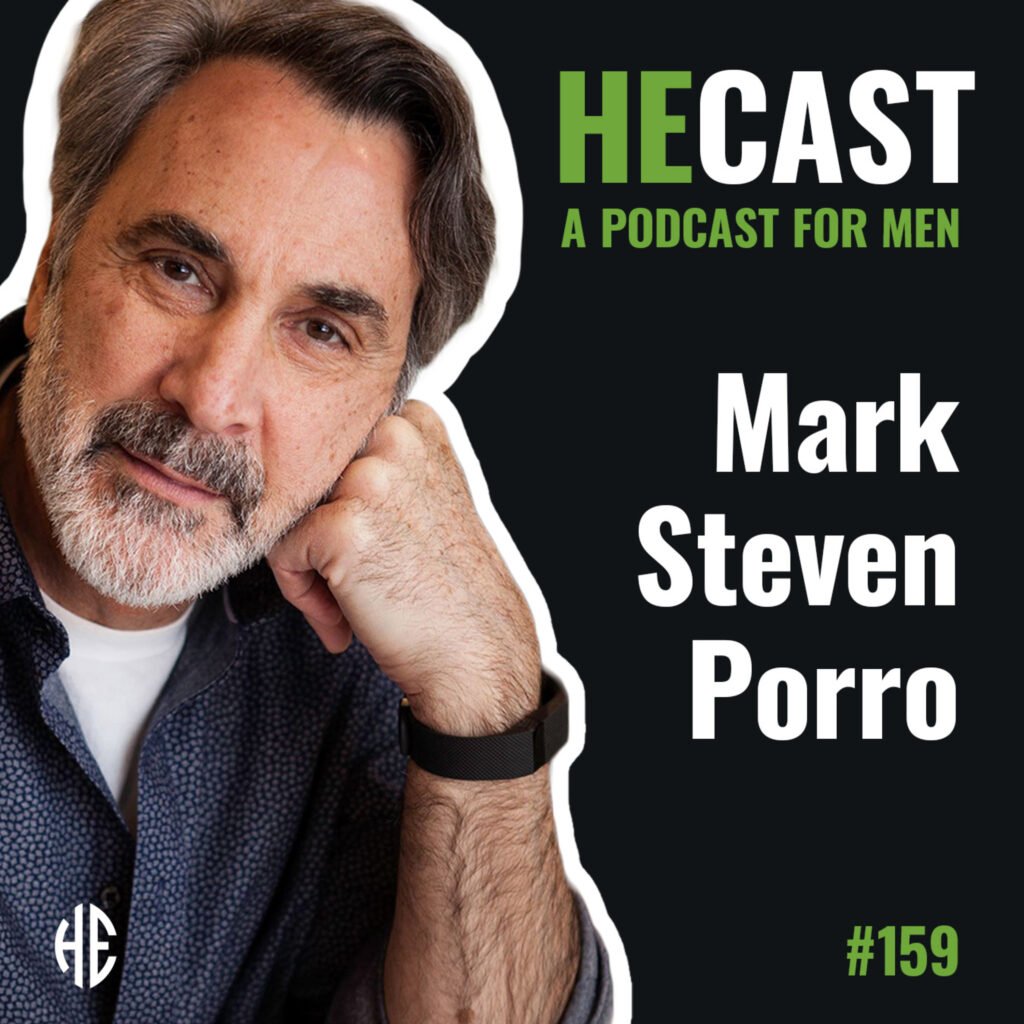
Episode 159 of heCast features Mark Steven Porro in an honest, heartfelt, and unexpectedly funny conversation about caregiving, aging, family, grief, dignity, and finding joy in life’s hardest seasons.
Mark Steven Porro is an award-winning designer, writer, director, actor, and author whose memoir A Cup of Tea on the Commode tells the story of caring for his mother in the final years of her life. In this episode, Mike and Mark explore what happens when life asks you to stop chasing the next thing and instead show up fully for the person who needs you most. What began as caring for an aging parent became a deeply human experience filled with love, laughter, exhaustion, perspective, and meaning.
Mike and Mark talk about the emotional reality of caregiving, the dignity of small gestures, the power of humor in difficult moments, and the unexpected lessons that come from walking someone you love through the final chapter of life. They also explore aging, family roles, purpose, empathy, and how these seasons of service can shape us into more grounded and compassionate people.
This episode is for caregivers, family members, and anyone navigating aging, loss, responsibility, or the challenge of being present when life gets real. It is also for anyone who needs the reminder that even in painful seasons, there can still be joy, connection, and grace.
Listen to heCast, the official podcast of HeChangedIt.
Download the HeChangedIt app for more tools, content, and support on your mental wellness journey.
Read transcript
Transcript supplied via Spotify RSS.
Welcome to he cast, the official podcast of he changed it.
As always, I am Mike Chisholm as always, I'm excited to have
conversations around the world of men's mental Wellness and all
of the things that encompass every guy's got a story and
those stories, they leave clues and and and and sometimes
they're hard clues, but clues nonetheless.
And that's why he cast exists. That's why he changed it exists.
Today's guest is a guy by the name of Mark Steven Poro.
Now Mark is he was an actor and he still, I mean, he he still is
an actor. He's just not a practicing
actor. Been in Holly was in Hollywood
for a long time, writer, screenwriter as well.
And he went through you know, it's, it's cool.
We we did talk a little bit about the fact that he got to go
chase his dreams and things like that.
That was great. But there was a, there was a, an
epic event that happened in his life where he had to go and, and
become a caregiver for his mother for the last few years of
her life. And his life became a full stop
from what he was doing and moving into a new phase and a
beautiful phase. And, and not only did he do that
for his mom, and I think a lot of us know people who end up
becoming caregivers. It could be for kids, it could
be for spouses, it could be for parents, as it was in this case
here. He also wrote a book about it.
And, and I'm just so grateful that this book is out in the
world. It's called A Cup of Tea on the
Commode. And it's the story of when he
became a caregiver for his mom and helping usher her into that
final phase of, of life. And boy, is it nice to hear him
talk about this and, and, and the benefits that came from it.
And, and you know, we all have a gear inside of us that we don't
necessarily know that we have. But for the guys that are out
there that are listening to this or watching this right now and,
and, and you might have a caregiver role that's being
thrust upon you at some point or, or you have been.
This is a really cool episode. Mark is, is, is so articulate
and the way that he's able to talk about not just, you know,
the book itself, but this story, what he went through, it's very
inspiring. I just appreciate him so much.
I hope you enjoy my conversation with Mark Steven Poro.
OK, Mark, before we get into anything here, I want to ask the
question, you know, on all of your, your, for lack of a better
term, branding, the way that you get your name out there, it's
Mark Steven Poro. Is that because of like a, a, a
a writers Guild or a, or an Actors Guild kind of thing?
Is that why you have the three names, or is it something that
you've just kind of always done? Well, when I was in Hollywood, I
it was Mark S Poro. I thought that had a nice ring
to it until I met until I met a potential manager said get rid
of the S mark Poro. It's strong.
And we we we had a big battle over this S Anyway, when when
when I was decided to write the book, I I thought it just
sounded. More literary oh, I got you OK
yeah. And it does it it does it has a
great ring to it and I, I just thought OK, that's that's it's
cool to do that and I, I appreciate that I appreciate a
little bit of it's not even theatric it's just care of how
things sound and whatnot and I just I had it does have a really
nice ring to it and I was wondering about that if you did
use that back in the day. We're going to get to your your
career in entertainment and all the the the the adventures that
you've had. But really, at the end of the
day, I cannot tell you how touched I was by your story.
And, and, and there's a lot of guys out there who, who, who
listen to this or people who know people who have become
caregivers. It could be to a child, it could
be to a spouse. And of course, as Gen.
X rises up in the age, you know, I'm a, I'm a, I'm one of the
younger Gen. Xers and, and, and I'm 50.
So as we raise up those baby boomer parents of ours, you
know, we become caregivers to our parents as well.
And and not only did you do that because a lot of people do that
and they do it silently, but these things leave clues and the
clues that you were able to pick up along the way you were.
They ain't able to take that, that, that that beautiful
alchemy of gifts that you have being, you know, an entertainer,
an actor, a writer, humorist, all of these things.
And you were able to look at some of these, put them together
and come up with a book that specifically every caregiver out
there should read. I, I, I don't like to shit on
anybody, but boy, oh boy, did you ever create a textbook and a
manual for people who became caregiver, who, who unwittingly
sometimes become caregivers? What a thing you've left in the
world. We're about a year after.
It's been really how? How Long's the book been out
now? Actually, we're approaching 3
years. It was 03 years.
I'm sorry. It was released on Mother's Day
2023, so OK. So we've got some reflection
yesterday. Well, ABS, I was gonna ask
because now we've got some distance between I thought it
was just over a year. It's it's three years.
OK, Now that we've got some distance between the release of
the book and where we are now, I'm curious, how has your
perspective changed? We're going to get into the book
and what it's all about and everything, but I'm super
curious on this end of it. How has your perspective changed
since the book has been released?
Well, what I'll, I'll give you one of the the first I, I, I
think revelations that I came up with.
So when the book came out, I couldn't do the audio book.
I wanted to record the audio book here.
I live in the South of France now, but I wanted to record the
audio book. But anything to do with my
family, I get really emotional. I'm really, I guess a crybaby.
I have no problem with that. And so I needed some not only, I
guess physical distance, but I needed some emotional distance
from it because even when I tried to read non emotional
chapters, I would just wait, this is about baseball.
Why am I crying? So I, I, I said, I, Oh my, you
know, my 28 years of studying, acting have to kick in here.
And so, but during that time, so it was about 6 months before I
recorded the audio book and I had time to look at the book it
with fresh eyes and it, it was interesting.
So the story sounds like, and it's kind of true that I went
back to rescue my mother and, and that's how I think most
people will look at it. And then a part of reflection.
I, I think that my mother actually rescued me and that
that popped in because again, she's still, I think even with
all the years that now she's been gone, she's still mom and
still teaching. And I think through my story,
I'm, I'm hoping that her teaching keeps expanding, which
it has. And so we were brought up in a
really nurturing home. Both of my parents were very
funny people, but they taught us how to care for others and care
for certainly the family members and stuff too.
So for me, this is not a big deal.
It seemed like the right thing to do.
My mom deserved better at this time, but we'll get into how
that all began. And so I felt that I was the one
who could give those make her life better and, and give her
last year's some happiness and some joy and stuff that was
missing a little bit before. And, and luckily I was smart
enough when this opportunity came.
And I think again, it was my mom's teaching.
I was smart enough to take it on.
And it made me certainly a better man and it made me more
empathetic for, you know, it's not, and not not just older
people, but people in general, but also animals.
My mother was a big animal person, and I grew up with every
kind of furry animal you could. But I also had asthma, and I
guess I took enough drugs so I could handle that.
But once I went away to college, all that kind of disappeared.
And I was allergic to my home from that point forward, because
at that point we didn't have any more cats, but we still had a
couple dogs. And I had to live in the
basement with the window open in the winter when I was there on
college breaks. And so I was not a dog person.
Now I'm a huge dog person because my girlfriend had a dog
and luckily I wasn't allergic to her dog at the time.
And it certainly helped the relationship.
And since then we've had rescued 2 more dogs and and they're
great. So, and my mom was a big animal
lover. And so I think again, that's
that's mom continually teaching. You know, he changed, he, he, he
changed it. It's all about these things that
we get these lessons that we get taught, these things that we
learn along the path. And, and, and I'm, I'm, I'm
fascinated. We're going to go into the book
here. But, but really at the end of
the day, there's different seasons for, for, for different
parts of our lives. And there's a lot of guys out
there, middle-aged people who have never gone out and chased
their dreams. They don't even know what their
dreams are, you know, and they're just, they're just
connected the dots. We talk about this all the time
on the show and but you weren't that guy.
You were the guy that was afforded the ability earlier on
in life to go and chase your dreams.
Was that something that your parents always supported?
I would have to say yes verbally.
They, they, they may have said, you know, once I, I went to
college, I got a, a, a, a Bachelor of Science in
industrial design, had a very successful design career going
and I gave it up to go to Hollywood to try that very
secure career in acting. And neither one of my parents
ever said anything like, what are you doing?
Like my dad's thing would have been your, your dumb bag rat.
What are you doing? And, and never.
And when they would come up and visit me in Lai think my mom got
a kick out of it because I have a chapter in a book called the
Champion of Arts. And she always wanted to get us
into, I think, into some creative career.
All of us were in the ballet at some point except for I think
one older brother. And I kind of fell into that.
My mom was a big fan of the ballet.
And we we lived about 20 minutes from Manhattan.
So she would take us say, we'd go to Radio City Music Hall, we
would go to Broadway plays and, and we would see the ballet and
things like that. And then my older brother and
older sister were like little stars in Northern Jersey.
We all studied with Irene Fokin was a very reputable Russian
ballet teacher, very strict. And so they were starring
actually with the Royal Danish Ballet in Lincoln Center when I
was about 7. And I went to visit, you know,
see the show and and I went backstage to visit before they
went on. And it was one of those
Hollywood stories. Some guy comes crashing through
the door and says, Hey, we need another little kid.
And he locks eyes with me. And he says, you kid want to be
in the show. And I'm like, what?
And then he says, and we'll pay you.
And I went, oh, now we're talking.
So my first job, I'm a professional dancer now.
I got thrown right into a wardrobe.
I got a great costume. I look like a little Errol Flynn
with the with the sachet and, and it was fabulous.
I got a better costume than my brother and he was not happy
about it. But we got paid $5 a show and
we're in Lincoln Center. So that was my debut at 7.
And I said, this is cool. And then I started taking dance
lessons and then we performed in the The Nutcracker.
Irene Fokin had a very popular production of that in Northern
Jersey where she got a lot of the leads from New York City.
So we top notch dancers and I was a kid and I was, you know,
played a bunch of roles. And so and then we travelled
around New Jersey doing recitals and things like that.
But I retired I think around 10 or 11 from that.
I did, did not get along with Irene Fokin.
She was a tough Russian and I was a very independent, stubborn
kid. And so I, I retired at, let's
say 11 from the ballet and that was it for the creative stuff
until I got into working after design.
I always did some funny stuff because my family, we had funny
things. So I, I wrote funny songs and we
did some fun performances of goofy stuff.
But when I was working at a design firm, one of our
receptionists was a model. And she said, hey, you should
start doing this. And so I looked into it and I
started doing the print and then some commercials because they
the commercials I was getting because they said you can act.
And I said, oh, that's interesting.
And yeah, it's. A gateway, yeah.
Yeah, and then in 84 I decided to bite the bullet and drove
across country and yeah, I moved to Hollywood.
So yeah, I've. I've, I've pretty much, I think
chased every dream. So that was, that was a big one
and it was, it was great because I wanted to be a good actor.
So I had a connection with an agent from my work in Ohio and,
and so she said start, you know, acting classes right away.
So I I was in acting classes when I first got there and, and
pretty much until I left in 2012.
And it was great. And so I said I want to be a
good actor. And my goal at that point was to
get on like Hill Street Blues. That was one of the top shows
you wanted to see. Yeah.
Yeah. And in less than two years, I
got on Hill Street Blues. Wow.
That was the start. And so I said that that's just
Steven. Bochco like the top of the top
of the top like that, you know, at the time, for those who don't
know, Hill Street Blues, like like that was probably the the
number one from a popularity standpoint.
Drama on TV at that. Time and and that read that
redefined definitely police shows and stuff and and and
television overall so but this is how Hollywood works so I get
Hill St. Blue I didn't work again for
seven months yeah. That's so that's, that's exactly
the feast and famine of the whole thing, right.
But you're chasing the dream and, and, and, and looking back
on that like I'm, I'm, I'm feeling your energy even as
you're talking about it. There's a lot of guys out there
who haven't even dipped their toe in their dream.
And I and you know, looking back, it feels like, you know,
you drove it's, it's that classic story.
You drove across the country to go and see if you can make it
there and see if if if you could make any headway there
whatsoever. You were there all the way till
2012. What a ride.
And I mean, I don't sense regret there at all for going out and
at least trying to see what you could do because it feels like
you went pretty far down the road compared to, you know, what
could have happened. Yeah, no, it it all of it was
good. In fact, you get a little
spoiled so that first I'm on Hill Street Blues and when you,
what's lovely when you're a, a union actor, if it goes into
overtime, the money just it, it, it multiplies.
So we were into like double golden time and I'm playing the
assistant DA. So I'm in the courtroom and it
was maybe 11 hours and, and I, I noticed in the, the gallery,
there was a, a man must have been in his 80s and he's there
that whole time as an extra and he's having the best time in the
world. And I'm like, Oh my gosh.
So I sat with him during one of our breaks and, and I'm kind of
hinting like, don't you have something better to do with the
years you have left? And, and he says, no, I just
love being around you young creative people.
It just, it gives me energy. It feeds me.
And, and he says, and my daughter owns the studio, so I
like hanging out here. And I said, who's your daughter?
He says Mary Tyler Moore. So it was MTM studios at the
time and they at Saint Elsewhere was there, Hill Street Blues
Later on Seinfeld was filmed there, which I was on actually
with my dad. And it was it was just a a great
start. But to see this man it just
having so much fun hanging out at his daughter's studio.
It it was lovely. So that was that was like, this
is very, very cool. So that was yeah.
And I had a lot of moments like that, I think because of, you
know, you go in with a good attitude.
There's a lot of rejection, of course, but you got to say, I'm
going to roll with it. Or you, you, you, I, I guess you
depend on your thick skin and stuff like that.
And I grew up with two very, let's say, torturing brothers.
So I learned about a thick skin very early on in life.
So it was like, that's all you got.
Nothing. Nothing compared to my brothers.
So this is a great contrast because I want it now move
forward a lot of time to the place where you had to make the
decision with mom and you knew you saw that, you know, there
was a time that was that was necessary that you were going to
have to come in and be the guy as she, you know, descended into
her golden years. And through that the challenges
that can come with that. I want to talk about that part
of the story now. How old were you and what was
the realization moment when that happened that it was you were
going to be the guy? Well, I was 55 and at the time
my acting career was kind of petering out because I didn't
have a major name or a great agent or anything like that.
It still had work once in a while, but I was running a snack
food business that my brother and I started to honor my father
and he invented this half pop popcorn snack he called
Nutronuts. We eventually changed it to
Grandpa Poe's originals and we built it into a national brand
and it was great 'cause it was a just a family secret.
My father didn't have any luck getting it to the market and I
told him that I'm going to get it to the market and
unfortunately we got on the store shelves a year after he
passed, but I'm sure he's enjoying it.
Anyway, that was he. Was going to say he knew like
energetically, energetically. It's that it's that beautiful,
beautiful triumph that keeps him alive.
And, and, and and and whether or not, you know, we don't know
what happens on the other side. But but the idea of the tribute
that's still happening after he's gone, that right there is a
beautiful, beautiful sentiment. And then if there's anything
else, that's cake. So what a beautiful story that
is. And that's gonna be the next
book, right? How you honor Dad?
Well, there, there is a a chapter in there.
Yep, Yep, that is the book that I'm almost done with now, which
is focusing more on dad. But there is a chapter about
this in, in this book also and the cup of tea and the commode.
And so that was pretty much 24/7.
And also that prepared me for mom because I did, I was
multitasking every day. I did everything for that
company from the website and the social media and all the
marketing to the, the demos to cooking everything.
I designed the equipment. So it, it, it set me up very
well for mom. And so I'm doing that and still
never married, had no children. So I say I was having the
carefree bachelor life. And I get a call from my
brother. My mother was still living in
the house that we grew up in in Ridgewood, NJ.
And he said mom's on her deathbed, the doctor cut off all
meds and food and called Hospice and so come home.
So she had six children. So we all came back thinking,
you know, we're going back to say goodbye.
And I think it was it was about 9 days after her 89th birthday
and she was still physically fine.
We had a family living in upstairs in our house that we're
overseeing household duties, doing the cooking in the
shopping and stuff because she could no longer no longer drive,
but also to keep her company. Yeah, We found out that they did
not get along very well, so they left my mother alone a lot.
So my mother did suffer from some depression throughout her
life, but she hid it very well from us.
But as the years go on, the filter seemed to fade.
And so she became sometimes grumpy and depressed.
And I think at this point she was not happy.
And I think she just said, if this is going to be the end of
my life, I'm going to end it now because this is not cool.
And so she was non responsive. I called it a semi comatose
state and a Hospice was there when I arrived and didn't open
her eyes. Maybe once in a while opened her
eyes but didn't talk. She responded a little bit to
touch but she looked like she was ready to go.
And we had the priest come in deliver the last rites.
And so my younger sister and I hung out with Hospice because we
wanted to care for our mother as much as possible for as long as
she wanted to be here. We didn't know if she's gonna be
hours, days or what. So Hospice was great.
They were very generous. They taught us the little tips
and tricks. We had to deal with bed sores at
the time, how to change the diaper and sponge bathe her
correctly, and how to change the bedding with the helpless
patient in bed. Little tricky, but it was good
to to know how to do that without.
I'm gonna stop you there because right now there are people
listening to this and they're like, whoa, they're getting
squeamish. They're getting to this place.
And, and, and I mean, having a little bit of experience with
this, you know, just talk about the idea of, you know, 'cause
you're on the other side of it right now and it's old hat and
you're able to talk about it. There's a gear inside of us that
does kind of open up and give us the ability.
There's a lot of people thinking about this going.
I could never do that. And I just would like you to
talk to that point just for a moment, because at some point
there's a good chance many, if not most of us are going to have
to do that in some way, shape or form.
And I want you to talk about how it became old hat from when it
was something that that that perhaps was not so much.
Right, well, for a son, I think especially it was a little
awkward in the beginning because you're seeing your mother naked
for the first time. At least I was.
And she's at that .89. You see what the years have done
to her and they're not kind nor is gravity.
And but I think that's where my my acting training came in
because I always said I'm taking on this role, a caregiver.
So I've got to become the caregiver and, and not, I'm
still the son, but I'm burying that part and I'm becoming,
whether it's method acting or not, I'm the caregiver because I
didn't want, my mother was not really awake at that point, but
I didn't want her to feel uncomfortable.
I didn't want her feel like she was a burden or that she was
putting us in an awkward position in any way.
So if there was any, if I was uncomfortable at any time, I had
to bury it. And I, I think that's where the
acting came in or leave the room.
And one of one of the pieces advice I would give people is if
they are uncomfortable with any of this, you don't, again, you
don't want to put that on your loved one.
Don't do it. You don't, you don't need to do
it. You can find a pro to do it or
someone who is comfortable with the, the changing the bedding,
wiping the, the, the butt on the commode and changing all that
stuff. If you are there and you're
present and you show them that you care and you want them to
stick around, that's enough. I mean, some of the best moments
I had with my mother was sitting at the kitchen table just
holding hands and not a word was spoken.
But boy, there was such a lovely connection going between our
hands. And those were the lovely
moments. I mean, you got to get through
the, the normal daily chores and I tried to make them as fun as
possible and certainly pleasant. And I took a lot of tender
loving care in it and stuff. But there's, there's some
moments where it's like, oh, and I and I in, in the book, I, I
lay it all out. People say, boy, it's raw and
honest and it, it, it. If you're a bit squeamish, you
may have a little issue with some of the chapters, but I
wanted to write an honest book about what you're confronted and
and so. Yeah, but people who are in the
situation, that's what they want to hear.
They, they, they, they don't, they don't want to hear people
beating around the Bush when it comes to that, right?
No pun. I don't know if there's a pun
there or not, but they don't want to hear that.
They don't want to hear that at all.
Because at the end of the day, when you're in that situation or
entering that situation, you need to know the info and, and,
and the idea, like, I mean, you're showing right here.
You know, you have that and, and, and you're a great, you're
a humorous writer, but you're showing it here.
You got personality and you're throwing it out there with a
little bit of panache, right? So, but at the same time, you
are also not sugarcoating what some of the hard stuff is.
And that's what that's what we need to hear.
We need to hear that. And here you are on the other
side of it. You're able to talk about it.
It wasn't, you know, you're able to get through it.
A lot of people, the fear is worse than the reality, I guess
is what I'm trying to say. And that is very, very clear in
your message. Yeah, it also what helps is I
have this motto and and I tell people some, some people have
say it's corny, but my motto it's, it's, it's, it's helped me
throughout life, especially with all of my adventures I've been
into. And it's find the joy and I
focus on the positive aspect of any of this stuff.
And, and so this was I'm going in and when I, I actually asked
my mother for permission at one point because I didn't move back
right away. I stayed with her several weeks
and then I went back to LA to take care of some business.
And then I came back a few months later and took care of
her for two more weeks. And that's the time where I
said, you know, I really think I got to step in and do this.
And I asked her for permission and I said, there's two things.
First, we're going to have fun because that that's the way I
roll. I wanted to make it as fun as
possible and make her laugh at least once a day.
And and she said, great. And I said, so if I do this, I
will now be in charge. And she was like, and I said,
that means you must now obey me. So the full role reversal.
And I'm the leader, I'm the leader.
Her smile completely disappeared, but she did puck
her up for a kiss. And I wasn't sure if that was a
sign of surrender or one wishing me luck because she she could
be, she could be a tough cookie. So I just gave her a kiss and
hope for the best. And it was, it was fun.
But again, yeah, if you go when I think with that mindset of how
can I also I put the focus on her.
So how can I make her each day more special?
How can I make her laugh? How can I cook a, a meal that
she hasn't had for a while or make her smile or, or do
something? And so I kept coming up with
those kind of things and not dwelling on, boy, this is
emotionally taxing and this is physically exhausting and all
that business. And it really helped.
And also, I grew up with two nutty parents and sense of humor
was a a big deal with my siblings and and my folks,
especially in difficult situations.
And so whether it's maybe dark sense of humor or not, but we
had moments where mom certainly made me laugh quite a bit too.
And so that helps. I I love hearing that.
I want to, I want to connect the dot real quick here.
Was it the community? Was it the fact that her family
was back around her that allowed her to kind of rise back up
again and then come back from the from the brink of where she
was at? Was it?
Was it basically you guys that caused that?
I, I believe, yes, I have a chapter in the book called The
Silent Scream, and I think it was a cry for help.
She wanted love back in her life and certainly back in her house.
And I think with all of her kids there and being around and
certainly a few of us caring for her, actually physically caring
for her, she sensed that was back.
And I think she said, OK, we'll give it another try.
And that's fantastic. Yeah.
So it was, yeah, it was about 3 weeks and it's interesting.
So Hospice, we found out that Hospice, you know, they had this
directive. Yep.
And but each of the Hospice nurses came in 'cause we had a
caravan of these nurses and they were great, but some of them
prescribed their own medicine and so we had to make sure they
read the directive. No food, no medicine, no, no
even drinking. We would just moisten her lips
occasionally. And she had no desire.
She she showed no indication of wanting anything other than just
the sleep. And this one nurse came in and
she read the directive and she goes, OK.
And she went right into my mother's room and leaned over
and said, Missus Poro, are you hungry?
And my mother, this is 3 weeks in.
My mother's eyes snapped open like a dinner bell went off.
And I'm like what the what is that?
And then the lady looks at us and accuses us of trying to
starve her mother to death. So so my sister and I were there
at the time. We almost jumped over the bed to
strangle her and said no we're not, please go and call your
supervisor. So the supervisor sent her away
because she broke the rules. But now I'm thinking maybe the
maybe the original assessment was wrong and we are in fact.
So I went into feeling really guilty and said, mom, are you
hungry? And she says, what do you got?
And those are her first words in weeks.
And I'm like, anything you want. And it's now it's March.
And she says, how about some pumpkin pie?
Well, it's not, it's not pumpkin pie season.
So I, I, I, I left the room. My brother who lived locally was
in the living room and I said please see if you can find a
miracle and find some pumpkin pies.
He came back in less than a probably a less than an hour 2
fresh pumpkin pies. I don't know where he found
them, I don't know if he baked them himself.
But the pumpkin pies woke her up again.
The 1st food in weeks. She spit out the first spoonful
but the second spoonful went down.
She ended up eating half the the first pie that day, finished it,
finished it the next day and then I think ate the full pie
the next day. But her color was back.
She was awake and alert and she knew what was going on and it
was fabulous. So that one nurse, I call her
the rebel nurse actually was it I think a guardian Angel.
So it was, it was pretty amazing.
And so she ate and and she may have been on their most
continuous sugar high because for weeks it was it was the
pumpkin pies. Then it went to sugary oatmeal
and she had about 8 bowls of oatmeal.
Wow. A day before that it was bowls
of sherbet. And it was like New Jersey was
running out of sherbet. And.
Again, super, super high sugar content and, and then the
oatmeal was a lot of sugar in it as well.
But we said, hey, listen, she's doing great.
You got anything you want at this point?
You know, she's 89 going into her 90th year.
And yeah, eat, eat it. And it was great.
And then we started sneaking in some real food and, and then it
worked out pretty well after that.
The sustenance that is a that is a phenomenal, phenomenal part of
the story And and it just shows again, what will I mean and, and
and and desire and drive can do when you have some sort of a
purpose, whatever that purpose is for her eating the pumpkin
pie and then and then coming back to it again, shout out to
that nurse. I mean, you talk about, you
know, somebody who's really in the healthcare profession, that
was someone who cared and, and, and what a what a what a, what a
part of the story that was. So OK, you, you, you, this goes
on. She starts to get her life back
in her and you realize, OK, well, you're going to be the
guy. You make the decision, you tell
her, and she goes with it in her whatever way that she does.
Was there any times as this began?
Now, obviously there's a learning curve.
Your purpose is learning what the new normal is going to be,
all that sort of stuff. But then at a certain point, I
imagine it becomes a routine and the newness and the things, the
challenge kind of go away a little bit.
Were there times where you were feeling I, I don't want to say
resentful, but yeah, like, I mean resentful or, or, or bored
or anything. Like, were there times during
those times where you know the magic of being there for your
mom and these moments that you talk about the beautiful things,
There had to have been some lows as well.
Oh, sure, Yeah, yeah. I don't know if there was any
boredom because it's, again, it's a, it's a 24/7 job, right?
And even when you're, there were a number of times where I'm up
laying in bed and, and she's sleeping and safely in her
hospital bed, so she can't get out of bed or anything like
that, but you're still worried if she's going to be breathing
when you get up in the morning. And there were a number of times
where she almost gave me heart attacks where she'd be calling
out my name very early in the morning and I'd go flying down
the stairs, not knowing if it's an emergency or not and sliding
into her room And she'd say, oh, you are here.
I'm like, of course I'm here. Where else am I going to be?
It's 6:00 in the morning. And she's like, oh, just
checking. And I said, can you check a
couple hours later next time? I just got to bed.
But you know, the you get again, it was I was glad she was awake.
And so that was lovely. While she was there again or
while I was there, she slept a lot because she was like a baby.
And so I had some skills in doing this.
So I ended up renovating her entire house while I was there.
Oh, there you go. And that was lovely because I
kept her engaged to show her, you know what we're doing.
And but it was pretty funny. She did suffer from a little bit
of dementia. So after we would go through,
let's say our morning routine and I would get her into the
kitchen for breakfast. Always cooked a nice healthy
breakfast. And I put her in the living room
where she watched the Animal Planet all day or Jeopardy and
Wheel of Fortune and that kind of stuff at night seems to be
mandatory for a certain age. And, and I would be off to Home
Depot in between and getting on the material.
So Home Depot I'm coming in with two by fours and buckets and all
this stuff. And, and for about 5 days in a
row, she's watching me in the living room pass her by and
she's going, what is going on? And I said, I'm making your
house more beautiful. She goes, well, who's paying for
all that? I said you are so cheer and that
went almost every day. I said I'm renovating your
house. I'm making it more beautiful.
Who's pay you are cherub. You may have to go back to work.
So it was a lot of fun. But during that there was I,
the, the last thing that I did was her, her bathroom upstairs
and I put in a big bathtub and, and I, I thought what you want.
So, you know, we take a lot of these things for granted.
I don't know. The last time she had a bath,
she had sponge baths twice a day.
I did sponge baths morning and evening, but last time a real
bubble bath. So I said, hey, you want to
christen the new bathroom with the bubble bath?
And she said absolutely. So I carried her upstairs, put
her in the bubble bath, place the bubbles and ice covering
everything and shot a picture. And she's just beaming from ear
to ear. It's fantastic.
And then she passes out and I'm like, and I'm so God, papping
her cheek and going oh God. I try to do a good thing and I
kill my mom, but at least she smelled good.
So I pull her out of the bathtub because I again, she had a
wicked sense of humor, so I thought she was joking and she
wasn't. She was out and so I carried her
downstairs and put her to bed and called the nurse and the
nurse said she fainted because her blood pressure went too low
in the hot water. You left her in too long.
So that was her last bubble bath.
But she woke up about 30 minutes later, had no recollection of
passing out. But she loved the new bathroom,
so it worked out good for me. That would have been a tough one
to explain to my siblings. Oh, by the way, yeah.
So we had, we had. I think that was the only near
death moment. There was another time when we
when I finished the basement, I had, I did all the work, but I
had someone to come in with the carpet, the carpeting.
So I had two carpet samples and they're three by three inch
squares. And I served her breakfast in
bed this particular day. And then I put the two carpet
samples on her breakfast tray and went in to replenish her,
her sippy cup with juice. And I came back and she has a
carpet sample in her mouth and a scowl on her face.
And I said, what's going on? She goes, this is not a cookie.
I said no, it's a carpet sample, which one tastes better?
And, and she chose well. So we had, we had some, I mean,
we tried to make again, you make light of it as best you can
because it's a, it's a stress relief, I think for both of us
and. Yeah, but you you think about if
you didn't make that decision and, and, and and go on this,
you know, trek of life, you know, these little moments are
the things that pass us by every day really quickly.
I know you're in the South of France now and I know the pace
is very different than it is here in North America.
But but but yeah, I know you remember it and I know you
remember the the hell bent speed that everybody seems to be going
on. We're tunnel visioned, you know,
we don't pop our heads up for moments like that.
And I mean, I think back to growing up, you think about
Reader's Digest, right? And Reader's Digest, in between
all the articles, they always had these little, teeny, tiny
little anecdotes, the life like that kind of anecdotes.
And I find that those are going away unless we have some sort of
a, of a quest like this or a mandate like this.
You know, again, these are some of those things that you never
even would have thought of you. OK?
I've got to take someone's got to take care of mom.
I'll take care of mom. We'll make it happen, right?
But you don't imagine that those little life like that moments
are going to happen. And here you are years later,
talking about those little moments, the the carpet square
versus the cookie. You know, that's a beautiful
little story there. Yeah.
Wouldn't happen if you didn't take time and and and be present
with your mom the way that you were.
Yeah, and, and I think that, you know, my intention wasn't
originally to write a book. I, I, I, I have a, a, a, a, a
history of recording family events and stuff like that
because I want to memorialize them.
So I, that's kind of in my background, but also I think
from my screen writing and stuff in Hollywood, if I see what I
think is an interesting story, I think about, oh, what could I do
to make this into a movie? And but I started originally
taking notes because again, I was Privy to all these wonderful
moments, some very interesting conversations and my mother had
some pretty interesting visions early on.
I didn't want my siblings to miss out because I was
experiencing these things everyday.
So I just started recording all those things.
There were a couple other things.
I think being a son, I think I took maybe a little more of a
romantic approach with mom and I had a great relationship with
her, with my dad as well. So I grew up with three sisters,
so all had long hair. So I, I knew how to take care of
hair and brush hair and braid and, and I knew how to paint my
mother's nails. Her nails were like the crown
jewels. Had to be very careful with
those and, and with lipstick and things like that.
And when I first got home, you know, my mother had these old
tattered, drab day dresses. And I said, now we got to jazz
this up. So if you want to cheer anybody
up at any age, a new wardrobe will do that.
And so I bought her a new wardrobe of these very nice day
dresses. Her legs were still in pretty
good shape for her age. So I bought them on the shorter
side and and she loved them. And it was fabulous.
And so my mom had six kids and she worked full time for the
largest newspaper in New Jersey called the Bergen Record.
And she worked the night shift and she only treated herself to
a weekly visit to the beauty salon where she had a shampoo
and set and had her nails done. And when she would visit me in
Lai would take her to my friend's beauty parlor in
Beverly Hills where she got the movie star treatment.
And I knew that she loved that. I don't know the last time she
went to a beauty parlor or anything like that, but I, I
created what I called Day of Beauty to try to recreate that
at home. And so normally I gave her the
sponge baths in the morning and evenings.
But for Day of Beauty, while she sat on the commode, I soaked her
feet in Epsom salts. I shampooed and rinsed and and
conditioned her hair and then got her finished on the commode,
got her on the bed and gave her the full sponge bath and a body
massage. Full massage and body lotion and
the baby powder and the new diaper.
And then she chose her new wardrobe.
And then it's another thing we take for granted.
In between getting her up and into the wheelchair, we came up
with another one of our little special routines, a morning hug.
Because it's difficult to hug our elders.
Usually they're lying in bed and, and it may hurt for them to
hug, if not make it almost impossible.
But touch is really important. And so we we would hug and it
would be fabulous. And neither one wanted to let
go. And then I would get her in the
wheelchair and then I would blow dry her hair and put it in a
ponytail or sometimes the braid and, and then I would do her
nails and then gave her a little touch of lipstick to match the
nails and usually bright red. And I didn't think that much of
it. I thought, oh, this is a nice,
nice gesture. So I'm Wheeling her into the
kitchen for breakfast and we pass by our dining room big
mirror in the dining room. And I pass by and I park her in
front of that dining room mirror and she is looking at her
reflection and beaming. And I'm like, wow.
So I lean in. I said, who is that pretty girl?
And she just, it was beautiful. The effect on her and certainly
on me was just profound. I didn't think, you know, again,
it was a nice gesture. But boy, the power of that.
And I learned an important lesson is wanting to feel pretty
does not end with at 90 or any age, you know, And it's for men
as well. Two days before my dad passed,
my dad was very strict Catholic, and his hair was always neatly
combed. He had a comb in his wallet and
always clean shaven. And so my sister and I shaved
him because we knew when he met Jesus, he wanted to be in, you
know, looking as good as he could.
And he so appreciated that. So it goes with men and women.
And again, these are things that we think aren't important and
they, they really are. And as I've shared this story
with more people, they're saying that more assisted living and
more nursing homes are starting to bring in people to do these
things, whether they're beauticians or whatever.
But the wardrobe and the day of beauty were, were magical.
And, and it was infectious because everybody who saw her
saw, you know, it was radiating. It was fabulous.
It's, it's a dignity thing, I think, and, and, and, and
dignity and self esteem. Sometimes I think you're
connected to each other and, and, and so, you know, if you
can, if you can improve the self esteem, you could also improve
the dignity or vice versa. It's probably both of those
things. I I would think, you know,
knowing that somebody cares and, and I mean, going through
looking at the pictures that you had, you know, with mom and,
and, and, you know, knowing that there was downtime that was
there. So the pictures that that that,
that you have are just, they're precious.
I mean, and, and, and it's something that like, I've, I've
learned a lot throughout listening to you here.
The idea that you were taking notes so your siblings who
weren't there could, could, could see that, but also taking
the photos that you did, you know, allowed a very similar
kind of a kind of a thing. Now you also have some downtime.
You're ready to the house. I get it.
Were you writing at that time? You're writing the notes and
whatnot? Were you writing screenplays or
were you writing? When did you start this book
Throughout the process of where your mom was?
Well, while I was, I guess during my journey, a friend of
mine was going through something similar with her dad.
And so I shared some of my experience and also what I
learned from Hospice, the tips and tricks, and she got some
benefit out of it. And that's when the idea of a
book came in because again, my first instinct is how do I make
it into a movie? And I said, no, I think this
could help people and certainly put it out a lot faster than a
movie. And, and, and so that was it.
But I couldn't, again, because of the emotions and all that
stuff, I couldn't write. So I just kept writing notes and
when I would be inspired or something hit to say, oh, this
story would be helpful. And because there's a lot of
back story in it that helped, I think justify why I did what I
did. And it was the way I was brought
up by my family, not only my parents, but my siblings and
stuff like that. So I, I couldn't write the book
until I moved to France and I never wrote a book.
So I wanted to study a memoir. And so I, I, I online, I studied
A memoir course and, and did a few of those courses.
And then my memoir teacher actually was my first editor and
she gave me some great notes. And then I also said I wanted to
be published. So I wanted to make it as good
as possible. And I had two publishers that
were interested. And, and so that was kind of
nice because at that point I was in my 60s.
So I found my first publisher and, and the, the book is done
very well. It's won a bunch of awards
selling well. And the, the, the personal notes
I've received from people who have read it have been the best
and just lovely and very touching. 11 I'll share this,
this girl, I think she's from my hometown.
I didn't know her, but I'm very aggressive with the, with the
marketing and social media. So a lot of people from my
hometown have become followers on Facebook.
Sure. And so she contacted me.
She says, you know, my mom's 95. I bought your book and I'm
reading it to her and we're both really enjoying it.
And then the next year she contacted me.
She goes, my mom's 96 now and I wanted to let you know we're
reading your book again because we had so much fun the first
time in Wow. And then she wrote me a couple
weeks after that and she said, I just want you to know my mother
passed away a couple weeks ago. And your book has helped me so
much, not only before, but but during the process now because
of your sense of humor and stuff like that.
And I just thought that that was just beautiful and and really
generous of her to share that with a stranger basically.
Or maybe we're not strangers now that she's read the book a
couple times. Because my girlfriend here says,
boy, you get to know a lot about him when we're done with this
one, which is probably true. But that, yeah, that was
beautiful. So the awards and and the book
sales is now it's going to be published in China and Taiwan
and South Korea so far. And but those personal notes are
the are are the best. Yeah, I mean, don't, don't get
me wrong seeing the book up in Times Square, the picture and
and I mean, I can only imagine, you know, what mom and dad would
think about the idea of a of, of one of their family stories.
When you see that the the you know, up on the on the on the
board in Times Square, it's such a beautiful, beautiful thing.
Especially Jersey boy, who early on in Manhattan is the place,
right. You're going across, you're
performing at the center and all that.
That's that's kind of that's one of those things where it's like,
Oh my gosh, the full circle parts of it.
But then you take, you know that that's great and it's nice.
Gratify, gratification is great. There's nothing wrong with
gratification. It's a wonderful, wonderful
emotion and, and, and feeling. But then like you look at all
the layers down that are so much deeper than that as to what
you're talking about here. It's it's, it's a beautiful,
beautiful thing. I just before we finish out, I
know time gets really, really slippery when we do this.
But when you do do the next book, I want to have you back on
and, and I just appreciate I, I like Mark, I can't tell you how
much I appreciate you sharing the things that you've shared.
There's a lot of clues here for people who are going through
this stuff or or maybe about to that they can hear.
And I that's what he, he, he cast is all about what he
changed. It's all about right And, and,
and the fact that the fact that it's not one of her daughters,
the fact that you are one of the sons, you know, I, I think a lot
of time the caregiver does because is, is, is, is the woman
many times. And, and the fact that you, you
did this and not only did it, but wrote such a, such a
wonderful, wonderful retelling of the story that will make you
laugh. And, and the squeamish parts
aren't so squeamish. They're a matter of fact that
people, you know, they're facts that people need, matters of
fact that people need is what I wanted to say.
I'm very grateful for that. How did you end up going to the
South of France? How did that happen?
Well, I had an ex-girlfriend, always wanted to retire here and
I guess I put the bug in my ear. I thought, you know, if I
retire, it's going to be on a Caribbean island or maybe Italy.
I've been to my grandfather came from Italy and I've been to his
little village and I thought that that would be a place.
But I came to France with her for the first time and and it
was great. We spent a week in Provence with
French friends from Paris and then we spent a week at their
place in Paris. And so my introduction was
fabulous. And we also, my mother's mother
had French in her. And so we have French on the on
the other side of the family. So I think my French ancestors
had something to do with it. And then a couple years later,
she found we were no longer a couple, but still in France
because I was at at home taking care of mom.
And she said, oh, I found a place in this where I am now.
It's a little village called Pesenas in the southwest part of
French. And, and, and I said, well, if
you want to make it a vacation home, maybe we'll both go in and
invest in this thing. And so I came over here almost
11 years ago, actually this month, actually, I think today
is when I landed here and I found I spent five days in this
village, fell in love with the people and found this house and
put an offer in. It was accepted.
And then I moved here a couple years later after five days.
Again, not knowing the language, I never expected to move to
France, but I think I think the French ancestors had something
to do with it because none of this should have worked out.
And the people here are lovely and they forgive me for my I
think my goal here is not to speak French, but to teach them
English, because as soon as I start speaking French, they go
right into English. Don't worry about it.
Don't worry about it. Let's just do that.
Yeah. The reason I ask is because, you
know, you've always been the guy who, who, who has chased the
things that you, you, you want to do and, and, and then you go
through this experience with mom and, and, and, and then you
write about it, You get it out there.
I mean, the therapeutic, I mean the parts that we could talk
about the therapeutic, you know, results from writing out the
story and getting out there the way that you did.
I mean endless. We could get into that, that
those are those are obvious, But I was just curious if the
ordeal, the experience said, you know what?
This makes me want to do another kind of life change and, and do
a reset and start. And if it had anything to do
with that, or if you would have ended up in France anyway
somehow. Excellent question.
I have no idea. Again, I like adventure and
maybe I needed a change again, losing at that point both of my
folks. I'm still close with my
siblings, but again, I moved out of the house shortly after I
turned 18. I never really lived back there
except when I returned to take care of mom.
And so I, you know, went to school in Ohio, The Ohio State
University, and then she. Represent.
And then Hollywood and and and and then back to Jersey.
So, yeah. And then I guess I had to take a
bigger leap. So I went across the Atlantic.
But the language is challenging for me.
Boy, it's, it's, it shouldn't be that hard.
We have so many words in common that I think they said there's
40,000 words in common. But boy, Yep, I don't, I don't
know. Those words seem to escape me.
There's so, but they're lovely. And the wine here, it's the
largest wine growing region in the world.
And the wine is cheaper than water.
So if you're into wine, it's great.
If you're not, it's a freaking nightmare.
But luck. Luckily I'm into the wine so
it's nice. Well, the the the book I want to
I want to make sure we we exclamation point the book, a
cup of tea on the commode. What's the best way for people
to buy? Obviously Amazon and all that's
there. But whenever authors are on
here, if they've got it on their own site or something like that,
I always want to make sure I plug that.
Not saying that Amazon's a bad thing, but I just feel that
creators many times sometimes don't get what they're, they're
just desserts sometimes from that.
So I've if if people want to buy a cup of tea on the commode,
where's the best place that you would like to send them?
Well, again, it it would be Amazon or Barnes and Noble, any,
any online site or if they go to the, if they Google a cup of tea
and the commode were everywhere. I mean, the website also has a
purchase button which will give them lots of options because the
publisher and our distributor has this all over the world,
which is lovely. And so if people, let's say anti
Amazon, there's plenty of other places and it comes an e-book,
audio book, a large print and also the paperback.
And and you read the audio book, you finally got it.
You got it out there and you. Read it, got it together.
Yeah. Well, that's great, I think.
No, it's the way it should be. It's the way it should be
because it comes from, Oh yeah, it's from you, right.
Like like Steve Martin, you know, he did the audio book for
Bourne standing up and it's, it's, it's so it's, it's better
when if it's autobiographical, that the person reads it.
So I'm glad that you were able to, to get it together so you
could do that. That's a that's a beautiful
thing. You know, that's, I think
that's, it's one of the best ways to consume it because
you're hearing it directly from your mother, your words, it's
coming from you. And, and, and that's such a
personal, personal thing. I can't thank you enough, Mark
for, for, for, for documenting this.
I really think that what you've gone through, you've been able
to turn it into a, a, a, a bright light.
And I think that there are people who are you, you've
touched on how many people are being touched by the book and,
you know, hopefully we can further that.
And then there's guys that are out there that are hearing this
going, OK, you know what? There are ways that I can get
through this. I'm not alone.
And not only that, I can get a bit of a of a textbook as to as
to what to do and and and and and your story just serves as
such a a beautiful beacon for that.
So Mark, I just want to say thank you so much for taking
time out of your schedule to come on he cast today and tell
us your story. I appreciate it.
Well, I, I appreciate the opportunity because it, it, it
keeps mob in the present and and she keeps teaching, which is
which is lovely. So.
So I appreciate that. Oh, thank you so much.
This is why we do the show. You know, everybody's got a
story and and all of those stories contain some sort of
learning in it. Mark has done such a great job
of of of really putting that to the forefront.
If you haven't downloaded the He Changed it app, what the heck
are you waiting for? Go to heatchangeit.com and check
out what's going on. And this is just I just
appreciate hosting the show so much.
This has been another episode of he cast the official podcast of
He changed it. My name is Mike Chisholm.
Go change something.
Transcript
Read along with this episode
A source transcript is available for this conversation.