
The conversation
About this episode
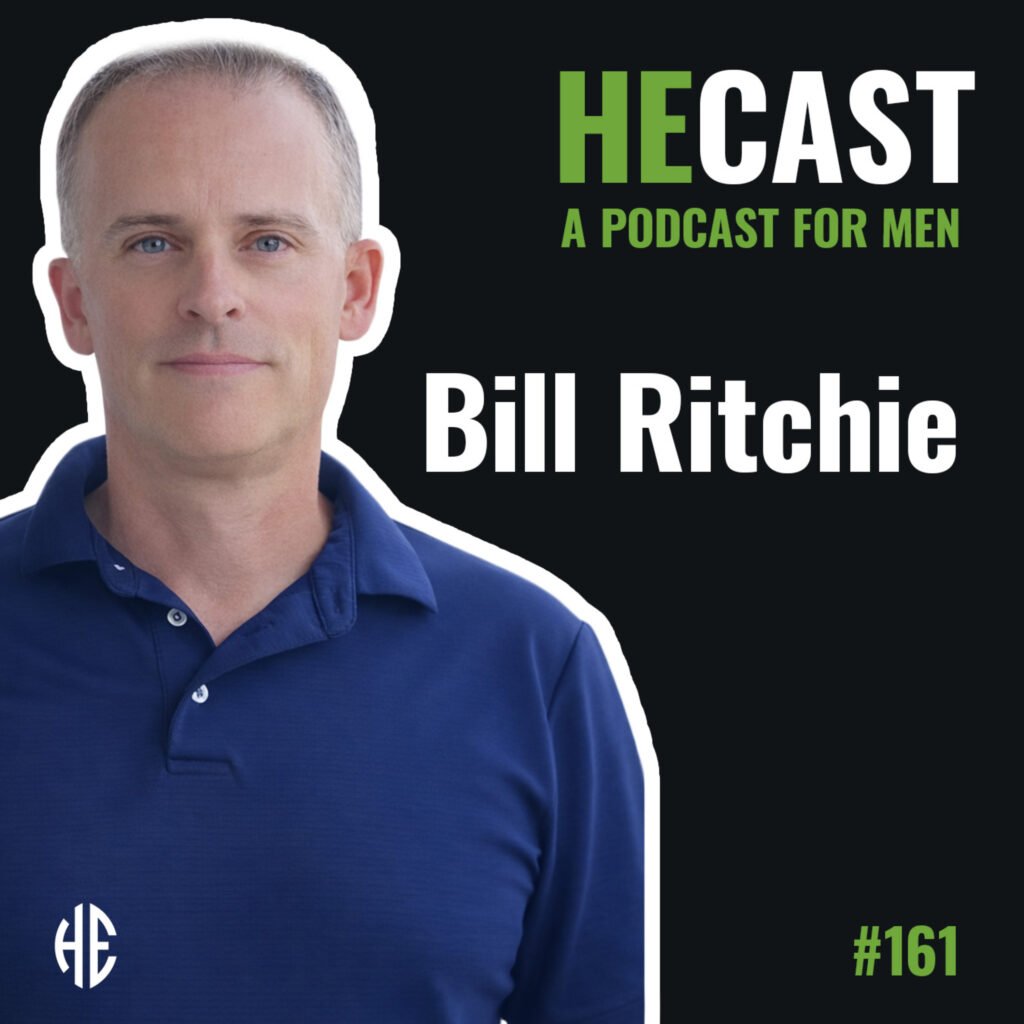
In this episode of heCast, Mike Chisholm sits down with Motivational Mindset Coach Bill Ritchie for a powerful conversation about toxic parenting, emotional patterns, boundaries, confidence, and what it takes to create a more aligned and fulfilling life.
Bill shares his personal journey of overcoming a challenging upbringing, navigating addiction and self-doubt, and turning those experiences into a mission to help others move toward emotional freedom.
Together, Mike and Bill explore how childhood trauma can shape adult behaviour, relationships, confidence, and identity — often without men even realizing it. They also discuss what it really means to take responsibility for your life without suppressing emotions or pretending everything is fine.
You’ll hear about:
- How toxic or difficult parents can create emotional patterns that follow us into adulthood
- Why setting boundaries is essential, even when it feels uncomfortable
- How men can begin rebuilding confidence and self-worth
- The connection between trauma, addiction, relationships, and identity
- Why being heard is often the first step toward healing
- How physical activity, self-talk, community, and self-compassion can support growth
- What it means to move from problem mode into solution mode
Bill’s message is simple and powerful: you are enough, you are not alone, and real change is possible.
This episode is for anyone who has ever felt stuck, overwhelmed, disconnected from their purpose, or ready to break free from old patterns that no longer serve them.
Download the HeChangedIt app:
https://hechangedit.com
Connect with Bill Ritchie:
Website: https://www.coachbill4u.com
Instagram: https://www.instagram.com/coachbill4u
TikTok: https://www.tiktok.com/@coachbill4u
LinkedIn: https://www.linkedin.com/in/bill-ritchie-6a8080266
Facebook: Coach Bill Life Coaching
Read transcript
Transcript supplied via Spotify RSS.
Welcome to hecast, the official podcast of he changed it.
As always, I am Mike Chisholm. As always, I'm excited to have
conversations around the world of men's mental Wellness and
talk to people who who are in the trenches helping other
people, helping men specifically, you know, navigate
this ever changing, more complex world, you know, and today's
today's guest is is certainly certainly in that category.
His name is Bill Ritchie. Coach Bill is coach Bill for
you. So the number four and the
letter u.com coach billforyou.com is his e-mail or
his website, I should say. And Bill's Bill's a cool guy,
fellow Canadian, helping people with the stuff that life throws
at us. And, you know, he, he, he's a, a
guy who became a, a, a personal development coach for people out
of his own journey. And we go into that in the
conversation here today. It's a, it's a really nice
conversation where we just talked about where he has come
from. But more specifically, we talked
about people who are people pleasers and, and, and how to
break that cycle and, and how dangerous it can actually be.
You know, for those people, if we talked about all sorts of all
sorts of things, why men struggle to reach out, we
certainly talk about that. But for anybody who's listening
to this, and you might be going through something or maybe you
don't even realize you're going through something.
We talked about boundaries. We talked about all sorts of fun
stuff that that that when I say fun towards making your life
better. Very grateful for Bill and what
he does in this world. And I hope you enjoy my
conversation with Coach Bill Ritchie.
OK, Bill, I, I'm excited to have you on here for a variety of
reasons, you know, but before we get to what it is that you do
and how you are helping to make the world a better place by
helping people improve their lives.
Because really the, the, the ripple effect of people who help
people improve their lives means it improves things that are
around them. And, and, and you know, coaches
like yourself, I would never want to minimize that, but we're
both broadcasting from Canada today.
I love having other Canadians on here, but it's, you're
broadcasting a place called Cambridge ON.
Now, I'll tell you this, I live in Kelowna, BC.
I was born and raised here, born of parents who are from
Cambridge. My mom, 1 of 12, and almost the
entire family stayed there. My dad, one of six, and almost
the entire family stayed there. I literally have hundreds of
relatives, hundreds of relatives in the Kitchener, Cambridge,
Waterloo area. When you told me you're from
Cambridge, that just shot an arrow right into my heart.
How long have you lived in that area?
I've been in Cambridge for about 24 years now, originally from
born and bred in Mississauga, ON, so not not far as you know
from from Cambridge, so. Went into the suburbs a little
bit though because Mississauga is basically Toronto now.
Right. Yeah, yeah, that's, that's not
the time. That's what we're trying to get
out of, right? A little more, a little more of
a country feel, Although Cambridge has turned a little
bit more city now too. So it's just like everywhere,
right? Yeah, it's crazy beautiful place
of the the world to be from. I'm grateful to be a Canadian
Welcome to he cast today Bill. I want to there's all sorts of
every time I have a coach on here you know who specifically
resonates with the message that he changed his putting out
there. I I love talking to coaches and
getting their perspective. But before we kind of get into
that, most coaches, in my experience, become coaches in
whatever modality it is. If it's a business coach or, or,
or, or, you know, athletic coach or, or, you know, a life coach
or specifically parts of life, you know, personal development
coach. Most of the time it's as a
result of their story. And sometimes the story leaves
clues. I'm super curious, how long have
you been doing this and what was it that led you to becoming a
coach? Well, essentially, I feel like
I've been a coach most of my life because even as a young
person, my friends would come to me, to I was, you know, be told
I was a good listener and maybe give a little bit of advice here
and there. So it's always come kind of
natural to me. But going through a lot of jobs
that I didn't like, warehouse jobs in the last 10 years prior
to doing this, doing sales jobs, it just never felt like me,
always felt like there was something else out there for me
like to be helping others. And then a light bulb went off a
few years ago when I got laid off from a job I didn't like
anymore. Anyway, sales, I said, you know
what, I'm going to make a change now.
I'm going to go try to get into coaching.
Life coaching is a little new to me, but I sense it wasn't.
So I went and got certification a few years ago out of Rhodes
College there in in Vancouver and just went, went from there.
So we can I can dive a little bit deeper into my story if you
want in a few minutes, but that's kind of how I came to to
coaching. OK, so, so the idea of changing
careers midstream, you know, us of a certain age.
I'm a Gen. Xer and and and I remember in
high school being told that my Yeah, I figured.
So I figured, you know, being told, I don't know if you were
told this where you grew up, but, but, but in my high school,
they said, hey, look, the baby boomer generation, they had one,
maybe 2 jobs. Your generation is going to have
5-6 careers. And, and, and, and, and, you
know, certainly the idea of that at the time was kind of
daunting. You've experienced it, you've
gone through some of these different things, these
different positions and whatnot. I'm curious when you decided to
take the plunge and move into something that felt more, that
resonated with who you are as a character and, and, and how
you're built the before and after.
You know, I, I, I'm curious as to what has surprised you the
most is, is how much of it, how much of it was exactly what you
thought it was going to be and how much of it was something
completely different? Yeah.
Well, so part of what I do is becoming an entrepreneur after
always relying on just going to work every day, getting that
paycheck, right. So that was pretty daunting,
daunting for myself, for my wife.
So it was just in going through all the coaching and learning
how to do that and just how that comes naturally.
What the heck do I know about running a business, right?
So that's been, I guess the biggest challenge with things
and then staying committed and doing all the behind the scenes
work I got to do, whether that's working on the technical stuff,
which I wasn't always great at, you know, your website, your
course that I created, all that stuff.
So the biggest challenge is just all that extra work that comes
along with running your own business basically, right?
The coaching stuff I'm I'm good with, but the other stuff I've
really, really had to to work on.
So that's been the the biggest challenge, I guess.
Yeah, you got to wear a lot of hats when you do that.
I, I, I similar something similar.
I used to work for Costco and then, and then I, I have AI
built a financial career on the side and, and, and building the
financial career on the side. I mean, you know, the licensing
and the, and the, and the learning about the different
financial products and strategies and all that stuff.
That's one thing. But but learning how to actually
build your clientele and build your business.
I mean, it's a, it's people you know, could make and have made
courses on just to do how to do that, how to network yourself,
how to get yourself out there, how to, how to make these things
happen. And you're doing all these
things at the same time. And it's in a place where it's
an extremely vulnerable space. Did it take you a while to get
going? And did you do it on the side or
did you literally quit cold Turkey and dive in with both
feet once you got certified? In hindsight, I should have done
it on the side because it was a bit of a struggle in the
beginning financially, but I just, I just felt like I got to
dive. I got to go all of it because I
thought about doing this prior, you know, for a good couple of
years prior to doing it. And so like I said, if you can't
go back in life, right, maybe I could have tried a little bit.
I just all in or nothing for me because it's just like this at a
stage of my life now where it's just like I got to do this
right. There's always self doubt.
There's always going to be self doubt in anything that we do.
So it's just getting over that and just like no, I'm going to
start and did I have 100 clients a month right away?
No. Do I still no, but it's just
getting those first couple and then get gaining that trust and
then just building it from there.
So. Well, and I mean, you talk about
your story. I mean, this is a part of your
story. I mean, the fact that you're
able to relate to people, I'm certain that, that, that, that
money and business and all that like, like, it's funny.
I'm, I'm, you know, in the financial planning side of, of,
of financial services. And sometimes I feel like, I
mean, I, I replaced the Kleenex box on my desk 3-4 times a
quarter sometimes because you feel like you're an armchair
coach or an armchair counselor, whatever you want to call it,
bartenders, hair stylists, you know, you, you, you dove into
that. So I'm certain that you can
probably take a lot of these experiences and use them towards
helping other people figure out a perspective of where they're
at and where they want to go. Absolutely.
And that's what a lot of my that's a lot of what I do comes
from my own experience. And if you like right now, I can
dive into my story a bit and it's.
Well, I'd, yeah, I'd love to hear how you, how you, I'd love
to hear what brought you to where you're at right now, for
sure. Yeah, OK, so we'll go all the
way back to when I was 2 years old.
That's when my parents got divorced, my mother and my
father. So I never remember my parents
together, you know, ended up being the age of 2.
And then I was about 6 years old, yeah, going into grade 1-6
years old. And my dad met another woman,
ended up getting married. And it was shortly after that
that the physical and emotional abuse started from my
stepmother. So, man, yeah.
So that was wonderful. So just dealing with all that as
a child and then, you know, when somebody's abusing you in
whatever form that is, they have a hold over you.
So I didn't even feel like I could go tell my father.
And quite honestly, he never really heard me anyway.
To this day, he still doesn't hear me right.
So when I got into Fast forward a little bit or a lot, when I
got into coaching, I first thought, Oh yeah, I can, I can
help people who are stuck, who are needing some motivation, who
need to to be heard all that. And I tried that for the first
six months or so, didn't really get a lot of, you know, clients
or even discovery calls from that.
So it's just like, like, is this working?
Why isn't this working? I'm like, I don't think I'm
being true to who I can actually help, right?
So I went back, I did some soul searching and I'm like, I want
to be able to help people who've had similar experiences to me
from maybe their childhood trauma and or that leads to
dealing with difficult or toxic parents, right?
So I just feel a little bit more aligned with that now.
The challenge with that people from my generation and
specifically men, I'm so happy to be on this show today because
I, I've really been gravitating to wanting to help men more.
Not that I don't want to help women, but I just think
traditionally women are a little bit more open to, to helping
themselves. Maybe maybe discovering some of
their trauma, past traumas or whatever, or just just in
general, right where where guys and if I'm jumping in too
quickly on this, stop me. But we're no, not at all us,
says guys. Especially being a fellow Gen.
Xer, it's like, you know, inside you're just, this shit just eats
up inside of you. But like I'm now I'm weak if I
go go get help, you know? So, well, the stigma, and I
mean, we talk about the stigma all the time.
One of the things again, you know, we've been from the very
start, unabashedly talking about how we want to help change the
world and, and, and we can't do that alone.
One of the things that we want to do is we want to take back
the phrase man up. And, and, and I think a lot of
the, the, the, the millennials and the, the Gen.
Z's and the Gen. Alpha, the people under us don't
necessarily understand what the phrase man up was when we were
growing up. And we were told that by many of
our baby boomer predecessors that that that whenever we felt
anything that they would view as weak, we would just be told to
suck it up, to man up. And, and, and what that meant
was bury it, essentially bury it, don't worry about it.
Move on forward. Yeah.
So I got up, but I got. Yeah, that's exactly it.
And we want to take man up back. And then the idea of manning up
is to go, whoa, whoa, hold on. Let's take some stock as to
where we're at right now and totally evaluate where we're at
right now. And then springboard that into
exploring why we are where we are right now and taking
responsibility, even if it wasn't our fault.
Like, again, you know, you know, in many, many, many different
modalities, they talk about the idea of is not everything is our
fault, but everything is our responsibility.
So taking responsibility, that's what manning up really is, is
actually looking at things the way they are and taking
responsibility for it and cleaning it up.
And, and, and if we, if, if we did that, that would be a huge
thing. And it's interesting to me that,
you know, in your first experiencing coaching or the
first amount of time that you were experiencing in coaching,
that that right there became sort of a focal point.
Did you when you it comes to your trauma and trauma is a, you
know, this is the big T trauma, the small T trauma, all of that
stuff. But trauma is trauma and
whatever it is that that, that, that that stops us.
Had you dealt with that personally before you came
became a coach? Or since becoming a coach, were
new insights introduced to you about what it was that you went
through and how it's affected you all these years later?
That is fantastic question. Thank you.
That's one of the best questions I've had from a podcaster and a
few that I've been on. I really appreciate that.
Right on I so I fall into them sometimes.
Yeah, so getting into my, if we can go back again, getting into
my late teens, well mid teens, I started to rebel all that stuff.
And then getting into my late teens and my goal was just to,
you know, when I got older, my stepmother couldn't physically
abuse me anymore, right? So it's bigger and everything,
but she could still psychologically screw with my
head. So my main focus was to get out
and get my own place. So I got a warehouse job, paid
pretty good money, got out, right.
So then get into, but then I got into drinking a little bit.
Now, some may say that's normal in your late teens, early 20s,
and it is. But I think I was drinking and
partying and working and just to mask my issues from from my
childhood, right? So I never really dealt with it.
And then I got into my 30s, got married and then had a couple of
kids and then still kept bringing the kids around their
grandparents, you know, my dad, my stepmother, right?
Still not dealing with it. Maybe having a few stiff drinks
while I'm not my dad's, just to deal with the hour or two that
we were there, you know. So did I deal with it?
No, not right away. It wasn't until I got into my
late 30s, early 40s that I started to get some flashbacks.
I started to have whether that was through dreams, whether that
was through just a flashback as you're driving down the four O 1
here in in Ontario. Yeah, not good.
So then I finally getting into my mid 40s ish.
So I'm Full disclosure, I'm 54 now.
Yeah. That's what that's when I said,
you know what I got to deal with this.
At the time, I was in a new relationship and cuz, cuz all
that stuff, all that trauma that totally affects your
relationships, your work relationships, everything,
right? So I started to, to, I got some
help. I went to some counseling,
started it, but even then it didn't fully feel like, Hey, I'm
fixed now, right? I don't think you're ever fixed,
but I didn't feel like I was totally good.
And then it's so get back to your great question.
When I went through my certification, I went back to
school. Here I am going back to school
in my late early 50s and we had to do some of that self
discovery. It wasn't sitting in class all
day. Here's your here's your lesson.
There was a lot of interaction, a lot of work on, on, on
yourself, self help, self help, self help.
Excuse me? So that was like, that was
really healing for me. And it really made me realize
that, yeah, I can do this. I can turn this around and I can
help others who are struggling with the same kind of things.
Yeah, yeah, I, I, I, I'm curious about that.
I love light bulb moments. You know, like, like one of my
favorite compliments that I get from somebody who listens to
this show or watches it is when they had a light bulb moment.
I just love that when, when, when somebody says something,
and usually it's a sentence or two that you wouldn't think
would be profound, but sometimes that the right set of words at
the right set of time for the right set of ears, everything
just clicks like a lock. It's like a combination lock and
you you hit the third thing and boom it just pops open.
I'm curious about your light bulb moment or moments that you
had when you were discovering these things.
I don't know if there was one specific moment, but there
definitely was a progression. So when my kids were young, I
played hockey growing up and that was a huge outlet for me
for my own stuff. And then once I've, you know,
got married and everything, I, I started to coach.
And so I've been coach Bill for about 20 years now, but not just
in this capacity. Yeah.
And the passion, the passion I had to coach those kids was
unbelievable. I wouldn't even be distracted at
my current job. So I'm doing a pregame speech
and all that stuff. But what it I got so much more
from it personally, because it was like, I would just relay not
just hockey stuff, but like life lessons.
And what how that feeling it gave me of helping the kids,
right? Or all those kids in the NHL
right now. I don't know.
But it doesn't matter. It was more about the the life
lessons and and I had I had 15 sets of eyeballs on me and they
were engaged, right. So that was kind of the
beginning of knowing that, hey, I got to do something else other
than that sales job or that other job.
No disrespect to anybody who goes to work every day, knows
the 9:00 to 5:00. So I've done it most of my life.
But yeah, so that was kind of the the progression.
I hope I'm answering your question right.
And then going through that course and rehashing the stuff.
But in a way where I had support from my classmates, our it was
crazy, our cohort, how we just connected.
It's about 20 of us. And it was just so supportive.
And I never really had that support from from people outside
of maybe some immediate family members, you know, like my mom,
my mom, who I didn't see much growing up because of my
situation, is like an Angel. Like is just amazing for
support. Always has been, right.
But but not everybody, not everybody has that.
So I yeah. So there was those kind of
moments as I was progressing, going along and then always that
something like I mentioned earlier that's in the back of my
head thinking. I need I need to help people
like I like. There's something inside here
that I that is not I'm not living my to my true authentic
self. Do you know what I mean?
Right? Well, Oh, of course, like it's,
it's about purpose. And I mean, like when we did the
pain points for, you know, when, when, when, when Candace and and
the team, I'm just the host of the podcast, right?
The the he changed it team. Obviously, you know, they they
they looked at to see what the pain points were for so many men
out there. It's lack of purpose.
I mean, it's, it's, it's and and it's not that you it's not that
you can't work a warehouse job, quote UN quote and not have
purpose. You totally, totally can.
But many times we don't even do the deep dive exploration as to
what it is out there that would help give us purpose.
And, and, and, and, you know, clearly if you've been coach
Bill for so long, there's you were scratching some itches you
probably didn't even know you had because you had outlets
where you could be your true self out there.
There's so many guys out there that have never even done that
work. They've done exactly what you
talk about. They, they connect the dots.
We're supposed to connect. I see this all the time on the
show. Forgive me for the people who
hear me say this all the time, but but I love saying the same
words to new people. And, and, and, and, and really
at the end of the day, I mean, how many of us were told, you
know, get a good education or get a good job, you know, buy
the house, get the wife, have the kids?
And, and, and, and we're so driven when it comes to tasks
that many times we don't realize the purpose.
And, and along the way, there's good things that happen when you
have the kids. There's that extra gear of love
that for many, if not most of us comes into play.
And you're like, OK, this does feel like purpose, but it's kind
of masking who our ability to go and find what our purpose would
be, whether those kids were there or not.
You know what I'm saying is that?
Is that exactly? Purpose.
Something that you thought. Yeah, yeah, I thought when I,
when I was, I got married, I guess maybe a touch late
compared to some people. I was 33 when I got married, but
I almost got married out of in that marriage.
I'm not with her anymore. But that marriage I almost
settled and was, oh, well, I'm, I'm in my 30.
I got to get married and maybe that'll make me happier.
Oh, I, I got to buy that house because, because, because my dad
rented this whole time. I always wanted to buy a house.
Ripped my butt off. Oh, I bought a house that's
going to make me happier. Have the kids.
That's going to make me happier. No, it makes you happy to a
certain degree. You love your children and
you're proud of your home. But yeah, where's my purpose?
I'm going to work every day, 4045 hours a week.
And I've had multiple different jobs, right?
Some better than others, but I've never just felt like I had
that purpose. That's an amazing point that I
can totally relate to and I'm sure a lot of guys out there.
OK. So, yeah, like the idea I, I is
that something that in your practice that you touch on a lot
with, with with people, Are you, are you helping them kind of
dive into who they are? And does it come down to
purpose? Does it do people?
Is that some of the the light bulb moments that you've had
working with people? It it varies from person to
person. I would say a higher, higher
percentage of my clientele have have been women and I'm really
trying to get more and gear more into the guys and helping,
helping men. So for women, generally
speaking, it might be a little bit in certain situations
without, you know, divulging some client information, but.
Oh, of course. Yeah.
Yeah. You know, just a feeling of
overwhelmed. I'm just here to be of the
mother. I'm just taking care of the
house. And, you know, maybe they work
as well. So it's like they, they don't
know what their purpose is either.
So it comes up from time to time, but it varies from person
to person, right? Yeah, it's, I mean, specifically
with men, like there are guys right now who are listening to
us as I'm about to say this, this next point that are going
to resonate from it right now. And there's some guys are going
to get emotional when they hear this.
I mean, how many guys are out there where they mask all the
tasks of life as their purpose? Well, if I make sure that I get
my kids in the right sport, if I make sure that I support my wife
in what it is that she's doing, if I make sure that I pay these
bills, you know, get these whatever it is, a vacation for
the family. All of these things that we're
almost like, like, like, like putting thinking that stars are
going to be put up somewhere on some Ledger for us.
And that's our purpose. And then we realize, oh man,
many times those those those things that we do are invisible
to everybody else. But we think that we're trying
to almost earn our way into that purpose part that you're talking
about here. And it's a silent thing.
There's a lot of guys out there who just that's what they're
doing. And then they run into brick
wall after brick wall after brick wall when it comes to the
area of fulfilment, personal fulfillment, whatever that looks
like. And they, the disconnect is
there. And you know, there's so many
guys who are listening to this right now.
And it's, it's not surprising that, you know, more women might
gravitate towards a coach than men because many times guys
don't even know what they don't know.
And I think that's part of the reason that we have
conversations like this is so guys can hear that and go, wait
a second, hold on. And they can take that and put
it over the overlay it over their own life.
Yeah, because it's got to be it's the worst feeling.
And I've been there myself, like the worst feeling of thinking
you're you're alone, right? The expectations from others,
whether that's family, your wife, your kids, whatever.
Where's the time for me? And then we think, oh, well,
maybe I'm being selfish because this this is my job to take care
of this, that and the other, right.
So that's some really good, really good points from you.
And I've been through it too. And I think that's why it took
me so long to, to get to my purpose, you know, 'cause I felt
like I had to have the house, the job, the steadiness of all,
all, all of the above. And even my current wife, my
forever wife, I should say, she was nervous.
The current Misses Richard coaching.
Yeah, you know she was. Sad, yeah, she's always had that
steady job and her ex was, you know, whatever went from job to
job or whatever. But yeah, so I had that a little
bit of that, that anxiety. Well, and putting more pressure
on my myself, right. Excuse me, sorry.
Because they didn't have that steady paycheck from from
previous jobs coming in, right. So there's a lot that we deal
with that we just don't feel that we have the that we can
share. And then as you know, people
you've talked to, I'm sure, and and stories you've heard that
just that can lead to some very, very negative things, right?
Oh, yeah, it's a downward spiral.
I mean, it it, it becomes a downward spiral because you can
only for many, if not most men, you know, when we talk about,
you know, divorce rates and things like that, that's not
sustainable. It's not.
It's at some point you're going to hit a rock bottom moment,
you're going to have something happen, a catastrophic moment
where, where, where everything kind of comes to a grinding halt
and then you don't necessarily know what to do.
I want to, I want to kind of switch to, you know, it's, it's,
it's very easy to focus on the problem.
I think we live in a society that that, that has thrived on
focusing on the problem. In fact, you know, whatever the
problem might be, I think we have legions of people and
tribalism where polarization has has, has has affected our
entire, our entire society by focusing on the problem.
Whereas it really it's pretty fun to focus on the solution.
Once you start going down that path, once you start realizing,
OK, this is here, I'm going to now take responsibility for
what's here and I'm going to try and find some solutions.
Safe to say that's the number one thing that that that that
you do as a coach is let's move into solution mode as quickly as
we can. Yeah, absolutely.
First stage I, I always try to be there and especially for
guys, but for anybody is just to listen because there's so many
people that feel they, they have nobody to talk to.
So once they are finally feeling heard from me, then that's when
I progressed to some solutions, some motivational ideas to help
get you there, help get you unstuck, whatever you may be
dealing with. I love that you said that first
is that the first thing is that people need to be heard.
And, and, and, and perhaps sometimes these guys who are in
that, that quiet life of desperation place, they don't
feel heard And, and maybe they can't even, they can't even
articulate what they would want to be heard about.
Perhaps that that might be sound of it too.
So, so, so when you start with somebody, is that what it is?
Is that exploration as to how they're feeling?
And then you move into the why they're feeling that way?
Yeah, absolutely. And that's that may not just be
in the first session, you know, that might be a couple of
sessions to get that out, to get them comfortable, you know,
discovering that because as a coach, I'm not just here saying
do this, do that, do this, do that, right?
It's that person needs to put in the work as well.
I guide you. I help get you there.
I may help you may ask some intriguing questions or some to
get you to that wow moment that you may have.
But yeah, it's definitely some people are ready to go and just
talk, but some guys specifically, they don't know
how to do it or what they're doing right so.
For guys who are in that situation, go ahead.
I'm sorry. So I gotta ask you about that
one point. Please, please put a pin in what
you were about to say for guys who are out there that they can
self identify with what you just said.
They're like, Yep, I'm the guy that doesn't know what I don't
know. I just know I don't feel very
good right now. I just know that that that that
life is not in color for me. It's kind of in black and white
right now. I've got my head down and I need
to put my head up for a guy who can self identify with that.
What are some of the things that you you would suggest might be
something to think about? What are some of the reframes
you can throw out there? I'm just looking at like, so if
they're, if they're looking for a result, what would that result
look like? If you could get there by the
end of this hour or by the end of next week, what would your
life look like if you weren't dealing all this stuff and you
could just get there? What do you think that would
look like? And they're like, Oh yeah, I
guess that would look like this or that or I could be happy.
I, I would have some direction, right.
So there's really interesting as a coach sitting on this side
that you see that person starting to really think about
that cuz like you said, they don't know what they don't know
and they've always been in that. The wording isn't coming out
right for me here. Sorry.
Cuz it's exciting, like seeing that from somebody, right?
Gosh, it's so power, it's so empowered.
Oh, I love it so much. The light bulb moment's the the
greatest thing. And the light bulb moment, if
I'm hearing you right, it comes from self exploration questions
like what would happiness look like for you?
You know, what would what would fulfillment look like for you?
Are they are am I on the right path?
Is that some of the questions? That you have absolutely right
those those probing questions that just gets the person
thinking like, Oh yeah, if I, if I could be happy because some
people come in, like you said, with the head down, the
confidence is shot. I've been there before where
I've lost my confidence and and you know, way back to all my
abuse. It took me years to regain my
confidence, right? Like when I went in to play
hockey, I was always this confident guy.
But outside of that, you know, he, he just, you sink like you
just don't know how to get it back right.
Yeah, well, with guys too, like, like, like, like the hockey was
probably a lifeline for you. Again, like, like, like whether
it was, whether it was coaching or playing, it was a lifeline
for you. So that's why fitness is such an
important thing because, you know, we get we, we, we develop
all this, this stuff that gets built up.
And then you go into a weight room where you go into a, you
know, run a marathon or run a treadmill or whatever, whatever
it looks like for you. But you can get some of that
stuff out and, and, and outlets are really, really important.
And I think we have a lot of subconscious outlets too, which
is why many times we avoid the self exploration stuff because
we're kind of getting it sort of out a little bit in different
ways, but we're never really hitting it head on necessarily.
And, and, and, and whether it's fear, whether it's a lack of
awareness, whether it's, you know, whatever causes that you
talk about, you know, the idea of confidence, I mean, and, and
you try and explain it to people to, you know, to, to women
specifically, like, like the idea of the quote UN quote, the
fragile male ego that that's how some people refer to it.
But like when it comes to males and confidence, that can be a
really slippery slope. But if I'm hearing you right,
that can also be a pretty quick staircase upwards when you start
focusing on it. Absolutely.
I I made a great point there about going to the gym, being
physical. That's great, gets the
Dolphamine going. But what happens after that?
I went to the gym today. I had a great work order.
I'm back to that to that job. I don't like the next morning or
I'm back to I'm back home where I'm having difficulties with my
wife right now or stress, whatever, whatever your stresses
are, right? So it's dealing with, you know,
getting it out, getting that work out in your mind out.
And if I can tell you a very quick story.
So I did all my hockey stuff and then this this year, just for a
little little extra to get back in the game.
It's been a few years. My kids are 21 now.
They haven't played hockey for a while, so I've been out of the
game for a while. So I thought, hey, I'm going to
give refing a shot. And if you know what kind of
hockey player I was, I was a little aggressive and the refs
didn't like me too much. So for me to become a ref, it's
almost like some karma's going to happen here.
But I I got so much anxiety with it in the beginning.
Like I was excited to try it. And then once I got out there,
it was just like, Oh my God, I don't know what I'm doing.
Like you get a level 1 certification.
It's very basic stuff. You already kind of know the
rules, but the game happened so much quicker.
Your head's on a swivel anyway. So the first couple of weeks I
was like, really, really stressing.
And here I am. Oh, this coach, I help other
people get through their stuff. Like, what am I doing wrong?
Why am I not getting through this?
So then I started to talk to myself out loud.
I started to, I'm on the ice. I'm like, yeah, you got this.
You got this. They're 10 year olds, you got
this. The coach yells at you and it's
OK. Like you got like, I had to
physically start telling myself because how, how easy is it for
us to say, hey, oh, that was that was stupid.
I did something stupid. Oh man, I can't do this.
I suck, right? Your brain hears everything.
So here I am. And I used to do some of this
years ago too, in the car. And when when we were younger,
there was no Bluetooth. So if you're talking to yourself
in the car, you're like, you're looking like a crazy guy, right?
Absolutely. Yep.
Now it's OK because you have Bluetooth, you can be talking on
the phone. So I'll talk myself sometimes
and I I would pet Mike going back to the the referee story
for a quick SEC. I would go to the ring, which is
only a few minutes away to have a a lot of time, But I'd be
like, you got this. Come on, what do you worry?
Let's go, let's go. I'm just like pumping myself up
a little bit, right. So those are through.
That works, by the way, that that that totally works.
By the way, for guys who are out there who like it, it really
does work to give yourself a little bit of positive talk.
And if you do it to a, a, a banger of a song or something
that whatever it is that, that, that that resonates with you,
that stuff works. You can raise your vibration
artificially if you want to call it that, but it's not really
artificially what? Because what you're doing is
you're reframing, you're refocusing yourself, right?
Like talk about being a referee. Like, it's funny, a couple of
years ago now, we had for, for American viewers, you might not
know who this is, but we had Ron McLean on the show a few years
ago. And, and I mean, half of the
conversation was talking about him as a referee.
A lot of people don't realize, yeah, he's one of Canada's, you
know, premier legendary broadcasters.
He's the host of hockey in Canada, has been for decades.
But he's also a referee. And we talked a lot about that.
And, and, and the idea of, of balancing he's like he said, he
said refereeing is like holding a baby bird.
Is, is, is how he referred to it.
And, and, you know, you put yourself in that position, Yeah,
you better figure out a way to develop a thick skin or, or be
able to deal with the criticism. And, and I mean, how many times
in our lives are we criticized by, you know, bosses at work or
Co workers who want to one up us or, or, or, or, or our wives or
our domestic partner? And we don't necessarily have
the the equipment to deal with that.
You wear a helmet when you're on the ice, that's great.
But what are we doing to equip ourselves for something that
happens almost to everybody in every facet of life?
And, and what are we doing? Are we, are we preparing
ourselves with mental armor? Many of us aren't.
And I think some of the things you're talking about here will
help people with that. And, and, and I'm certain self
esteem, self-image, self worth is something that you, you talk
about with your clients a lot. Yeah, absolutely.
And that's usually in the early to mid stages as well, you know,
and, and for, for self-care, like you mentioned working out
and we're talking about talking, but it's OK.
Like it's OK to be a little selfish.
Cuz if you can't take care of yourself, how the heck are you
gonna show up and take care of others, you know?
It's funny the way you say it like that cuz it's not selfish
but we almost have to tell ourselves that it's OK to be
selfish because it's so for so many people.
It's so far down that other path.
You almost have to use that word. self-care is not selfish.
If you are caring for yourself, you can care for others in a
much stronger way for a lot longer of a time.
Would you agree with that? Absolutely.
And a lot, a lot of people that have gone through certain trauma
issues, we become, I guess speaking from experience, we
become people pleasers. We put everybody else, you know,
first before ourselves. Took me years to finally say,
Hey, you know what, bud? You're, you're worth it too.
You know, you're, you're, you're, you're worth taking care
of yourself. Because I was having some panic
attacks, chest pains and having a heart attack, acid reflux,
whatever, right? Your body just starts to break
down and your body starts to tell you.
So you talking about a light bulb moment earlier?
That was a light bulb moment for me.
I'm taking on too much here. I got to start taking care of
myself. You can see in the video, I'm
not a huge guy, but like I go to the gym every other day.
I'm committed to that. You know, it's just self-care,
right? So when I am talking to guys,
it's it's more like they're putting everybody that's
admirable in one, one hand, right?
You're putting your family ahead of you.
If you have a heart attack because of stress or whatever
and you're gone, how are you going to take care of anybody?
That's yeah, you, you just explained the definition as to
why the, the mission statement, the mandate, why he changed it
exists is because that is happening daily.
It's happening all the time. And, and there's a heart attack.
But I mean, there's, there's many links that are out there.
And I'm not a health expert, but at the same time there's, I've,
I've read and talked to so many people that talk about, you
know, how if your body, if your, if your, if your body or your
life is really stressed, it's gonna come out somehow.
And if it, if it, you know, there's links to cancer, there's
links to all sorts of different physical ailments, like you
said, heart attacks, stress, you know, one of the number one
concerns when it comes to heart health, you know, and, and, and
it's going to come out somehow. So, so how do you want to deal
with it? Do you want the body to take
over and deal with it in a way where you're not going to be
here or do you want to take control and deal with it
yourself? I love these points that you're
making. You know, you, you mentioned
something earlier that I wanted to make sure that we got to,
it's on my list here and that's people pleasing.
And and I I I want to know like like.
You know, the idea of people pleasing, again, it's one of
those things that maybe we might have heard it And, and, and I
think especially like with the word trauma, there are words
that have been kind of Co opted and changed around a little bit,
that sort of thing. But I want to talk about people
pleasing because really at the end of the day, that can be
something that seems like an admirable trait to people on the
inside, like you said, but can be an extremely dangerous thing
long term for people. Let's talk about people pleasing
for a second. Yeah, so as it may sound, you're
always, you're always putting others before you, but almost
like to the point where it's detrimental to you, to you and
your own health. Right.
So I would, no matter what my internal feelings were about my
father, let's say, I would always show up for the Sunday
dinner, you know, with my family.
Even if I didn't want to go, I would always go there to to
please him, right. Maybe it is that.
Maybe it is that Co worker who you who maybe doesn't hold their
weight, right. Oh, I'll just do that for you,
Jim. I'll help you out there.
You know what I mean? You're helping them, but at what
cost to you? So right.
It's always, always, always putting people 1st.
And my wife is a bit of a people pleaser like when we first met.
I see. And how much she always like
does for her family and it's not always reciprocated are
appreciated at times, you know, So it's just always, always,
always doing everything for everybody else to your own
detriment. Let me ask you this.
I've never really brought this point up with anybody here, but
I want to. I want to throw it at the wall,
see if it sticks. The idea of it should never be
that if you, your goal is to be doing something for somebody
else, that should create anxiety.
You know, it's one of those things where, you know, I've
seen people who run around like crazy to do something nice for
somebody to the point where it gives them anxiety and hurts
them. And obviously I'm not talking
about, you know, if your daughter's getting married or
something like that. I'm not talking about things
like that. I'm talking about like everyday
things where if you don't feel like you do it right, like and
it does the person even know that you're putting this kind of
effort into something or this kind of, you know, emotional
effort into something. If if you're trying to do
something nice for somebody but it's causing you anxiety,
perhaps it might be a good idea to explore that a little bit.
Yeah, exactly. So with with me always doing
that for many, many years, I finally got to the point where
like, why am I doing this right? And that's fine to try to stop
doing that, but but those same people tend to suck you back
into to doing it again. So how do we fix that?
Well, for me and for others, it's it's learning how to set
boundaries. And most importantly, I feel is
learning how to set boundaries without guilt.
Hey, Dad. This is important.
This is super important here. I love this, Yeah.
Yeah. Hey, Dad, I can't come over this
Sunday because we're doing this or that and the other.
And I would make excuses a couple of times, well, more than
a couple of times I would if I didn't go, it would always be
some drawn out excuse. I thought about it for like half
an hour. What am I going to say to him?
To, to, to, you know, to sound convincing, right?
Why the fuck am I putting myself, Excuse my language, Why
am I, why am I putting myself through all of this stress and
anxiety? But that's I didn't know any
better. So when I finally got to the
point I'm going to set a boundary without guilt, it's
like, it's like drawing that line in the sand.
OK, I'm setting this boundary and if you try to cross it,
we're going to have a problem. You know, that's not
threatening. That's just standing up for
yourself and for your own, your own worth, your own self-care.
So, and that's part of what I help people with too, with the
boundary. Boundaries are not boundaries
are a big one. Boundaries are not easy for for
most of us to set. Thank you for saying this, man.
This is so important. The part where you talked about
guilt, I mean, my gosh, because if you set a pattern, like,
again, what we're talking about here is taking responsibility,
right? We're not trying to make anybody
a victim here. If you have set a pattern where
you have allowed people to walk all over you, 'cause that's
really what we're talking about here, right?
They're taking advantage potentially of whatever it might
be, time, generosity, just steamrolling, you know, their
values over yours and, and, and, and and valuing something of
them over you if you've allowed it, right?
OK, it's 60 miles into the jungle.
It's also 60 miles out of the jungle.
You're going to have to, as you're setting these boundaries,
there's going to be pushback. There's going to be pushback
sometimes from some of these people.
Sometimes you're being manipulated.
Sometimes it is as innocent as this is the pattern that we've
established and now you're changing the pattern or
somewhere in the middle, people are going to come back at you
for it, right? And and that's where you can't
be, you can't be a, you know, a little one man tent in a
windstorm. You got to you got to you got to
hold down. And if you hold down, it doesn't
take long for holding down once or twice, standing up for
yourself, whatever it is, creating that boundary and
holding on to that boundary. It doesn't take that long for a
new pattern to be established. And again, you talk about this
confidence, it can lead to, it can lead to momentum in all
sorts of other areas just by starting to set these
boundaries. And those boundaries are set by
you basically saying I need to make sure that I put myself, I
put my airplane mask on, as the analogy goes.
Yeah, yeah. It's like we don't want to be,
we don't want to be doormats, right.
So if what you're saying is so good, so, so true.
If, if I, if I can set that boundary, in my case, it was my
dad. So if I can set that boundary,
my dad, maybe I'll have confidence to set a little bit
of a boundary with my bosses making me do double the work
because Johnny just got just quit and I'm making the same
pay, right? Maybe I can set a boundary there
saying, hey, yeah, I'll do this extra work.
But can we pony up a little bit or whatever the case may be,
right? It can just snowball, right?
Start gaining that confidence in your life.
So that's it's huge. Well, I just think about you
coming up with that excuse for your dad, like like, like, like,
let's go back. So again, talking about anxiety,
like I, I today is the day I, I can't go there.
All right? How am I going to communicate
that? Oh gosh.
And now you start thinking about it, right?
Whereas it should just be, Hey, my tanks aren't empty right now.
I can't do it today. That's all it should be, right?
And I don't know, I don't want to put words in your mouth and
say, but I'm super curious if that was a boundary that you
personally worked on You, you, you did a good job articulating.
I would think about 1/2 hour, you know, of, of excuses or
whatever and it would cause anxiety all that.
What was the, you know now if you were to talk to yourself
back then and say no, this is what you need to do, What would
you tell yourself to do? I'd.
Probably give myself a slap upside the head because I should
have done it so much earlier. But what would he say to dad?
What would, what would be like for guys who are out there
going, oh gosh, I do that all the time?
What like, like give us the example of what you could say,
because it doesn't have to be, you don't have to be an asshole
to do this. No, no, no, absolutely.
It doesn't have to be disrespectful.
It can be respectful. But but but how do you, how do
you establish, how do you establish boundaries with
people? If you've for, for people who
have stirred up some stuff right now and they're thinking, OK,
yeah, I, I need to establish some boundaries with people in
my life. What are some ways to do that?
I think it would just be getting that person's attention, sitting
down with that person because sometimes, you know, you got
other people around, right? Maybe it's a mother or father
situation with multiple people and just say, Hey, listen,
let's, let's have a chat. And it doesn't have to be a full
on heart to heart. It would just be like, I can't,
I, I can't do this every time I'm coming over here.
And if you don't like that, then you're not going to see me.
You know, maybe it's not as blunt as that.
It just depends. It could be baby steps, how it
how we work up to that moment. Yeah.
When looking back, I think it's absolutely ridiculous that I had
to think of all these excuses. And if I was going to say going
somewhere else, I better not post that on, on Facebook.
Not that my dad was on Facebook much, but maybe my brother saw
that. He told my dad, hey, he was
there. You should have been here.
You know. So it's just a matter of trying
to trying to be an honest as possible and then being OK if
you do get that push back, right?
And if you, if it's caught, because for a while it didn't,
it didn't work right away for me.
So I'm not some guru here saying it worked right away.
I did some boundaries and it was listened for maybe a maybe a
day. And then the same patterns kept
happening, right? So sometimes it might be, it
might be a break. It'd be like, hey, if you don't
respect this boundary, if you don't respect me saying this to
you, then I can't see you for a while.
Yeah. Oh, man, Time and space.
Asking for time and space can sometimes throw people through a
loop, you know, because you're upsetting the apple cart a
little bit. But you got to remember, it's
good that you're upsetting the apple cart.
That's what you want to do. Because this apple cart's got
rotten apples in it. I want to, I want to, you know,
empty this thing so I can put new apples in there.
You know that, right? But the process of watching it
go over sometimes can be jarring for people.
But I love, I love that we're having this talk right now
because there are people who heard you talking about what it
was that you would go through, you know, the idea.
Oh, OK, so I told dad this. So I can't put on social media
that and all the little trappings that we pull ourselves
into. And there are people who are
listening to that going, yeah, that's ridiculous, Bill, You
shouldn't have to do that, but yet they do it themselves.
And so put the mirror up, put the mirror up and say, because
again, we've talked about this on the show many, many, many
times. Many times we'll treat our best
friend when they're going through something or they're
having a maybe they're setting a boundary or whatever.
We'll treat them many times with respect and care and love.
Imagine if we treat ourselves the way that we treat our best
friends. Imagine if we literally treated
ourselves with that much respect and and that much courtesy.
You know, I, I love that we're talking about this because
there's so many guys out there that need to do that.
One of the things that I personally am working with is
the idea of, of, of, of trying to manage other people's
feelings or expectations. That's something that that's
been something on my personal and I don't know if it puts me
in the pleaser category or if it's not.
But I, I personally, when somebody is upset with me,
especially if it's somebody that I care very deeply for, I will
go that extra mile to make sure they're not upset.
And if I know that they're upset, it almost puts me into
like a fight or flight type place.
And, and it gives me, it gives me anxiety.
That's one of the things managing other people's
feelings. And and and it's it's it's, it's
crazy because when you become aware of this and you start
altering your behavior, yeah, it might create a little friction
here and there, but usually that's only once or twice until
you establish a new pattern. And if you can jump in there for
a second like that, just that proves that you're, to me
anyway, I'm, what I want to acknowledge is that you're an
empathetic person. But we can't be empathetic to
the point of being taken advantage of either because that
isn't going to do us do us any good.
And when I was talking about all these scenarios, what I'm going
to do, a lot of the times we go through all this stuff in our
hearts, they go, oh, what if they say this?
I say that I could do this nine times out of 10.
From my experience, when you set that boundary, you're surprised.
You know, they're like, oh, OK, whatever.
Maybe it takes a couple of tries, but it's never as bad as
it is in our own heads, right? For lots of.
Things, Oh my gosh. So, Oh yeah, one of my, one of
my business mentors, he said something very, very early in
my, in my financial career. He said, hey, listen, it's never
as bad as it seems. It's never as good as it seems.
He goes just try and you know, try and keep yourself.
And I'm a very emotional person in in a good way.
I'm a very enthusiastic person and and so even when things are
at the height of of the enthusiasm, I can always go to
myself yes OK, enjoy this be present because this moment is
temporary. Everything is temporary and,
and, and, and learning to do that in the negative times in
the in and even to the rock bottom times, knowing that it's
never as good as it seems, it's never as bad as it seems is
something I've carried with me as well.
I, I want to ask before we kind of move, move towards, you know,
the end of this, I want to ask if you have any like books or
resources that you have been valuable to you.
Is there one or two that you, you, you, you or or or videos or
or films perhaps that resonate that that you find recommending
to people more often than not or or you know, are there anything
that you would throw out there for people as recommendations?
Full disclosure, I'll, I'll be honest, I'm not a, I'm not a
huge reader to be honest with you.
So, so I don't, some of the books I are people I have
followed have been maybe a motivational type people, you
know, and to go back to my youth a little bit, it's I've, I have
found some motivation for myself through movies, through music,
you know, those kinds of outlets.
And the one thing and maybe probably dating myself now, but
it's, it's Sylvester Stallone and all the Rocky movies.
Absolutely just such good messaging.
It's not about just boxing. Half the movie isn't even about
the boxing. It's about the messaging and,
you know, being so down so low and fighting through and and
keep on punching right. So I don't want to steal his
tagline at the end of of my videos or whatever I'm doing.
But for me it's keep pushing, you know, keep pushing through.
So that's what's that's what has done it for me.
But I do need to get into more reading.
So that's always been a challenge for me.
And that's my grade 3 teacher missus Scrubs faults because she
made us read high level books and it just it deterred me from
enjoying reading. So.
More more of that small, more of more of that small T trauma.
No, I, I, you talk about the Rocky story like even every once
in a while there's a there's a, there's a couple different,
there's a lot of different rocky montages that will motivate you.
That'll get you out of the gutter.
If your mind is there that, that, that you can watch.
But also there's, there's montages about the story of how
he got that movie made and, and, and the, the motivation of you
talk about keep on punching in the, in, in the movie.
I, I honestly think that the spirit that you're talking about
exists in those movies because of what it took him to get that
thing made. And, and, and, and how he didn't
relent on certain things, even when he, he absolutely could
have. He could have taken the easy Rd.
A couple of times, but it wouldn't have.
Led he was homeless living in his car.
Yeah, there you go. His dog, he sold his dog.
He sold Buck Guess, you know, in the movie, it was Buck guess he
saw, you know, he saw just so the story itself is crazy.
Like, again, I don't think it has to be a book, you know,
talking about the Rocky stuff. That's that's that's what I
wanted to know. What is it that inspires you?
What are some of the things that you you would recommend to get
people inspired? I'm the same way.
Film and and music, we're Gen. X man.
Film and music Is, is, is, is, is the soundtrack of our lives
in so many ways. And, and, and so I, I feel
exactly the same way. And, and you know, the
adjustment Bureau is a big one for me that I don't know if
you've seen that movie or not, but I mean, talking about the
idea of it, it, it's phenomenal, phenomenal way to look at
mindset and how things, how things can change and, and they
can. And I think that, you know, as
we move to a close here, I want to talk to I want.
OK, so First off, if people want to find you coach Bill for you.
So the number four in the letter U coach billforyou.com is where
people can find you, right? Yep, that's the website.
Yep. And do you do social media as
well? Like are you, do you find
yourself out to do it? Are you one of those guys
treating a bunch of content and stuff as well?
Facebook Insta. Are you on any of that stuff?
Yeah, I'm on Facebook, Instagram, I'm on the TikTok.
Like us, older. Guys on the TikTok, yeah.
Not as much on the I want to ramp up the TikTok.
I'm also I'm also starting or have started a a community.
It's called school.com or you've heard of school or not SK double
Oli didn't send that to you for the any of my contact info, but
right on theschool.com community I have.
I also have a course that I created.
It's called breaking free A4 module journey to emotional
freedom. So it's free to join the school
community group, but if you wanted to check out that course,
that's additional on there. But so I'm just kind of getting
into that. I haven't been in that too much.
Been working on a couple other things.
So yeah, those are basically the forms as far as my website goes.
If you're not sure about coaching, you've never had
coaching before. I for like many coaches, I have
for free discovery call. And that's not a quick two
minutes, Hey, how are you? OK, let's get coaching.
It's, it's, you know, we take our time, 20-30 minutes, however
long it takes, just to see if I would be a good fit for you.
And quite honestly, if you'd be a good fit for me, right?
There might be certain areas that I just don't deal with, but
I'm not going to waste your time just to get you as a client.
So I think that's really important.
We have to align with each other, right?
That's that's a huge thing for me.
Like I'm a relationship, I'm a relationship connection guy.
Tony Robbins has a, has a, has a thing that we talked about the
six basic human needs and, and most humans have two of them as
as, as, as kind of the top relationship and connection as
one of them. That's me.
And, and so in my financial business, I want to make sure
like it's, it's so the temptation to just get as many
clients as you can is so vast when you're a business owner.
And, and, and once you can get to a place more mentally than
anything, because I truly believe, you know, it'll, it'll,
it's, it works out the way it's supposed to work out.
But like when you get to a place mentally where it's like, no,
no, no, I want to make sure the clients that I get have a
connection here. Because when things are great,
that's awesome. But when things aren't great,
you want to make sure that connection is there because
that's way, that's how you weather storms.
And, and, and so that's something that I think is very
important. I love that you feel that way.
You know, people can come and see you.
So obviously you do online as well.
So you don't have to live in the Cambridge, Kitchener, Waterloo
area. You can, you can come see you
anytime. I appreciate this.
If if as we kind of come to a close, you know, you started,
you know, talking about the traumas and things like that
that you went through and how it LED you to a place where you
ended up helping people with their own.
I guess. I guess my question to finish
off is if there's one or two things that you find that you're
saying to people more often the top of the list of things that
you're saying to people who are going through something, they're
maybe feeling a little lost. They might not know what the
path forward is. What are what are one or two of
those things that that keep coming up continually?
I think the, the main thing I always like to leave with is is
you're not alone. And it's, it's OK to reach out,
whether that's with me, whether that's with somebody else, just
reach out, you know, and that's, that's for anybody.
And I, because we're on this podcast, I'd like to say for
guys specifically, it's OK. It doesn't make you weak, right?
It makes you strong actually, where you realize, hey,
something's just not right here. I'd like to fix it.
There's in my world, it's a judgment free zone.
There's no judging. I've because I've been there.
I truly have been there. I've been down to some very,
very low points. One point I didn't mention was,
you know, considered suicide when I was younger through my
abuse, but I didn't, sorry. We should have touched on that
earlier maybe, but I just don't want people to get to that
stage, right? So reach out and you're not
alone. And thank you for what you're
doing here as well, Mike. I really appreciate it.
Oh, he changed it. Yeah.
Like you just you just basically, you know,
encapsulated again why he changed its doing what it's
doing because there is nothing new under the sun.
You're not alone. You're not the first person to
go through this and and and by the way, you are enough for
those who are listening to this here and they maybe need to hear
that you are enough, believe it or not, not that it's not you
know, you don't have my some stuff to take some
responsibility for and deal with, but you are enough.
You can do it. And when you do it, when you
even start the process of doing it, you're going to start
feeling better because you have momentum forward.
And then if you can create some consistency with that momentum,
you know you'll start to actually live it that you are
enough. You'll live it that you're not
alone. And you'll be able to make that
a part of your life. Bill, I can't thank you enough
for taking time out of your schedule to come on here today.
I know that that the team's going to reach out to you as
well when it comes to resources and all that stuff.
Again, we just want to link arms with everybody who, who, who,
who, who feels the healing need for this world, for this world,
whether it's our our personal world, whether it's the world
around us locally or beyond that.
We want to, we want to get this stuff out there and reawaken
some of this stuff. You are certainly doing that.
You've made a career out of it, a purpose out of it.
Thank you very much for doing what you do, Sir.
It's it's very appreciated. Well, thank you so much for
having me, Mike. This has been an enjoyable
experience for sure. And I appreciate, like I said,
appreciate everything you're doing as well.
So thank you so much. It's been an.
Outstanding. Oh, thank you so much again.
You know, I'll do the outro here.
We'll see our bike privately. So hang on for a moment Again, I
say it every show. This is why we do the show.
This is why we do the show. I love that it's almost becoming
a tagline. This is why we do the show.
You know, conversations like this, Hope hopefully people who
who are listening to this right now, you know, there's going to
be people out there who have one of these aha moments, wow
moments, light bulb moments. If that's you, you know, do what
you can to reach out to somebody.
You're not alone. If you haven't download the He
changed it app yet. What the heck are you waiting
for? Go to hechangedit.com.
You can see all of the the info as to where he changed it is at
right now. And then perhaps even see where
he changed it is going and the goal is to change the world.
Thank you so much for everybody who has supported us from the
very start. We appreciate it very, very
much. The numbers over the last I'm
told I don't look at the numbers or anything like that for either
of my shows. I just do it for the sake of
doing it. But I've been told that our
numbers are are are are very impressive over the last month,
10s of thousands of impressions and views and comments and all
that sort of stuff. So we're very grateful for that.
Thank you very, very much. This has been another episode of
he cast the official podcast of he changed it.
My name is Mike Chisholm. Go change something.
Transcript
Read along with this episode
A source transcript is available for this conversation.